BSM50GP120 IGBT Module: A Technical Analysis for Efficient Power Conversion
BSM50GP120 IGBT Power Module | 1200V 50A Six-Pack
Introduction and Core Highlights
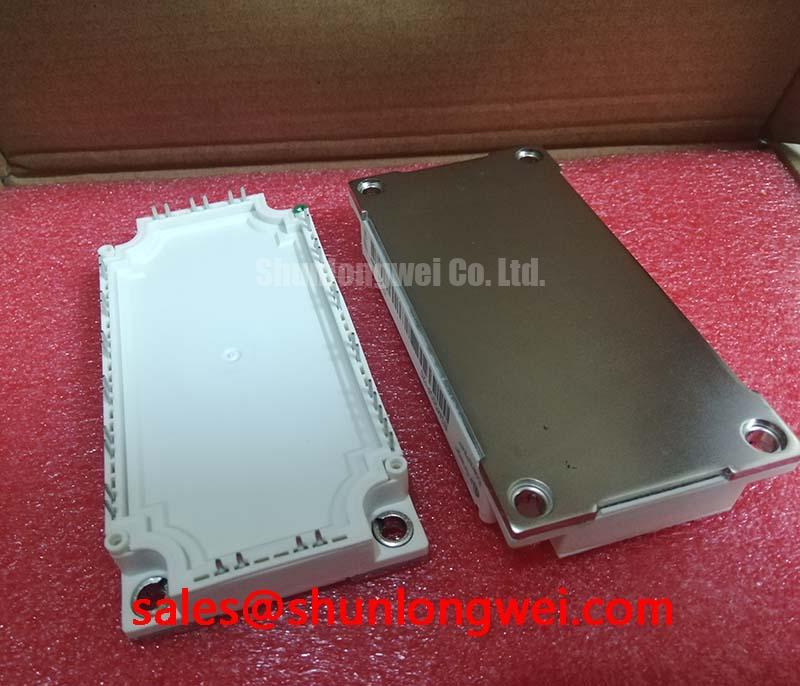
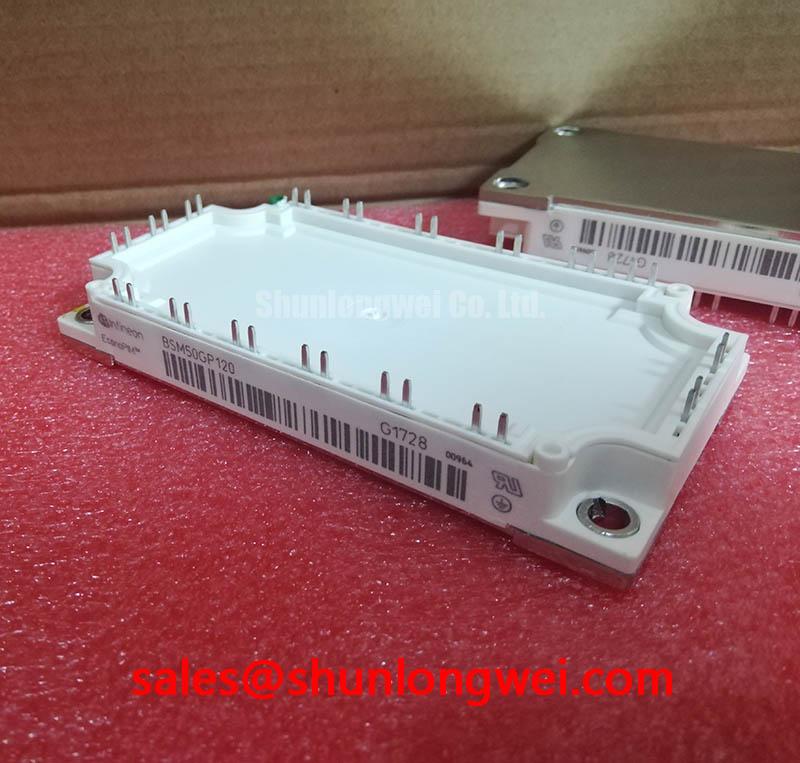
The BSM50GP120 is an IGBT power module from Infineon that integrates a three-phase full bridge (six-pack) configuration into a single, compact package. Its core value proposition is delivering robust and efficient power conversion for motor drives, achieved through the use of low-loss Trench/Fieldstop IGBT4 technology and an integrated NTC thermistor for real-time temperature monitoring. The module’s low collector-emitter saturation voltage (VCE(sat)) directly translates to reduced power dissipation, which simplifies thermal management and can lower the total cost of the cooling system.
- Core Specifications: 1200V | 50A | VCE(sat) (typ) 1.7V
- Key Advantages: Low conduction losses for higher efficiency, integrated temperature sensing for improved system reliability.
Download the Official BSM50GP120 Datasheet (PDF)

Technical Analysis: Efficiency and Reliability by Design
A critical parameter dictating the efficiency of an IGBT module is its collector-emitter saturation voltage, VCE(sat). For the BSM50GP120, the typical VCE(sat) is 1.7V at its nominal current (IC = 50A) and a junction temperature of 25°C. This parameter can be compared to the friction in a mechanical system; a lower value signifies that less energy is converted into waste heat during the on-state. This low conduction loss is a hallmark of Infineon’s Trenchstop™/Fieldstop IGBT4 technology, enabling designers to achieve higher system efficiency or operate at higher power densities without excessive thermal stress.
System reliability is significantly enhanced by the module’s integrated NTC thermistor. This component provides a direct and accurate measurement of the module’s internal temperature. By connecting the NTC to the control circuitry, engineers can implement precise over-temperature protection, preventing the device from exceeding its maximum junction temperature of 150°C. This proactive thermal management is essential for preventing premature device failure, particularly in applications with high cyclical loads. The role of such sensors is further explored in The Key to IGBT Module Safety and Reliability.
Optimized Application Scenarios
The BSM50GP120’s characteristics make it a strong candidate for several medium-power applications:
- Variable Frequency Drives (VFDs): The six-pack topology is the standard building block for three-phase motor inverters. The module’s low losses directly improve the drive’s energy efficiency.
- Servo Drives: The fast and soft switching behavior of the integrated anti-parallel diodes (EmCon HE diodes) reduces EMI and supports the precise control required in servo applications.
- Uninterruptible Power Supplies (UPS): High reliability is paramount in UPS systems. The integrated NTC and robust 10µs short-circuit withstand time contribute to a more resilient design.
- Solar Inverters: Maximizing energy harvest requires high conversion efficiency. The low VCE(sat) of the BSM50GP120 minimizes power loss during the DC/AC inversion stage.
This module is best matched for three-phase inverter designs up to approximately 20 kW where high efficiency and integrated thermal feedback are primary engineering goals.
Key Specification Parameters
| Absolute Maximum Ratings (TC = 25°C unless otherwise specified) | |
|---|---|
| Collector-Emitter Voltage (VCES) | 1200 V |
| Continuous Collector Current (IC) @ TC=80°C | 50 A |
| Total Power Dissipation (Ptot) | 310 W |
| IGBT Electrical Characteristics (Tvj = 25°C) | |
| Collector-Emitter Saturation Voltage (VCE(sat)) @ IC=50A, VGE=15V | 1.70 V (typ) / 2.15 V (max) |
| Gate-Emitter Threshold Voltage (VGE(th)) | 5.8 V (typ) |
| Short Circuit Withstand Time (tSC) @ VGE ≤ 15V, VCC = 600V | 10 µs |
| Thermal and Mechanical Characteristics | |
| Thermal Resistance, Junction-to-Case (RthJC) per IGBT | 0.4 K/W (max) |
| Operating Junction Temperature (Tvj op) | -40 to +150 °C |
| Mounting Torque (M5 Screw) | 3.0 – 6.0 Nm |
Engineer’s FAQ
- 1. What is the junction-to-case thermal resistance, and how does it impact heatsink selection for the BSM50GP120?
- The datasheet specifies a maximum thermal resistance from junction to case (RthJC) of 0.4 K/W per IGBT. This value is critical for calculating the required performance of your heatsink. A lower RthJC, as seen here, indicates more efficient heat transfer from the silicon die to the module’s baseplate, allowing for a smaller or less complex cooling solution to maintain the junction temperature within its safe operating area.
- 2. What are the recommended mounting torque specifications for this module?
- For reliable thermal and electrical contact, the datasheet specifies a mounting torque for the M5 baseplate screws of 3.0 to 6.0 Nm. The M5 terminal screws should be tightened to a torque of 2.5 to 5.0 Nm. Applying incorrect torque can lead to poor thermal performance or mechanical damage.
- 3. What is the main benefit of the integrated NTC thermistor?
- The integrated NTC provides a cost-effective and reliable method for monitoring the module’s operating temperature close to the IGBT chips. This allows the system’s controller to implement an over-temperature protection scheme, reducing power or shutting down the system before thermal damage occurs, thereby increasing the overall reliability of the power stage.
- 4. Is the BSM50GP120 suitable for high-frequency switching applications?
- The BSM50GP120 utilizes IGBT4 technology, which is optimized for a balance between low conduction losses (VCE(sat)) and switching losses. While it is suitable for typical motor drive frequencies (e.g., up to 16 kHz), for very high-frequency applications (above 20-25 kHz), it is essential to carefully analyze the switching energy (Eon, Eoff) values in the datasheet to calculate total losses and ensure thermal limits are not exceeded. Exploring topics like the evolution of trench gate technology can provide further context.
Final Engineering Statement
The BSM50GP120 provides a well-balanced and integrated solution for three-phase power conversion. It equips engineers with a component that combines proven IGBT4 efficiency with the necessary protective features for building reliable and thermally stable motor drives and power inverters. The module’s performance characteristics facilitate streamlined designs that meet demanding energy efficiency targets.