Fuji 2MBI300N-060 IGBT Module: A Technical Review and Analysis
Fuji 2MBI300N-060 IGBT Module | 600V 300A
Technical Analysis of the Fuji Electric 2MBI300N-060 IGBT Module
The Fuji Electric 2MBI300N-060 is a 600V, 300A dual IGBT module engineered to provide a robust and efficient power switching solution for high-power industrial applications. This N-series module integrates two IGBTs in a half-bridge configuration, focusing on delivering a balance between low conduction losses and reliable high-speed switching performance. Its electrical and thermal characteristics make it a strong candidate for demanding power conversion systems.
- Core Specifications: 600V | 300A | VCE(sat) (typ) 2.2V
- Key Advantages: Low on-state voltage minimizes heat generation, and the low-inductance package structure supports high-speed operation.
- Design Focus: How a module’s thermal resistance impacts heatsink selection is a critical consideration. The 2MBI300N-060’s specified Rth(j-c) values provide the clear data needed for effective thermal management design.
Download the Official 2MBI300N-060 Datasheet (PDF)
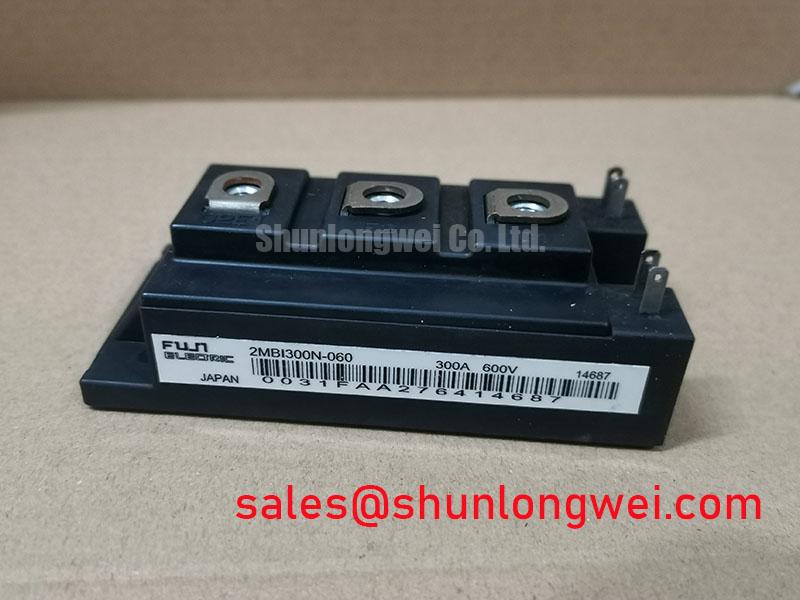

Engineered for Efficiency and Thermal Stability
A key performance indicator for an IGBT module is its collector-emitter saturation voltage, VCE(sat). The 2MBI300N-060 specifies a typical VCE(sat) of 2.2V at its nominal current of 300A. This parameter directly translates to lower conduction power loss, which is crucial for overall system efficiency. Think of VCE(sat) as a form of electrical friction; a lower value means less energy is wasted as heat while the switch is on. This reduction in waste heat simplifies the thermal design, potentially allowing for smaller and more cost-effective cooling solutions.
Effective thermal management is fundamental to the reliability of any power system. The datasheet specifies the thermal resistance from junction to case (Rth(j-c)) as 0.11 °C/W for the IGBT and 0.24 °C/W for the free-wheeling diode (FWD). This value represents how effectively heat can be transferred from the active semiconductor junction to the module’s baseplate. A lower thermal resistance is analogous to a wider pipe for heat flow, enabling faster and more efficient heat dissipation to the heatsink. This characteristic is essential for maintaining the junction temperature within its specified safe operating limits, especially under heavy load conditions.
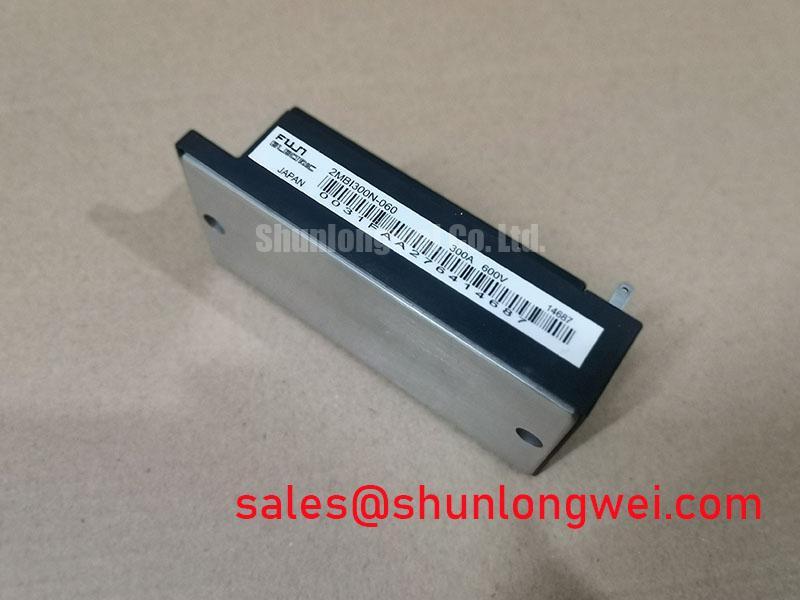
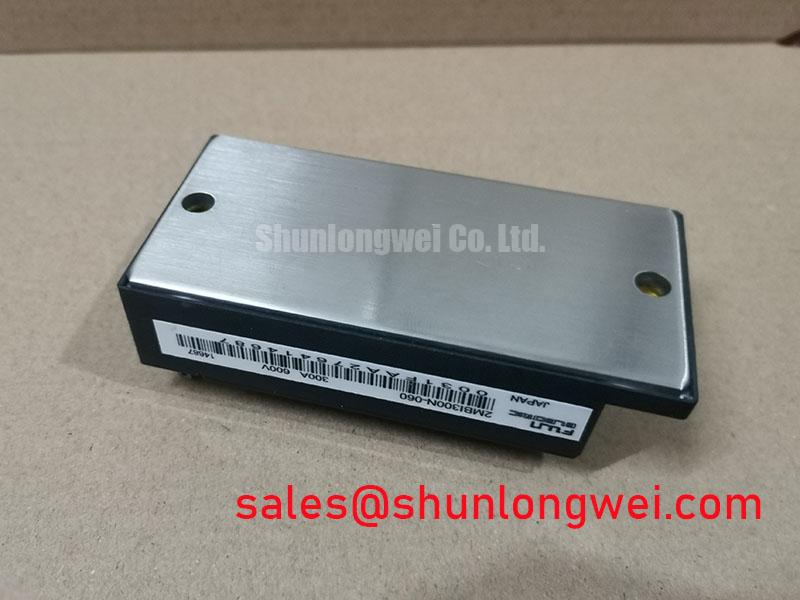
Optimized Application Scenarios
The technical specifications of the 2MBI300N-060 position it as a suitable component for several high-power applications:
- Inverters for Motor Drives: The 300A current rating and efficient switching are well-suited for the inverter stages of AC and DC motor controllers, providing precise and efficient power delivery.
- Uninterruptible Power Supplies (UPS): Its ability to handle high pulse currents (up to 600A) and its inherent reliability are critical for ensuring stable power in large-scale UPS systems.
- Welding Machines: The robust thermal performance and high current capability are essential for managing the demanding, cyclical loads found in industrial welding power supplies.
- AC/DC Servo Drive Amplifiers: The module’s fast switching characteristics support the high-frequency operation required for responsive and accurate servo systems.
This module is an optimal match for high-current inverter designs where low conduction losses and proven thermal performance are primary engineering requirements.
Key Specifications of the 2MBI300N-060
| Parameter | Symbol | Value | Conditions |
|---|---|---|---|
| Absolute Maximum Ratings | |||
| Collector-Emitter Voltage | VCES | 600V | – |
| Gate-Emitter Voltage | VGES | ±20V | – |
| Continuous Collector Current | IC | 300A | – |
| Peak Collector Current | IC pulse | 600A | 1ms pulse |
| Max Power Dissipation | PC | 1100W | – |
| Electrical Characteristics (IGBT) | |||
| Collector-Emitter Saturation Voltage | VCE(sat) | 2.2V (typ), 2.7V (max) | IC=300A, VGE=15V |
| Gate-Emitter Threshold Voltage | VGE(th) | 5.5V (typ) | IC=300mA, VCE=20V |
| Thermal Characteristics | |||
| Thermal Resistance (IGBT) | Rth(j-c) | 0.11 °C/W | Junction to Case |
| Thermal Resistance (Diode) | Rth(j-c) | 0.24 °C/W | Junction to Case |
Engineer’s FAQ for the 2MBI300N-060
- How does the VCE(sat) of the 2MBI300N-060 affect the thermal design of a power converter?
- The typical VCE(sat) of 2.2V at 300A determines the conduction power loss (P_loss = VCE(sat) * IC). A lower VCE(sat) results in less heat generated during operation, which directly reduces the cooling requirement. This allows engineers to design a more compact or lower-cost thermal management system (e.g., heatsink and fan) to maintain the junction temperature below the 150°C maximum rating.
- What is the recommended mounting torque for this module?
- The datasheet specifies a mounting screw torque of 3.5 N·m for the M5 screws. Applying the correct torque is critical to minimize the thermal resistance between the module’s baseplate and the heatsink, ensuring proper heat transfer and preventing mechanical stress on the package.
- What is the primary role of the internal Free-Wheeling Diode (FWD)?
- The FWD provides a path for inductive load current to flow when the IGBT is turned off. In applications like motor drives, the motor’s inductance stores energy. The FWD allows this energy to circulate safely, protecting the IGBT from potentially damaging overvoltage spikes. The 2MBI300N-060 includes an FWD with a low forward voltage (VF) of 2.8V (typ) to minimize losses during this freewheeling period.
- Is this module suitable for parallel operation?
- The datasheet notes that the VCE(sat) is classified, which facilitates easier parallel connection. For successful IGBT paralleling, a tight distribution of VCE(sat) and VGE(th) is important to ensure balanced current sharing among the modules. A symmetrical PCB layout and individual gate resistors are also recommended to mitigate oscillations and ensure stable operation.
Enabling Reliable High-Current Systems
The Fuji Electric 2MBI300N-060 offers a well-documented and robust solution for designers of high-power inverters and converters. Its combination of a 300A current rating, low conduction losses, and a thermally efficient package provides the necessary performance for building reliable and effective power electronic systems for the industrial market.