SKiiP 83AC12ISMT10 Technical Review: Reliability Through Solder-Free Design
SKiiP 83AC12ISMT10 1200V IPM Technical Analysis
Introduction to the SKiiP 83AC12ISMT10 Intelligent Power Module
The Semikron SKiiP 83AC12ISMT10 is a highly integrated Intelligent Power Module (IPM) that combines a three-phase IGBT inverter bridge with a sophisticated gate driver unit. This module’s defining value is its use of Semikron’s SKiiP pressure contact technology, which eliminates solder bond wires to deliver superior thermal performance and exceptional operational reliability for demanding power conversion systems. This design addresses a primary failure point in conventional modules, ensuring a longer service life under rigorous thermal cycling.
- Core Specifications: 1200V VCES | 125A IC (at 25°C) | Integrated Protection
- Key Advantages: Solder-free pressure contacts for enhanced reliability and simplified mounting, integrated driver stage reduces system complexity.
- Design Benefit: The integrated driver and protection features, including short-circuit and under-voltage lockout, significantly reduce external component count and shorten development time.
Download the Official SKiiP 83 AC 12 I Series Datasheet (PDF)
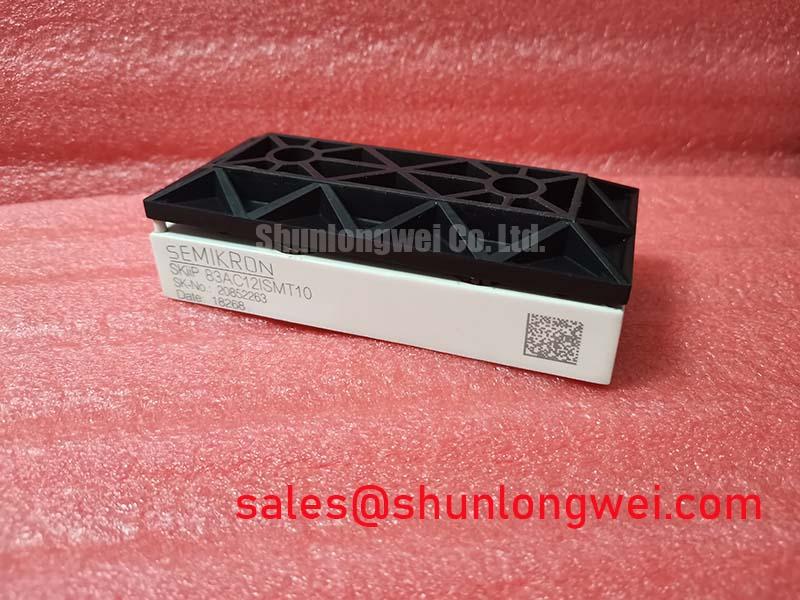
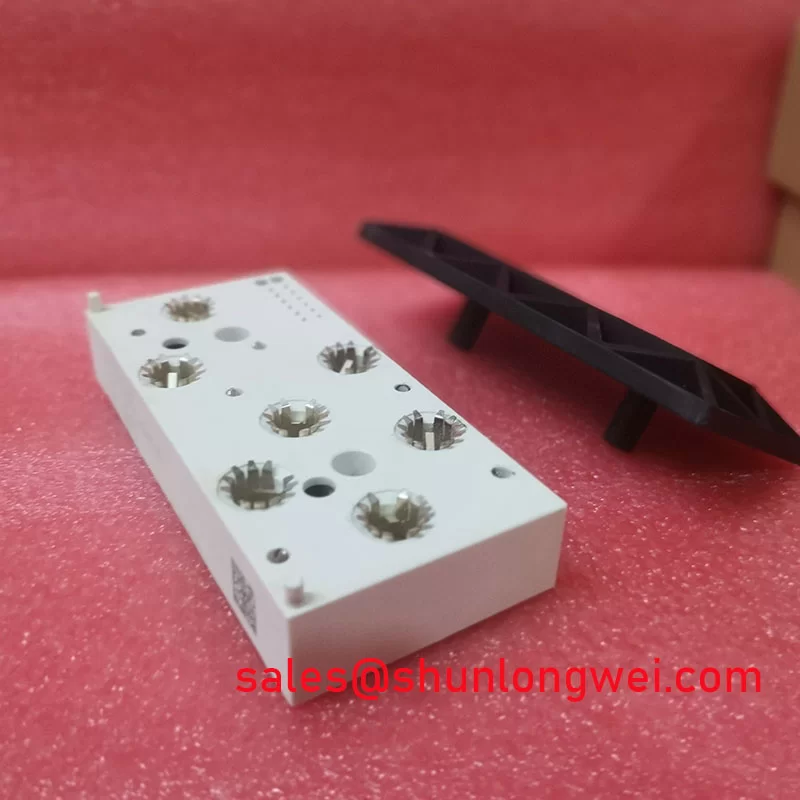
Technical Analysis: Reliability Through Solder-Free Design
The engineering significance of the SKiiP 83AC12ISMT10 lies in its pressure contact system. Unlike traditional modules that rely on soldered connections which can fatigue and fail over time, this IPM uses a mechanical pressure system. This approach establishes a direct and highly effective thermal path from the DBC substrate to the heatsink. Think of the thermal path as a highway for heat; the solder-free pressure contact system creates a wider, smoother highway, allowing heat to escape the semiconductor junction more efficiently. This results in a lower junction-to-heatsink thermal resistance (Rth(j-s)), enabling higher power density and improving the module’s resilience to power cycling, a common stressor in applications like motor drives.
This module integrates Trench Gate IGBTs and CAL (Controlled Axial Lifetime) free-wheeling diodes. The Trench Gate structure provides a low collector-emitter saturation voltage (VCEsat) of 2.5V (typical at 100A, 25°C), which directly translates to lower conduction losses during operation. The CAL diodes are optimized for soft and fast recovery, minimizing voltage overshoots and electromagnetic interference (EMI) during switching. This combination of advanced silicon and robust packaging ensures both high efficiency and system-level reliability.
Optimized Application Scenarios
The features of the SKiiP 83AC12ISMT10 make it particularly suitable for specific industrial applications:
- Variable Frequency Drives (VFDs): The module’s high integration level simplifies the power stage design, while its robust thermal performance manages the demanding load cycles of industrial motors effectively.
- Uninterruptible Power Supplies (UPS): The integrated protection and high reliability from the pressure contact system are critical for ensuring continuous, failure-resistant operation in UPS systems.
- Commercial HVAC Systems: In applications like commercial air conditioners and pumps, the low thermal impedance allows for more compact heatsink designs, contributing to smaller and more cost-effective overall systems.
- Solar Inverters: The high efficiency derived from low VCE(sat) and optimized switching characteristics helps maximize energy harvest in solar power conversion systems.
This module is best matched for systems requiring high reliability and simplified thermal management in the 20 kW to 50 kW power range.
Key Technical Specifications
All parameters are specified at Theatsink = 25°C unless otherwise noted. These values are derived from the official manufacturer datasheet for the SKiiP 83 AC 12 I series.
| Absolute Maximum Ratings | ||
|---|---|---|
| Parameter | Value | Unit |
| Collector-Emitter Voltage (VCES) | 1200 | V |
| DC Collector Current (IC) @ TC=80°C | 85 | A |
| Peak Collector Current (ICM), tp < 1ms | 250 | A |
| Operating Junction Temperature (Tj) | -40 to +150 | °C |
| Isolation Voltage (Visol), AC, 1 min | 2500 | V |
| IGBT Inverter Characteristics (Tj=125°C) | ||
| Collector-Emitter Saturation Voltage (VCEsat), IC=100A | 3.1 (typ) | V |
| Total Switching Energy (Eon + Eoff), IC=100A | 27 (typ) | mJ |
| Thermal Resistance, Junction-Heatsink (Rth(j-h)) per IGBT | 0.25 | K/W |
For detailed parameters and operational curves, refer to the official datasheet. This table is for reference only.
Engineer’s FAQ
1. What are the primary advantages of the SKiiP 83AC12ISMT10’s integrated design?
The integrated design combines the power switches (IGBTs and Diodes) and the gate driver with a full protection suite into a single component. This reduces PCB complexity, minimizes parasitic inductance between the driver and IGBTs, and shortens the overall system design and assembly time. For further reading on integrated modules, see this guide on the advantages of IPMs.
2. What is the correct mounting procedure to ensure optimal thermal performance?
This module uses a pressure contact system that requires a specific mounting torque and procedure. It must be mounted to a heatsink using two M5 screws with a recommended torque of 2.5 to 3.5 Nm. A thin layer of a suitable thermal interface material (TIM) is essential for minimizing contact thermal resistance. Refer to the Semikron application manuals for detailed guidance.
3. What protection features are included in this module?
The integrated driver board provides comprehensive protection, including under-voltage lockout (UVLO) for both the primary and secondary side of the driver, short-circuit protection for the IGBTs, and an over-temperature warning via an integrated NTC sensor. A fault signal is provided to the controller in case of a trip event.
4. How does pressure contact technology improve reliability?
Pressure contact technology creates a solder-free interface between the module’s power substrate and the heatsink. This eliminates a common failure mechanism in power electronics—solder fatigue—which occurs due to repeated expansion and contraction during thermal cycles. This leads to a significantly higher power cycling capability and longer operational life. Explore more on the importance of thermal cycling reliability here.
Design Enablement
The SKiiP 83AC12ISMT10 provides a robust, pre-validated power stage solution that allows engineering teams to focus on system-level innovation rather than on discrete component-level complexities. By leveraging solder-free pressure contacts and integrated protection, this IPM offers a direct path to developing more reliable, power-dense, and efficient inverter systems.