Mitsubishi CM1000E4C-66R: A Technical Review of a 3300V High-Power IGBT Module
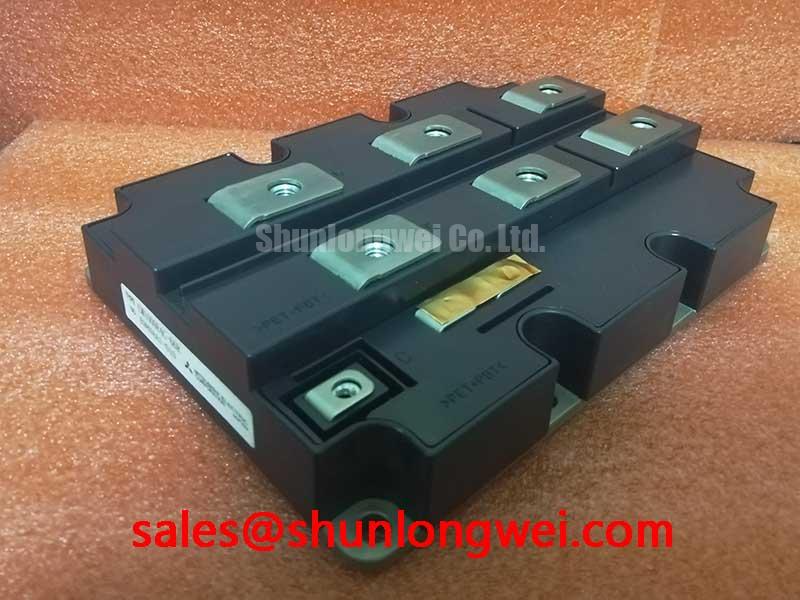
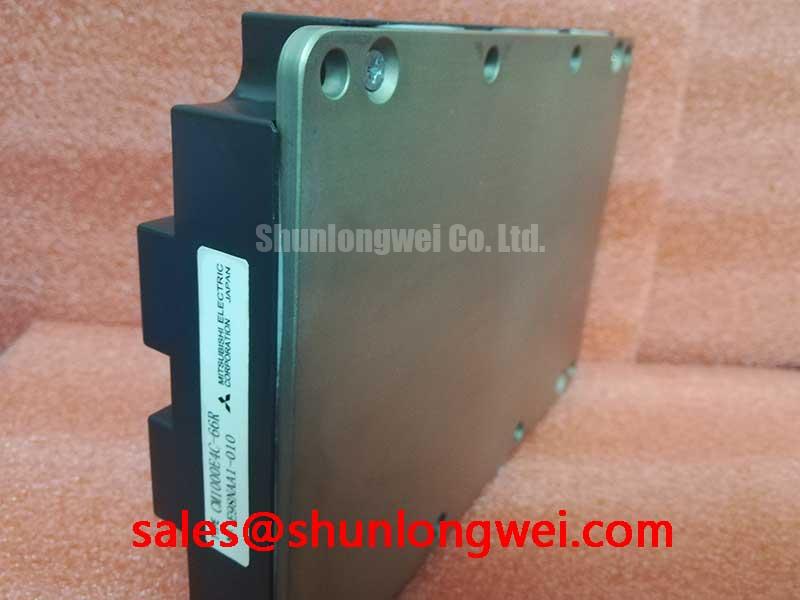
Mitsubishi HVIGBT Module CM1000E4C-66R | 3300V / 1000A
High-Voltage, High-Current Switching for Megawatt Systems
The Mitsubishi CM1000E4C-66R is a high-voltage IGBT module engineered for robust performance in megawatt-scale power conversion systems. This module’s primary value lies in its substantial voltage and current ratings, which enable the design of high-power-density inverters and converters while maintaining critical safety and reliability margins. Effective thermal management, guided by its specified thermal resistance values, is fundamental to leveraging its full power capability.
- Core Specifications: 3300V Collector-Emitter Voltage | 1000A DC Collector Current | 6.0 kVrms Isolation Voltage
- Key Advantages: Enables high-power density inverter designs, provides substantial safety margin in high-voltage circuits.
Download Official Datasheet (PDF)
Technical Analysis for Power System Design
The standout feature of the CM1000E4C-66R is its 3300V collector-emitter voltage (VCES) rating. This high blocking voltage capability is essential for applications connected to medium-voltage grids, providing the necessary headroom to withstand voltage transients and ensuring system reliability under demanding operating conditions. The module’s robust construction with an AlSiC baseplate also contributes to its high reliability and long operational life.
Efficient power conversion is determined by both conduction and switching losses. The module specifies a typical collector-emitter saturation voltage (VCE(sat)) of 3.3V at its nominal 1000A current (at Tj=150°C). This parameter is analogous to a valve’s resistance to flow; a lower VCE(sat) indicates less energy wasted as heat during the on-state, which directly reduces cooling system requirements. For reliable operation and safety, the module features a high isolation voltage of 6000Vrms, ensuring secure galvanic separation between the high-power circuit and control electronics. This is a critical parameter for systems utilizing isolated baseplates to manage high voltages.
Optimized Application Scenarios
The electrical and thermal characteristics of the CM1000E4C-66R make it suitable for a range of high-power industrial applications.
- Medium Voltage Drives (MVDs): Its 3300V rating is a direct match for the DC bus voltages in MVDs that control large industrial motors, offering the required voltage margin for reliable operation.
- Renewable Energy Inverters: In utility-scale solar or wind power systems, the 1000A current capacity allows for the efficient conversion of vast amounts of DC power to the AC grid.
- Railway Traction Systems: The module’s high power handling and robust design are essential for main propulsion inverters in electric locomotives and high-speed trains.
- HVDC Power Transmission: It can serve as a core switching element in Voltage Source Converters (VSCs) for modern High-Voltage Direct Current (HVDC) transmission lines.
This module is best matched for applications demanding high blocking voltage and current with a foundation of proven operational reliability.
Key Specification Parameters
| Absolute Maximum Ratings (Tj = 150°C unless otherwise noted) | |
|---|---|
| Collector-Emitter Voltage (VCES) | 3300 V |
| Gate-Emitter Voltage (VGES) | ±20 V |
| DC Collector Current (IC) @ Tc = 95°C | 1000 A |
| Maximum Power Dissipation (Pc) @ Tc = 25°C | 10400 W |
| Operating Junction Temperature (Tjop) | -50 to +150 °C |
| Electrical & Thermal Characteristics | |
| Collector-Emitter Saturation Voltage (VCE(sat)) Typ. @ IC=1000A, Tj=150°C | 3.3 V |
| Isolation Voltage (Viso) RMS, 60Hz, 1 min | 6000 V |
| Thermal Resistance (Rth(j-c)Q) Junction to Case, IGBT Part | 12.0 K/kW (Max) |
Engineer’s FAQ
- How is thermal resistance specified for the CM1000E4C-66R, and why is it important?
- The datasheet specifies the maximum thermal resistance from junction to case (Rth(j-c)Q) as 12.0 K/kW. This value is critical for thermal design; it defines how effectively heat can be transferred from the IGBT chip to the module’s baseplate. Accurate power loss calculations combined with this thermal resistance value are necessary to select an appropriate heatsink and ensure the junction temperature remains within the safe operating limit of 150°C.
- What are the mounting torque recommendations for this high-power module?
- According to the datasheet’s mechanical characteristics, the recommended mounting torque for the M8 main terminal screws is 8.0 – 10.0 N·m, and for the M6 mounting screws, it is 4.0 – 6.0 N·m. Applying the correct torque is essential for ensuring low-resistance electrical connections and optimal thermal contact with the heatsink, preventing both overheating and mechanical stress.
- Is the CM1000E4C-66R a single switch or a more complex configuration?
- The CM1000E4C-66R is a single-element module, containing one IGBT switch. This configuration is often used in chopper circuits, such as for braking, or as a building block in more complex multi-level inverter topologies.
- What is the maximum continuous operating junction temperature?
- The maximum operating junction temperature (Tjop) specified in the datasheet is 150°C. Operating the device at or below this temperature is crucial for ensuring the module’s long-term reliability and performance.
Enabling High-Reliability Power Conversion
For engineers tasked with designing next-generation high-power converters, the CM1000E4C-66R provides a foundation of high voltage and current capability. Its robust electrical and thermal specifications, as detailed in the official datasheet, enable the design of efficient and reliable megawatt-class systems capable of performing in demanding industrial environments. Proper implementation based on these verified parameters is key to achieving system-level performance objectives.