SKM150GAL12T4 Fast IGBT Module: A Technical Analysis
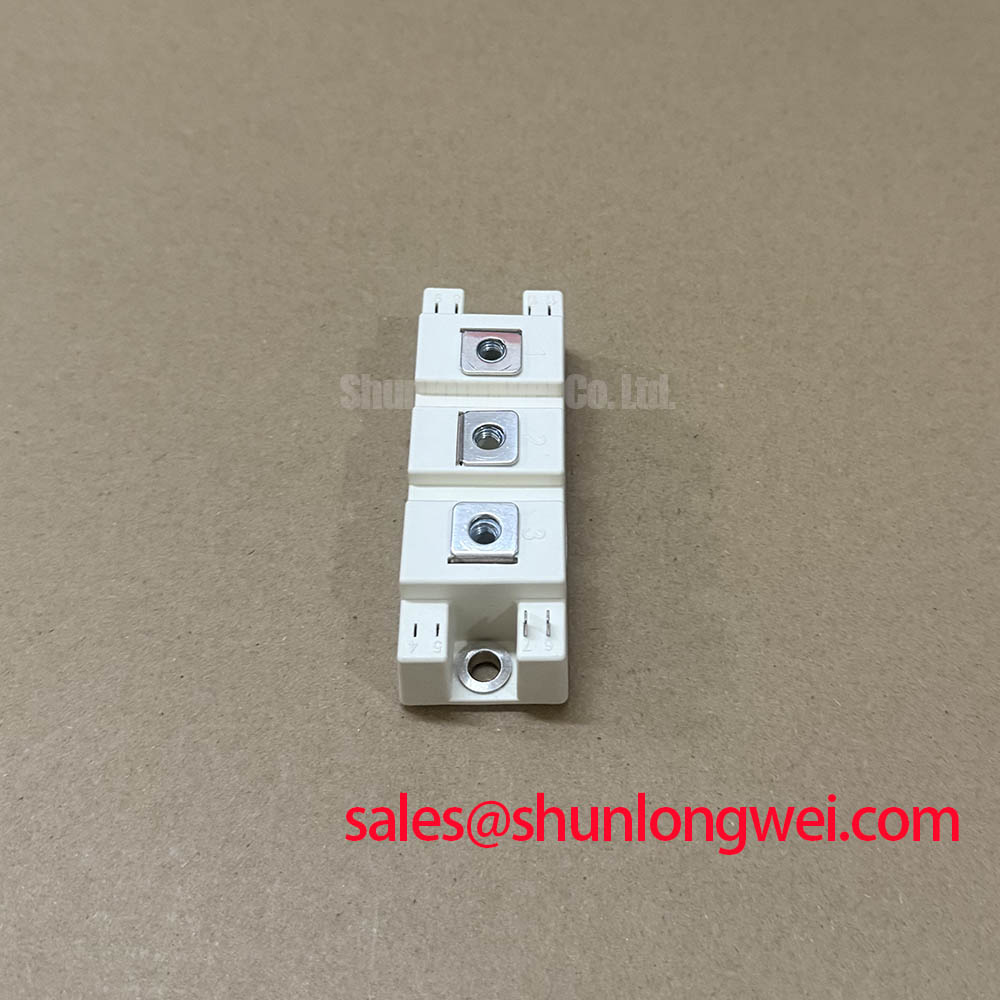
SKM150GAL12T4 | 1200V 150A Fast IGBT4 Module
Introduction and Core Highlights
The Semikron SKM150GAL12T4 is a half-bridge IGBT module that integrates 4th generation Trench Gate technology and a soft-recovery CAL4 diode to deliver a superior balance of switching efficiency and operational robustness. This module’s primary value proposition is its ability to minimize total power losses through a low saturation voltage and controlled diode behavior, enabling higher system efficiency and simplified thermal design in high-frequency power conversion systems.
- Core Specifications: 1200V | 179A (Tc=80°C) | VCE(sat) 1.7V (typ)
- Key Advantages: Low conduction losses reduce heatsink requirements. Soft diode recovery minimizes EMI and voltage stress.
- Engineering Insight: The module’s positive temperature coefficient for VCE(sat) simplifies the process of paralleling multiple devices for higher power outputs.
Download the Official SKM150GAL12T4 Datasheet (PDF)
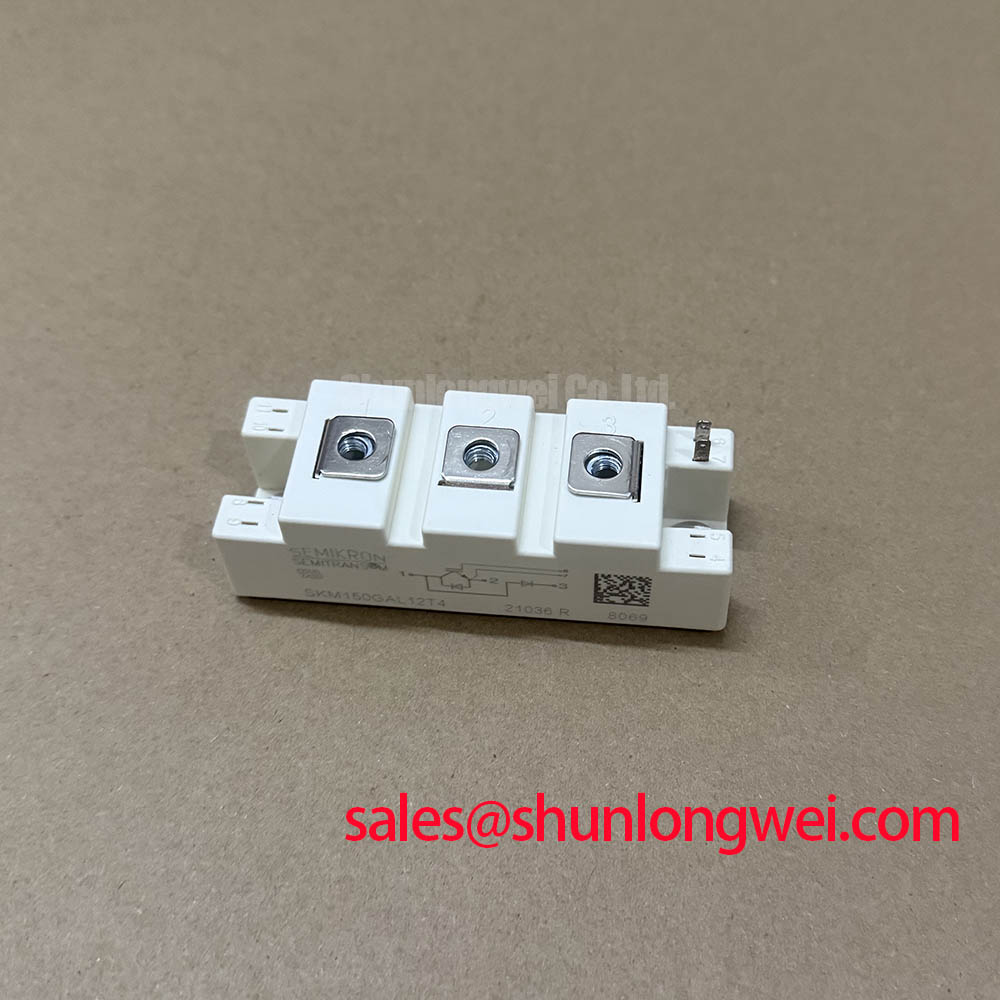
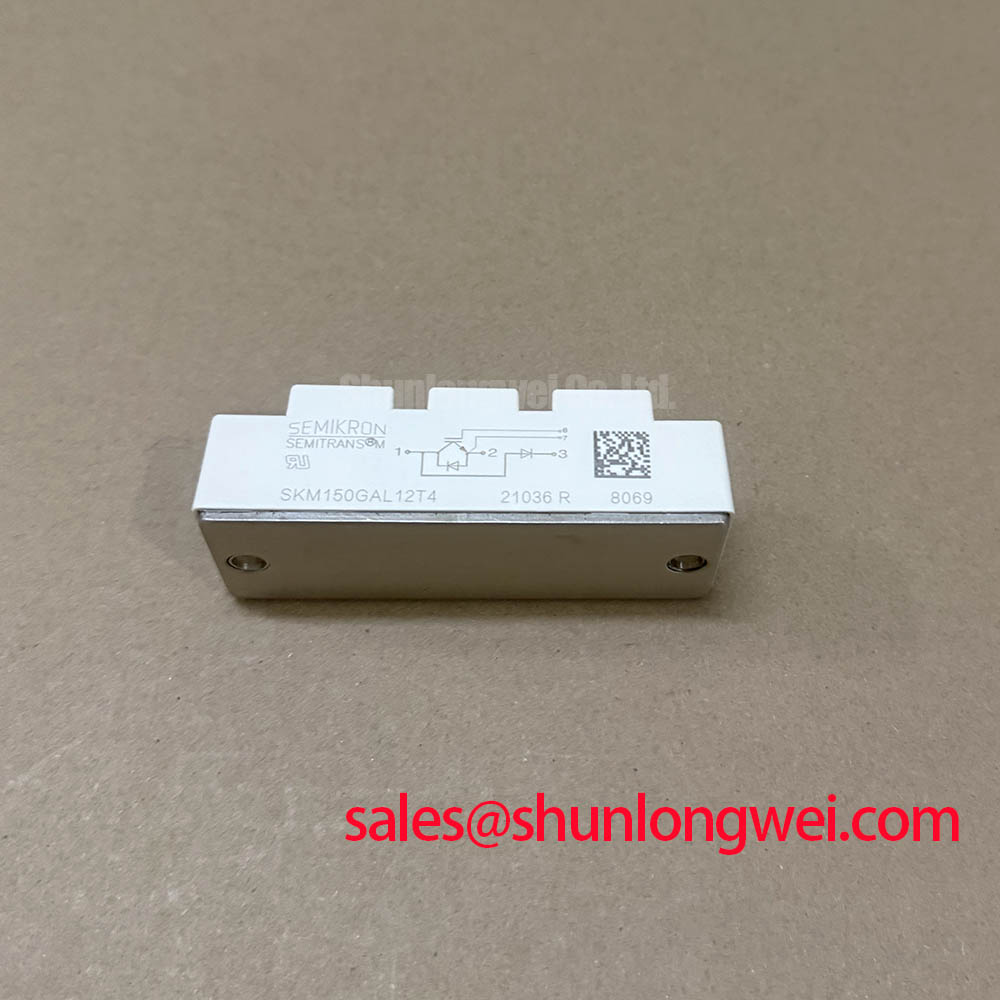
Technical Analysis: Efficiency and Reliability by Design
The performance of the SKM150GAL12T4 is rooted in its advanced silicon. It employs Trench Gate IGBT4 technology, which significantly lowers the collector-emitter saturation voltage (VCE(sat)) to a typical value of 1.7V at its nominal current. This low VCE(sat) is a critical parameter as it directly dictates conduction losses—the primary source of heat generation when the IGBT is on. Think of VCE(sat) as electrical friction; a lower value means less energy is wasted as heat, allowing for more compact cooling systems and higher overall inverter efficiency. For a deeper understanding of this parameter, explore the fundamentals of Trench Gate technology’s quest for lower VCE(sat).
Complementing the IGBT is the 4th generation CAL (Controlled Axial Lifetime) freewheeling diode. In hard-switched applications like motor drives, the diode’s recovery behavior is crucial. The CAL4 diode is engineered for “soft” recovery, meaning it turns off smoothly without large current and voltage oscillations. This characteristic reduces electromagnetic interference (EMI) and mitigates destructive voltage overshoots that can stress the IGBTs. The result is a more reliable system that requires less complex and costly snubber circuitry to manage switching transients. The performance of this internal diode is as critical as the IGBT itself, as detailed in this guide on the freewheeling diode’s role in system performance.
Optimized Application Scenarios
The SKM150GAL12T4 is specified for systems requiring efficient and robust power control, especially at switching frequencies up to 20 kHz.
- AC Motor Drives: The low VCE(sat) and high short-circuit capability make it ideal for demanding industrial motor control, enhancing efficiency and protecting against fault conditions.
- Electronic Welding: Its ability to operate at higher switching frequencies (up to 20 kHz) is a direct fit for modern welding power supplies, enabling better arc control and smaller magnetic components.
- Uninterruptible Power Supplies (UPS): The module’s high efficiency and proven reliability within the SEMITRANS package ensure minimal energy loss and dependable operation during critical backup power events.
- DC/DC Converters & Brake Choppers: The fast and soft switching characteristics of the IGBT and CAL diode pairing are well-suited for high-performance DC choppers and DC-DC conversion stages.
This module is best matched for power conversion systems from 30 kW to 75 kW where minimizing power loss and ensuring long-term reliability are primary design objectives.
Key Specification Parameters
This table contains key parameters from the official SKM150GAL12T4 datasheet. All values are typical at Tj = 25°C unless otherwise stated.
| Absolute Maximum Ratings | |
|---|---|
| Collector-Emitter Voltage (VCES) | 1200 V |
| Continuous DC Collector Current (IC) @ Tc=80°C | 179 A |
| Repetitive Peak Collector Current (ICRM) | 300 A |
| Operating Junction Temperature (Tj) | -40 to +175 °C |
| IGBT Characteristics (per switch) | |
| Collector-Emitter Saturation Voltage (VCE(sat)) @ IC=150A | 1.7 V (typ) / 2.15 V (max) |
| Turn-on Energy (Eon) @ IC=150A | 15.0 mJ |
| Turn-off Energy (Eoff) @ IC=150A | 19.0 mJ |
| Diode Characteristics (per switch) | |
| Forward Voltage (VF) @ IF=150A | 1.85 V (typ) / 2.2 V (max) |
| Reverse Recovery Energy (Erec) @ IF=150A | 10.5 mJ |
| Thermal and Mechanical | |
| Thermal Resistance, Junction-to-Case (Rth(j-c)) per IGBT | 0.17 K/W |
| Isolation Voltage (Visol) | 2500 V (AC, 1 min.) |
Engineer’s FAQ
1. What are the main thermal design considerations for the SKM150GAL12T4?
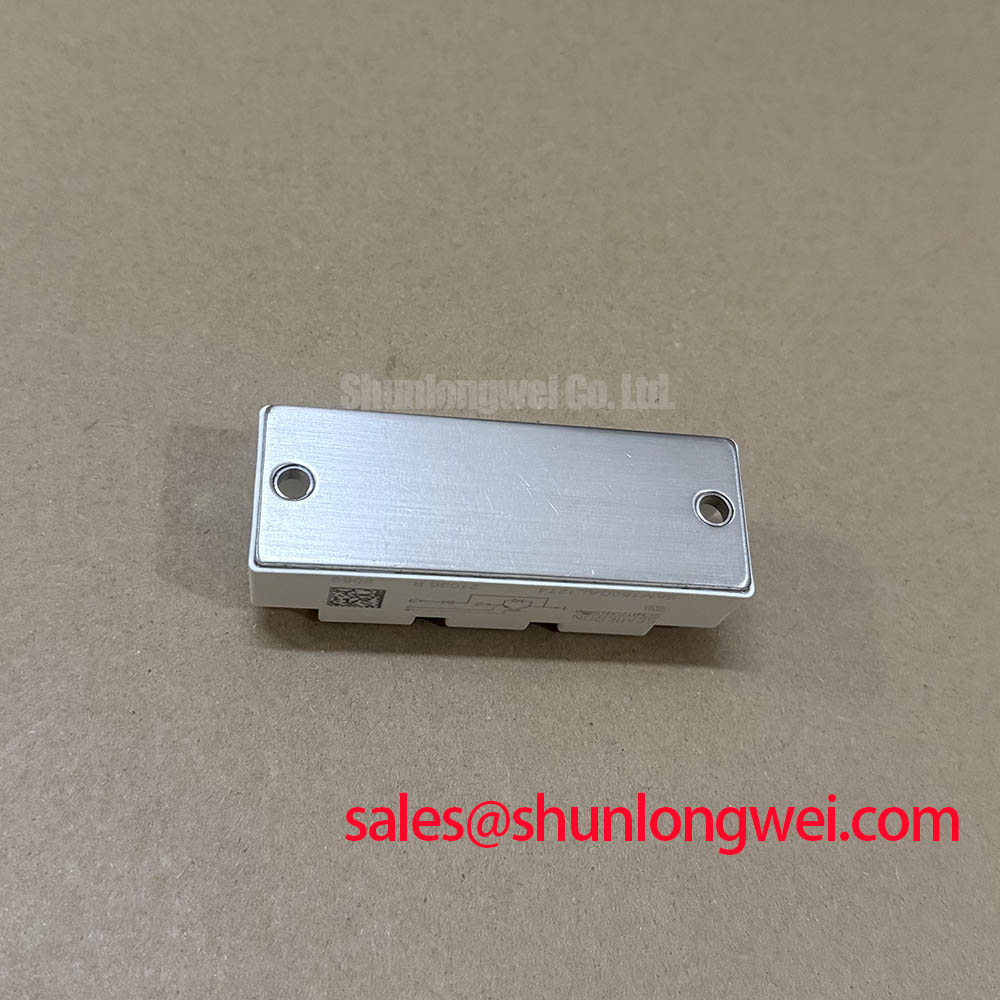
The primary consideration is efficiently extracting heat from the isolated copper baseplate. The datasheet specifies a thermal resistance from junction-to-case (Rth(j-c)) of 0.17 K/W per IGBT. Your thermal design, including the thermal interface material (TIM) and heatsink, must have a low enough thermal resistance to keep the maximum junction temperature (Tjmax) below 175°C under worst-case operating conditions. Accurate calculation of both conduction and switching losses is essential for this. A practical guide to mastering IGBT thermal design with Zth curves can provide further insight.
2. What is the recommended mounting torque for this module?
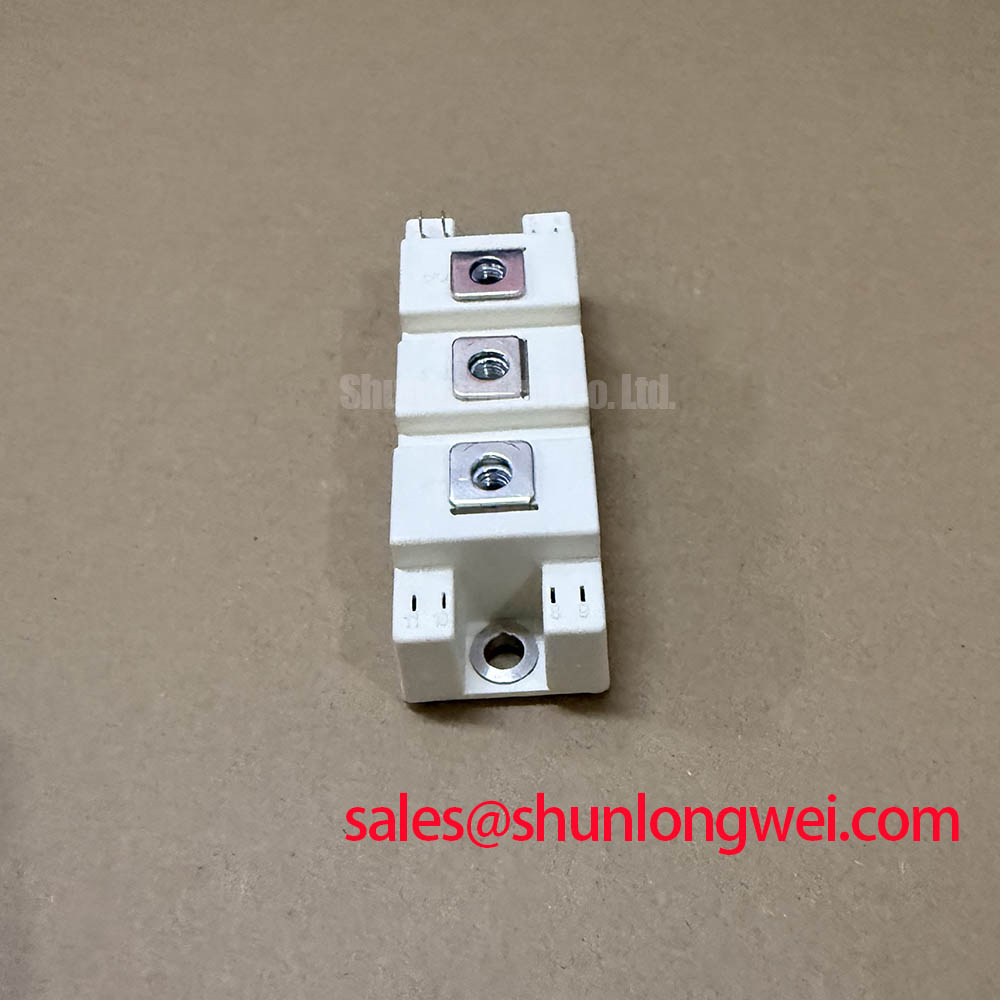
The datasheet specifies a mounting torque for the M6 module mounting screws of 3-5 Nm. For the M6 main terminals, the recommended torque is also 3-5 Nm. Applying incorrect torque is a common cause of failure. Under-tightening leads to high thermal and electrical resistance, causing overheating. Over-tightening can crack the ceramic substrate, leading to catastrophic failure. Always use a calibrated torque wrench.
3. What is the key benefit of the integrated CAL4 diode?
The CAL4 diode provides “soft” switching recovery. This means it turns off with lower current oscillations (ringing) compared to standard diodes. This behavior significantly reduces EMI emissions and lowers the peak reverse recovery voltage, which protects the IGBT from overvoltage stress and improves overall system reliability.
4. How does the module’s UL recognition (File E63532) benefit my design process?
The UL recognition indicates that the module has been tested and certified to meet specific safety standards by Underwriters Laboratories. For engineers designing systems for markets where UL certification is required (like North America), using a pre-recognized component like the SKM150GAL12T4 can significantly streamline the final product’s safety certification process, saving time and testing costs.
Enabling Efficient Power Conversion
The SKM150GAL12T4 provides a robust foundation for high-performance power electronics. By integrating low-loss Trench Gate IGBTs with soft-recovery CAL4 diodes in the industry-standard SEMITRANS 2 package, this module allows engineers to achieve higher efficiency, reduce system-level cooling requirements, and improve the electromagnetic compatibility of their final designs. It represents a fact-based choice for developing reliable and energy-efficient industrial power systems.