BSM300GB120DLC_E3256 IGBT Module: A Technical Analysis for High-Power Applications
BSM300GB120DLC_E3256 | 1200V 300A IGBT Module | Datasheet
Introduction and Core Highlights
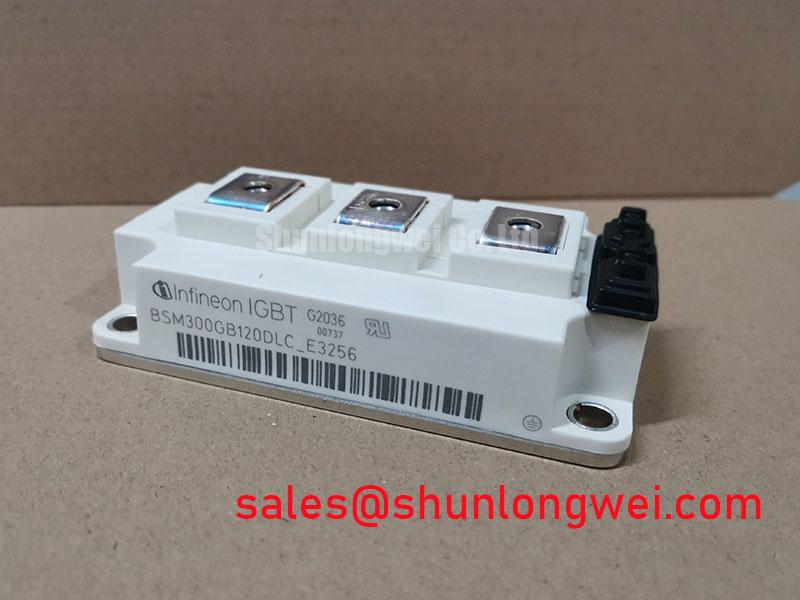
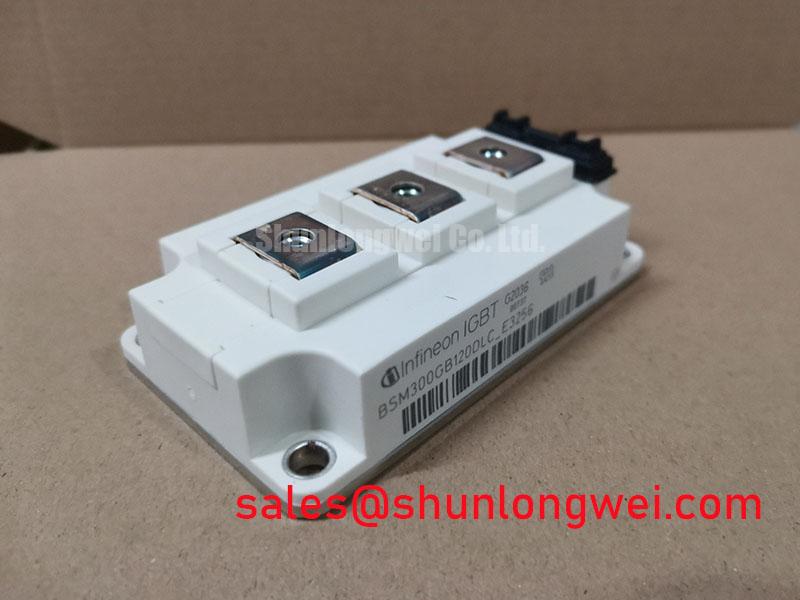
The BSM300GB120DLC_E3256 is a high-power N-channel IGBT module configured as a half-bridge, notable for its robust thermal performance and balanced electrical characteristics. It provides a reliable foundation for demanding power conversion systems by delivering efficient heat dissipation and dependable switching under high-current conditions. This makes it a strong candidate for high-power motor drives where consistent performance is critical.
- Core Specifications: 1200V | 300A (Tc=80°C) | VCE(sat) 2.7V (max)
- Key Advantages: Low thermal resistance for effective cooling, robust short-circuit withstand capability.
Download Official Datasheet (PDF)
Technical Analysis Focused on Thermal and Electrical Robustness
A key engineering aspect of the BSM300GB120DLC_E3256 is its thermal design, characterized by a low maximum thermal resistance from junction to case (RthJC) of 0.07 K/W per IGBT. This parameter can be visualized like the width of a pipe for heat flow; a lower value signifies a wider pipe, allowing heat to escape the semiconductor chip more efficiently. This superior thermal transfer minimizes junction temperature rise, a critical factor in preventing premature component failure and ensuring long-term operational reliability. Proper thermal management is fundamental to system longevity.
Electrically, the module provides a balanced performance profile. With a maximum collector-emitter saturation voltage (VCE(sat)) of 2.7V at its nominal current and 125°C, it manages conduction losses effectively. This is complemented by a robust short-circuit withstand time of at least 10 microseconds at a VCC of 600V. This level of ruggedness provides a critical safety margin against fault conditions, preventing catastrophic failures in demanding applications such as industrial drives and power supplies. For a deeper understanding of failure modes, explore this root cause analysis of IGBT failures.

Optimized Application Scenarios
The specific characteristics of this module make it well-suited for several high-power applications:
- Industrial Motor Drives: The 300A current rating and robust thermal performance reliably handle the high peak currents and continuous loads typical in AC motor control.
- Uninterruptible Power Supplies (UPS): The 1200V blocking voltage provides a necessary safety margin for inverter stages, while the half-bridge topology is a standard building block.
- Welding Power Supplies: The excellent short-circuit ruggedness (10µs minimum) is essential for withstanding the harsh electrical conditions often found in welding applications.
- Solar Inverters: Its efficiency and high voltage rating are suitable for central inverters in photovoltaic systems, ensuring reliable power conversion.
This module is an optimal match for medium-frequency power conversion systems requiring high reliability and efficient thermal management.
Key Specification Parameters for BSM300GB120DLC_E3256
| Parameter | Value | |
|---|---|---|
| Absolute Maximum Ratings | ||
| Collector-Emitter Voltage (VCES) | 1200 V | |
| Continuous Collector Current (IC) @ Tc = 80°C | 300 A | |
| Gate-Emitter Voltage (VGES) | ±20 V | |
| Operating Junction Temperature (Tj) | -40 to +150 °C | |
| IGBT Electrical Characteristics (Tj=125°C unless otherwise specified) | ||
| Collector-Emitter Saturation Voltage (VCE(sat)) @ IC=300A, VGE=15V | 2.2 V (typ), 2.7 V (max) | |
| Gate-Emitter Threshold Voltage (VGE(th)) | 5.0 to 6.5 V | |
| Diode Electrical Characteristics (Tj=125°C unless otherwise specified) | ||
| Forward Voltage (VF) @ IF=300A | 1.7 V (typ), 2.1 V (max) | |
| Thermal and Mechanical Characteristics | ||
| Thermal Resistance, Junction-to-Case (RthJC per IGBT) | 0.07 K/W (max) | |
| Thermal Resistance, Junction-to-Case (RthJC per Diode) | 0.13 K/W (max) | |
| Isolation Voltage (Visol) | 2500 V~ (RMS, t=1 min) | |
Engineer’s FAQ
Q: How do I use the RthJC value to select a heatsink for the BSM300GB120DLC_E3256?
A: The RthJC value (0.07 K/W for the IGBT) is the first step in thermal calculation. You must add it to the thermal resistance of your thermal interface material (RthCH) and the thermal resistance of the heatsink (RthHA). The total thermal resistance, multiplied by your calculated power losses, will determine the junction temperature rise. You must ensure the final junction temperature (Tj) remains below the 150°C maximum rating under worst-case operating conditions.
Q: What are the recommended mounting torque specifications?
A: The official datasheet specifies a mounting torque for the M6 mounting screws of 5 Nm. The M6 main terminals should also be tightened to a torque of 5 Nm. Applying the correct torque is critical for ensuring low thermal and electrical resistance without causing mechanical stress to the module’s isolated baseplate.
Q: What is the recommended on-state gate-emitter voltage (VGE)?
A: The datasheet defines the module’s primary characteristics, such as VCE(sat), at a VGE of +15V. While the gate threshold voltage is between 5.0V and 6.5V, operating with a gate voltage of +15V is recommended to ensure the IGBT is fully saturated and to minimize on-state conduction losses.
Design Enablement
The BSM300GB120DLC_E3256 offers a proven, high-performance solution for power electronics engineers. Its combination of high power handling, robust short-circuit protection, and efficient thermal dissipation provides the necessary tools to build reliable and effective power conversion systems.