FF1200R17KE3: A Technical Analysis of a High-Power IGBT Module
“`html
FF1200R17KE3: 1700V 1200A Dual IGBT Module Analysis
Introduction and Core Highlights
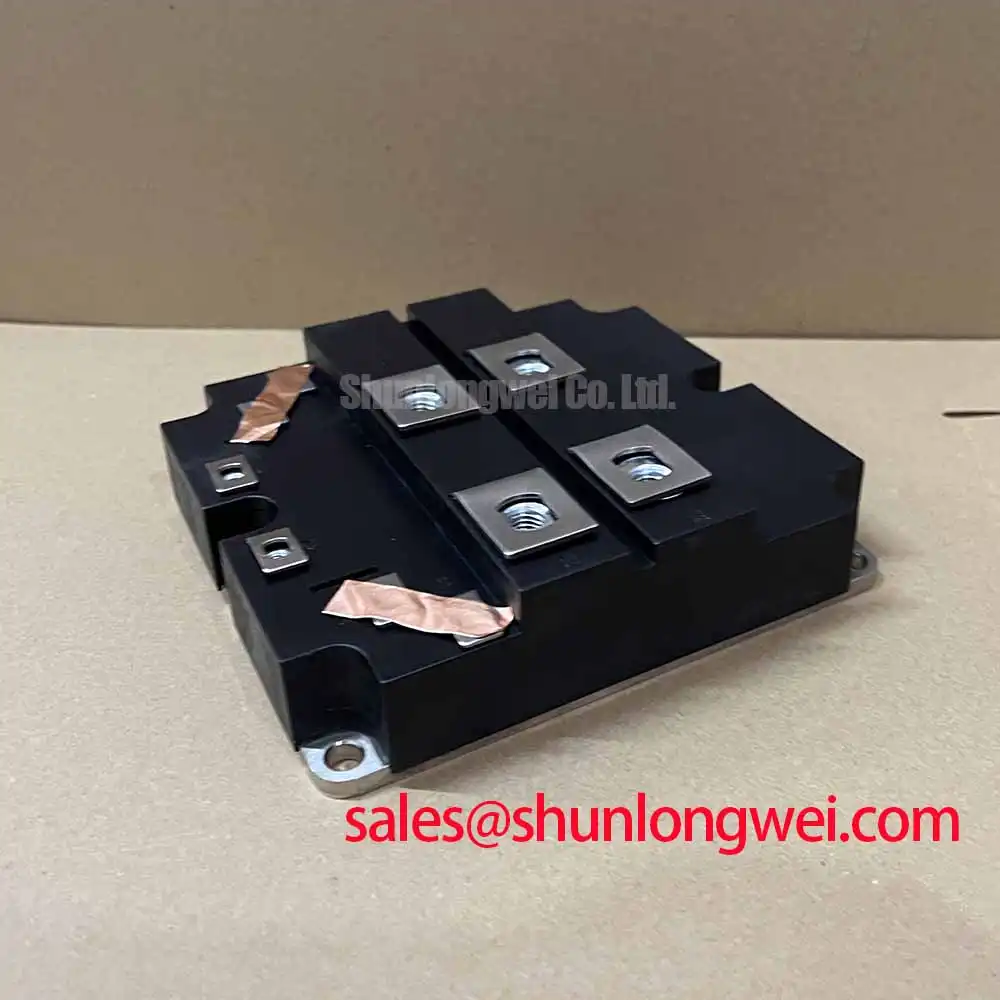
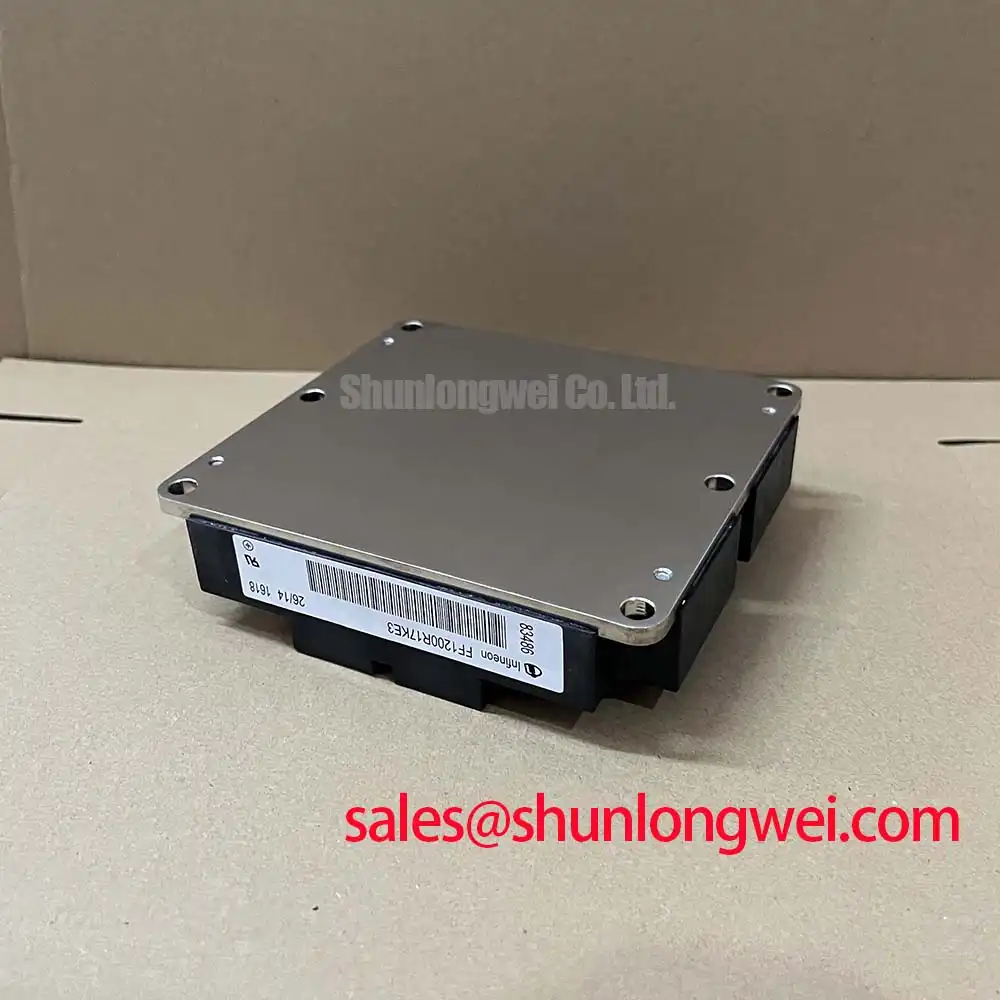
The Infineon FF1200R17KE3 is a high-power dual IGBT module that provides a robust solution for demanding power conversion systems. It leverages Infineon’s established IGBT3 technology, delivering a well-balanced performance profile for medium-frequency applications. The 1700V collector-emitter voltage offers a significant safety margin in systems with high DC-link voltages, enhancing overall system reliability by providing tolerance against voltage overshoots during switching events.
- Core Specifications: 1700V | 1200A | VCE(sat) (typ.) 2.40V at 125°C
- Key Engineering Benefits: High current capability for power-dense designs and proven technology for system reliability.
This module’s specifications make it a solid foundation for developing high-power inverters and drives where durability is paramount. For detailed specifications, download the official FF1200R17KE3 datasheet (PDF).

A Technical Analysis of the FF1200R17KE3’s Design
The FF1200R17KE3 is engineered around a high-current capacity of 1200A (IC nom), enabling its use in applications that require substantial power throughput, such as megawatt-class converters. The module’s foundation is Infineon’s IGBT3 technology, a well-regarded platform known for its robust performance in industrial environments. This technology provides a balanced trade-off between conduction losses, indicated by a typical collector-emitter saturation voltage (VCE(sat)) of 2.40V at its nominal current and an operating temperature of 125°C, and its switching losses. This balance makes it suitable for systems that do not require the extremely high switching frequencies achievable with newer technologies like SiC.
Effective thermal management is crucial for reliability in high-power modules. The FF1200R17KE3 datasheet specifies a thermal resistance from junction to case (RthJC) of 21.0 K/kW per IGBT. This parameter is a critical factor in heatsink design. Think of thermal resistance like the width of a hallway for heat trying to escape a crowded room. A lower value signifies a wider hallway, allowing heat to dissipate more easily. This module’s defined thermal pathway dictates the necessary performance of the cooling system to keep the device within its maximum operating junction temperature of 125°C.
Optimized Application Scenarios
The characteristics of the FF1200R17KE3 make it a strong candidate for several high-power industrial applications:
- Industrial Motor Drives: Its high continuous current rating of 1200A is well-suited for controlling large induction motors in manufacturing and processing plants.
- Wind Turbines: The 1700V blocking voltage provides a robust safety margin against grid-induced voltage spikes, a critical requirement for reliable wind turbine inverters.
- Power Transmission & Distribution: In medium voltage applications, its proven reliability and high power handling capacity support stable grid operations.
- Large-Scale UPS Systems: The ability to handle high currents ensures uninterrupted power for data centers and other critical facilities during power outages.
This module is best matched for high-power, medium-frequency systems where durability and a significant voltage safety margin are primary design requirements.
Key Electrical & Thermal Specifications
The following parameters are sourced directly from the official datasheet for the FF1200R17KE3. These figures are essential for system design and simulation.
| Key Parameters (Tvj = 25°C unless otherwise specified) | ||
|---|---|---|
| Parameter | Symbol | Value |
| Absolute Maximum Ratings | ||
| Collector-Emitter Voltage | VCES | 1700 V |
| Continuous DC Collector Current (TC = 80°C) | IC nom | 1200 A |
| Repetitive Peak Collector Current (tP = 1 ms) | ICRM | 2400 A |
| Gate-Emitter Peak Voltage | VGES | ±20 V |
| Characteristic Values | ||
| Collector-Emitter Saturation Voltage (IC = 1200A, VGE = 15V, Tvj = 125°C) | VCE sat | 2.40 V (typ.) |
| Gate Threshold Voltage (IC = 48.0mA) | VGE(th) | 5.2 V (min) to 6.4 V (max) |
| Turn-on Delay Time (Tvj = 125°C) | td on | 0.80 µs (typ.) |
| Turn-off Delay Time (Tvj = 125°C) | td off | 1.80 µs (typ.) |
| Thermal & Mechanical | ||
| Operating Junction Temperature | Tvj op | -40 to +125 °C |
| Thermal Resistance, Junction to Case (per IGBT) | RthJC | 21.0 K/kW |
Engineer’s FAQ
- How do I use the thermal resistance values for heatsink design?
- The datasheet provides RthJC (junction-to-case, 21.0 K/kW) and RthCH (case-to-heatsink, 17.0 K/kW). The total thermal resistance from junction to ambient is the sum of RthJC, RthCH, and the heatsink’s thermal resistance (RthHA). To keep the junction temperature below the 125°C maximum, you must select a heatsink with an RthHA low enough to dissipate the calculated power losses under your worst-case operating conditions.
- Is the FF1200R17KE3 a good choice for high-frequency applications?
- This module uses IGBT3 technology, which is optimized for low to medium switching frequencies, typically in the range of a few kilohertz. The switching energy losses (Eon and Eoff), which are 350 mJ and 445 mJ respectively at 125°C, become significant at higher frequencies, leading to excessive heat generation. For applications requiring switching frequencies above 15-20 kHz, modules based on newer technologies like IGBT7 or SiC would be more suitable.
- What is the maximum recommended operating junction temperature for this module?
- The maximum operating junction temperature (Tvj op) is specified as 125°C. For long-term reliability and to avoid accelerated aging, it is critical that the thermal design ensures the junction temperature remains below this limit during all operating conditions, including transients. Exceeding this temperature can degrade the module’s performance and lifespan.
Enabling High-Power System Reliability
The Infineon FF1200R17KE3 module provides engineers with a high-current, robustly specified component for building powerful and reliable converters. Its use of proven IGBT3 technology, combined with a 1700V rating, offers a dependable building block for industrial drive and renewable energy systems where long-term operational stability is a primary design goal. More information about power semiconductors can be found in our technical articles.
“`