Mitsubishi CM150DY-24H 1200V 150A Dual IGBT Module: Technical Features and Applications
Mitsubishi CM150DY-24H 1200V 150A Dual IGBT Module
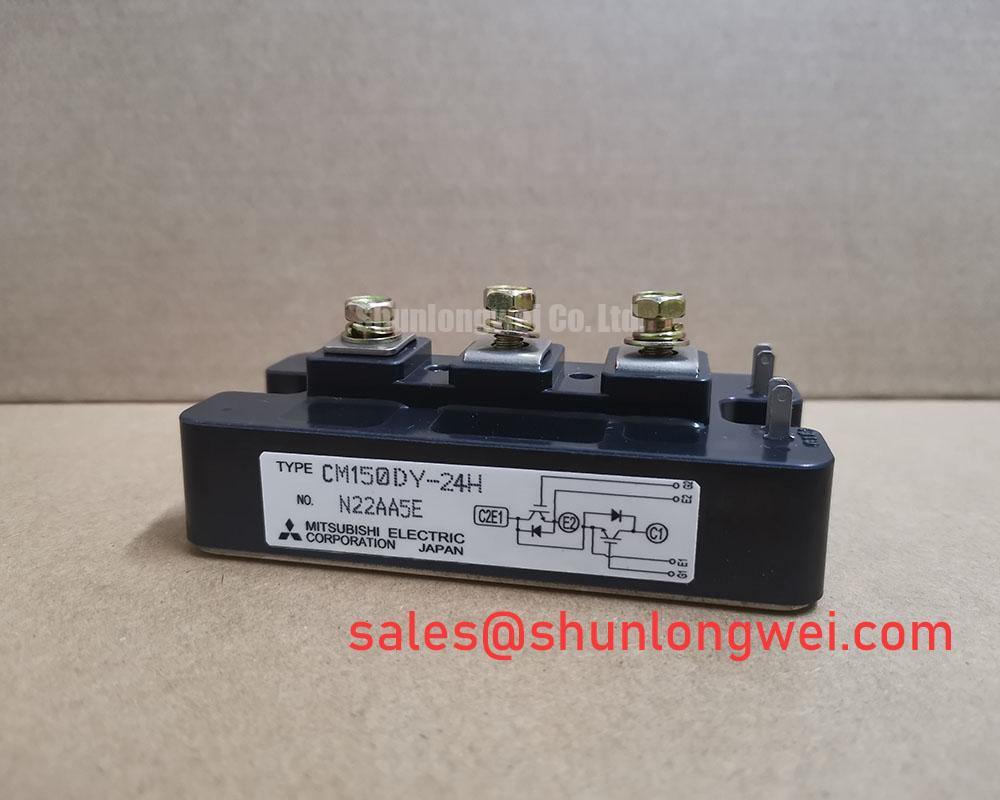
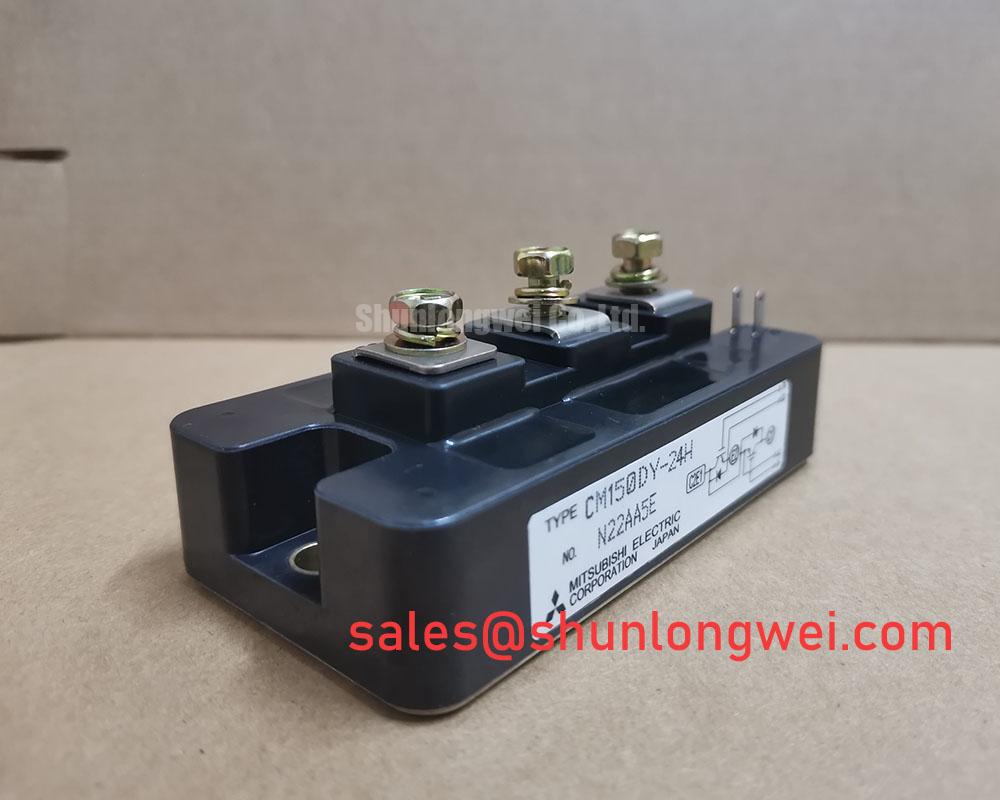
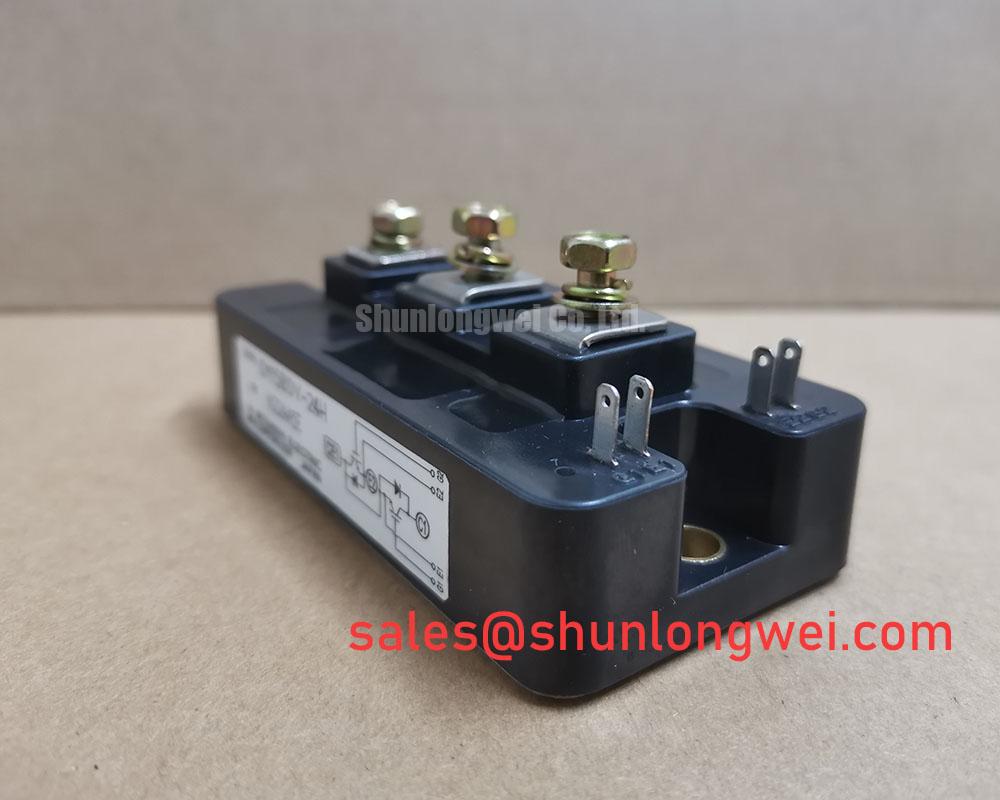
The Mitsubishi CM150DY-24H is a high-performance H-series Insulated Gate Bipolar Transistor (IGBT) module designed for robust industrial power switching. This dual configuration (half-bridge) module integrates two IGBTs and two fast-recovery free-wheel diodes into a single isolated package. By combining a 1200V rating with a 150A collector current capability, it delivers the power density required for sophisticated motor control and renewable energy systems. The H-series optimization focuses specifically on achieving a balance between low conduction losses and high-speed switching performance.
- Core Specifications: 1200V | 150A | VCE(sat) 2.4V (Typical at 25°C)
- Key Advantages: Minimized thermal management overhead and simplified gate drive requirements due to optimized capacitance.
Engineers often evaluate this module for its ability to handle high-frequency PWM switching. The H-series design significantly reduces turn-off switching losses (Eoff), making it highly effective for applications operating in the 5kHz to 15kHz range where efficiency is a critical design metric. For those looking to understand broader system impacts, exploring our guide on power semiconductors can provide additional context on integration.
Download Official Datasheet (PDF)

Technical Analysis of H-Series Efficiency
The conduction efficiency of the CM150DY-24H is defined by its typical saturation voltage (VCE(sat)) of 2.4V. In power electronics, this parameter represents the internal voltage drop across the collector and emitter when the device is fully turned on. Lower VCE(sat) values result in less energy being dissipated as heat during the conduction phase. This is particularly important for high-duty cycle operations where steady-state losses dominate the total power dissipation profile.
Thermal management is the cornerstone of reliability for the CM150DY-24H. The datasheet specifies a junction-to-case thermal resistance (Rth(j-c)) of 0.11°C/W for the IGBT part. You can think of thermal resistance as the width of a heat pipe; a lower value means heat can flow away from the silicon die more easily. This low resistance allows the module to maintain a stable operating temperature even under heavy current loads. This prevents the junction from exceeding the absolute maximum rating of 150°C. Proper thermal design and Zth curve analysis are essential for maximizing the lifespan of the module.
Furthermore, the switching characteristics of this H-series module are tailored for modern drive requirements. The turn-off time (toff) is approximately 0.6 microseconds, which facilitates tight dead-time control in half-bridge topologies. This responsiveness reduces the risk of shoot-through currents and allows for more precise control in sensitive applications like servo drives. Understanding these dynamics helps engineers avoid common IGBT failure modes associated with poor switching synchronization.
Optimized Application Scenarios
The CM150DY-24H is effectively utilized across various high-power industrial platforms:
- Variable Frequency Drives (VFDs): Its dual configuration and 150A rating make it a standard choice for medium-power motor control. It relies on its high-speed switching to provide smooth torque control.
- Solar Inverters: The 1200V rating provides the necessary safety margin for high DC bus voltages common in string inverters. The isolated baseplate simplifies the mounting of multiple units to a single heatsink.
- Uninterruptible Power Supplies (UPS): Fast switching ensures a rapid response to power anomalies, maintaining critical load stability.
- Servo Drives: High precision and low parasitic capacitance enable the fast current loops required for robotic motion control.
This module provides an ideal balance for engineers requiring a half-bridge topology that maintains high efficiency across a wide range of switching frequencies.
Key Specifications Table
| Parameter | Symbol | Value/Condition |
|---|---|---|
| Collector-Emitter Voltage | VCES | 1200V |
| Collector Current (DC) | IC | 150A (Tc = 25°C) |
| Collector Power Dissipation | PC | 1100W |
| Saturation Voltage (Typ) | VCE(sat) | 2.4V (IC=150A, Tj=25°C) |
| Gate-Emitter Threshold | VGE(th) | 4.5V – 7.5V |
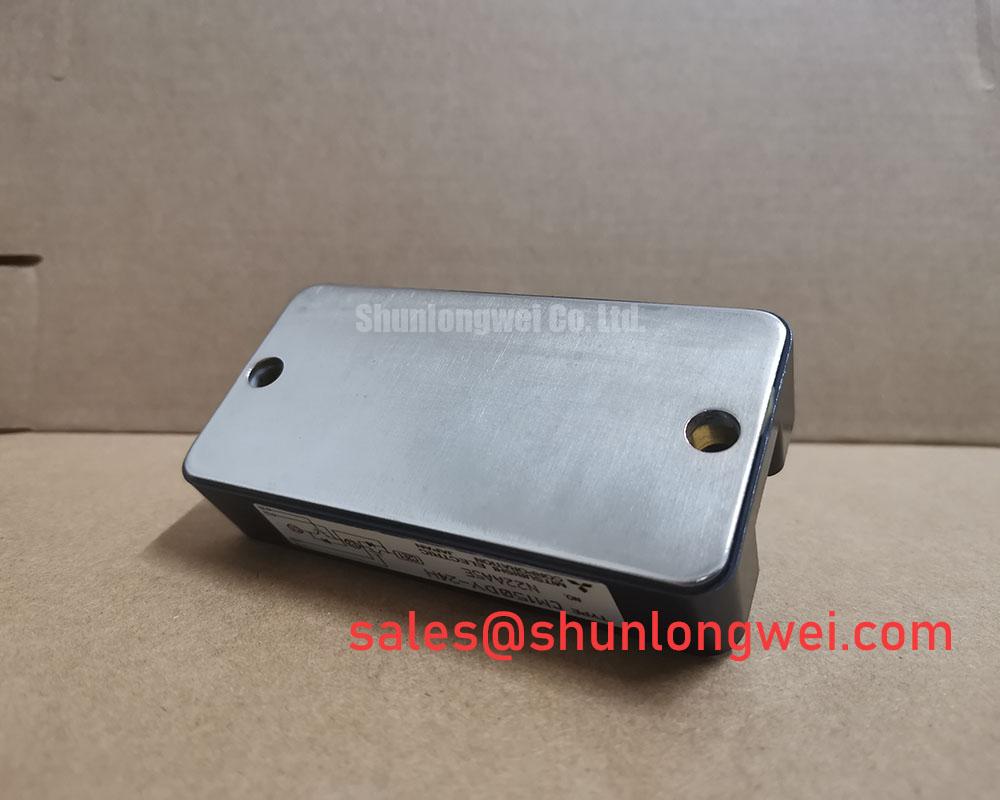
| Isolation Voltage | Viso | 2500V (AC, 1 min) |
Engineer FAQ
Q: What is the recommended gate drive voltage for the CM150DY-24H?
A: Based on the electrical characteristics, a nominal gate voltage (VGE) of +15V is typical for turn-on to minimize conduction losses. A negative bias of -5V to -10V is often used for turn-off to ensure immunity against Miller-effect induced parasitic turn-on.
Q: How do I calculate the heatsink requirements for a 150A load?
A: You must sum the thermal resistance of the junction-to-case (0.11°C/W) and the case-to-sink (typically 0.035°C/W with thermal compound). Multiply this total resistance by the calculated power dissipation to ensure the junction temperature remains below 150°C under worst-case ambient conditions.
Q: Does this module include internal short-circuit protection?
A: The CM150DY-24H is a standard IGBT module and does not include active protection circuitry. It requires external monitoring via desaturation detection or current sensing in the gate driver to protect against short-circuit events within the rated 10-microsecond withstand time.
The Mitsubishi CM150DY-24H represents a reliable building block for high-voltage industrial systems. By leveraging the specific characteristics of the H-series silicon, engineers can achieve significant efficiency gains in half-bridge converters and inverter stages. Its isolated packaging and documented thermal performance provide a predictable path toward achieving rigorous design goals in demanding industrial environments.