Infineon FF1400R12IP4: Technical Analysis for High-Power System Design
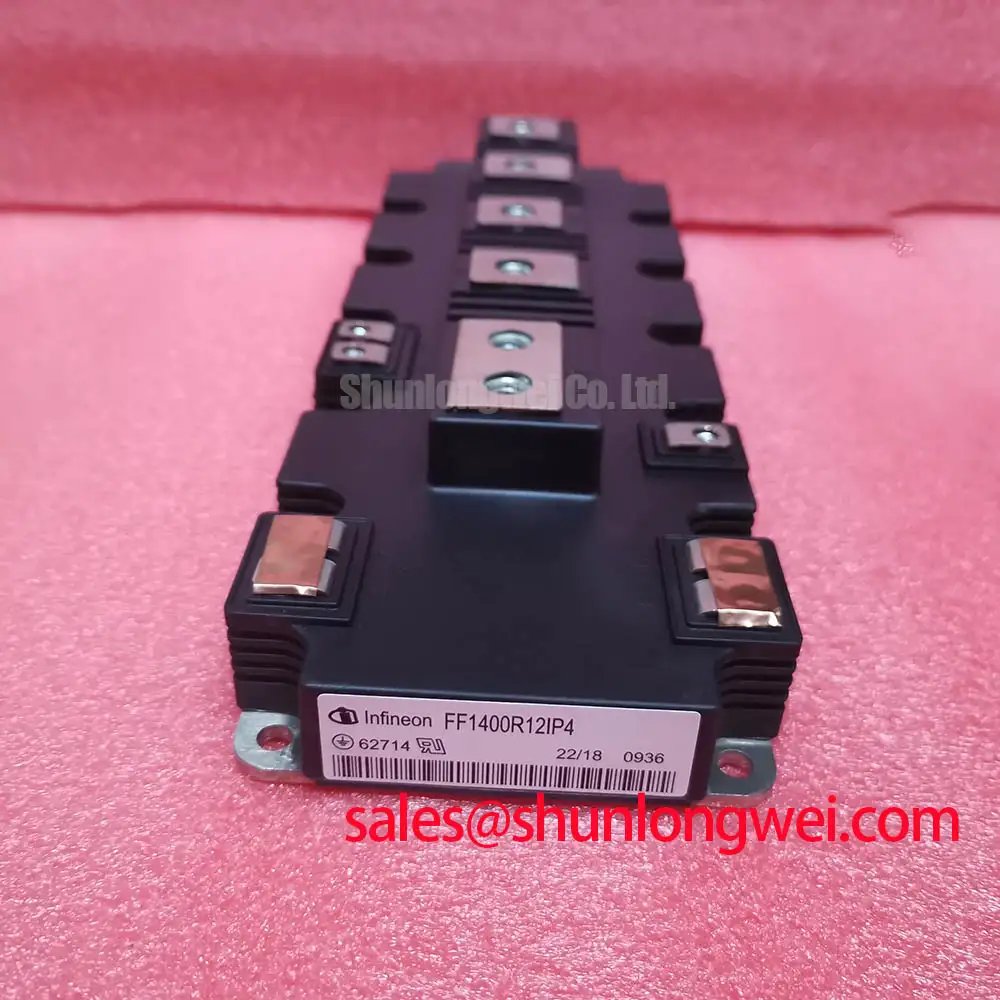
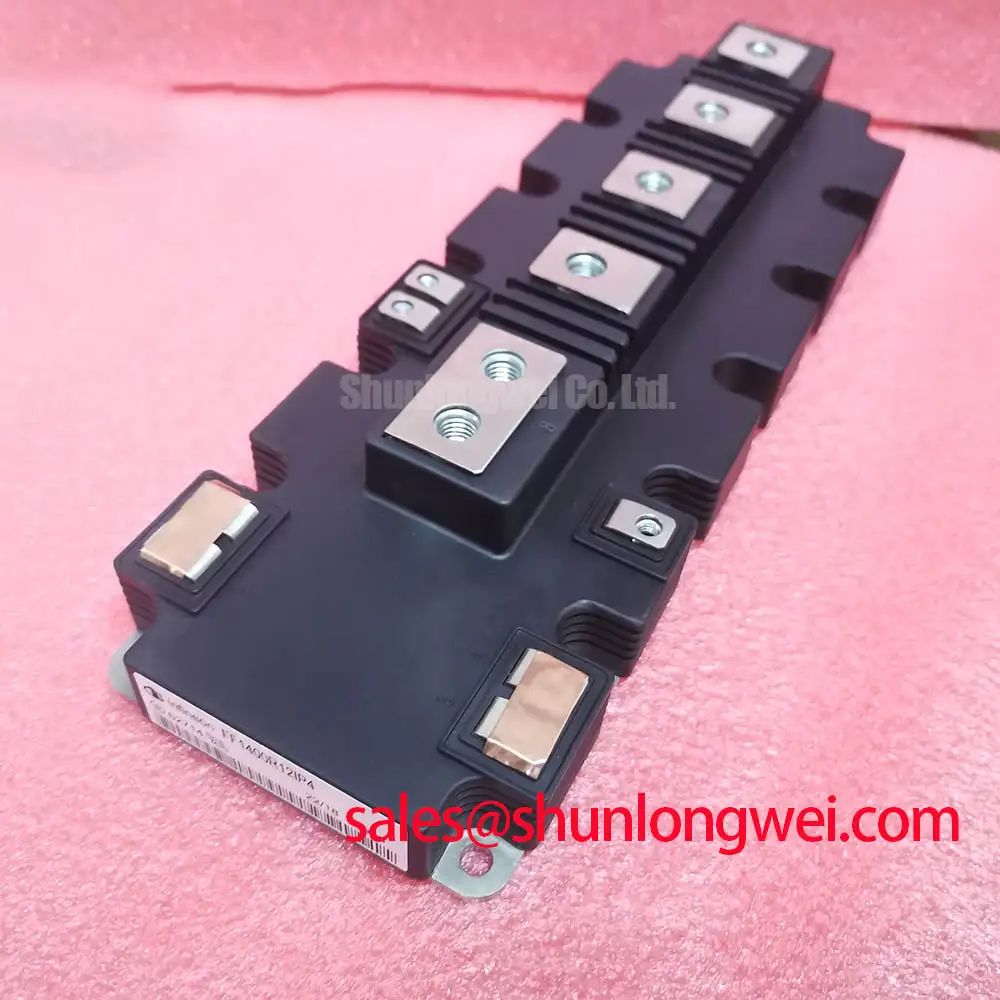
Infineon FF1400R12IP4 1200V 1400A PrimePACK™ Module
Technical Introduction to the FF1400R12IP4 IGBT Module
The Infineon FF1400R12IP4 is a high-power IGBT module engineered for demanding power conversion systems, delivering substantial current handling capacity with optimized efficiency. This module integrates Trench/Fieldstop IGBT4 and Emitter Controlled 4 diode technologies within a single PrimePACK™ 3 package. It provides a robust solution for managing high-power applications by combining high current density with effective thermal management. The positive temperature coefficient of its saturation voltage is a key feature for enabling reliable parallel operation of multiple modules.
- Core Specifications: 1200V | 1400A | VCE(sat) (typ.) 1.75V
- Key Strengths: High current density, excellent thermal performance
- Engineering Value: Facilitates simplified thermal design, enables robust parallel configurations
For detailed specifications and performance curves, refer to the official FF1400R12IP4 datasheet (PDF).
Technical Analysis for Power System Design
The FF1400R12IP4 is built around Infineon’s Trench/Fieldstop IGBT4 technology, which provides a low collector-emitter saturation voltage (VCE(sat)) of 1.75V (typical) at its nominal current. This characteristic directly translates to lower conduction losses during operation, a critical factor in high-current applications. Reduced power loss minimizes waste heat generation, which can lead to smaller heatsink requirements and improved overall system efficiency. For a deeper understanding of IGBT losses, see this guide on the quest for lower IGBT VCE(sat).
Effective thermal management is further supported by the module’s low thermal resistance. The thermal resistance from junction to case (RthJC) for the IGBT is specified at 0.0195 K/W. This parameter can be visualized as the width of a pipe for heat flow; a lower value indicates a wider pipe, allowing heat to escape more easily from the semiconductor junction to the heatsink. This efficient heat transfer is essential for maintaining the junction temperature within safe operating limits, which is fundamental to long-term reliability. An integrated NTC sensor provides a direct method for temperature monitoring.
Optimized Application Scenarios
The electrical and thermal characteristics of the FF1400R12IP4 make it a suitable component for a range of high-power industrial systems.
- High-Power Converters: Its 1400A nominal current rating provides the capacity required for central inverters in utility-scale renewable energy projects and industrial power conversion.
- Motor Drives: The module’s robustness and high power density are well-suited for controlling large industrial motors in applications like manufacturing, pumping stations, and compressors.
- Wind Turbines: The ability to handle high currents and operate reliably under demanding thermal cycles is critical for the power conversion stage in wind energy systems.
- Uninterruptible Power Supplies (UPS): For large-scale UPS systems, the FF1400R12IP4 ensures reliable power switching and high efficiency, critical for data centers and industrial backup power.
This IGBT module is best matched for applications requiring over 1000A of continuous current at 1200V with a focus on high efficiency and thermal stability.
Key Specifications of the FF1400R12IP4
| Absolute Maximum Ratings (Tvj = 25°C unless otherwise specified) | ||
|---|---|---|
| Parameter | Symbol | Value |
| Collector-Emitter Voltage | VCES | 1200 V |
| Continuous DC Collector Current (TH = 60°C) | IC nom | 1400 A |
| Repetitive Peak Collector Current (tP = 1 ms) | ICRM | 2800 A |
| Gate-Emitter Peak Voltage | VGES | ±20 V |
| IGBT, Inverter – Characteristic Values | ||
| Collector-Emitter Saturation Voltage (IC = 1400A, VGE = 15V, Tvj=25°C) | VCE sat | 1.75 V (typ.) |
| Gate Threshold Voltage (IC = 49.0 mA, VCE = VGE) | VGE(th) | 5.8 V (typ.) |
| Thermal Resistance, Junction to Case | RthJC | 0.0195 K/W |
Engineer’s Frequently Asked Questions
What are the primary considerations for the thermal design when using the FF1400R12IP4?
The thermal design must effectively manage the heat generated from conduction and switching losses. Key datasheet values are the thermal resistance from junction to case (RthJC) and case to heatsink (RthCH). Proper mounting on a heatsink with an appropriate Thermal Interface Material (TIM) is critical to minimize RthCH and keep the junction temperature below the maximum rating of 150°C. For more on this, read about mastering IGBT thermal design.
Can multiple FF1400R12IP4 modules be connected in parallel for higher current output?
Yes, paralleling is a primary application for this module. The FF1400R12IP4 features a positive temperature coefficient for VCE(sat), which is essential for ensuring balanced current sharing among parallel modules. As a module heats up, its on-state voltage increases slightly, naturally directing current to cooler, less resistive modules. A symmetrical busbar layout is also necessary to minimize stray inductance and ensure proper dynamic current sharing.
What is the function of the integrated NTC thermistor?
The integrated NTC (Negative Temperature Coefficient) thermistor provides a means for real-time temperature monitoring of the module’s baseplate. This data can be fed back to the control system to trigger thermal warnings, implement power derating, or initiate an emergency shutdown if the temperature exceeds safe limits, which is a key element of IGBT module safety and reliability.
What are the mounting and terminal torque specifications?
According to the datasheet, the mounting screws for the module require a torque of 5.0 Nm ± 15%, and the main terminals (M8) require a torque of 10.0 Nm ± 15%. Adhering to these specifications is vital to ensure low-resistance electrical connections and optimal thermal contact with the heatsink without causing mechanical stress to the module.
Enabling High-Power System Reliability
The FF1400R12IP4 provides the high-current capability and thermal efficiency required by engineers developing next-generation inverters, motor drives, and power converters. Its use of proven IGBT4 technology within the industry-standard PrimePACK™ housing offers a dependable foundation for systems where performance and reliability are critical operational requirements.