Innolux AT070TN83 V1: A Technical Review of the 7-inch Parallel RGB Display
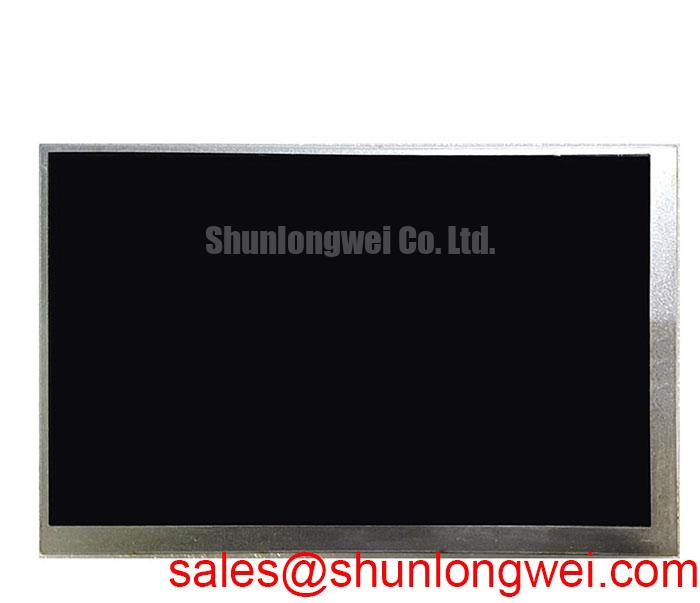
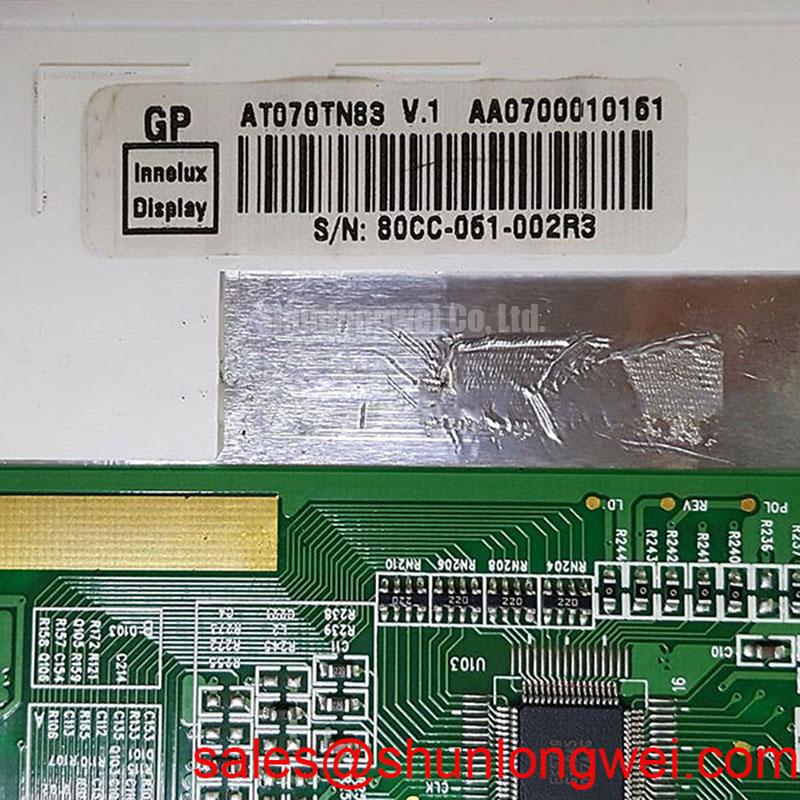
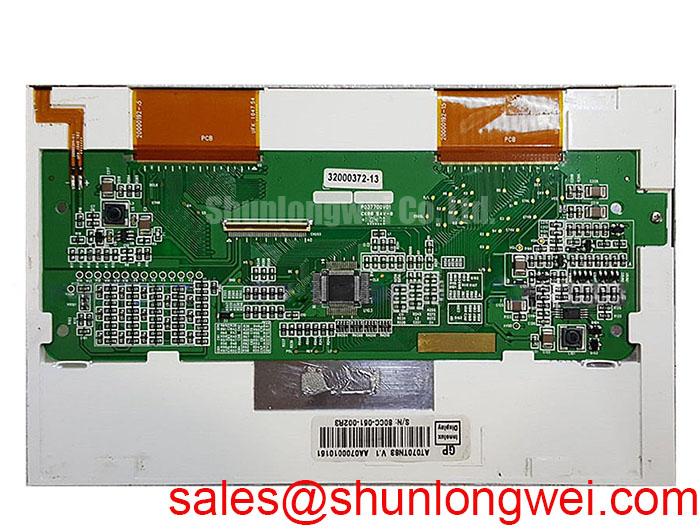
Innolux AT070TN8-V1 7-inch WVGA TFT LCD Module
Introduction and Core Highlights
The Innolux AT070TN83 V1 is a 7.0-inch TFT-LCD module delivering a clear 800×480 WVGA resolution. Its defining feature is a standard 18-bit parallel RGB digital interface, which enables direct connection to a wide range of microcontrollers and processors. This simplifies hardware architecture and streamlines the development process for graphical user interfaces. The module’s balanced performance metrics make it a reliable choice for consistent visual output in various embedded systems.
- Core Specifications: 7.0-inch | 800×480 (WVGA) | Parallel RGB Interface
- Key Advantages: Facilitates direct processor connection, proven design for reliability.
This display is a strong candidate for systems needing a “7-inch 800×480 parallel RGB display” that is straightforward to integrate without requiring complex interface conversion hardware.
Download Official Datasheet (PDF)
Technical Analysis
The primary engineering advantage of the AT070TN83 V1 is its parallel RGB interface. This interface transmits red, green, and blue data simultaneously along with timing signals like dot clock (DCLK), horizontal sync (HSYNC), and vertical sync (VSYNC). This direct-drive approach eliminates the need for LVDS or MIPI converter chips, reducing both the bill of materials (BOM) cost and PCB complexity. For engineers working with processors that have an integrated TFT controller, this module offers a near plug-and-play hardware solution for adding a graphical output.
The display’s optical performance is well-suited for its intended applications. With a typical brightness of 250 cd/m² and a 500:1 contrast ratio, it produces clear and legible content for indoor environments. The contrast ratio can be thought of as the display’s ability to distinguish between its deepest blacks and brightest whites. A 500:1 ratio ensures that text, icons, and graphical elements are well-defined, which is critical for user interfaces where clarity is paramount. The TN panel technology provides fast response times, a key factor in reducing motion blur for dynamic content. Explore more on the fundamentals of LCD core technology.
Optimized Application Scenarios
The specifications of the AT070TN83 V1 make it a practical choice for several applications:
- Industrial HMI (Human-Machine Interface): The 7-inch size and 800×480 resolution are a standard in many industrial control panels, and the parallel interface connects directly to common industrial SoCs.
- Portable Instrumentation: Its specified power consumption and standard interface are well-suited for battery-powered or portable test and measurement devices.
- Home Automation and Appliances: Provides a cost-effective way to add a clear graphical display to smart thermostats, security panels, and high-end kitchen appliances.
- Embedded Systems Development: Serves as a reliable and easy-to-implement display for prototyping and production of various embedded projects.
This module is an optimal match for systems requiring a proven, cost-effective display with a direct-drive parallel RGB interface for rapid development.
Key Specification Parameters
| Panel Specifications | |
|---|---|
| Screen Size | 7.0 inches |
| Resolution | 800(RGB) x 480 (WVGA) |
| Active Area | 152.4(W) x 91.44(H) mm |
| Module Size | 165(W) x 104(H) x 5.5(D) mm |
| Display Mode | TN, Normally White, Transmissive |
| Optical and Electrical Characteristics | |
| Luminance | 250 cd/m² (Typ.) |
| Contrast Ratio | 500:1 (Typ.) |
| Viewing Angle | 70°/70°/50°/60° (L/R/U/D) |
| Interface | Digital RGB (6-bit/channel) |
| Supply Voltage (VCC) | 3.3V (Typ.) |
| Operating Temperature | -10°C to +60°C |
Note: All specifications are based on the official AT070TN83 V.1 datasheet. Engineers should consult the datasheet for complete and up-to-date information.
Engineer’s FAQ
1. What are the key timing parameters for the AT070TN83 V1’s parallel RGB interface?
The display supports both SYNC mode (using HSYNC and VSYNC) and DE-only mode. For typical operation in SYNC mode, the dot clock (DCLK) frequency is 33.3 MHz. The horizontal period (H total) is 1056 clocks, and the vertical period (V total) is 525 lines.
2. How is the LED backlight driven on this module?
The backlight consists of white LEDs and requires an external driver circuit. The LED power supply voltage (VLED) should be between 4.5V and 5.5V. Brightness can be controlled via a PWM signal applied to the ADJ pin, with a recommended frequency range of 100Hz to 25kHz.
3. What is the expected power consumption of the AT070TN83 V1?
The datasheet specifies the panel’s logic power consumption at approximately 0.825W (VCC @ 3.3V, Icc @ 250mA Typ.). The backlight power consumption is typically 2.5W (VLED @ 5.0V, ILED @ 500mA Typ.). Total power consumption should be calculated based on the final application’s brightness settings.
4. What are the mounting requirements for this display?
The module’s mechanical drawing in the datasheet shows four mounting holes on the metal bezel. These should be used to securely fasten the display to the system chassis. It is important to avoid applying excessive stress or torque to the display to prevent damage to the glass or bezel.
Design and Integration
The AT070TN83 V1 is engineered for straightforward implementation in systems requiring reliable visual output. Its combination of a standard WVGA resolution, a direct-drive parallel interface, and well-documented electrical characteristics provides a solid foundation for industrial and consumer electronics. By minimizing external interface components, this module enables engineers to focus on application-level software and deliver a robust final product efficiently.