Optrex DMF5005N-SEW-ABE-CP: A Technical Review for Simplified HMI Integration
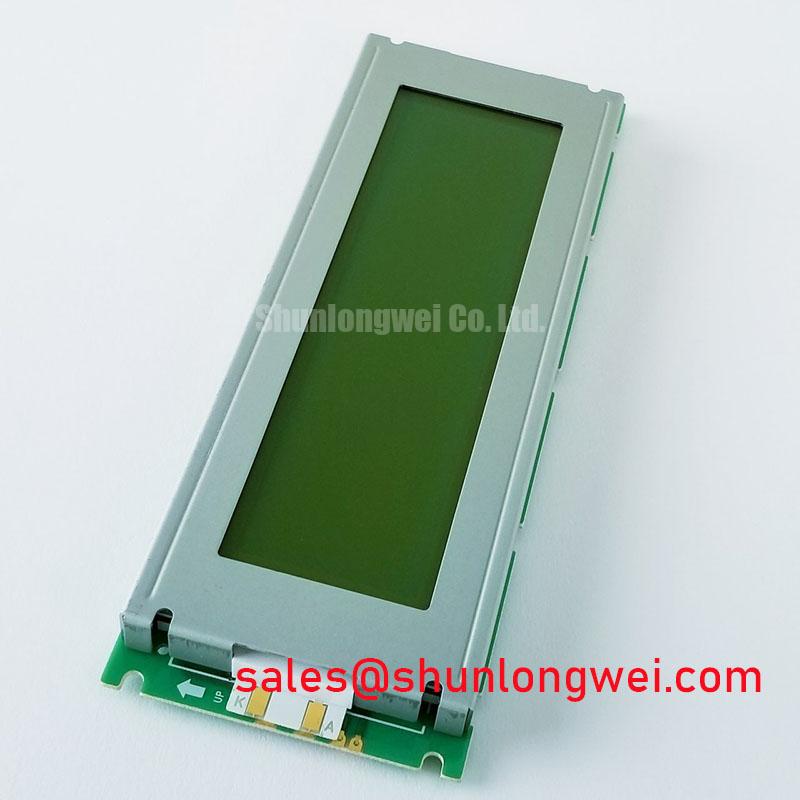
Optrex DMF5005N-SEW-ABE-CP 240×64 STN Graphic LCD Module
Introduction and Core Highlights
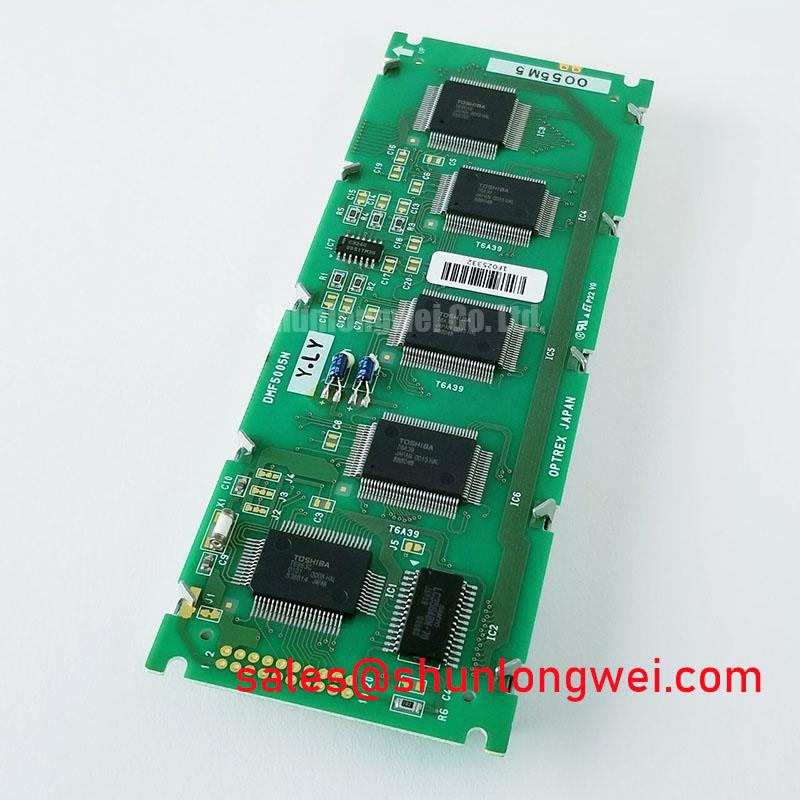
The Optrex DMF5005N-SEW-ABE-CP is a 240×64 F-STN graphic display module engineered to streamline Human-Machine Interface (HMI) integration. Its primary value for design engineers lies in the onboard Toshiba T6963C controller, which manages display operations and simplifies the connection to an 8-bit microprocessor, reducing host system overhead. Combined with a high-contrast monochrome display and an integrated LED backlight, this module provides a comprehensive solution for clear information delivery in industrial equipment.
- Core Specifications: 240 x 64 Dots | Integrated T6963C Controller | White S-E LED Backlight
- Key Advantages: Simplifies hardware and software design via the built-in controller. Delivers excellent readability in various lighting conditions.
For detailed specifications and interface timing, you can download the official datasheet (PDF).

Technical Analysis for System Integration
Integrated T6963C Controller for Simplified Design
The integration of the Toshiba T6963C controller is a significant feature of the DMF5005N-SEW-ABE-CP. This controller acts as a dedicated graphics processor, handling tasks like RAM management, character generation, and cursor control. By offloading these functions from the host microcontroller (MCU), engineers can use less powerful MCUs or allocate more processing power to primary application tasks. The standard 8-bit parallel interface simplifies the hardware connection and is a well-established protocol for embedded systems, accelerating the development cycle.
Visual Performance with F-STN and LED Backlighting
The module utilizes Film-compensated Super-twisted Nematic (F-STN) technology, which provides a notable improvement in visual clarity over standard STN displays. The datasheet specifies a typical contrast ratio of 8:1, ensuring that text and graphics are sharp and distinct. Think of the contrast ratio as the legibility of black text on a white page; a higher ratio makes the information easier to read quickly and accurately. This is complemented by the side-edge white LED backlight, which provides bright, even illumination across the 132.0 x 39.0 mm viewing area, maintaining readability in low-light industrial environments.
Optimized Application Scenarios
The specific feature set of the DMF5005N-SEW-ABE-CP makes it a strong candidate for several applications:
- Industrial Control Panels: The 240×64 resolution is well-suited for displaying system status, diagnostic menus, and operational parameters, while the integrated controller simplifies the interface with a Programmable Logic Controller (PLC).
- Test and Measurement Equipment: Capable of rendering numerical readouts, simple waveforms, and user instructions with high clarity, essential for precision instruments.
- Medical Instrumentation: Ideal for user interfaces on devices like infusion pumps or diagnostic equipment where clear, unambiguous monochrome data presentation is required.
- Network Hardware: Can serve as a status display on rack-mounted equipment such as routers or servers, showing IP addresses, traffic data, or error codes.
This module is an optimal match for microprocessor-based systems requiring a straightforward, reliable graphic HMI with minimal external driver components.
Key Specifications of the DMF5005N-SEW-ABE-CP
| Display Characteristics | |
|---|---|
| Display Type | F-STN LCD, Black & White (Monochrome) |
| Resolution | 240 x 64 dots |
| Viewing Area | 132.0 mm (W) x 39.0 mm (H) |
| Dot Size | 0.49 mm x 0.49 mm |
| Contrast Ratio (Typ.) | 8:1 |
| Electrical & Interface Characteristics | |
| Onboard Controller | Toshiba T6963C or compatible |
| Logic Supply Voltage (Vcc) | 5.0V (Typ.) |
| LCD Driving Voltage (Vcc-Vee) @ 25°C | 13.0V (Typ.) |
| Backlight Type | Side-Edge White LED |
| Mechanical & Environmental | |
| Module Dimensions | 180.0 mm (W) x 65.0 mm (H) x 12.0 mm (D) |
| Operating Temperature | 0°C to +50°C |
| Storage Temperature | -20°C to +60°C |
Engineer FAQ
How do you interface with the onboard T6963C controller?
The T6963C uses a standard 8-bit parallel data bus (D0-D7) along with control lines such as Chip Select (CE), Read (RD), Write (WR), and Command/Data (C/D). The typical process involves checking the controller’s status register to ensure it’s not busy before sending a command or data byte. A variety of open-source libraries and application notes are available for different microcontroller platforms.
What are the power supply requirements?
The module requires a +5V supply for its logic circuits (Vcc). A separate, negative voltage (Vee) is also required to generate the specified LCD driving voltage (Vcc-Vee), which is typically 13.0V at room temperature for optimal contrast. The LED backlight requires its own power source, detailed in the datasheet.
What determines the viewing direction for this module?
The datasheet specifies the optimal viewing direction based on a clock-face analogy. For this module, the optimal viewing angle is typically specified for a certain direction (e.g., 6 o’clock or 12 o’clock). This means the highest contrast is achieved when viewing the display from that angle, a key consideration when designing the product enclosure and mounting orientation.
Are there any specific power sequencing requirements to prevent damage?
Yes, the datasheet specifies a critical power-on and power-off sequence. Typically, the logic voltage (Vcc) must be stable before the LCD driving voltage (Vee) is applied. Reversing this sequence can apply a DC voltage to the liquid crystal, which may degrade its performance over time. Refer to the timing diagrams in the official datasheet for precise requirements.
Enabling Clear and Efficient HMI Design
The DMF5005N-SEW-ABE-CP provides a robust and practical foundation for adding graphical feedback to industrial instrumentation and control systems. Its architecture, centered on the integrated T6963C controller and a high-visibility F-STN panel, allows engineering teams to focus on application-level software rather than low-level display control, enabling faster development of effective user interfaces. For more insights into display technologies, explore our resources on LCD core technology and best practices for achieving vibration and shock resistance for industrial displays.