Infineon FP35R12W2T4: An Integrated H-Bridge for Efficient Power Conversion
FP35R12W2T4 1200V 35A H-Bridge IGBT Module
Introduction and Core Highlights
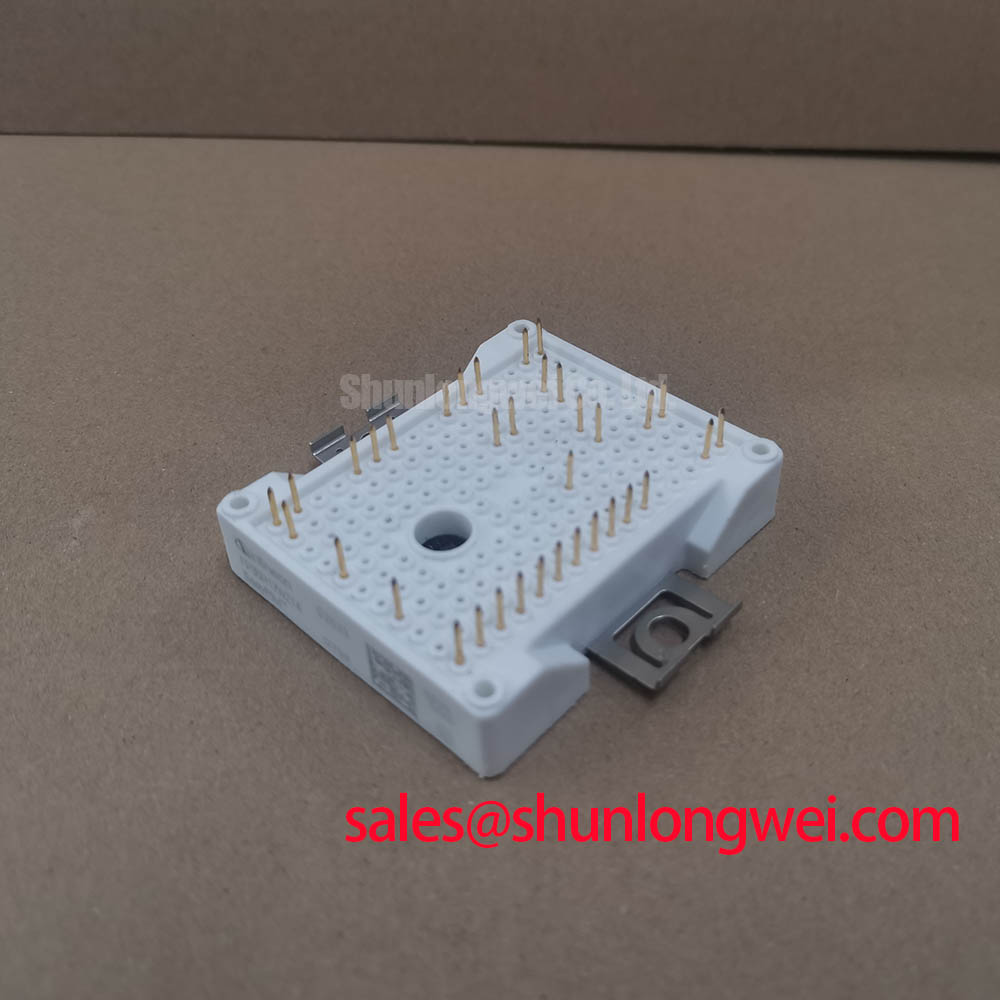
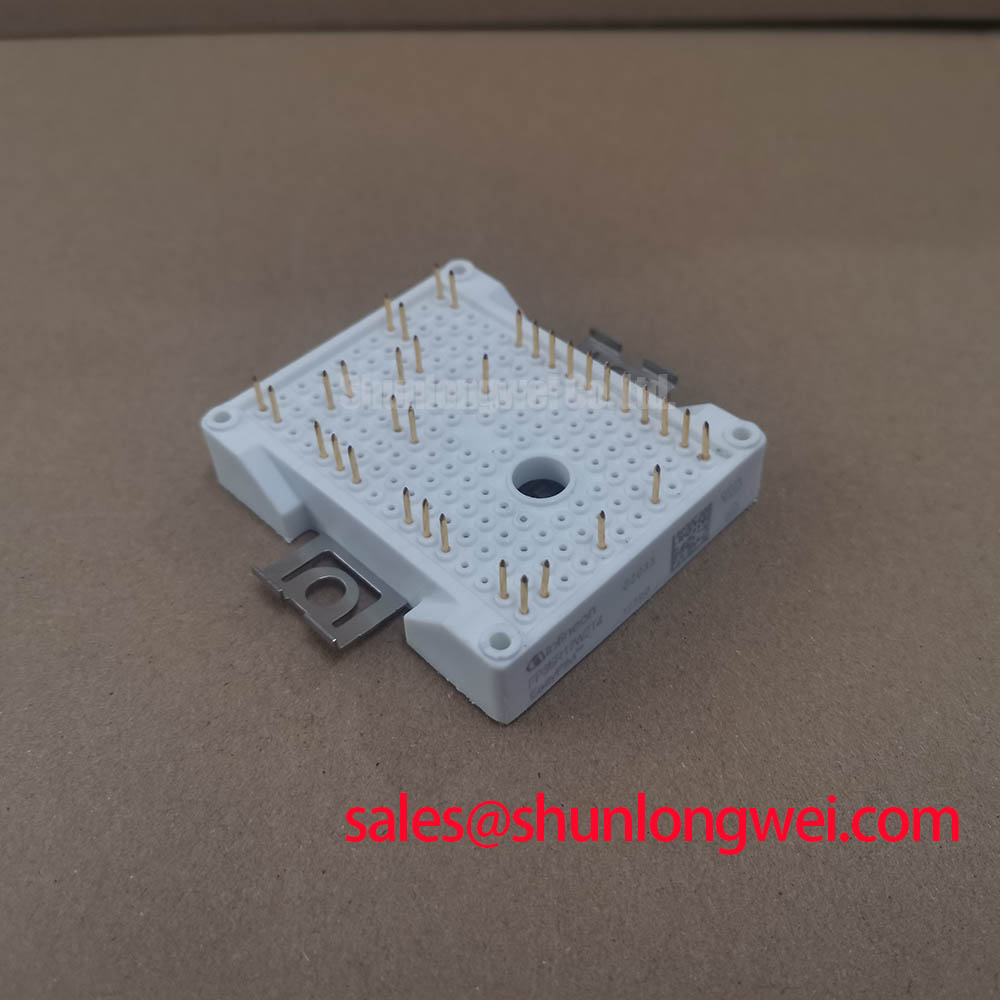
The Infineon FP35R12W2T4 is a power module that integrates a complete H-Bridge (four-pack) configuration within a single EasyPIM™ 2 package. This module leverages Infineon’s robust TRENCHSTOP™ IGBT4 and an emitter-controlled diode, creating a solution that balances conduction and switching efficiency. It is engineered for constructing compact and thermally manageable power stages for single-phase inverters and four-quadrant DC drives. The inclusion of an integrated NTC thermistor provides a direct path for temperature monitoring, enhancing system-level protection and operational awareness.
- Core Specifications: 1200V | 35A | VCE(sat) 1.90V (typ.)
- Key Advantages:
- Integrated H-Bridge topology simplifies PCB layout and reduces component count.
- Low VCE(sat) minimizes conduction losses and eases thermal management.
For detailed electrical characteristics, thermal properties, and mechanical drawings, refer to the official documentation.
Download Official FP35R12W2T4 Datasheet (PDF)

Technical Analysis of Core Features
The engineering value of the FP35R12W2T4 is rooted in its blend of integration and proven semiconductor technology. The use of TRENCHSTOP™ IGBT4 results in a collector-emitter saturation voltage (VCE(sat)) of just 1.90V at its nominal 35A current (at Tvj=25°C). This low on-state voltage directly reduces the power lost as heat during conduction (P = VCE(sat) * IC), which simplifies the thermal design of the entire system. A lower heat load allows engineers to specify smaller, more cost-effective heatsinks or to operate at a higher output current for a given cooling solution.
The module’s H-Bridge (or “four-pack”) topology is a key differentiator. By integrating four IGBTs and four corresponding freewheeling diodes into a single EasyPIM™ package, the module replaces multiple discrete components. This integration significantly reduces the complexity of the power stage PCB, minimizes stray inductance between switches, and shrinks the overall physical footprint of the inverter. Reduced stray inductance is particularly important for mitigating voltage overshoots during high-speed switching events, contributing to improved system reliability and lower EMI.
Effective thermal management is further supported by the module’s low thermal resistance and integrated NTC thermistor. The thermal resistance from the IGBT junction to the case (RthJC) is specified at 0.53 K/W per switch. This can be pictured as the width of a pipe; a lower value means a wider pipe, allowing heat to flow more easily from the active silicon to the heatsink. The built-in NTC acts as a precise temperature sensor, providing the control system with real-time feedback. This data enables the implementation of protective measures, such as derating the output power or triggering a shutdown, to prevent the module from exceeding its maximum operating junction temperature of 150°C. For more on this, see our guide to the role of the integrated NTC in IGBT reliability.
Optimized Application Scenarios
The specific characteristics of the FP35R12W2T4 make it a strong candidate for several power conversion applications:
- Four-Quadrant DC Motor Drives: The native H-bridge topology is ideal for controlling the speed and direction of DC motors, including regenerative braking where energy is returned to the DC link.
- Single-Phase Solar Inverters: Serves as the core DC-to-AC conversion stage, with the 1200V rating providing ample margin for typical photovoltaic array voltages.
- Uninterruptible Power Supplies (UPS): Forms the fundamental building block for the inverter stage in online UPS systems, generating a clean AC output from the DC battery bus.
- Welding Equipment: The robust IGBT4 technology and integrated freewheeling diodes are well-suited to handle the pulsed, high-current loads characteristic of welding applications.
This module is an optimal fit for single-phase inverter or DC motor control systems requiring a reliable, integrated solution for up to approximately 11 kW.
Key Specifications of the FP35R12W2T4
| Parameter | Value | |
|---|---|---|
| Absolute Maximum Ratings (per switch, Tvj = 25°C unless otherwise specified) | ||
| Collector-Emitter Voltage (VCES) | 1200 V | |
| Continuous DC Collector Current (IC nom / IC) | 35 A | |
| Repetitive Peak Collector Current (ICRM) | 70 A | |
| Gate-Emitter Voltage (VGES) | ±20 V | |
| Inverter IGBT & Diode Characteristics (Tvj = 25°C) | ||
| IGBT Collector-Emitter Saturation Voltage (VCEsat) at IC=35A, VGE=15V | 1.90 V (typ.) | |
| Diode Forward Voltage (VF) at IF=35A, VGE=0V | 1.90 V (typ.) | |
| Total Switching Energy (Ets) at IC=35A, VCE=600V | 5.40 mJ (typ.) | |
| Thermal and Mechanical Characteristics | ||
| Operating Junction Temperature (Tvj op) | -40 to +150 °C | |
| Thermal Resistance, Junction-to-Case (RthJC per IGBT) | 0.53 K/W | |
| NTC Resistance (R25) | 5.00 kΩ | |
Engineer’s FAQ
- How do I use the RthJC value for heatsink selection?
- The RthJC (junction-to-case thermal resistance) is the first step in a thermal calculation. To select a heatsink, you must first calculate the total power loss (conduction + switching). Then, determine the required case-to-ambient thermal resistance (RthCA) using the formula: RthCA = (Tj max – Ta) / Ploss – RthJC. Your heatsink’s thermal resistance must be lower than this calculated RthCA value. Learn more about mastering IGBT thermal design.
- What is the function of the Emitter Controlled 4 diode?
- The Emitter Controlled 4 diode is an Infineon freewheeling diode technology optimized for the TRENCHSTOP™ IGBT4. It is engineered to have a low forward voltage drop (VF) to reduce losses during freewheeling and “soft” recovery characteristics. A soft recovery minimizes voltage oscillations and EMI during diode turn-off, which is critical for system stability. For more context, see our article on why soft recovery diodes are key to IGBT performance.
- What are the mounting recommendations for the EasyPIM™ package?
- To ensure optimal thermal performance, apply a thin, even layer of thermal interface material (TIM) across the module’s baseplate before mounting. The datasheet specifies a mounting torque of M5 screws between 2.5 and 5.0 Nm. Using the integrated mounting clamps and applying the correct torque is critical to minimize the case-to-heatsink thermal resistance (RthCH) and prevent mechanical stress on the module.
- Can the integrated NTC be used for precise junction temperature measurement?
- The NTC thermistor provides a reliable indication of the module’s case temperature, not the instantaneous junction temperature (Tvj). There is a thermal resistance between the IGBT junction and the NTC’s location. Therefore, it is best used for over-temperature protection and for modeling the approximate junction temperature in the control software, rather than as a direct, real-time measurement of Tvj.
Enabling Compact and Reliable Power Design
The FP35R12W2T4 provides engineers with a foundational building block for creating thermally efficient and topologically simple power conversion systems. By integrating a full H-Bridge into a single, proven package, this module enables the development of compact motor drives and inverters while ensuring the robust performance characteristic of Infineon’s TRENCHSTOP™ IGBT technology.