MDC1001620C Rectifier Diode Module: 1600V 100A Dual Diode Technical Guide and Applications
MDC1001620C Rectifier Diode Module | 1600V 100A Dual Diode
Introduction and Core Technical Highlights
The MDC1001620C is a high-performance power rectifier diode module designed for robust AC-to-DC conversion in demanding industrial environments. Built with a dual-diode configuration in a cathode-common or series arrangement, this module excels in providing high-voltage stability and superior surge resilience. The core identity of the MDC1001620C lies in its dielectric isolation technology, which enables high-density packaging and simplified thermal management for system integrators.
- Core Specifications: 1600V Repetitive Peak Reverse Voltage | 100A Average Output Current | 2500V AC Isolation.
- Key Engineering Advantages: Enhanced surge current capability ($I_{FSM}$) minimizes the risk of failure during line transients, while the isolated copper baseplate simplifies the design of multi-module heat sink assemblies.
- User Intent Addressed: Engineers often ask, “How much safety margin does a 1600V rating provide for 480V industrial lines?” The MDC1001620C offers more than a 3x voltage buffer, ensuring long-term reliability against the voltage spikes common in unstable power grids.
Download Official MDC1001620C Datasheet (PDF)
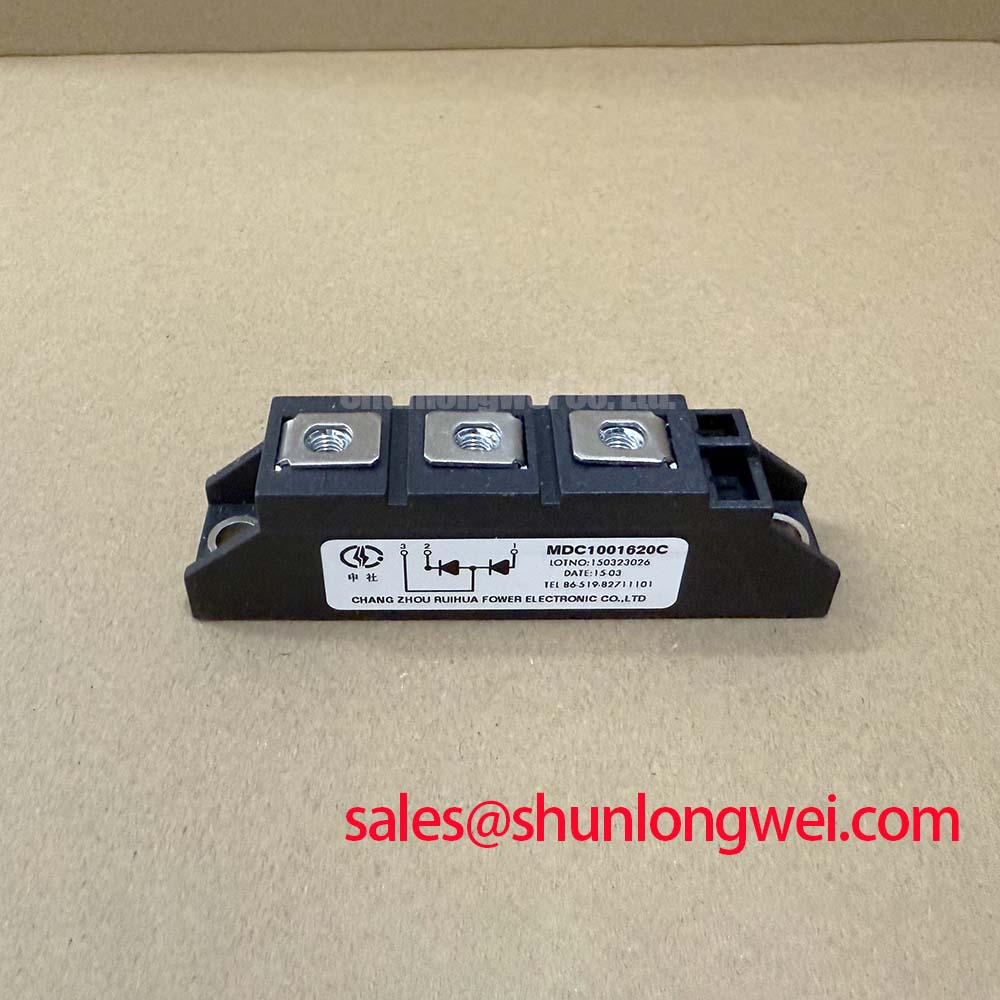
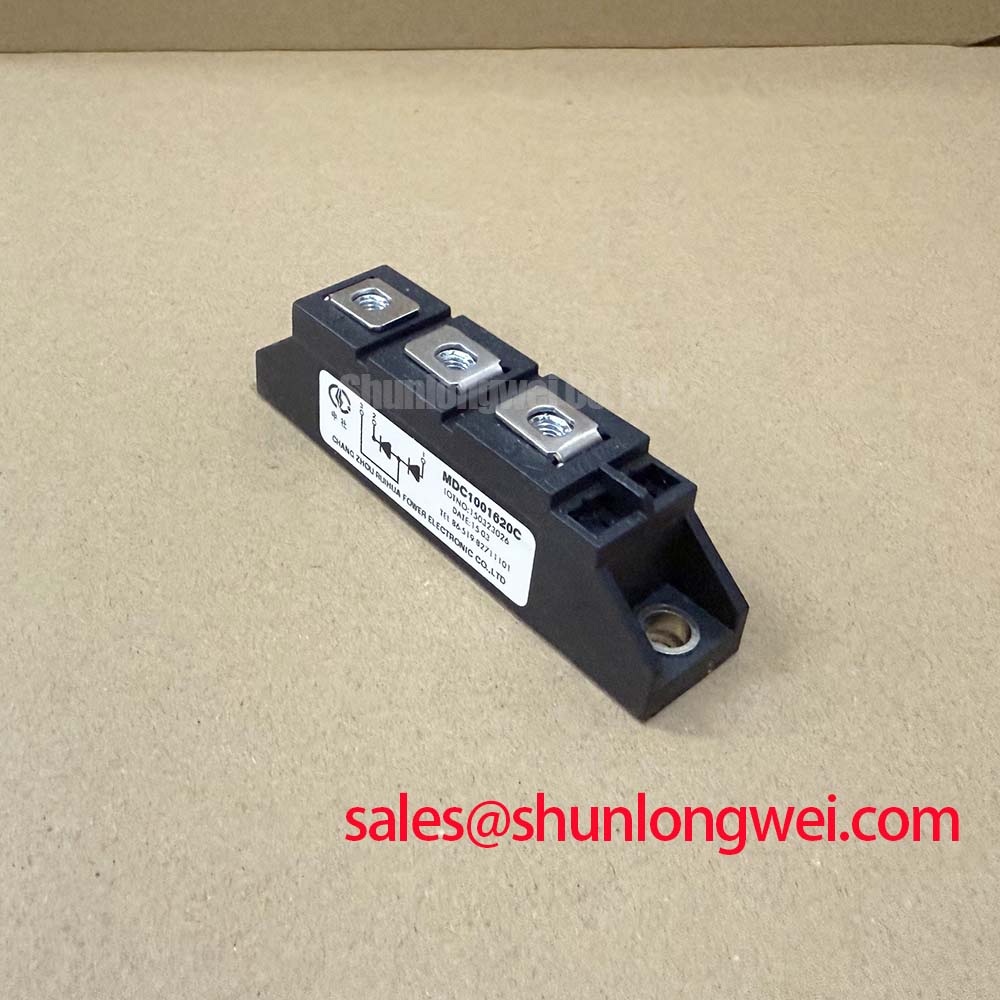
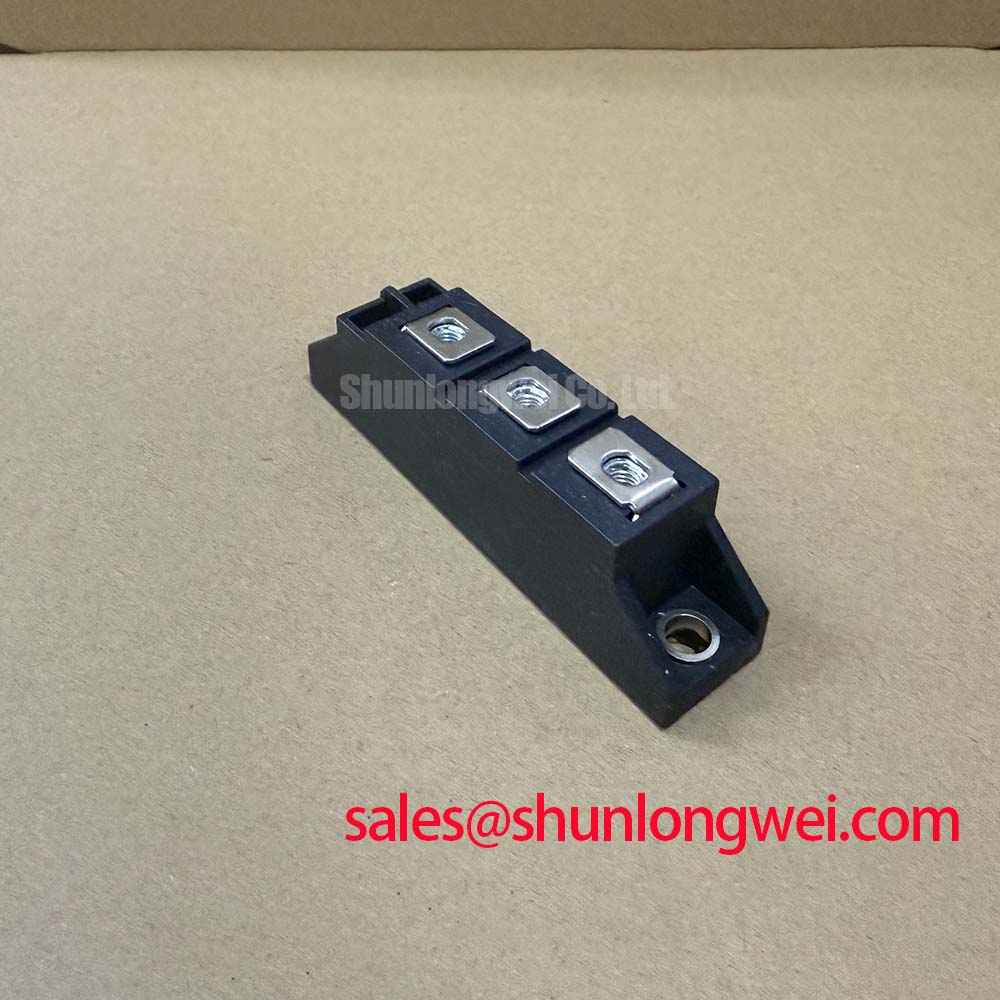
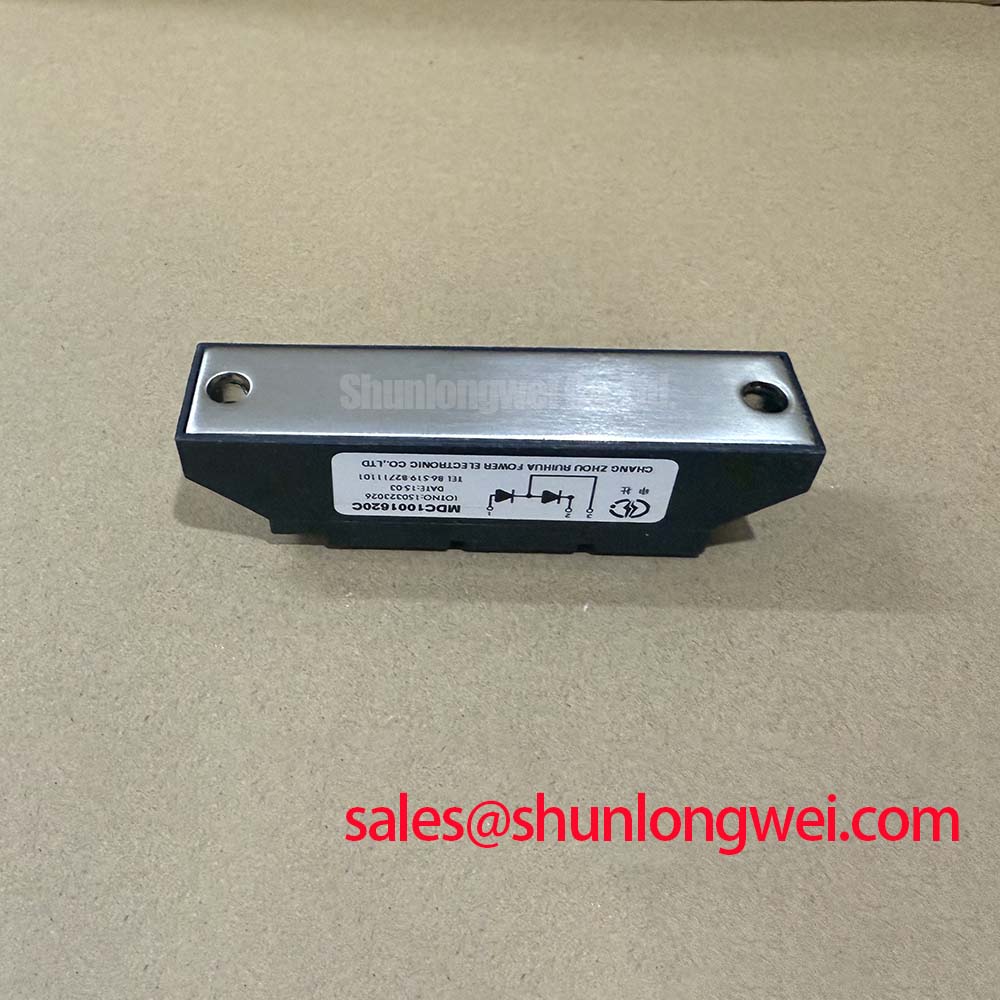
Technical Analysis: Thermal Dynamics and Voltage Robustness
The MDC1001620C is engineered to bridge the gap between high-power throughput and limited mechanical space. Its $V_{RRM}$ of 1600V is specifically targeted at industrial three-phase rectification where transient overvoltages are a constant threat. This high reverse voltage threshold prevents the “wear-out” phase seen in lower-rated components that operate too close to their breakdown limits. When integrated into systems using Power Semiconductors, this module provides the necessary ruggedness for the front-end rectification stage.
A critical parameter for engineers is the Thermal Resistance (Junction-to-Case). To understand its importance, consider a simple analogy: think of thermal resistance as the width of a drainage pipe. A lower resistance value means heat can “flow” away from the sensitive silicon junction toward the heatsink much more efficiently. This prevents “thermal runaway,” a condition where the diode’s temperature rises uncontrollably until the device fails. The MDC1001620C utilizes an Isolated Baseplate design that ensures consistent contact pressure, optimizing this “drainage” of heat.
Furthermore, the $I_{FSM}$ rating (Non-repetitive Surge Forward Current) of this module is typically rated in the range of 2500A. This allows the device to withstand massive, short-duration current surges—such as those encountered during initial capacitor bank charging in Large DC power supplies—without catastrophic bond-wire lift-off. This level of robustness is essential for reducing field service interventions and maintaining high system uptime.
Optimized Application Scenarios
The MDC1001620C is a versatile component that fits into several high-reliability architectures:
- Variable Frequency Drives (VFDs): Acts as the primary input bridge rectifier, converting three-phase AC into stable DC for the inverter stage. Its 1600V rating is ideal for 480V and 600V drive systems.
- Industrial DC Power Supplies: Provides high-current rectification for electroplating, welding, and electrolysis equipment where surge resilience is paramount.
- Battery Charging Systems: Suitable for high-capacity EV chargers and energy storage systems (ESS) requiring durable front-end power conversion.
- Soft Starters: Works effectively in bypass or control circuits to manage initial motor torque and current flow.
Best Match Conclusion: The MDC1001620C is the optimal choice for engineers prioritizing thermal efficiency and surge robustness in high-voltage three-phase rectification applications.
Key Specifications Table
| Parameter Group | Specification | Typical Value |
|---|---|---|
| Absolute Maximum Ratings | Repetitive Peak Reverse Voltage ($V_{RRM}$) | 1600 V |
| Non-Repetitive Peak Surge Current ($I_{FSM}$) | ~2500 A (50Hz) | |
| Electrical Characteristics | Average Rectified Forward Current ($I_o$) | 100 A |
| Peak Forward Voltage Drop ($V_{FM}$) | Max 1.35 V (@ $I_F = 300A$) | |
| Thermal & Mechanical | Isolation Voltage ($V_{isol}$) | 2500 V AC (1 min) |
| Operating Junction Temperature ($T_j$) | -40 to +150 °C |
Engineer’s FAQ
Q1: Why is the MDC1001620C rated at 1600V for a standard 480V line?
Industrial power lines often experience inductive kickbacks and lightning transients. A 1600V $V_{RRM}$ provides a significant safety margin, preventing peak transient voltages from reaching the diode’s avalanche breakdown point.
Q2: What is the significance of the isolation voltage rating?
The 2500V AC isolation rating means that multiple MDC1001620C modules can be mounted on a single common heatsink without an electrical path forming between the circuit and the chassis. This is critical for safety compliance and noise reduction.
Q3: How critical is mounting torque for this module?
Extremely critical. As detailed in our guide on Terminal Torque Risks, improper tightening can lead to high contact resistance and localized overheating. Always follow the manufacturer’s specified N·m (Newton-meter) values for baseplate and terminal screws.
Q4: Can this module be used in high-frequency switching applications?
Standard rectifier modules like the MDC1001620C are optimized for line frequency (50/60Hz). For high-frequency switching (PWM), fast recovery or Schottky diodes would be more appropriate to minimize switching losses.
Final Engineering Statement
The MDC1001620C stands as a cornerstone component for high-power rectification, offering a refined balance of thermal conductivity and dielectric isolation. By integrating a 1600V peak reverse voltage capability with a robust 100A output current, it empowers engineers to design more compact and reliable power stages. This module ensures that the critical front-end conversion of industrial machines remains resilient against the thermal and electrical stresses of continuous heavy-duty operation.