J2-Q05B-G Mitsubishi 600V 50A NPN Darlington Transistor Power Module: Features and Applications
J2-Q05B-G Mitsubishi NPN Darlington Transistor Power Module
600V 50A High Gain Darlington Solution for Industrial Power Control
The J2-Q05B-G is a high-performance NPN Darlington Transistor Module engineered by Mitsubishi Electric for robust power switching in demanding industrial environments. This module integrates two Darlington transistors in a single package, optimized for low base drive requirements and high current handling capability. By utilizing high DC current gain ($h_{FE}$), the J2-Q05B-G simplifies drive circuitry, making it a staple for maintaining legacy power semiconductors in motor control and power supply systems.
- Core Specifications: 600V | 50A | High $h_{FE}$
- Key Advantages: Minimized drive power requirements and isolated copper baseplate for superior thermal management.
- Engineering Intent: Provides a reliable drop-in replacement for legacy systems where precise base current control is necessary for efficiency.
Download Official J2-Q05B-G Datasheet (PDF)
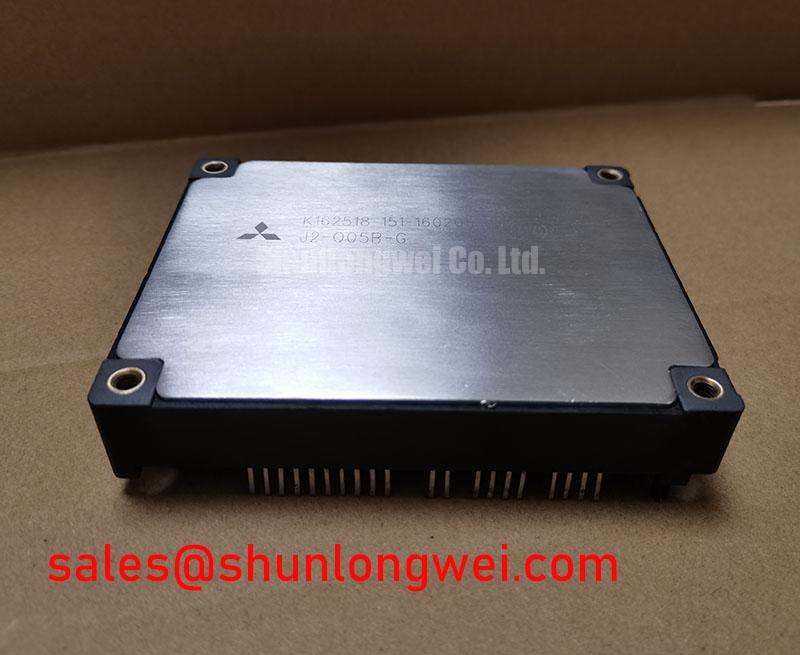
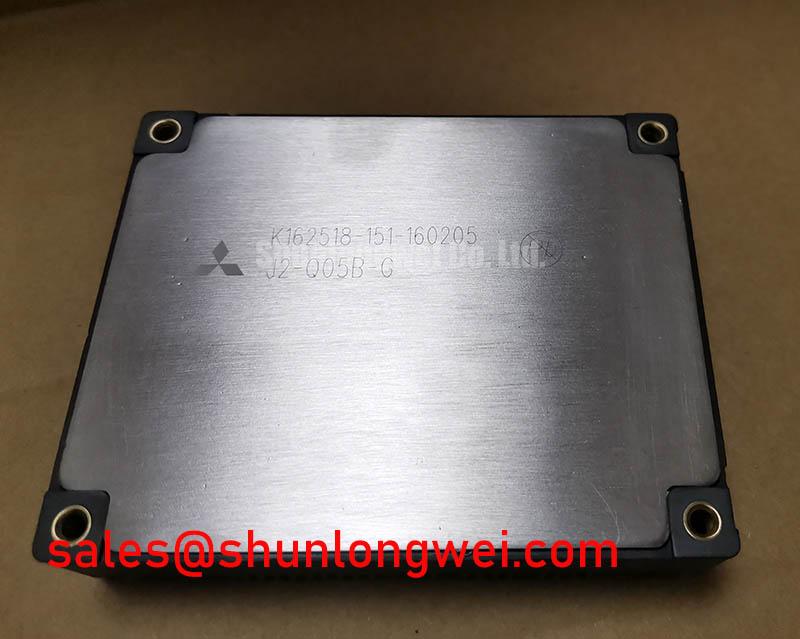

Technical Analysis: Efficiency Through High Gain Architecture
The technical core of the J2-Q05B-G lies in its Darlington configuration. In power electronics, the DC current gain ($h_{FE}$) is a critical parameter that dictates how much base current is required to saturate the collector-emitter junction. You can think of the current gain as a mechanical lever; a higher gain means a smaller “push” (input current) can lift a much heavier “weight” (output current). For the J2-Q05B-G, this translates to significantly reduced power dissipation in the base drive circuit, allowing for smaller, more cost-effective drive transformers or optocouplers.
Furthermore, the Collector-Emitter Saturation Voltage ($V_{CE(sat)}$) is meticulously controlled to ensure that conduction losses remain within acceptable limits during full-load operation. Combined with its high-speed switching characteristics, the module maintains a balance between conduction and switching losses. In thermal management, the module utilizes an isolated baseplate technology, which is essential for ensuring that multiple modules can be mounted on a single heatsink without electrical interference, thereby improving system reliability.
Optimized Application Scenarios
The J2-Q05B-G is particularly suited for applications that prioritize drive simplicity and ruggedness over the ultra-high frequencies of modern SiC devices.
- AC/DC Motor Drives: High $h_{FE}$ allows for robust torque control in legacy variable speed drives.
- Uninterruptible Power Supplies (UPS): Excellent for the inverter stage where 600V blocking voltage provides an necessary safety margin.
- Industrial Welding Power Supplies: The 50A rating handles the high-current surges common in arc welding processes.
- DC Choppers: Ideal for secondary power conversion stages where isolated mounting simplifies the mechanical layout.
Best Fit: The J2-Q05B-G is the optimal choice for maintenance and upgrades of legacy 200V-400V industrial controllers requiring high current amplification.
J2-Q05B-G Key Specifications
| Category | Parameter | Typical Value |
|---|---|---|
| Absolute Maximum Ratings | Collector-Emitter Voltage ($V_{CES}$) | 600V |
| Collector Current ($I_C$) | 50A | |
| Collector Dissipation ($P_C$) | 310W (Approx.) | |
| Electrical Characteristics | DC Current Gain ($h_{FE}$) | 100 (Min) |
| Saturation Voltage ($V_{CE(sat)}$) | 2.0V – 2.5V | |
| Thermal Properties | Thermal Resistance ($R_{th(j-c)}$) | 0.40 °C/W (Max) |
Engineer FAQ: Implementing the J2-Q05B-G
What are the primary thermal design considerations for the J2-Q05B-G?
When calculating thermal overhead, ensure the heatsink thermal resistance plus the interface material resistance stays low enough to keep junction temperatures below 150°C. For detailed calculations, refer to our guide on mastering thermal design curves.
Can the J2-Q05B-G be used in high-frequency switching above 20kHz?
Darlington modules generally have longer storage times ($t_{stg}$) compared to IGBTs or MOSFETs. For the J2-Q05B-G, it is typically recommended to keep switching frequencies below 10kHz to avoid excessive switching losses and thermal runaway.
Is base-emitter reverse bias necessary during the off-state?
Yes, providing a negative bias or a low-resistance path between the base and emitter helps clear stored charges faster, significantly reducing the turn-off time and protecting the device against $dv/dt$ induced turn-on.
The J2-Q05B-G remains a cornerstone for engineers tasked with maintaining high-gain power systems where reliability and drive simplicity are paramount. By leveraging its integrated Darlington architecture and robust isolation, it ensures consistent performance in the most demanding industrial power applications.