SKiiP 03NAC126V1: Semikron 1200V Baseplate-less IGBT CIB Module Overview
SKiiP 03NAC126V1 Semikron 1200V IGBT CIB Module
Introduction and Core Technical Highlights
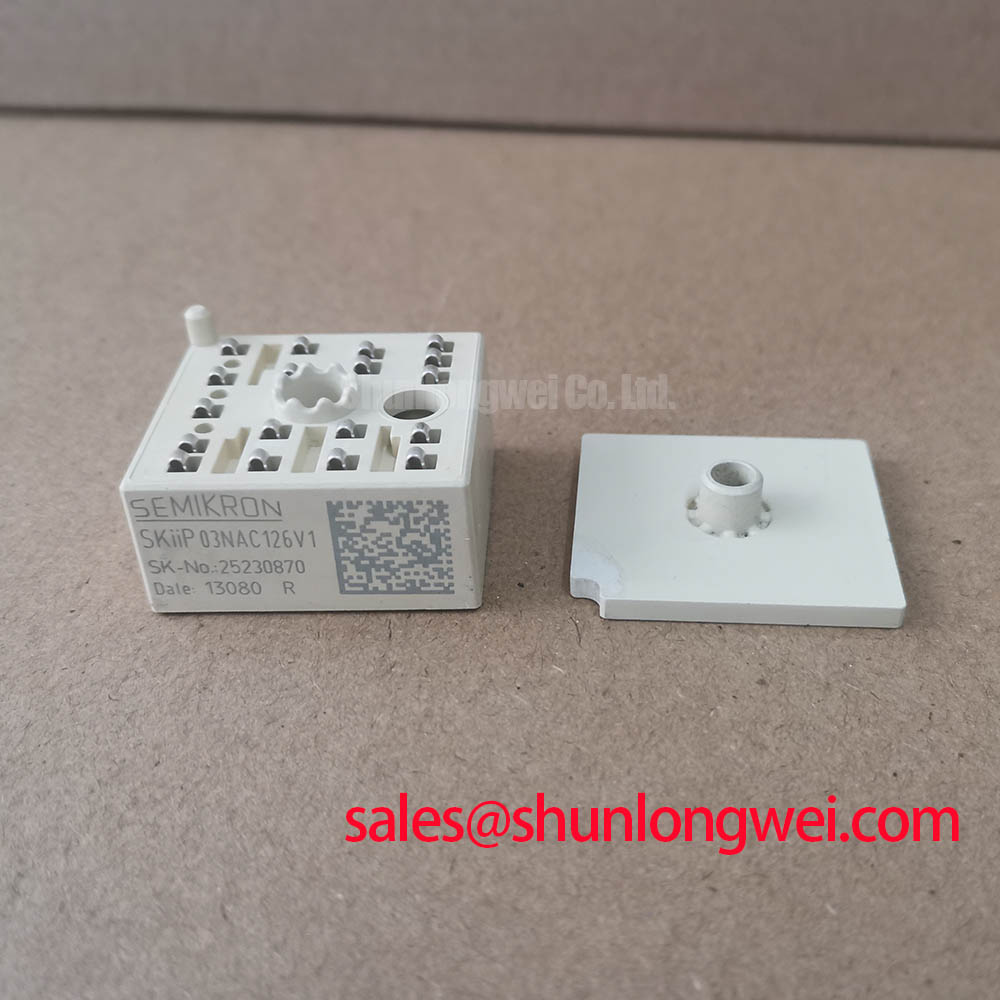
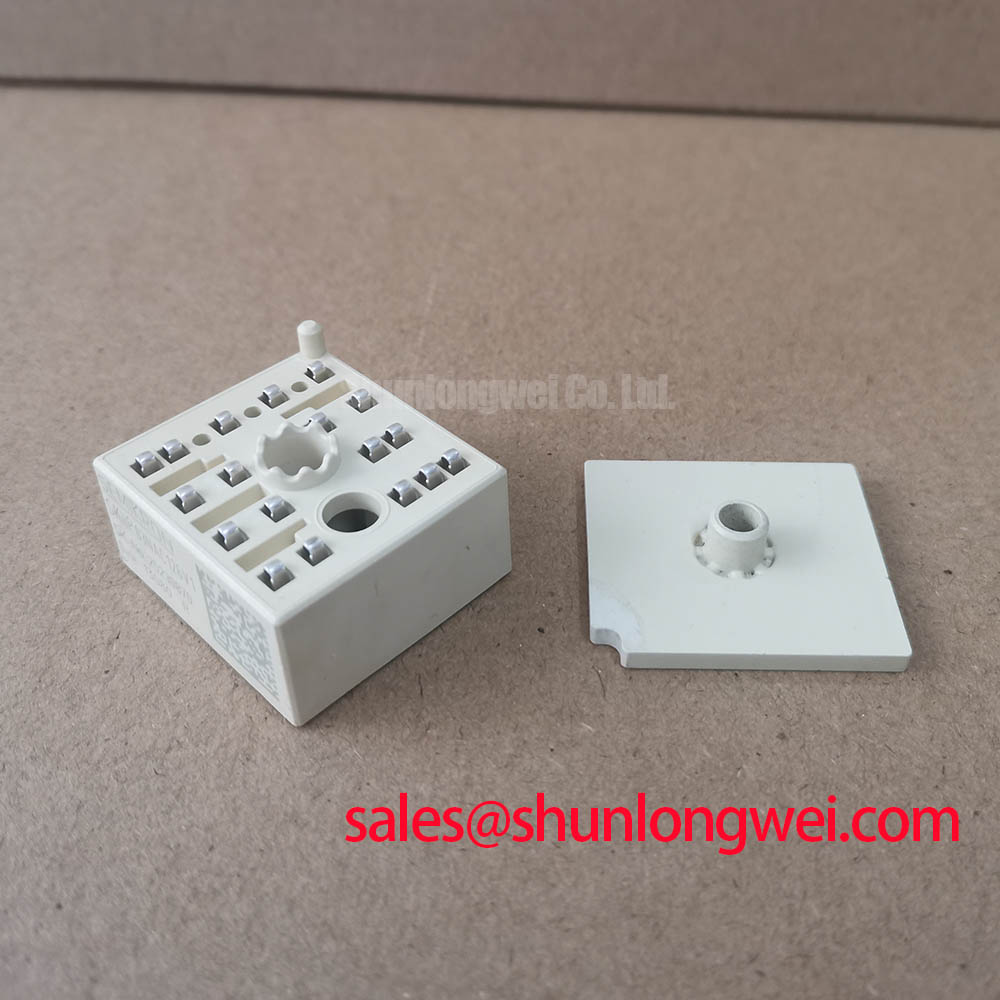
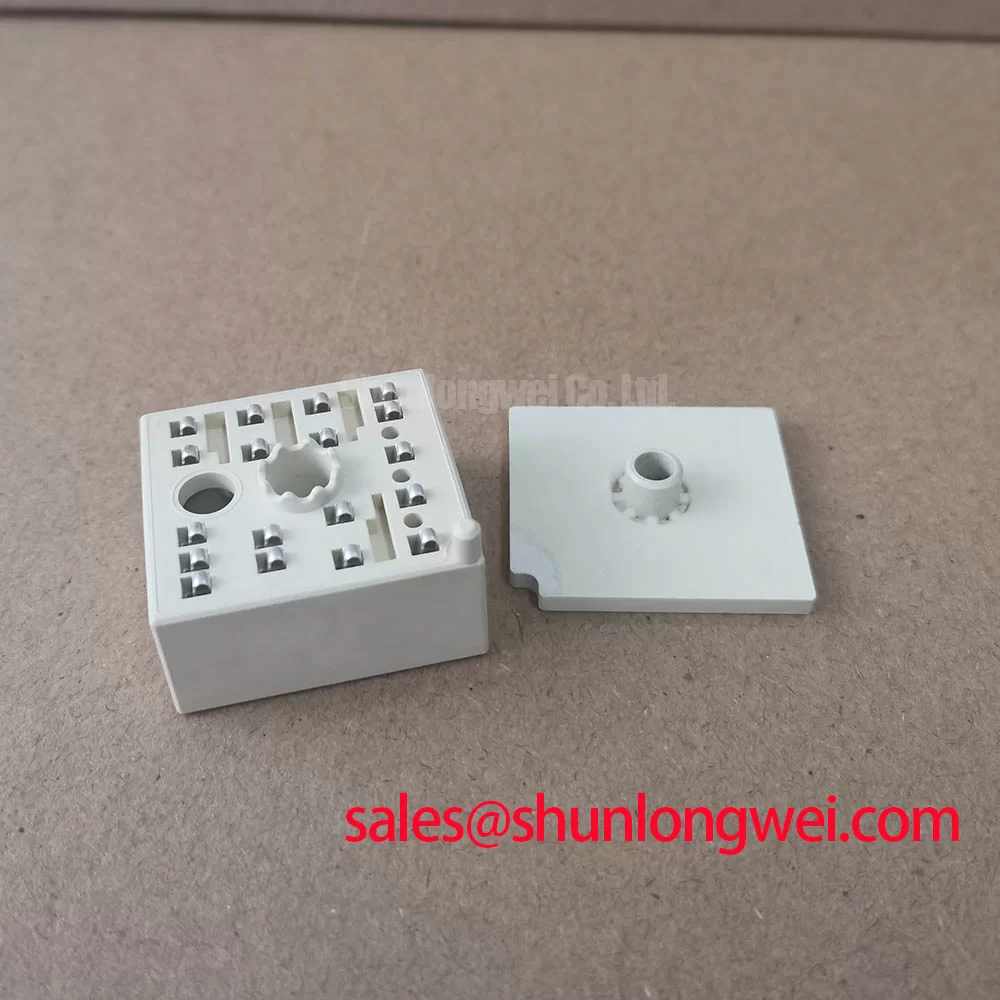
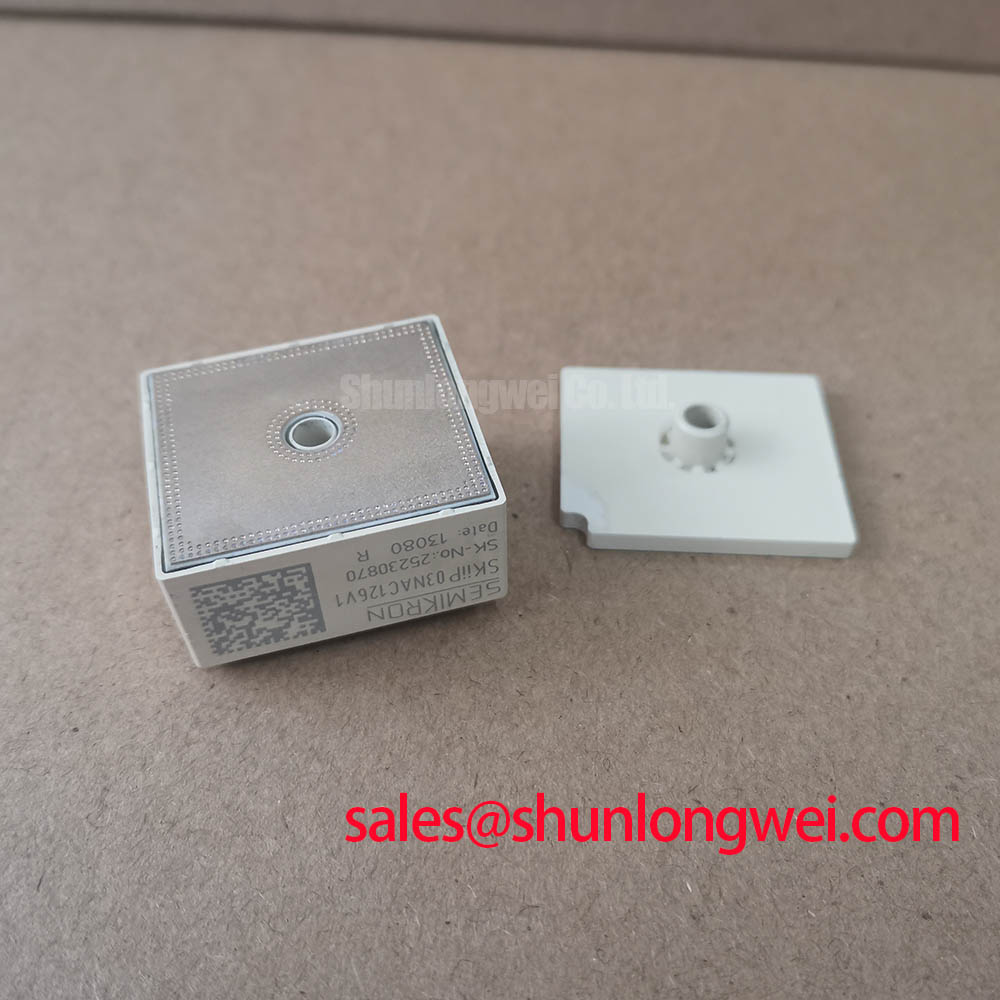
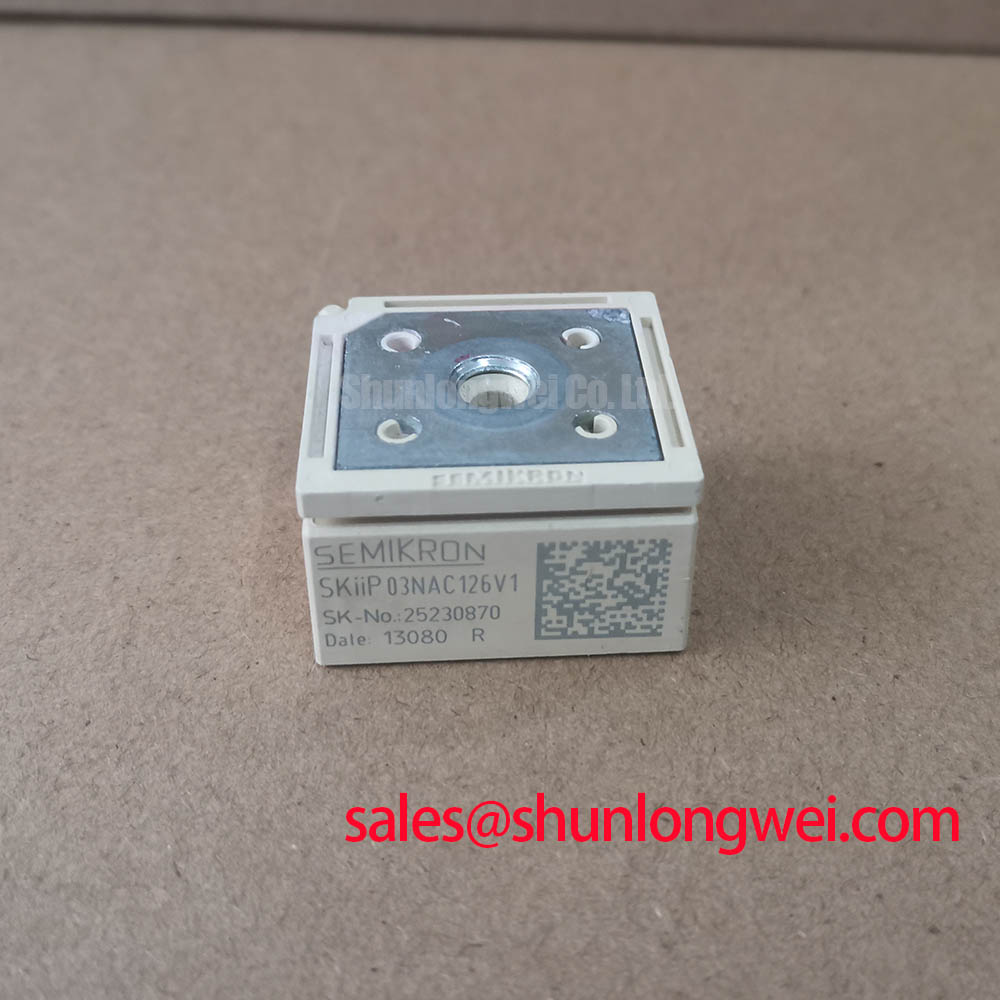
The SKiiP 03NAC126V1 is a 1200V Converter-Inverter-Brake (CIB) module engineered to simplify power stage architecture in low-power industrial drives. This module integrates a three-phase diode bridge rectifier, a brake chopper, and a three-phase trench IGBT inverter into a single component. By combining these stages within a baseplate-less footprint, it dramatically reduces system size. The design features solder-free spring contact connections, which increase reliability under thermal cycling and reduce production assembly time. An integrated NTC thermal sensor provides real-time monitoring directly on the ceramic substrate to prevent overtemperature damage.
- Core Ratings: 1200V nominal breakdown voltage, 8A inverter current rating at heatsink temperature Ts = 70°C, and 1600V rectifier stage voltage.
- Design Advantages: Spring contact connection eliminates thermal solder joint fatigue, while the integrated layout lowers parasitic circuit inductance.
Download Official SKiiP 03NAC126V1 Datasheet (PDF)
Technical Analysis and Structural Design
The primary engineering feature of the SKiiP 03NAC126V1 is its pressure-contact spring technology. In typical power semiconductors, thermal stress causes mismatches in expansion between the copper baseplate and the PCB, leading to cracked solder joints. The spring contacts in this module act like dynamic shock absorbers. They compress to maintain a constant electrical connection regardless of temperature swings, extending the power cycling lifetime of the device.
Thermally, the baseplate-less architecture places the DBC ceramic substrate directly on the thermal grease and heatsink. Think of thermal resistance like a traffic bottleneck on a highway. Removing the copper baseplate eliminates one major traffic stop, allowing heat to escape directly from the silicon junctions to the heatsink. This decreases the junction-to-heatsink thermal resistance ($R_{th(j-s)}$), ensuring the module runs cooler under high switching loads.
Additionally, the layout within the SKiiP 03NAC126V1 reduces internal loop areas. Keeping power loops compact minimizes stray inductance, which is critical to suppressing peak voltage spikes during switching transitions. This permits designers to use simpler, less expensive snubber circuits while protecting the Trench IGBTs from voltage breakdown.
Optimal Application Environments
- Compact AC Motor Drives: The module fits well in variable frequency drives where limited space restricts cooling fan sizes and heatsink area.
- Industrial Pumps and Fans: Excellent fit for ventilation and pumping equipment because the spring contact system withstands motor vibrations better than soldered pins.
- Servo Controllers: The combination of three-phase inversion and a brake chopper allows for rapid acceleration and controlled braking in motion control.
Best Match: Optimal for low-power three-phase motor drives needing high integration, solderless assembly, and thermal cycling durability.
Key Specifications Table
| Parameter | Symbol | Typical Value | Unit |
|---|---|---|---|
| Inverter IGBT Section | |||
| Collector-Emitter Voltage | $V_{CES}$ | 1200 | V |
| Continuous Collector Current ($T_s = 70^circtext{C}$) | $I_C$ | 8 | A |
| IGBT Saturation Voltage ($I_C = 8text{ A}, T_j = 25^circtext{C}$) | $V_{CE(sat)}$ | 1.9 | V |
| Rectifier Diode Section | |||
| Repetitive Peak Reverse Voltage | $V_{RRM}$ | 1600 | V |
| Forward Current ($T_s = 70^circtext{C}$) | $I_F$ | 15 | A |
| Module Ratings | |||
| Isolation Test Voltage (AC, 1 min) | $V_{isol}$ | 2500 | V |
| Maximum Junction Temperature | $T_{j(max)}$ | 150 | °C |
Engineer FAQ
How do spring contact connections perform under vibration?
Unlike soldered terminals that can experience stress cracking, spring contacts maintain continuous pressure. This design makes the SKiiP 03NAC126V1 highly resistant to high-vibration environments, preventing connection failures over time.
What is the benefit of a baseplate-less module?
A baseplate-less design eliminates the thermal barrier of a thick copper bottom plate. It allows the ceramic substrate of the SKiiP 03NAC126V1 to transfer heat directly to the heatsink, lowering thermal resistance and module operating temperature.
Can this module be used without external temperature monitoring?
The integrated NTC sensor should be connected to the gate driver circuit. This sensor reads the internal chip temperature directly, allowing the driver to shut down the system before thermal runaway occurs.
The SKiiP 03NAC126V1 is a robust, integrated power module for compact inverter platforms. By eliminating solder interfaces and reducing thermal loop resistance, it simplifies assembly and increases driver board reliability.