Fuji 2MBI600VE-120 IGBT Module: A Technical Analysis of Efficiency and Reliability
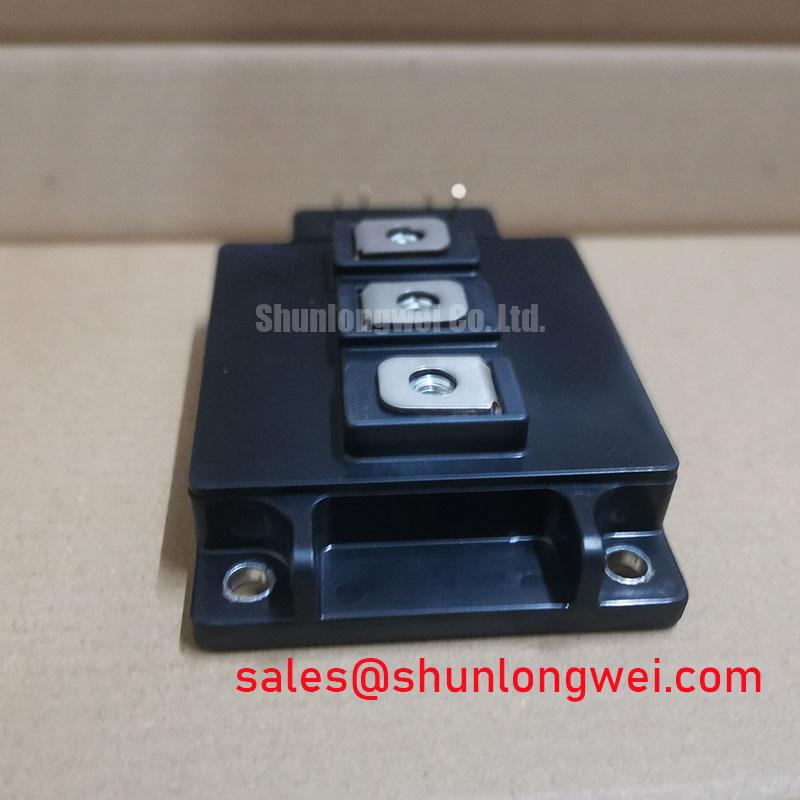
Fuji 2MBI600VE-120 V-Series 1200V 600A IGBT Module
High-Efficiency Power Switching with Low Conduction Loss
The Fuji Electric 2MBI600VE-120 is a V-Series IGBT module engineered for high-power conversion systems, delivering a robust balance of low power loss and high reliability. This module’s core value is its exceptional efficiency, achieved through a low collector-emitter saturation voltage and superior thermal management. It provides a dependable foundation for demanding applications like large-scale motor drives and renewable energy systems.
- Core Specifications: 1200V | 600A | VCE(sat) 2.40V (Typ)
- Key Advantages: Minimized conduction losses reduce heat generation. Excellent thermal dissipation enhances long-term reliability.
- Primary Applications: Well-suited for high-power inverters and servo drives requiring efficient and stable performance.
Download Official Datasheet (Link)


Technical Analysis for System Optimization
The standout feature of the 2MBI600VE-120 is its low collector-emitter saturation voltage (VCE(sat)), specified as 2.40V (typical) at a junction temperature of 125°C. This low on-state voltage directly translates to lower conduction losses during operation, a critical factor in high-current applications. Reduced power loss means less waste heat is generated, which can allow for smaller heatsink designs and improved overall system efficiency. This contributes to lower operating costs and a more compact system footprint.
Effective thermal management is paramount for reliability. The module specifies a thermal resistance from junction to case (Rth(j-c)) of 0.058 °C/W for the IGBT and 0.11 °C/W for the freewheeling diode (FWD). Think of thermal resistance as the friction heat encounters when trying to escape. A lower value, like the 0.058 °C/W here, indicates a very efficient path for heat to move from the active silicon to the heatsink. This capability, detailed in resources like our guide to mastering IGBT thermal design, is crucial for preventing overheating and ensuring the device operates reliably within its safe operating area.
The integrated FWD is co-packed with the IGBT and optimized for inverter circuits. It features a low forward voltage (VEC) of 2.40V (typical at 125°C), which complements the IGBT’s low VCE(sat) by minimizing losses during the freewheeling phase of inverter operation. The soft recovery characteristic of the diode is also beneficial, helping to reduce electromagnetic interference (EMI) and voltage overshoot, simplifying the design of snubber circuits and improving system-level robustness.

Optimized Application Scenarios
The specific characteristics of the 2MBI600VE-120 make it a strong candidate for several high-power applications:
- Inverters for Motor Drives: The 600A current rating and low VCE(sat) provide the efficiency and power handling required for large industrial AC motor control.
- Uninterruptible Power Supplies (UPS): Its high reliability and efficient thermal performance ensure dependable operation during critical backup power situations.
- AC and DC Servo Drive Amplifiers: Fast and soft switching characteristics enable precise control and smooth operation in high-performance servo systems.
- Welding Machines: The module’s robust construction and ability to handle high, continuous currents are essential for industrial welding power sources.
This IGBT module is an optimal match for systems requiring high current capacity and superior thermal efficiency at the 1200V node.
Key Specifications of the 2MBI600VE-120
| Absolute Maximum Ratings (Tj = 150°C unless otherwise specified) | ||
|---|---|---|
| Collector-Emitter Voltage (VCES) | 1200 V | |
| Gate-Emitter Voltage (VGES) | ±20 V | |
| Continuous Collector Current (IC) @ Tc=100°C | 600 A | |
| Collector Power Dissipation (PC) 1 device | 4800 W | |
| Operating Junction Temperature (Tjop) | 150 °C | |
| Electrical Characteristics | ||
| Collector-Emitter Saturation Voltage (VCE(sat)) (Typ) @ IC=600A, Tj=125°C | 2.40 V | |
| Gate-Emitter Threshold Voltage (VGE(th)) | 6.0V to 7.0V | |
| FWD Forward Voltage (VEC) (Typ) @ IE=600A, Tj=125°C | 2.40 V | |
| Thermal Resistance (Rth(j-c)) IGBT | 0.058 °C/W | |
Engineer’s FAQ
What is the typical VCE(sat) of the 2MBI600VE-120 at its maximum operating temperature?
According to the datasheet, the typical collector-emitter saturation voltage is 2.40V at a junction temperature of 125°C and 2.45V at 150°C, both measured at the nominal 600A collector current.
What is the recommended mounting torque for this module?
The datasheet specifies a mounting screw torque of 6.0 N·m. Proper torque is essential to ensure low thermal contact resistance between the module’s baseplate and the heatsink. Applying an appropriate layer of thermal compound is also critical for effective heat transfer.
How does the soft recovery FWD benefit an inverter design?
A soft recovery freewheeling diode exhibits a less abrupt drop in reverse recovery current. This reduces voltage spikes and ringing, which are significant sources of EMI. For engineers, this means less need for complex and costly snubber circuits and can lead to easier compliance with EMC standards.
Can the 2MBI600VE-120 be used in parallel for higher current applications?
While the datasheet does not explicitly provide guidance on paralleling, IGBT modules are often paralleled. Success requires careful attention to symmetrical PCB layout to equalize stray inductances and ensure balanced current sharing. The positive temperature coefficient of VCE(sat) in this module is beneficial for thermal stability in parallel operation.
Enabling Efficient and Reliable High-Power Systems
This power semiconductor provides a technically sound solution for engineers developing high-power converters. The 2MBI600VE-120’s blend of low on-state voltage and efficient thermal dissipation, characteristic of Fuji’s V-Series, directly supports the creation of systems that are not only powerful but also more efficient and reliable over their operational lifetime.