IXYS MDD95-12N1B: A Technical Deep Dive into a High-Reliability Power Control Module
IXYS MDD95-12N1B Thyristor/Diode Module | 1200V 110A
Introduction and Core Highlights
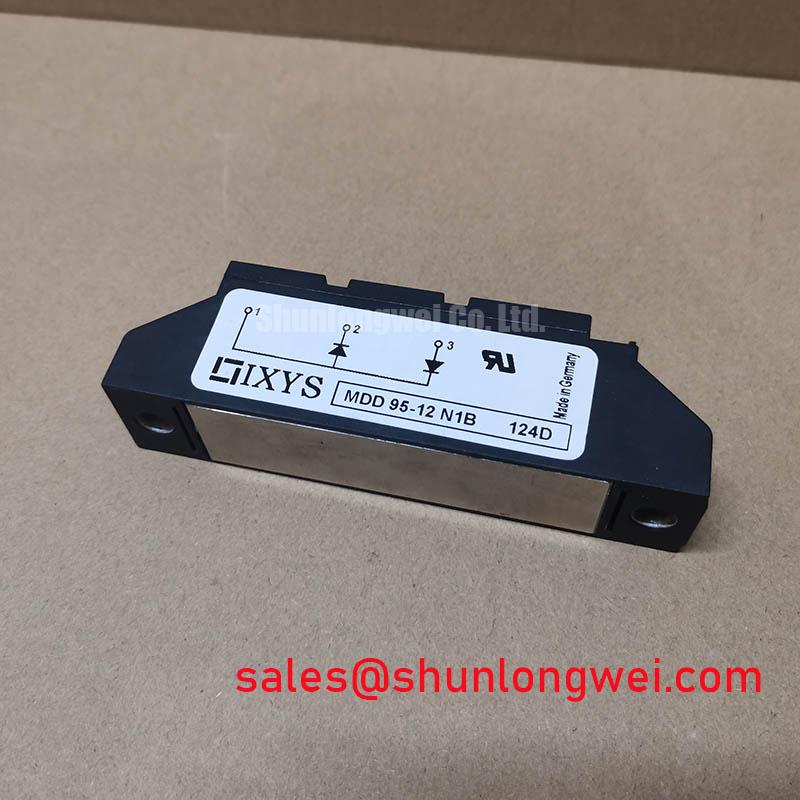
The IXYS MDD95-12N1B is a Thyristor/Diode module engineered for high reliability in controlled rectification applications, featuring robust 3600V electrical isolation and a Direct Copper Bonded (DCB) substrate for superior thermal management. This construction provides a dependable component for demanding industrial power systems. Its low thermal impedance from junction to case simplifies heatsink selection, directly contributing to more compact and efficient system designs. This module integrates two series-connected devices, a thyristor and a diode, in a single industry-standard TO-240AA package.
- Core Specifications: 1200V VDRM/VRRM | 110A ITAVM (Tc=85°C) | 3600V Isolation
- Key Advantages: Enhanced system safety margins, simplified thermal design.
Download Official Datasheet (PDF)

Technical Analysis: Isolation and Thermal Efficiency
A standout feature of the MDD95-12N1B is its 3600V RMS isolation voltage. This high level of dielectric strength between the terminals and the baseplate is critical for systems connected to the main power grid. It ensures a high degree of safety, preventing potential short circuits to the chassis and protecting downstream control logic. This robust isolation simplifies system-level safety compliance and enhances overall equipment reliability in harsh industrial environments.
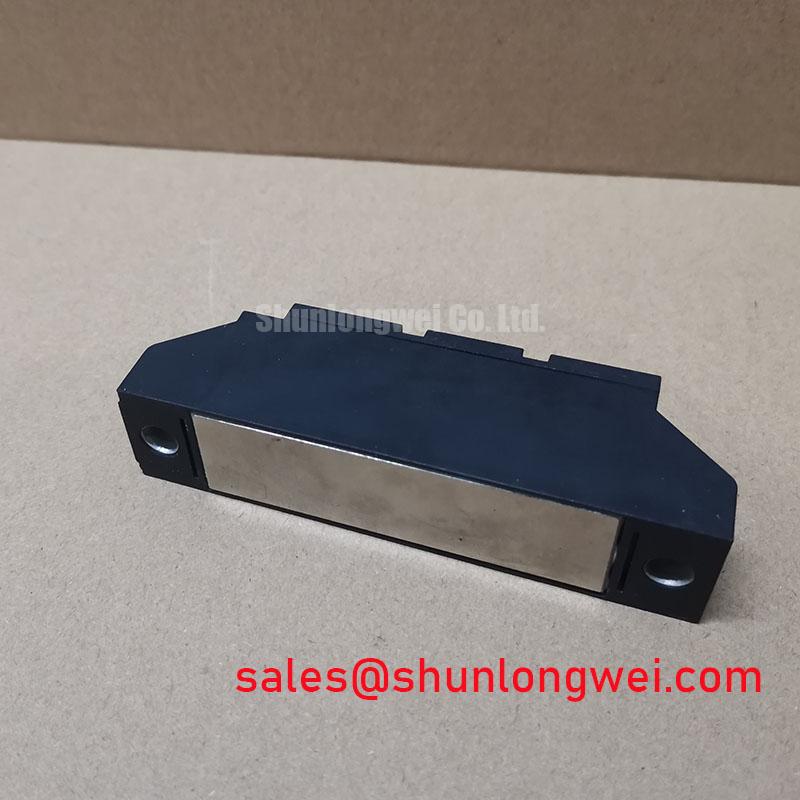
The module’s thermal performance is anchored by its Direct Copper Bonded (DCB) ceramic baseplate. This structure provides not only excellent electrical isolation but also a highly efficient path for heat to escape from the semiconductor junctions. The specified thermal resistance from junction to case (RthJC) is just 0.24 K/W for the thyristor. You can think of thermal resistance like the width of a pipe; a lower value means a wider pipe, allowing heat to flow away more easily. This efficiency minimizes junction temperature rise under load, a key factor in maximizing the operational life of power semiconductors and maintaining stable performance.

Optimized Application Scenarios
The specific characteristics of the MDD95-12N1B make it well-suited for several power control applications:
- Controlled Rectifiers: The thyristor-diode topology is ideal for single-phase controlled bridge circuits, enabling precise voltage output regulation for DC power supplies.
- AC Motor Soft Starters: Its ability to phase-control the AC voltage allows for smooth, current-limited motor starts, reducing mechanical stress and electrical inrush.
- Industrial Heating Control: The module’s power regulation capability is perfect for managing the output of high-power resistive heating elements with high precision.
- Lighting Dimming Systems: In large-scale architectural or stage lighting, this module can efficiently control the brightness of high-power light sources.
This module is an optimal match for industrial AC control systems requiring precise power regulation and high thermal stability within a standard footprint.
Key Specification Parameters
| MDD95-12N1B Electrical and Thermal Characteristics (TC = 25°C unless otherwise specified) | ||
|---|---|---|
| Parameter | Value | Conditions |
| Repetitive Peak Reverse/Off-State Voltage (VRRM/VDRM) | 1200 V | – |
| Average On-State Current (ITAVM) | 110 A | TC = 85°C |
| RMS On-State Current (ITRMS) | 170 A | TC = 85°C |
| Isolation Voltage (VISOL) | 3600 V~ | 50/60 Hz, RMS, t = 1 min |
| Thermal Resistance, Junction to Case (RthJC) – Thyristor | 0.24 K/W | – |
| Thermal Resistance, Junction to Case (RthJC) – Diode | 0.28 K/W | – |
| Operating Junction Temperature (TVJ) | -40°C to +125°C | – |
Engineer’s FAQ
- How is the required heatsink performance calculated for the MDD95-12N1B?
- To determine the required heatsink thermal resistance (RthCA), you must first calculate the total power dissipation (Ptot) of the module under your specific load conditions. Then, using the formula TJ(max) = TA + Ptot * (RthJC + RthCA), you can solve for RthCA. A detailed guide to this can be found in resources about mastering IGBT thermal design.
- What is the recommended mounting torque for this module and why is it critical?
- The datasheet specifies a mounting torque of 3-3.5 Nm for the M5 mounting screws. Adhering to this specification is crucial. Insufficient torque leads to poor thermal contact between the module’s baseplate and the heatsink, increasing thermal resistance. Excessive torque can cause mechanical stress, potentially damaging the ceramic substrate and compromising the device’s long-term reliability.
- What does the ‘Planar passivated chips’ feature imply for system reliability?
- Planar passivation is a manufacturing process that protects the sensitive junction termination area of the semiconductor die. This glass-like layer stabilizes the electrical characteristics over the module’s lifetime, particularly the blocking voltage capability and leakage currents, especially at high temperatures. It directly contributes to the device’s robustness and long-term stability.
Enabling Robust Power Control
By integrating high dielectric strength with efficient heat dissipation, the IXYS MDD95-12N1B provides a robust foundation for building reliable and precisely controlled high-power AC systems. Its industry-standard packaging and well-defined thermal characteristics empower engineers to develop compact and durable power conversion equipment with confidence.