Mitsubishi PM100RLA120: An Integrated 1200V/100A IPM for Simplified Motor Control
Mitsubishi PM100RLA120 IPM: 1200V 100A Integrated Power Module
Integrated Power Stage for High-Reliability Motor Control
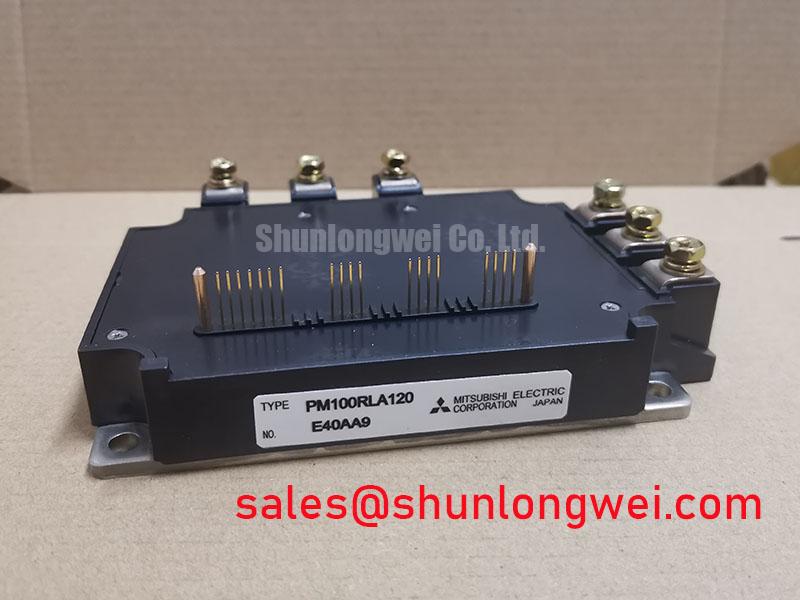
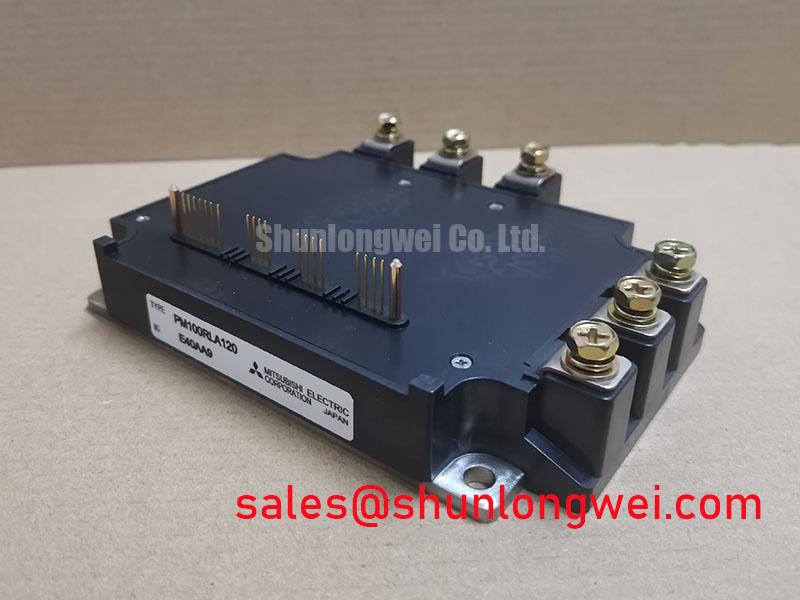
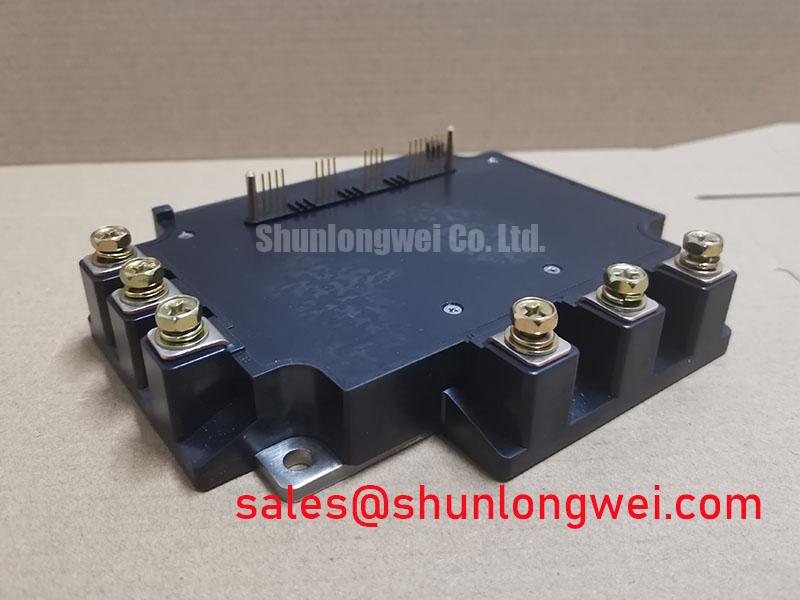
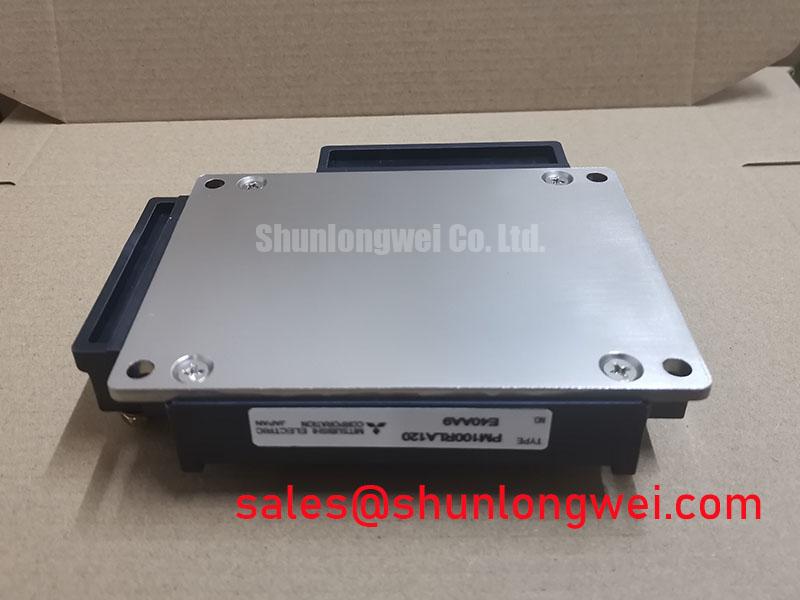
The Mitsubishi PM100RLA120 is an L1-Series Intelligent Power Module (IPM) that delivers a compact and robust solution for three-phase motor control applications. This module integrates a three-phase IGBT inverter stage with dedicated gate drive and protection circuits into a single flat-base package. The core value proposition is the simplification of system design and enhanced reliability through this high level of integration. By consolidating key power and control functions, this IPM helps engineers accelerate development cycles for demanding industrial systems.
* **Core Specifications**: 1200V | 100A | Three-Phase Inverter with Brake
* **Key Advantages**: Reduces PCB complexity and component count, provides integrated short-circuit and over-temperature protection.
* **Design Simplification**: Answers the need for a more compact and reliable alternative to discrete component-based designs in motor control.
Download Official Datasheet (PDF)

Technical Analysis of Integrated Functionality
The primary engineering advantage of the PM100RLA120 is its system-in-a-package design. It incorporates IGBTs based on Mitsubishi’s CSTBT™ (Carrier Stored Trench Gate Bipolar Transistor) technology, which provides a favorable balance between collector-emitter saturation voltage (Vce(sat)) and switching losses. This integration of power devices with monolithic gate drive and protection logic circuits minimizes the parasitic inductance that often plagues discrete designs, leading to cleaner switching waveforms and reduced electromagnetic interference (EMI).
The module’s built-in protection features are crucial for system longevity. It includes circuits for short-circuit (SC), over-temperature (OT), and control supply under-voltage (UV) detection. The over-temperature protection is particularly significant. You can think of the module’s junction-to-case thermal resistance (Rth(j-c)) as the width of a pipe draining heat away from the silicon chip. The datasheet specifies this value as 0.16°C/W for the inverter IGBT, allowing engineers to precisely calculate the required heatsink performance to keep the junction temperature within safe limits. This integrated thermal sensing provides a direct and fast-acting defense against thermal runaway.
Optimized Application Scenarios
The specific characteristics of the PM100RLA120 make it a strong candidate for several industrial applications:
- General Purpose Inverters: The module’s robust 1200V rating and 100A continuous current capability are well-suited for 400V AC industrial motor drives up to 22kW. The integrated brake chopper simplifies the management of regenerative energy.
- AC Servo Drives: For robotics and CNC machines, the module’s optimized switching performance and integrated protections contribute to the precise torque and speed control necessary for high-accuracy motion.
- Motor Controls: In applications like pumps, fans, and compressors, the high level of integration reduces system size and assembly time, while the built-in fault detection improves operational reliability.
This IPM is best matched for motor control systems where reducing design complexity, minimizing footprint, and ensuring high operational reliability are primary engineering goals.
Key Specifications of the PM100RLA120
| Absolute Maximum Ratings (Tj = 25°C unless otherwise noted) | ||
|---|---|---|
| Parameter | Symbol | Value |
| Collector-Emitter Voltage (Inverter) | VCES | 1200V |
| Collector Current (Inverter, TC=25°C) | ±IC | 100A |
| Collector Current (Brake, TC=25°C) | ±IC | 50A |
| Collector Power Dissipation (Inverter, TC=25°C) | PC | 585W |
| Junction Temperature | Tj | -20 to +150°C |
| Isolation Voltage | Viso | 2500 Vrms |
Engineer’s FAQ
- What are the main advantages of using the PM100RLA120 IPM over a discrete IGBT and driver solution?
- The primary advantage is system simplification and reliability. The IPM integrates factory-optimized gate drives, which eliminates the complex task of designing, tuning, and laying out a separate driver board. This reduces component count, assembly costs, and potential EMI issues from parasitic inductance in the gate loop.
- How should I approach thermal design and heatsink selection for this module?
- Effective thermal management starts with the junction-to-case thermal resistance (Rth(j-c)) provided in the datasheet. First, calculate the total power loss (conduction and switching) based on your application’s load profile. Then, use the Rth(j-c) value and the maximum allowable junction temperature (150°C) to determine the maximum case temperature. The heatsink’s thermal resistance (Rth(c-a)) must be low enough to maintain the case temperature below this calculated limit under worst-case ambient conditions.
- What is the function of the “Fo” (Fault Output) pin?
- The Fo pin provides a status signal indicating that a protection function has been activated. The datasheet specifies that this pin goes to a low-logic level when a short-circuit (SC), over-temperature (OT), or control supply under-voltage (UV) event is detected. This signal should be monitored by the system’s master controller to initiate a safe shutdown procedure.
- What are the control-side power supply requirements?
- The module requires a 15V DC supply (VD) for the control logic and gate drivers. The acceptable voltage range is specified as 13.5V to 16.5V. The internal under-voltage (UV) protection circuit will trigger if this supply drops below the specified threshold, typically around 11.5V, to prevent the IGBTs from operating with insufficient gate drive.
Accelerating Reliable Power System Development
The PM100RLA120 Intelligent Power Module provides engineers with a pre-validated power stage that integrates advanced protection and optimized drive circuitry. This approach mitigates common design risks associated with discrete components, allowing development teams to focus on system-level control and functionality. The result is a more compact, reliable, and faster-to-market motor control system.