SKIM601TML12E4B: A Three-Level IGBT Module for Efficient and Reliable Power Conversion
SKIM601TML12E4B: 1200V Three-Level Trench IGBT Module
Introduction and Core Highlights
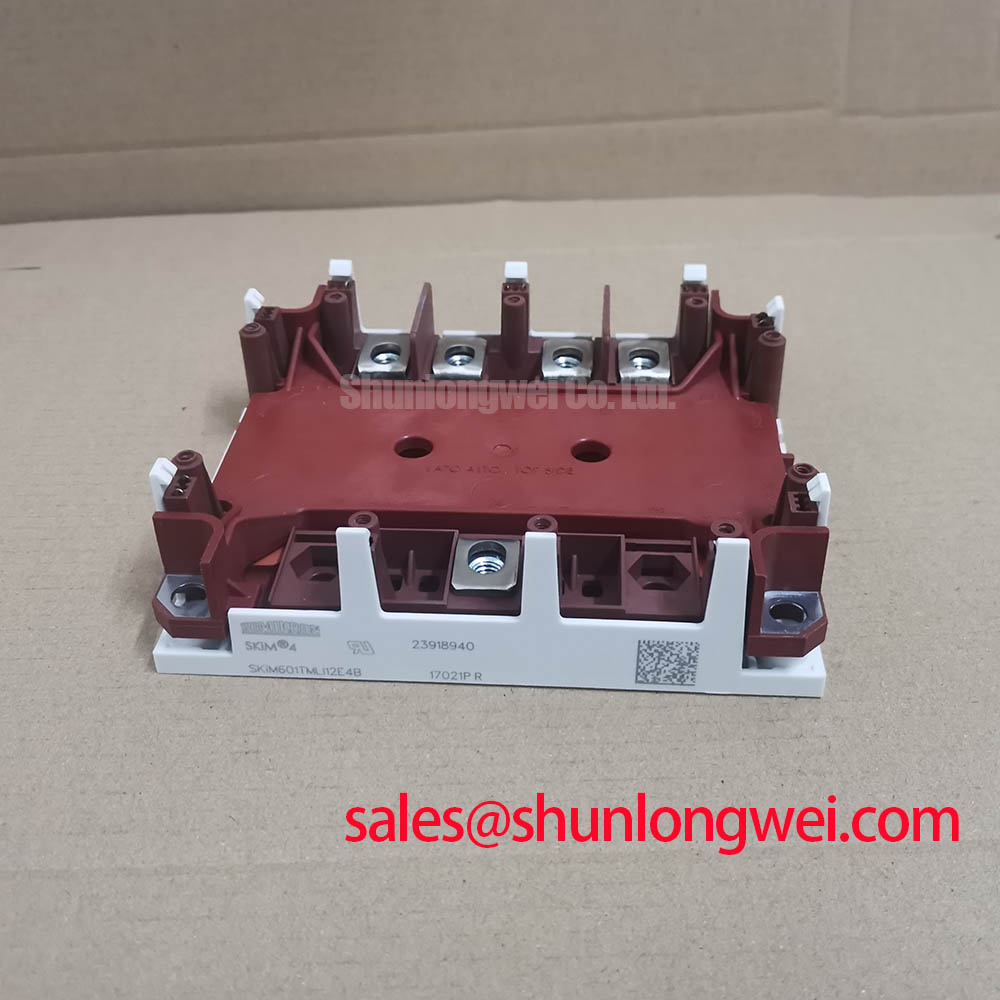
The SEMIKRON SKIM601TML12E4B is a trench gate IGBT module that delivers a fully integrated three-level Neutral Point Clamped (NPC) inverter topology in a single, robust package. This design’s unique value proposition lies in its ability to significantly improve the efficiency of high-voltage power converters while simplifying system assembly through solder-free spring contacts. By effectively halving the blocking voltage across each IGBT, the three-level topology allows for reduced switching losses, which is a critical factor for systems like large-scale solar inverters and uninterruptible power supplies.
- Core Specifications: 1200V | 150A (Nominal Collector Current) | Three-Level NPC Topology
- Key Advantages: Enables higher DC-link voltages and reduces switching losses for improved system efficiency. Solder-free spring contacts enhance reliability and streamline manufacturing.
Download the Official SKIM601TML12E4B Datasheet (PDF)

Technical Analysis: Efficiency and Assembly Reliability
The engineering significance of the integrated three-level NPC topology within the SKIM601TML12E4B cannot be overstated. In a conventional two-level inverter, the switching devices must block the full DC-link voltage. This module’s NPC configuration ensures that the IGBTs (T1-T4) only need to block half of that voltage. This fundamental difference allows for the use of 1200V V-IGBT4 components, which exhibit lower conduction losses (VCE(sat)) and switching energies (Eon, Eoff) compared to higher-voltage rated devices. The result is a direct increase in power conversion efficiency and a reduction in the thermal load on the entire system.
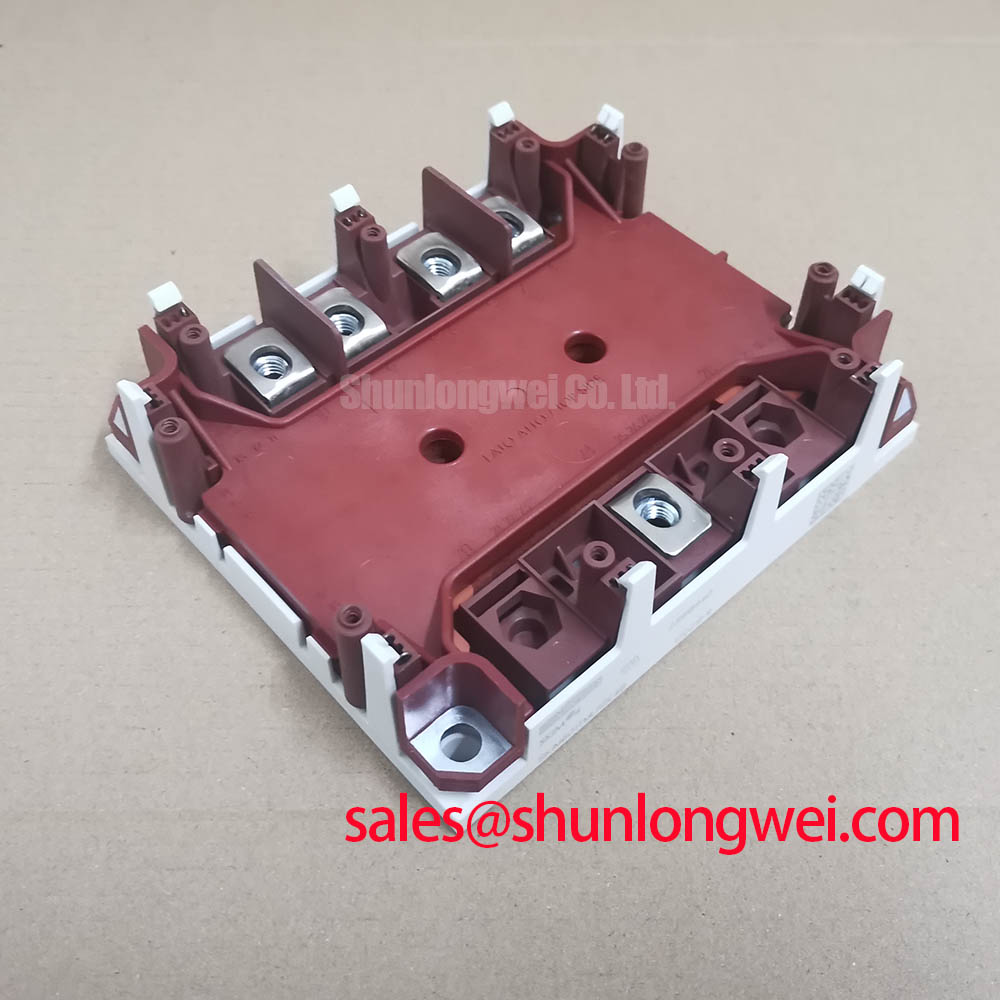
Further enhancing its value in industrial environments is the SEMITRANS 10 package, which utilizes spring contacts for all auxiliary connections. This design choice eliminates the need for soldering the driver board, a common point of mechanical failure due to thermal cycling and vibration. The spring contacts can be thought of as a dedicated suspension system for your control signals; they maintain a constant, correct pressure on the PCB pads, ensuring a highly reliable connection throughout the product’s operational life. This not only simplifies the initial assembly process but also improves long-term system reliability, a crucial aspect of power semiconductors for demanding applications.
Optimized Application Scenarios
The specific characteristics of the SKIM601TML12E4B make it a strong candidate for several high-power applications:
- Solar Central Inverters: The three-level topology is exceptionally well-suited for the high DC voltages from large PV arrays, maximizing energy harvest by minimizing conversion losses.
- Uninterruptible Power Supplies (UPS): Its high efficiency reduces cooling requirements and operational costs in data centers, while the 150A current rating supports high-power backup systems.
- Industrial Motor Drives: The module’s robust construction and the use of soft-recovery CAL4F freewheeling diodes result in lower EMI and reduced stress on motor windings in high-power Variable Frequency Drives (VFDs).
This module is an optimal match for high-voltage systems where conversion efficiency and long-term assembly reliability are primary design drivers.
Key Specification Parameters
| Absolute Maximum Ratings (per switch unless specified) | |
|---|---|
| Collector-Emitter Voltage (Vces) | 1200 V |
| Nominal Collector Current (Ic, nom) | 150 A |
| Max. Junction Temperature (Tj, max) | 175 °C |
| Isolation Voltage (Visol, AC 50 Hz, t=1 min) | 4000 V |
| Electrical & Thermal Characteristics (Tj = 25 °C unless specified) | |
| VCE(sat) (Typ., Ic=150A, Vge=15V, Tj=25°C) | 1.70 V |
| Thermal Resistance, Junction to Case (Rth(j-c), per IGBT) | 0.17 K/W |
| Turn-on Switching Energy (Eon, Typ.) | 23.00 mJ |
| Turn-off Switching Energy (Eoff, Typ.) | 19.50 mJ |
Engineer’s FAQ
- What are the primary thermal management considerations for the SKIM601TML12E4B?
- Based on the datasheet, each IGBT has a thermal resistance from junction to case (Rth(j-c)) of 0.17 K/W. Effective thermal management requires a properly sized heatsink and appropriate thermal interface material (TIM) to keep the junction temperature below the 175°C maximum, calculated based on total power losses.
- How do the spring contacts affect PCB design and assembly?
- The PCB for the gate driver must be designed with corresponding contact pads that align with the module’s springs. The primary assembly benefit is the elimination of soldering for control signals, which removes a thermal stress process and creates a more resilient mechanical connection, simplifying manufacturing and improving field reliability.
- The datasheet specifies CAL4F diodes. What does this mean for performance?
- CAL (Controlled Axial Lifetime) diodes are engineered for a “soft” reverse recovery characteristic. This reduces voltage overshoots and high-frequency oscillations during switching, leading to lower electromagnetic interference (EMI). This is a significant system-level benefit, potentially simplifying filter design and aiding in EMC compliance.
Enabling Efficient, Reliable Power Conversion
By integrating a high-efficiency three-level NPC topology into the robust, easy-to-assemble SEMITRANS 10 package, the SKIM601TML12E4B provides a direct path for engineers to develop more reliable and performant high-voltage power conversion systems. Its architecture is fundamentally aligned with the demands of modern solar, UPS, and industrial drive applications.