Vishay 300UR120A: A Technical Analysis for High-Power Industrial Applications
300UR120A: Vishay 1200V 300A Standard Recovery Diode
High-Current Rectification and Surge Robustness
The Vishay 300UR120A is a standard recovery diode engineered for high-power industrial applications requiring robust performance and high reliability. Its primary value is derived from its ability to manage substantial continuous and surge currents, making it a stable component for demanding power conversion circuits.
- Core Specifications: 1200V | 300A (Average) | 4710A (Surge)
- Key Advantages: Exceptional surge current survivability, simplified thermal management via stud-mount package.
- Design Consideration: The high IFSM rating provides a significant safety margin against fault conditions like startup inrush currents.
Download the Official 300UR120A Datasheet (PDF)
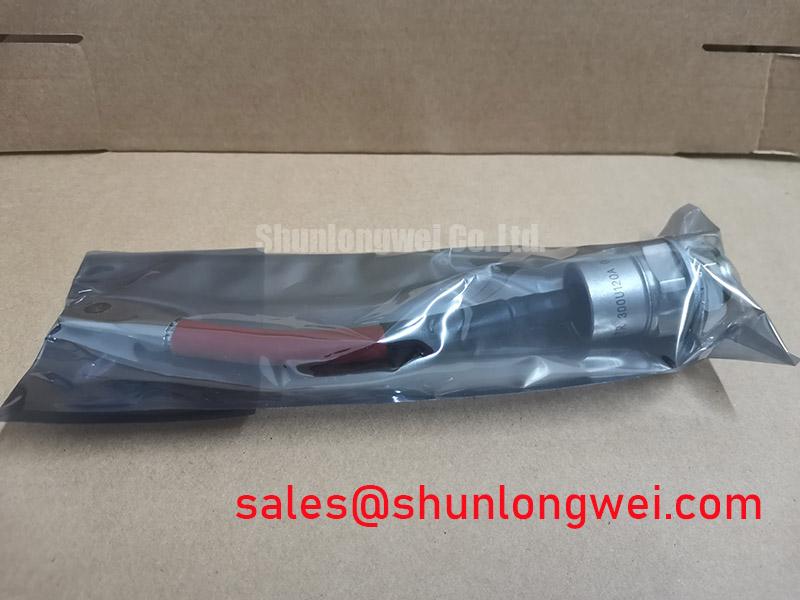

Technical Analysis for System Reliability
The engineering value of the 300UR120A is clearly defined by its electrical and thermal characteristics as detailed in the official datasheet. These parameters are critical for designers of high-power systems where reliability is paramount.
Exceptional Surge Current Handling
A standout feature is the non-repetitive surge current (IFSM) rating of 4710A for a 10ms half sine-wave pulse. This high surge capability is crucial for system survivability during abnormal events such as short circuits or the inrush current seen when charging large capacitor banks. You can think of this surge rating as a safety valve for the electrical system; it can withstand a massive, brief overload without failing, thereby protecting more sensitive downstream components. This robustness is fundamental in applications like welding power supplies, which inherently experience high current fluctuations.
Thermally Efficient Stud-Mount Design
The 300UR120A utilizes a DO-205AB (DO-9) stud-mount package, which is designed for superior thermal management. With a low junction-to-case thermal resistance (RthJC) of 0.23 °C/W, this package provides an efficient path for heat to transfer from the semiconductor junction to a heatsink. This is analogous to the width of a pipe; a lower thermal resistance value means a wider “pipe” for heat to escape, preventing the device from overheating when conducting a continuous average forward current of 300A. Proper mounting and thermal interface material are key to leveraging this feature for long-term operational stability.
Optimized Application Scenarios
The specifications of the 300UR120A make it a strong candidate for specific high-power rectification tasks. Its design inherently favors robustness and high current capacity over switching speed.
- Welding Equipment: The exceptional surge current rating (4710A) ensures the diode can withstand the demanding, fluctuating loads common in welding processes.
- Industrial Power Supplies: Its 300A average forward current makes it suitable for the input rectification stage of high-power AC-DC converters.
- Battery Charging Systems: The high current and voltage ratings are well-suited for high-capacity industrial battery chargers, including those for forklifts and electric vehicles.
- DC Motor Controls: Provides reliable rectification for the power stages of large DC motor drives, handling both continuous and peak current demands.
This diode is best matched for high-current industrial applications where robust surge handling and simplified thermal management are primary design requirements.
Key Specifications of the 300UR120A
| Parameter | Value | Conditions |
|---|---|---|
| Absolute Maximum Ratings | ||
| Repetitive Peak Reverse Voltage (VRRM) | 1200 V | |
| Average Forward Current (IF(AV)) | 300 A | TC = 135 °C |
| Non-Repetitive Surge Current (IFSM) | 4710 A | 10 ms, half sine-wave |
| Operating Junction Temperature (TJ) | -65 °C to 200 °C | |
| Electrical & Thermal Specifications | ||
| Max Forward Voltage (VFM) | 1.4 V | @ 942 A, TJ = 25 °C |
| Max Reverse Current (IRRM) | 25 mA | @ VRRM, TJ = 200 °C |
| Thermal Resistance, Junction-to-Case (RthJC) | 0.23 °C/W | DC operation |
Note: All specifications are based on the official Vishay 300UR120A datasheet. Engineers should consult the datasheet for complete characteristic curves and test conditions.
Engineer’s FAQ
What is the non-repetitive surge current capability of the 300UR120A and why is it important?
The 300UR120A is rated for a peak non-repetitive surge current of 4710A for a 10ms duration. This is a critical parameter for reliability in applications with high inrush currents or potential fault conditions, as it defines the diode’s ability to survive brief, high-energy events without damage.
What are the recommended mounting practices for the 300UR120A’s stud package?
The datasheet specifies a mounting torque of 11.3 Nm to 17.0 Nm (100 lbf·in to 150 lbf·in). It is essential to use a calibrated torque wrench and apply a thin, uniform layer of thermal grease to the clean mounting surface to ensure a low thermal resistance path to the heatsink. Over-torquing can damage the device, while under-torquing can lead to poor thermal contact and overheating.
How does operating temperature affect the forward voltage drop (VF)?
Like most silicon diodes, the 300UR120A exhibits a negative temperature coefficient for its forward voltage drop. As the junction temperature (TJ) increases, the forward voltage required to pass a given current will decrease. The characteristic curves in the datasheet provide specific VF values at various junction temperatures, which is a critical factor for accurate power loss calculations.
Is the 300UR120A suitable for high-frequency applications?
No, this is a standard recovery diode. Its reverse recovery characteristics are not optimized for fast switching. It is intended for line frequency (50/60 Hz) rectification and other low-frequency applications. For high-frequency designs, a fast or ultrafast recovery diode would be required.
Enabling Robust Power System Design
The 300UR120A provides a straightforward, high-reliability solution for power rectification. Its high current-handling capacity, combined with a thermally efficient package and the ability to withstand significant surge events, allows engineers to design resilient power conversion systems with simplified thermal architectures.