7MBR150VR120: Fuji Electric V-Series 1200V 150A 7-in-1 PIM IGBT Module Technical Overview
7MBR150VR120 | Fuji Electric V-Series PIM IGBT Module 1200V 150A
Integrated 7-in-1 Power Conversion Solution with V-Series Technology
The 7MBR150VR120 is an advanced Power Integrated Module (PIM) developed by Fuji Electric, utilizing their proprietary V-Series trench gate technology. This 7-in-1 configuration consolidates a three-phase converter, a brake chopper, and a three-phase inverter into a single, compact package. Rated at 1200V and 150A, it is engineered for high-density industrial applications where reducing board space and simplifying thermal management are critical design objectives. By integrating an NTC thermistor for precise temperature telemetry, this module allows engineers to maintain tight control over the thermal operating window without additional external sensors.
- Core Ratings: 1200V Vces | 150A continuous Ic (@ Tc=80°C) | 150A average rectifier current.
- Engineering Advantage: Optimized Vce(sat) characteristics (Typ. 1.85V) significantly reduce conduction losses in high-load motor control scenarios.
- Design Efficiency: The high level of integration minimizes the external component count, which is a primary advantage when evaluating PIM vs. Discrete IGBT layouts.
Download Official 7MBR150VR120 Datasheet (PDF)

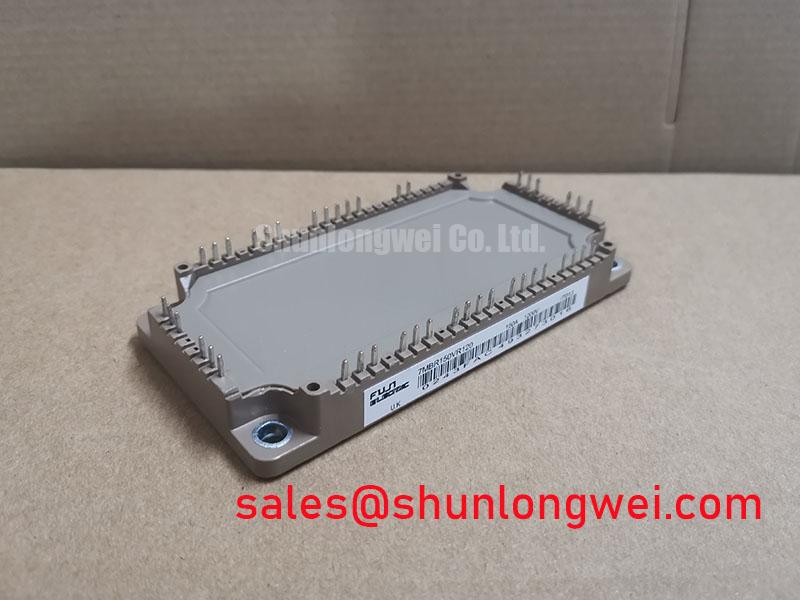
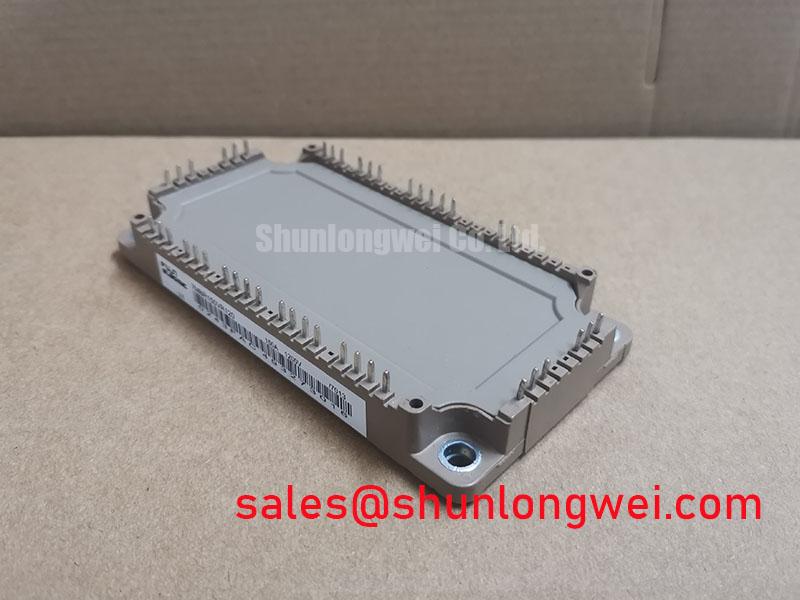
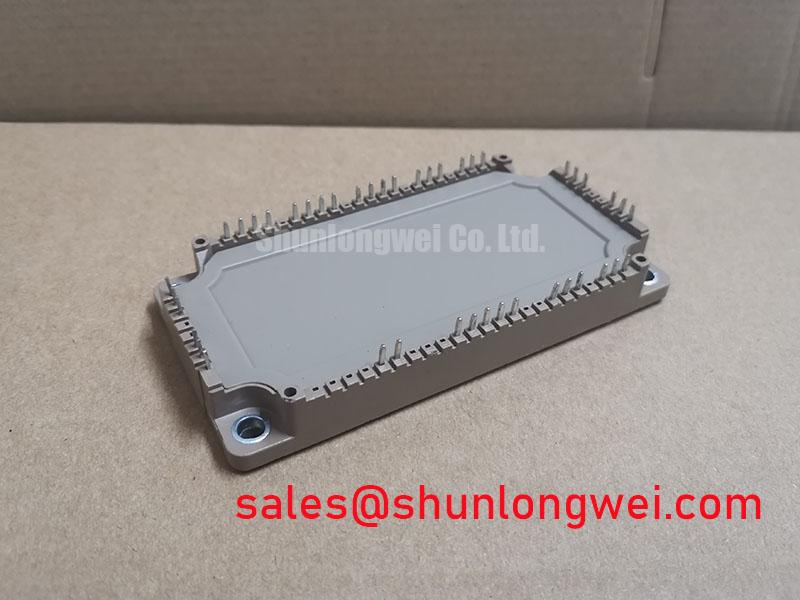
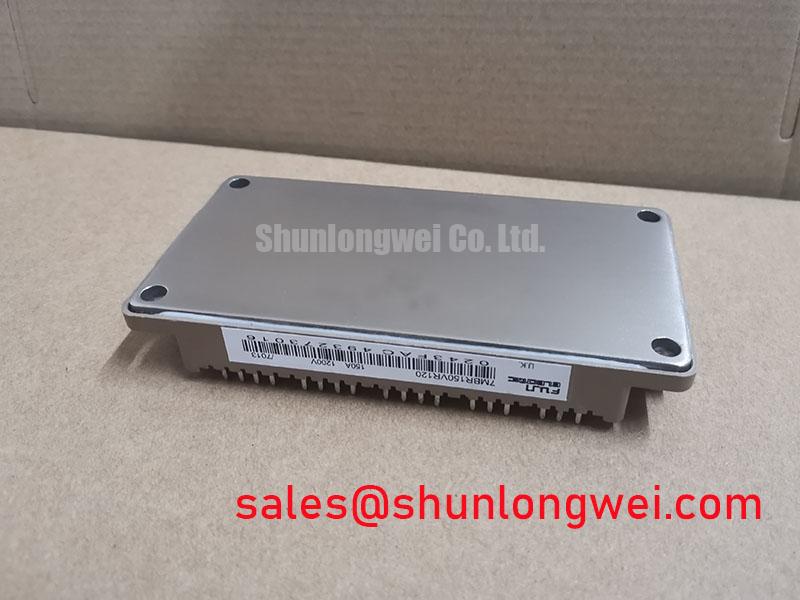
Technical Analysis: Trench Gate Evolution and Conduction Efficiency
The 7MBR150VR120 leverages the V-Series trench gate architecture to address the fundamental trade-off between switching speed and saturation voltage. In power electronics, Vce(sat) represents the “voltage toll” a module charges for energy passage. A lower Vce(sat) of 1.85V at the rated 150A current ensures that less energy is dissipated as heat during the conduction phase. This efficiency is enhanced by the module’s soft-switching characteristics, which help suppress EMI and reduce the stress on motor insulation systems.
Thermal resistance is another critical metric defined in the 7MBR150VR120 datasheet. With an Rth(j-c) of 0.20°C/W for the inverter IGBT section, heat is efficiently channeled from the silicon junction to the copper baseplate. To understand the importance of this value, one can analogy thermal resistance to the width of a drainage pipe; a lower resistance value (a wider pipe) allows heat to flow away from the delicate internal chips more freely, preventing thermal runaway and extending the module’s operating life under heavy cycles.
Furthermore, internal layout optimization reduces stray inductance between the internal chips and the power terminals. High parasitic inductance can cause significant voltage spikes during rapid turn-off transitions. By managing these parasitics within the PIM housing, Fuji Electric enables faster switching frequencies without compromising the Reverse Bias Safe Operating Area (RBSOA). For a deeper understanding of these mechanics, engineers may reference research on the impact of parasitic inductance on IGBT switching performance.
Optimized Application Scenarios
The 7MBR150VR120 is specifically suited for high-reliability environments that demand both power density and integrated protection features.
- Industrial Variable Frequency Drives (VFDs): The integrated 1600V rectifier and 150A inverter stage are perfectly matched for 400V-480V AC motor control systems.
- Servo Drive Systems: The V-Series technology offers the precise switching control needed for high-dynamic response in robotic and automated assembly lines.
- Uninterruptible Power Supplies (UPS): Its high thermal cycling capability ensures long-term reliability in standby power systems that face intermittent, high-stress loads.
- Solar Inverters: The 1200V rating provides the necessary safety margin for DC link voltages in commercial-scale photovoltaic installations.
Best Match: High-performance 45kW to 75kW motor drive systems requiring a compact, all-in-one power stage with integrated thermal monitoring.
Key Specifications Table
| Parameter Group | Characteristic | Value (Typical/Max) |
|---|---|---|
| Absolute Maximum Ratings | Collector-Emitter Voltage (Vces) | 1200 V |
| Collector Current (Ic continuous) | 150 A (@ Tc=80°C) | |
| Repetitive Peak Reverse Voltage (Rectifier) | 1600 V | |
| Electrical Characteristics (Inverter) | Vce(sat) at Ic=150A, Tj=125°C | 1.85 V (Typ) |
| Gate-Emitter Threshold Voltage (Vge(th)) | 6.0 V to 7.5 V | |
| Input Capacitance (Cies) | 22.5 nF (Typ) | |
| Thermal Characteristics | Rth(j-c) Inverter IGBT | 0.20 °C/W (Max) |
| Rth(j-c) Converter Diode | 0.23 °C/W (Max) |
Engineer’s FAQ for 7MBR150VR120
Q1: How should the thermal interface material be applied to ensure the lowest Rth(c-s)?
A: To achieve the specified case-to-sink thermal resistance, Fuji Electric recommends a uniform application of high-quality thermal grease with a thickness of approximately 100μm. This ensures optimal heat transfer to the heatsink. For extreme environments, engineers should consider the longevity of the silicone gel and grease interface to prevent pump-out effects.
Q2: Can the integrated NTC thermistor be used for direct over-temperature shutdown?
A: Yes, the integrated NTC provides a resistance value that corresponds to the baseplate temperature near the chips. It should be used in conjunction with a comparator circuit in the gate driver to trigger a soft shutdown if thresholds are exceeded. Note that the NTC measures case temperature, which is lower than the peak junction temperature.
Q3: What is the recommended gate resistance (Rg) for switching at 10kHz?
A: The datasheet lists a standard Rg of 2.2Ω for testing. However, the optimal Rg depends on your specific busbar inductance and desired dv/dt. A lower Rg will reduce switching losses but may increase EMI and voltage overshoot during turn-off.
The Fuji Electric 7MBR150VR120 remains a cornerstone for engineers requiring a balance of high integration and robust electrical performance. Its V-Series architecture and PIM configuration provide a stable foundation for high-power industrial conversion, ensuring that performance metrics are met without unnecessary system complexity.