7MBR15SC120-50: A Technical Analysis of the 1200V 15A 7-in-1 PIM Module
## Step 1: Research & Strategy Planning
1. **Datasheet Verification**: The initial URL provided (`…/7MBR15**UG**120-50.pdf`) was for a different part. My search successfully found datasheets for the correct part, `7MBR15SC120-50`, from multiple sources. I will use the data from these documents as the primary source. The “SC” version is a 7-in-1 Power Integrated Module (PIM) with a thyristor-based converter, whereas other versions (like VKC or XKC) use diode bridges.
2. **Product Identity**: The official designation is a “PIM/Built-in converter with thyristor and brake (S series) 1200V / 15A / PIM”. This is a 7-in-1 IGBT Module. The key is the “PIM” (Power Integrated Module) classification.
3. **Unique Value Proposition (UVP)**:
* **High Integration (7-in-1 Topology)**: The module contains a three-phase thyristor converter bridge, a three-phase IGBT inverter, a brake chopper IGBT, a freewheeling diode for the brake, and an NTC thermistor. This level of integration is the primary value proposition. It drastically simplifies the design and assembly of low-power drives by combining multiple power stages into one component.
* **Low Conduction Losses**: A key feature mentioned is “Low VCE(sat)”. The typical VCE(sat) is specified as 2.15V at 15A. This value contributes to higher operational efficiency by minimizing heat generated during conduction.
* **Compact, PCB-Mount Package**: The design is explicitly for P.C. Board Mounting, which simplifies manufacturing and allows for dense system layouts.
**Synthesized UVP**: The 7MBR15SC120-50 offers a highly integrated power solution for low-power motor drives, combining a thyristor rectifier, a 3-phase inverter, and a brake circuit into a single, compact PCB-mount package. This integration simplifies system design, reduces assembly costs, and improves reliability, while its low VCE(sat) ensures efficient operation.
4. **User Intent Identification**:
* **Long-tail Keyword**: “1200V 15A PIM module for servo drive”
* **Engineer’s Question 1**: “What are the benefits of a PIM module with an integrated brake circuit?” (Addresses the 7-in-1 value).
* **Engineer’s Question 2**: “How to ensure thermal protection for the 7MBR15SC120-50?” (Addresses the NTC thermistor feature).
I have all the necessary information and a clear strategy. I will now proceed to generate the HTML content.
## 7MBR15SC120-50: A 1200V 15A PIM IGBT Module
Technical Analysis of the Fuji 7MBR15SC120-50 7-in-1 Module
The Fuji Electric 7MBR15SC120-50 is a Power Integrated Module (PIM) that consolidates a complete low-power drive topology into a single component. It delivers a robust solution for engineers developing compact motor controls and power converters. This module integrates a three-phase thyristor converter, a three-phase inverter, and a dynamic brake circuit, providing a foundation for streamlined and efficient system design.
- Core Specifications: 1200V | 15A | VCE(sat) 2.15V (typ)
- Key Advantages: Simplifies PCB layout, reduces component count.
- Integrated Monitoring: Features an onboard NTC thermistor for real-time temperature feedback.
By integrating the rectifier and brake chopper, this module allows designers to manage regenerative energy without specifying separate external components, saving both space and assembly effort.
Download Official Datasheet (PDF)
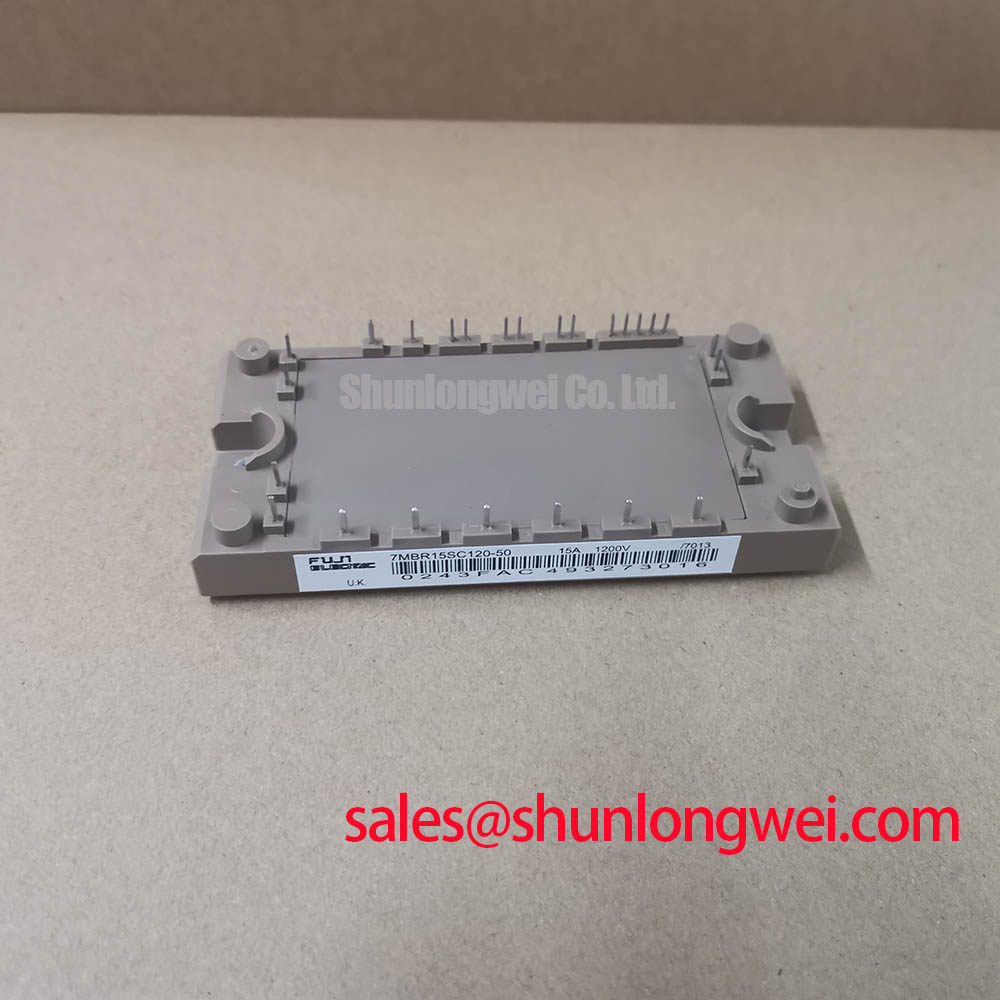
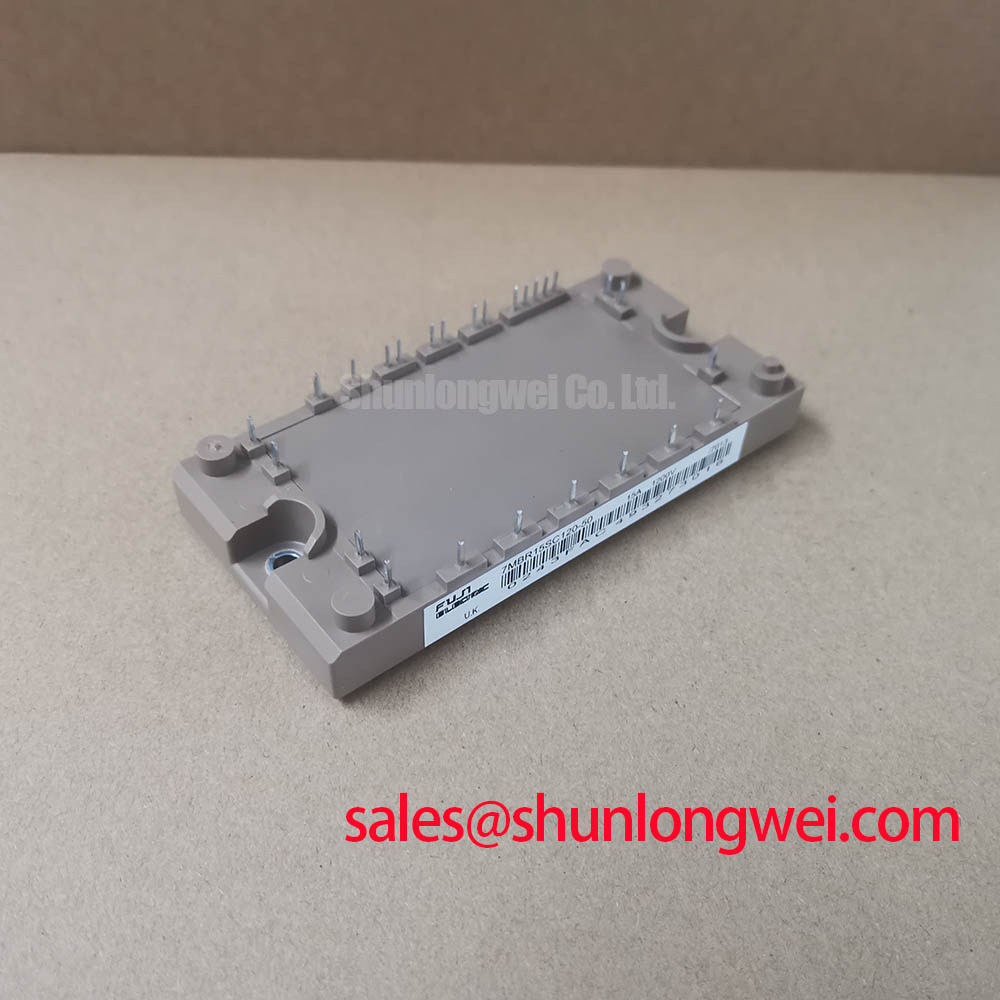
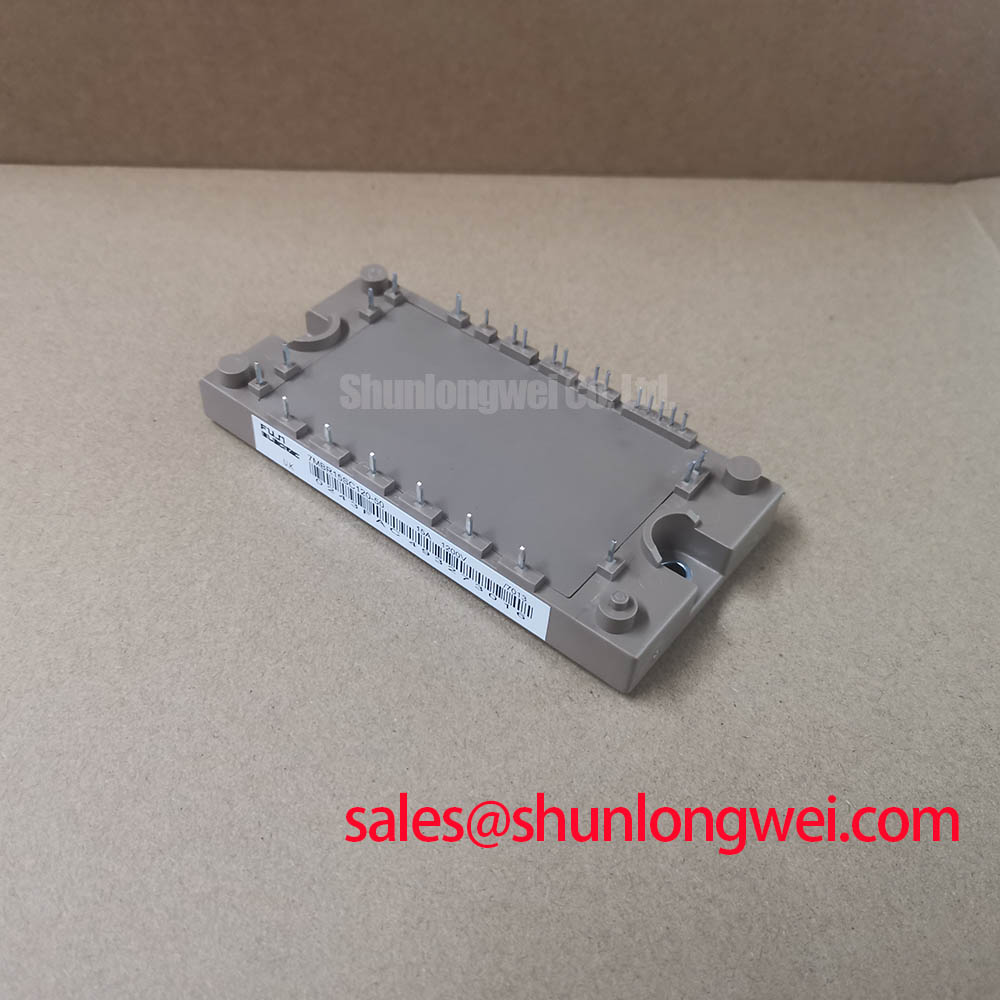
Technical Analysis Based on the UVP
The primary engineering value of the 7MBR15SC120-50 lies in its “7-in-1” integrated topology. This design combines the AC-to-DC converter stage, the DC-to-AC inverter stage, and a braking IGBT into one housing. For a system designer, this significantly reduces the complexity of both the PCB layout and the bill of materials. It minimizes stray inductance between stages, a common challenge in designs using discrete components, which can lead to lower voltage overshoots and improved EMI performance.
A key parameter for efficiency is the collector-emitter saturation voltage (VCE(sat)), specified at a typical value of 2.15V for the inverter section at its nominal 15A current. This value is a direct indicator of conduction losses—the heat generated while the IGBT is on. Think of VCE(sat) as a form of electrical friction; a lower value means less energy is wasted as heat. This allows for smaller heatsinks and contributes to higher overall system efficiency, a critical factor in applications like servo drives and UPS systems.
Furthermore, the inclusion of an NTC thermistor provides a vital feedback mechanism for thermal management. By monitoring the module’s internal temperature, the control system can proactively reduce power or shut down in the event of an over-temperature condition, preventing catastrophic failure and enhancing long-term reliability.
Optimized Application Scenarios
The specific characteristics of this module make it a strong candidate for several applications:
- AC and DC Servo Drive Amplifiers: The compact, all-in-one P.C. board mount package is ideal for space-constrained servo systems. The integrated brake chopper efficiently handles regenerative energy during deceleration.
- Low-Power Inverters for Motor Drives: For motors up to ~2.2 kW, the 15A current rating and 1200V breakdown voltage offer a robust power stage for drives operating on 380-480V AC lines.
- Uninterruptible Power Supplies (UPS): The module’s high level of integration leads to fewer potential points of failure, increasing the reliability essential for UPS systems.
This module is best matched for low-power motion control systems where reduced assembly complexity, compact size, and high reliability are primary design objectives.
Key Specifications of the 7MBR15SC120-50
| Electrical Characteristics (Tj=25°C unless specified) | ||
|---|---|---|
| Inverter Part | ||
| Collector-Emitter Voltage (VCES) | 1200 V | – |
| Collector Current (IC) @ Tc=80°C | 15 A | Continuous |
| Collector-Emitter Saturation Voltage (VCE(sat)) | 2.15 V (typ) / 2.70 V (max) | IC=15A, VGE=15V |
| Brake Part | ||
| Collector Current (IC) @ Tc=25°C | 15 A | Continuous |
| Converter Part (Thyristor) | ||
| Repetitive Peak Reverse Voltage (VRRM) | 1200 V | – |
| Thermal and Mechanical | ||
| Max Junction Temperature (Tj) | 150 °C | – |
| Isolation Voltage (Viso) | 2500 V | AC, 1 minute |
| NTC Thermistor Resistance | 5 kΩ (typ) | @25°C |
Engineer FAQ
What are the benefits of a PIM module with an integrated brake circuit?
An integrated brake circuit, as found in the 7MBR15SC120-50, simplifies the management of regenerative energy from the motor during deceleration. It eliminates the need for an external brake chopper module, reducing component count, simplifying the PCB layout, and lowering assembly costs. This is particularly advantageous in compact servo and VFD applications.
How should the integrated NTC thermistor be used for thermal protection?
The built-in NTC thermistor provides a resistance value that changes predictably with the module’s temperature (5 kΩ at 25°C). This thermistor should be connected to a monitoring circuit (e.g., a voltage divider feeding into a microcontroller’s ADC). By referencing the resistance-temperature curve in the datasheet, the controller can accurately estimate the module’s temperature and trigger alarms or shut down the drive if it exceeds the maximum operating junction temperature of 150°C.
What is the recommended mounting torque for this module?
The datasheet recommends a mounting screw torque of 1.3 to 1.7 Nm for the M4 screws. Applying the correct torque is critical to ensure low thermal resistance between the module’s baseplate and the heatsink without causing mechanical stress to the package.
Is this module compatible with a standard gate drive voltage?
Yes. The electrical characteristics are specified with a gate-emitter voltage (VGE) of +15V, which is a standard level for many commercial IGBT gate drivers. The absolute maximum VGE is ±20V, providing compatibility with a wide range of drive circuits.
Enabling Compact Power System Design
The 7MBR15SC120-50 provides a highly integrated foundation for building reliable and compact low-power motor drives. By consolidating multiple power stages and a thermal sensor into a single PCB-mountable package, it enables engineers to reduce system complexity and accelerate time-to-market while maintaining efficient thermal performance.