Technical Analysis of the Infineon FS150R06KL4_B4 IGBT Module
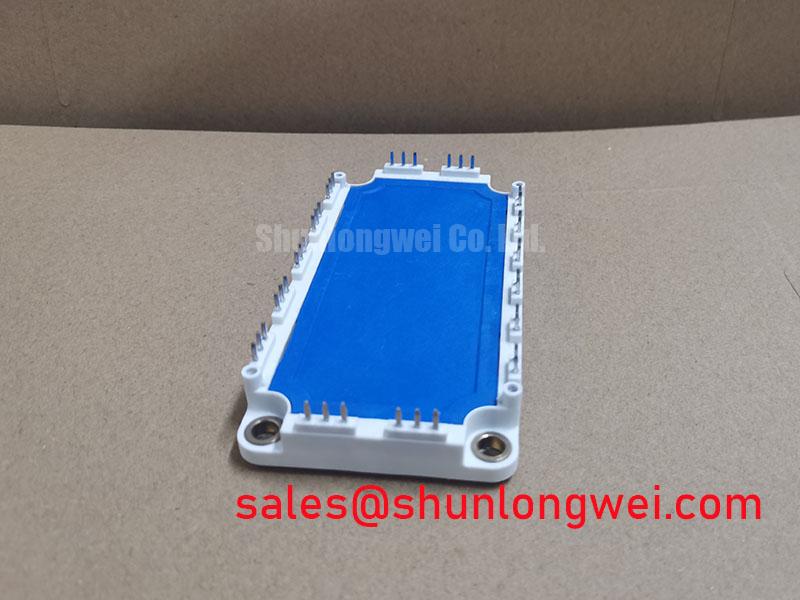
Infineon FS150R06KL4_B4 600V 150A IGBT4 Four-Pack Module
Low Conduction Loss and High Thermal Stability in a Four-Pack Configuration
The Infineon FS150R06KL4_B4 is a power module that integrates four IGBTs in a B-series (four-pack) topology, leveraging Trench/Fieldstop IGBT4 technology to achieve a low collector-emitter saturation voltage. This design directly reduces conduction losses, which is a primary source of heat in high-power switching applications. The module’s robust thermal architecture ensures dependable performance under demanding operational conditions.
- Core Specifications: 600V | 150A | VCE(sat) (typ) 1.70V @ 125°C
- Key Advantages: Reduced thermal load on cooling systems, enhanced overall system efficiency.
- Application Focus: Its four-pack arrangement is well-suited for implementing compact and efficient single-phase H-bridge circuits.
Download the Official FS150R06KL4_B4 Datasheet (PDF)


Technical Analysis: Efficiency and Thermal Management
A defining characteristic of the FS150R06KL4_B4 is its low collector-emitter saturation voltage (VCE(sat)), which is documented as 1.70V (typical) at its nominal current of 150A and an operating junction temperature of 125°C. This parameter is critical because it quantifies the voltage drop across the IGBT when it is fully on. A lower VCE(sat) translates directly to lower power dissipation (P = VCE(sat) * IC), resulting in less waste heat and higher energy efficiency for the end system. This is a core benefit of the integrated Infineon Trench/Fieldstop IGBT4 technology.
Effective thermal management is fundamental to the reliability of any power semiconductor. The module’s thermal resistance from junction to case (RthJC) for each IGBT is specified at 0.24 K/W. This value can be viewed as an indicator of how easily heat can travel from the active silicon die to the module’s baseplate. To use an analogy, thermal resistance is like the width of a pipe; a lower value signifies a wider pipe, allowing heat to flow away more easily. This efficient heat transfer capability allows for more manageable heatsink requirements and helps maintain the junction temperature within safe operating limits, which is essential for long-term operational stability. Further reading on mastering IGBT thermal design can provide deeper insights.
To support precise thermal oversight, the FS150R06KL4_B4 includes an integrated NTC thermistor. This component provides a real-time temperature feedback signal to the system’s controller. This data enables the implementation of over-temperature protection mechanisms, preventing the device from exceeding its maximum rated junction temperature of 150°C. This integrated NTC is a key element for building robust and self-protecting power conversion systems.

Optimized Application Scenarios
The electrical and structural characteristics of this module make it suitable for several specific power conversion tasks:
- Motor Drives: The 600V/150A rating and high efficiency are ideal for three-phase inverters used in industrial automation and servo drives, reducing energy consumption.
- Solar Inverters: The four-pack topology is perfectly configured for building the single-phase H-bridge required in many residential and commercial solar energy systems.
- Uninterruptible Power Supplies (UPS): Low conduction and switching losses are crucial for maximizing battery life and reducing cooling costs in high-availability UPS systems.
- Welding Equipment: The module’s thermal stability allows it to handle the demanding, cyclical loads characteristic of power sources for industrial welding.
This module is an optimal match for applications requiring high efficiency and thermal stability in the sub-200A, 600V class.
Key Specification Parameters for FS150R06KL4_B4
| Absolute Maximum Ratings (Tvj = 25°C unless otherwise specified) | |
|---|---|
| Collector-Emitter Voltage (VCES) | 600 V |
| Continuous Collector Current (IC nom) | 150 A |
| Repetitive Peak Collector Current (ICRM) | 300 A |
| Operating Junction Temperature (Tvj op) | -40 to +150°C |
| Isolation Test Voltage (VISOL) | 2500 V (RMS, f=50Hz, t=1min) |
| Electrical & Thermal Characteristics (IGBT Inverter) | |
| Collector-Emitter Saturation Voltage (VCE sat) | 1.70 V (Typ. at IC=150A, Tvj=125°C) |
| Gate-Emitter Threshold Voltage (VGE(th)) | 5.0V – 6.5V |
| Total Switching Energy (Ets) | 16.50 mJ (Typ. at IC=150A, Tvj=125°C) |
| Thermal Resistance, Junction to Case (RthJC) | 0.24 K/W per IGBT |
| Mounting Torque (M) | 3.0 – 6.0 Nm |
Note: The parameters listed above are for reference. For complete and verified technical data, always consult the official manufacturer’s datasheet.

Engineer’s FAQ for the FS150R06KL4_B4
Q: How do I use the RthJC value of the FS150R06KL4_B4 for heatsink selection?
A: The RthJC (0.24 K/W per IGBT) is the thermal resistance from the silicon junction to the module’s case. To select a heatsink, you must also consider the thermal resistance of the thermal interface material (RthCS) and the heatsink itself (RthSA). The total thermal resistance (RthJA) is the sum of these values. You can calculate the maximum allowable thermal resistance for your heatsink based on your estimated power loss, maximum ambient temperature, and the maximum allowable junction temperature (150°C).
Q: What are the recommended mounting torque specifications for this module?
A: The datasheet specifies a mounting torque of 3.0 to 6.0 Nm for the M6 mounting screws. Adhering to this specification is critical. Insufficient torque can lead to poor thermal contact with the heatsink, while excessive torque can cause mechanical stress and damage the module’s substrate.
Q: What is the primary benefit of the ‘Four-Pack’ (B-Series) configuration?
A: The four-pack topology arranges four IGBTs and their corresponding freewheeling diodes in a single module, which is ideal for creating a full H-bridge. This configuration simplifies the design of single-phase inverters, such as those used in solar applications or UPS systems, by reducing the component count and simplifying the busbar layout compared to using discrete components or multiple half-bridge modules. You can learn more about different IGBT topologies like H-bridge vs. half-bridge here.
Q: How does the integrated NTC contribute to system reliability?
A: The integrated NTC thermistor acts as a temperature sensor placed close to the IGBT chips. It allows the control system to continuously monitor the module’s operating temperature. If the temperature approaches the maximum limit due to overload or cooling system failure, the controller can trigger a safe shutdown or reduce power, preventing catastrophic failure from IGBT burnout and enhancing the overall lifetime of the power system.
Enabling Efficient Power Conversion
The Infineon FS150R06KL4_B4 module provides a robust solution for power conversion systems where efficiency and thermal performance are critical design drivers. Its low VCE(sat), a direct result of the IGBT4 technology, combined with a well-defined thermal architecture, gives engineers the tools to develop compact, reliable, and energy-efficient inverters and motor drives.