Fuji 2DI200D-100: A Technical Analysis of the 1000V/200A Power Module
Fuji 2DI200D-100: 1000V 200A Power Transistor Module
Technical Analysis of the Fuji Electric 2DI200D-100
The Fuji Electric 2DI200D-100 is a dual Darlington Power Transistor Module engineered for robust performance in high-power switching applications. This device integrates two NPN Darlington transistor pairs with freewheeling diodes into a single, isolated package, providing a foundation for efficient and simplified power control circuits. Its primary value lies in delivering high current gain alongside substantial voltage and current ratings, enabling direct control of demanding loads.
- Core Specifications: 1000V | 200A | hFE ≥ 75
- Key Engineering Benefits:
- Simplified base drive circuit requirements due to high DC current gain.
- Enhanced thermal management with an electrically isolated baseplate.
This module’s high gain means less input current is needed to control the main 200A output current, reducing the complexity of preceding driver stages. This is a key consideration for designers looking to optimize system cost and reliability.
Download the 2DI200D-100 Official Datasheet (PDF)
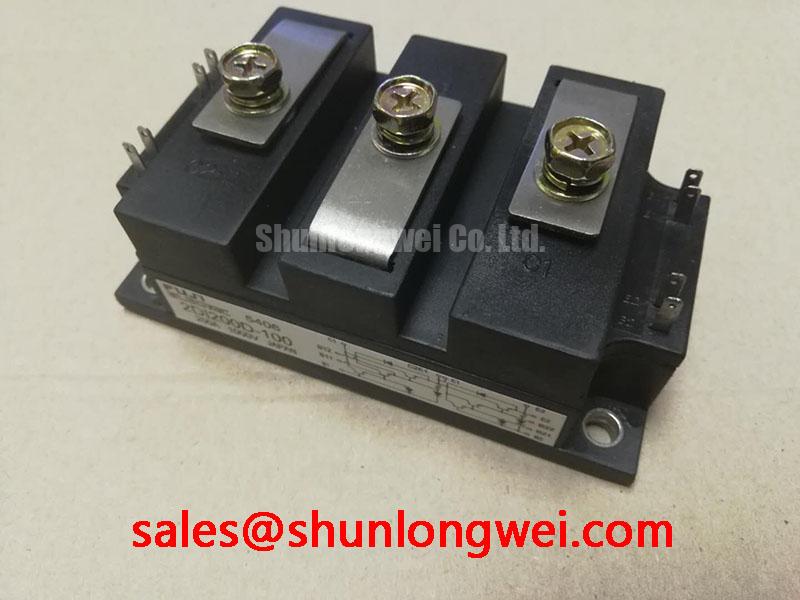

In-Depth Technical Attributes
A standout characteristic of the 2DI200D-100 is its high DC current gain (hFE), specified with a minimum value of 75. This allows the module to manage a substantial collector current of 200A with a comparatively low base current. For system designers, this translates directly to a less powerful—and therefore less complex and costly—gate drive circuit. It simplifies the interface between the control logic (like a microcontroller) and the high-power output stage, a crucial aspect of power system design.
The module’s thermal resistance, Rth(j-c), is documented at 0.12°C/W per transistor. This parameter is as critical as the electrical specifications. Think of thermal resistance as the width of a pipe; a lower value signifies a wider pipe, allowing heat to flow more easily from the active silicon junction to the case. This efficient heat transfer is fundamental for maintaining the junction temperature within its maximum limit of 150°C during operation. Proper thermal management, guided by this value, is essential for ensuring system reliability and preventing premature component failure.

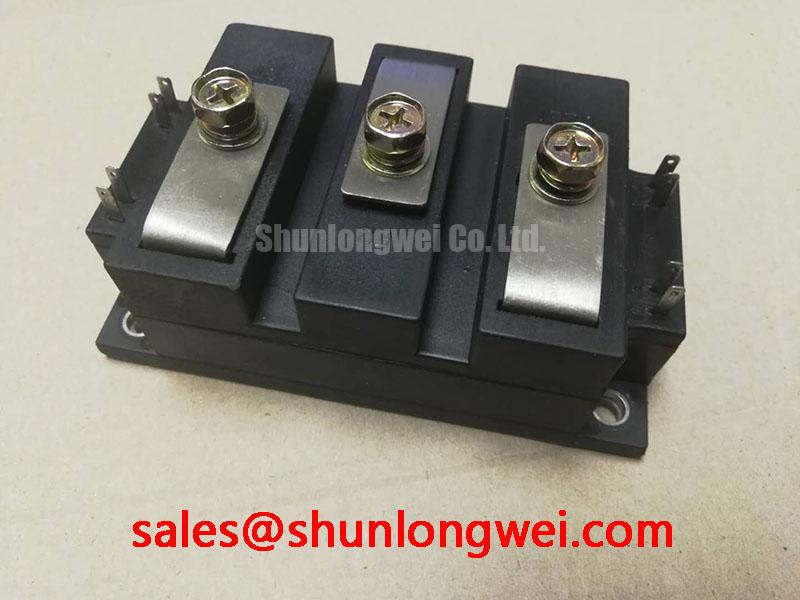
Optimized Application Scenarios
The characteristics of the 2DI200D-100 make it a strong candidate for several high-power, low-to-medium frequency applications:
- DC Motor Controls: Its high current capability (200A) and voltage rating (1000V) are well-suited for driving large DC motors. The integrated freewheeling diode safely dissipates energy from the motor’s inductance when the transistor switches off.
- Low-Frequency Inverters: While not designed for high-frequency operation like modern IGBTs, it is a robust choice for inverters operating in the lower kilohertz range.
- High-Power Switching Regulators: Can be effectively used as the main switching element in linear or buck/boost converters where efficiency at lower frequencies is prioritized.
The module is best matched for high-power, low-frequency systems where robust control and simplified driver design are primary engineering goals.
Key Technical Specifications of the 2DI200D-100
| Absolute Maximum Ratings (Tc=25°C) | |
|---|---|
| Collector-Base Voltage (VCBO) | 1000V |
| Collector-Emitter Voltage (VCEO) | 1000V |
| Emitter-Base Voltage (VEBO) | 6V |
| Collector Current (IC) | 200A |
| Base Current (IB) | 20A |
| Collector Power Dissipation (PC) | 1250W |
| Operating Junction Temperature (Tj) | +150°C |
| Electrical Characteristics (Tc=25°C) | |
| Collector-Emitter Saturation Voltage (VCE(sat)) | 2.5V (Max) at IC=200A, IB=4A |
| Base-Emitter Saturation Voltage (VBE(sat)) | 3.5V (Max) at IC=200A, IB=4A |
| DC Current Gain (hFE) | 75 (Min) at IC=200A, VCE=2V |
| Thermal Characteristics | |
| Thermal Resistance (Rth(j-c) – Transistor) | 0.12 °C/W |
| Thermal Resistance (Rth(j-c) – Diode) | 0.25 °C/W |
Note: All specifications are sourced directly from the official Fuji Electric datasheet.
Engineer’s FAQ for the 2DI200D-100
1. What are the base drive requirements for this module?
Based on the datasheet, the module requires a base current (IB) of approximately 4A to drive the 200A collector current into saturation, where VCE(sat) is at its maximum of 2.5V. The high DC current gain (hFE ≥ 75) means that the required base current is significantly lower than for a single transistor, simplifying the design of the drive circuitry.
2. How do I approach thermal design for this power module?
Effective thermal design starts with the module’s thermal resistance (Rth(j-c)) of 0.12°C/W. To ensure reliability, calculate the maximum power dissipation (Pd) in your application. The case temperature (Tc) must be kept low enough that the junction temperature (Tj) does not exceed 150°C, using the formula: Tj = Tc + (Pd × Rth(j-c)). This calculation will determine the required performance of your heatsink.
3. What is the purpose of the freewheeling diode in the 2DI200D-100?
The integrated freewheeling diode (FWD) is essential for applications involving inductive loads, such as electric motors. When the transistor turns off, the energy stored in the motor’s inductance creates a large voltage spike. The FWD provides a safe path for this current to circulate, protecting the transistor from exceeding its breakdown voltage and preventing device failure.
4. Is this module suitable for new, high-frequency designs like a modern EV inverter?
The 2DI200D-100 is a Darlington transistor module, a technology that generally has slower switching speeds compared to modern IGBTs or SiC MOSFETs. With turn-on and turn-off times in the microsecond range, it is best suited for low-frequency power control (e.g., DC choppers, low-frequency motor drives) rather than high-frequency designs where switching losses would become excessive.
This power transistor module delivers a durable and straightforward solution for managing high-power loads. The combination of high gain, robust thermal performance, and an integrated dual-device package enables engineers to build reliable, high-current control systems with simplified driver electronics.