Optrex DMF50260NFU-FW-31: A High-Reliability 240×64 FSTN Graphic LCD Module for Industrial HMIs
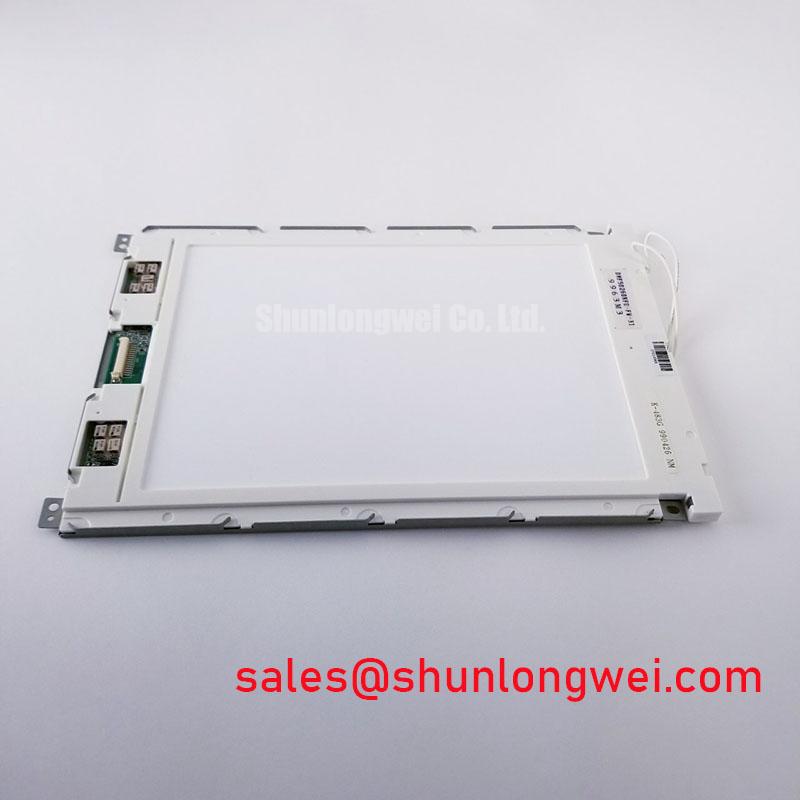
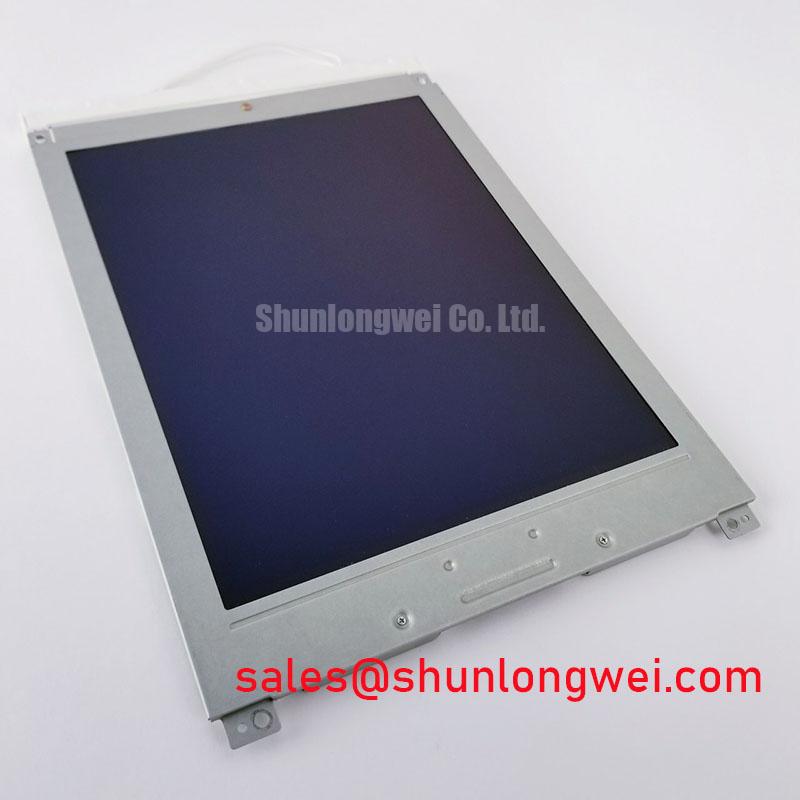
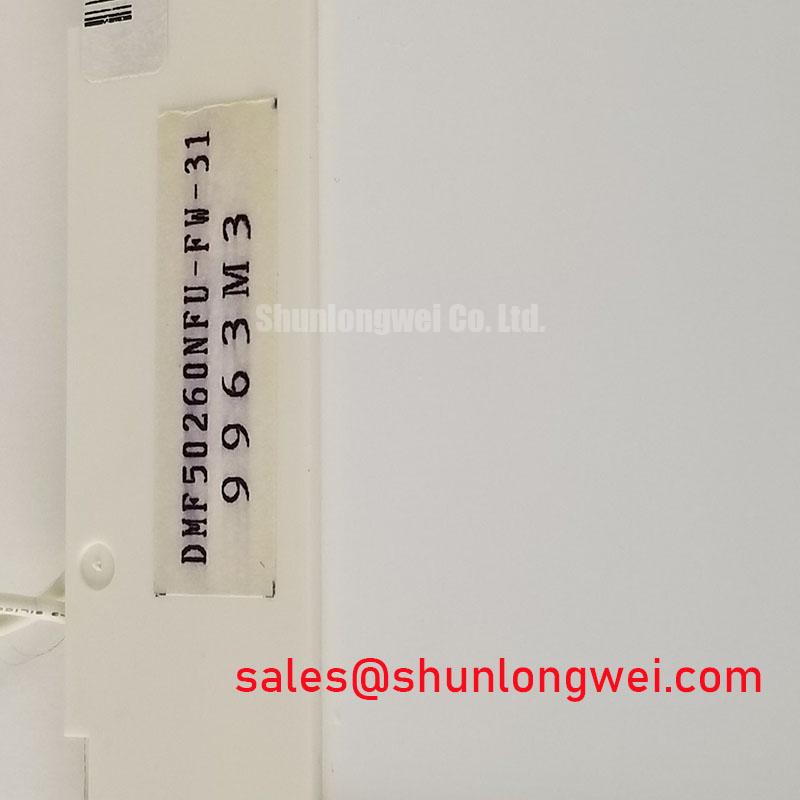
DMF50260NFU-FW-31 Optrex FSTN Graphic 240×64 LCD Module
Introduction and Core Specifications
The Optrex DMF50260NFU-FW-31 is a highly reliable, 240×64 dot matrix monochrome graphic LCD module engineered for demanding industrial environments. Incorporating a film-compensated super-twisted nematic (FSTN) liquid crystal display, the unit offers exceptional readability under various lighting conditions. This legacy display features an integrated T6963C controller and an 8-bit parallel interface, simplifying HMI integration for system upgrades and retrofitting projects.
- Core Parameters: 240 x 64 Dot Matrix | FSTN Transflective | Integrated T6963C Controller
- Key Engineering Benefits: Lowers host CPU overhead via onboard graphics processing, and ensures excellent sunlight readability without excessive backlight power.
- Maintenance Utility: It acts as a direct-fit replacement for older industrial control interfaces, maintaining legacy compatibility without requiring a complete hardware redesign.
Download Official DMF50260NFU-FW-31 Datasheet (PDF)

Technical Analysis and UVP Integration
The standout value of the DMF50260NFU-FW-31 lies in its transflective polarizer. A transflective display behaves like a smart mirror. In bright environments, it reflects incoming ambient light back out to increase screen contrast, while under low-light settings, the CCFL backlight ensures viewability. This dual-mode capability minimizes power draw and thermal dissipation on the front panel.
By leveraging LCD core technology centered on FSTN fluids, this display offers sharp monochrome graphics with a 1/64 duty cycle. The built-in T6963C controller operates as an independent graphics engine. It handles text rendering, custom character generation, and pixel-mapping autonomously. This offloads processing-heavy UI rendering loops from the main host microcontroller, enabling deterministic control elsewhere in your system.

Operating with a standard +5V logic supply ($V_{DD}$), the module requires a negative voltage supply ($V_{EE}$) for contrast biasing. The differential voltage ($V_{DD} – V_0$) controls liquid crystal alignment. Think of this biasing voltage like adjusting the lens focus on a camera; precise tuning on the $V_0$ pin is essential to keeping text razor-sharp across the module’s operating temperature range.
Optimized Application Scenarios
- CNC Machinery Controllers: Ideal for dusty factory floors because its static monochrome matrix does not suffer from off-axis viewing washout.
- Industrial HMIs: Provides reliable numeric readouts for custom industrial HMIs and processing machinery.
- Marine Diagnostic Consoles: Resists washouts from direct sunlight due to its reflective polarizer.
- Medical Instruments: Offers clean waveform displays for patient monitoring systems.
Best Fit Verdict: The DMF50260NFU-FW-31 is the optimal drop-in replacement display for high-vibration legacy industrial controllers requiring low logic overhead and high sun-readability.
Key Specifications Table
| Parameter Category | Specification Name | Value / Rating |
|---|---|---|
| Absolute Maximum Ratings | Logic Supply Voltage ($V_{DD} – V_{SS}$) | -0.3V to +7.0V |
| LCD Bias Voltage ($V_{DD} – V_0$) | 0V to +30.0V | |
| Operating Temperature Range | 0°C to +50°C | |
| Electrical Characteristics | Input High Voltage ($V_{IH}$) | Min 0.8 * $V_{DD}$ |
| LCD Driving Voltage ($V_{DD} – V_0$) at 25°C | Typ 14.1V | |
| Logic Current Draw ($I_{DD}$) | Max 12.0 mA | |
| Optical & Physical | Dot Configuration | 240 x 64 dots |
| Viewing Direction | 6 o’clock position | |
| Display Backlight Type | CCFL (White) |
For additional details regarding drive circuitry and waveform analysis, refer to our comprehensive technical guide on the DMF50260NFU-FW series.
Engineer’s Frequently Asked Questions
Q1: What built-in controller drives the DMF50260NFU-FW-31, and is it compatible with modern MCUs?
A: The display is driven by the Toshiba T6963C controller. It uses an 8-bit parallel bus interface (D0-D7), which is compatible with most 5V-tolerant microcontrollers. If interfacing with modern 3.3V MCUs, voltage-level translation buffers are required on the control and data lines.
Q2: How is the contrast adjusted on this specific FSTN screen?
A: Contrast is controlled by applying a negative bias voltage to the $V_0$ pin. You must configure an external potentiometer between $V_{DD}$ and the negative voltage output ($V_{EE}$), routing the adjustable center tap directly to the $V_0$ pin. This enables compensation for temperature-induced display drift.
Q3: Does the CCFL backlight require an external high-voltage inverter?
A: Yes. The cold cathode fluorescent lamp requires an external CCFL inverter to step up the low DC voltage to the high AC start voltage. Ensure proper insulation and circuit separation to mitigate high-frequency EMI. To evaluate dimming options and their impact on screen life, read our resource on industrial LCD dimming guidelines.
The DMF50260NFU-FW-31 remains a vital component for extending the service life of critical legacy systems. Its combination of transflective FSTN visibility and dedicated on-chip graphical control ensures high performance where modern displays fail to meet mechanical or electrical requirements.