Hitachi Energy 5SNE0800E330100: High-Voltage 3300V 800A HiPak IGBT Module for Traction and Industrial Power
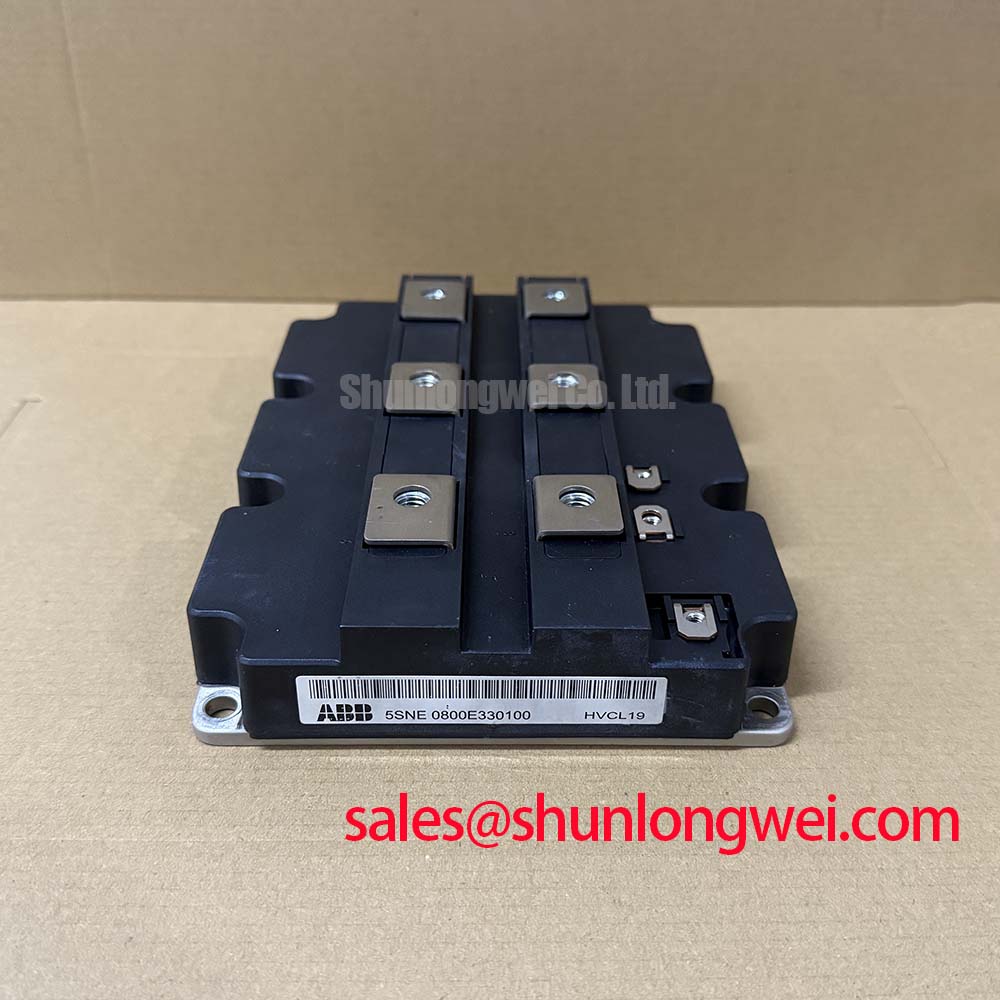
Hitachi Energy 5SNE0800E330100 3300V 800A HiPak IGBT Module
Exceptional Ruggedness for High-Voltage Traction Systems
The 5SNE0800E330100 is a high-power single-switch IGBT module developed by Hitachi Energy (formerly ABB) to meet the rigorous demands of locomotive traction and heavy industrial power conversion. Utilizing advanced SPT+ (Soft Punch Through) technology, this module provides a superior balance between low conduction losses and exceptional switching ruggedness. It is engineered to perform in environments where thermal cycling is frequent and reliability is non-negotiable.
- Core Specifications: 3300V | 800A | VCE(sat) 2.9V
- Key Advantages: Enhanced thermal cycling life with AlSiC baseplate technology and simplified gate drive requirements due to low parasitic capacitance.
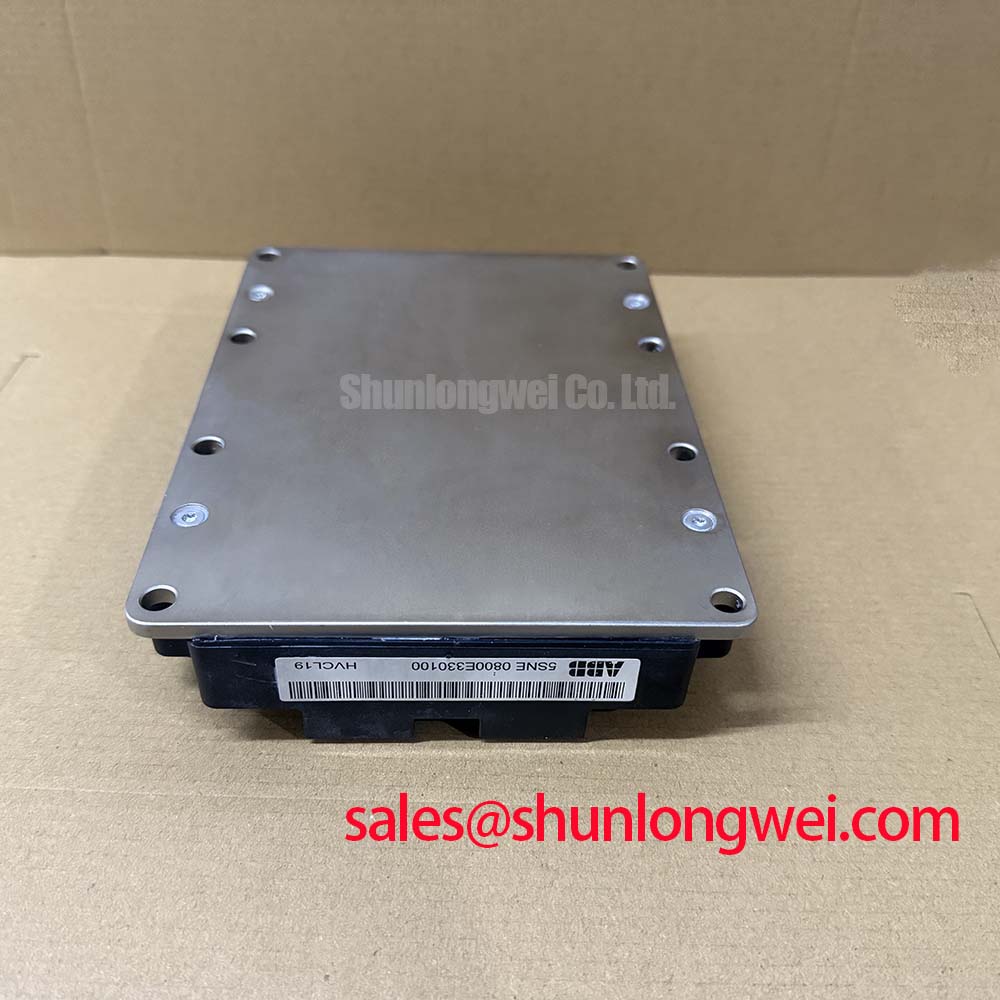
- Engineering Insight: One common challenge in high-voltage designs is matching the thermal expansion of the module to the heatsink. The 5SNE0800E330100 addresses this with its AlSiC baseplate, which drastically reduces mechanical stress during operation.
Download Official 5SNE0800E330100 Datasheet (PDF)
SPT+ Technology: Optimizing Efficiency and Ruggedness
The technical core of the 5SNE0800E330100 lies in its SPT+ silicon design. In traditional high-voltage switching, engineers often face a trade-off between switching speed and conduction losses. SPT+ technology breaks this barrier by optimizing the carrier distribution in the silicon, resulting in a lower collector-emitter saturation voltage (VCE(sat)) without increasing the energy lost during switching (Eoff). This allows for higher power density in the same footprint, reducing the need for oversized cooling solutions.
To understand the importance of this efficiency, consider an analogy: conduction loss is like friction in a water pipe. A smoother internal surface (lower VCE(sat)) allows water to flow with less resistance, preventing the pipe from heating up. In power electronics, this “smoothness” translates to less waste heat and improved system efficiency. This is critical for applications like liquid-cooled megawatt converters where every watt of lost energy must be actively managed.
AlSiC Baseplate and Thermal Management
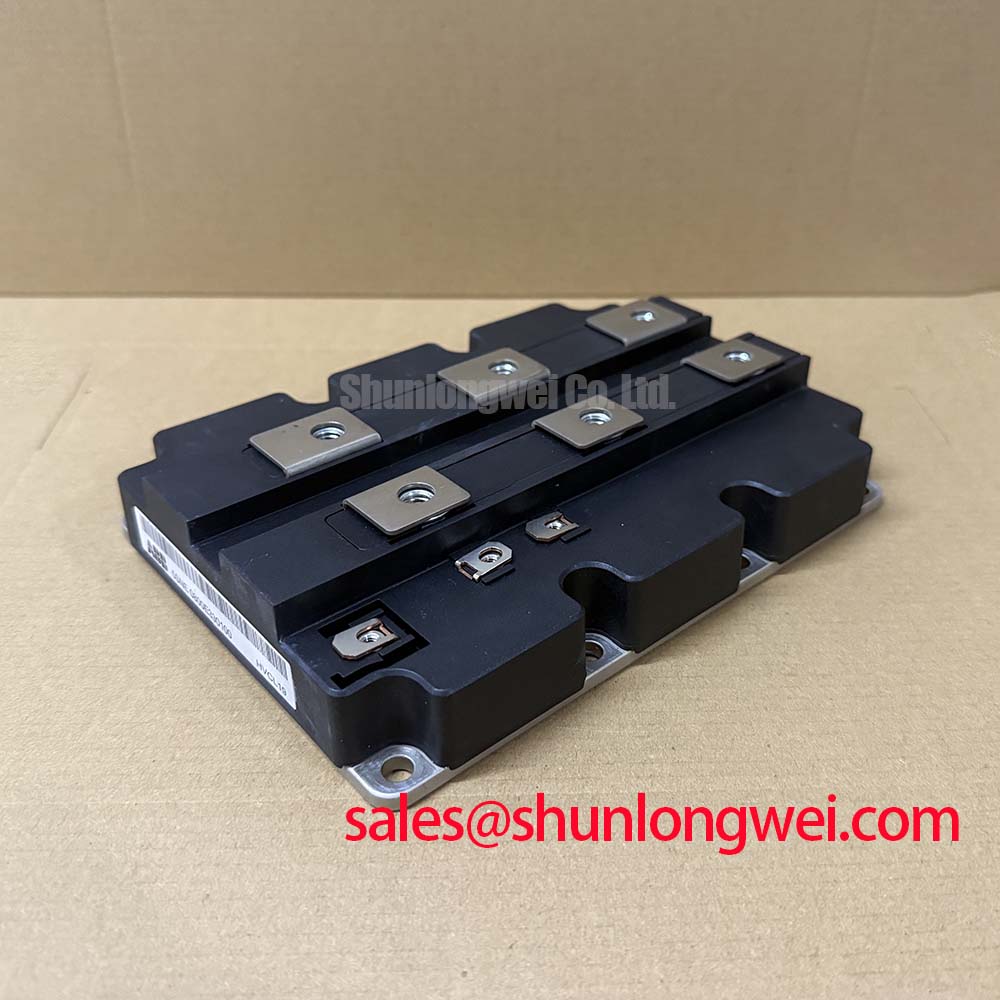
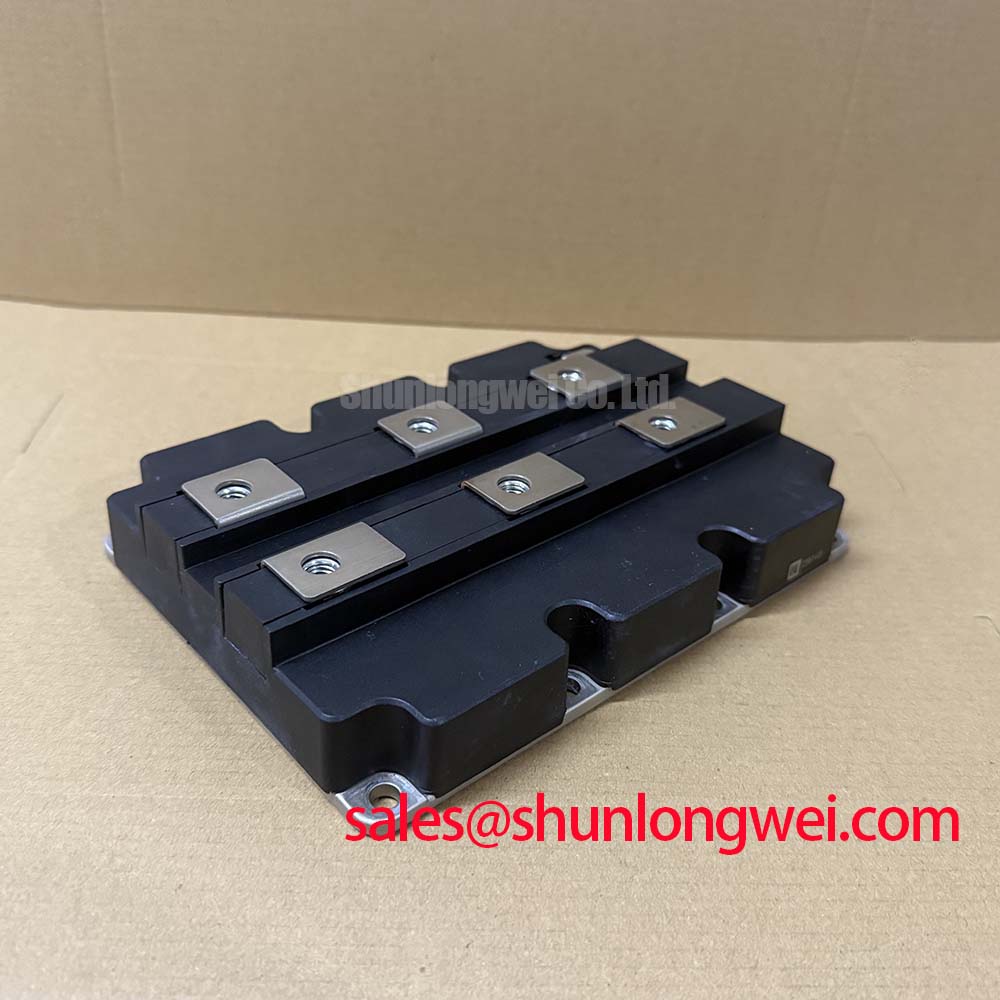
Mechanical stress is a primary driver of IGBT failures in high-power cycles. The 5SNE0800E330100 utilizes an Aluminum Silicon Carbide (AlSiC) baseplate. You can imagine the thermal expansion coefficient as the “flexibility” of a material when heated. Traditional copper baseplates expand more than the ceramic substrates inside the module, causing solder cracks over time. AlSiC, however, expands at a rate nearly identical to the internal ceramic, ensuring that the internal “joints” of the module do not fatigue even after thousands of power cycles. This ruggedness is further protected by high-performance silicone gel insulation, which prevents partial discharge at 3300V.
Optimal Application Scenarios
- Railway Traction: The square RBSOA (Reverse Bias Safe Operating Area) allows the 5SNE0800E330100 to handle the unpredictable load transients common in locomotive motor control.
- Industrial MV Drives: High voltage rating simplifies the design of multi-level inverters for high-power industrial motors.
- HVDC Transmission: Low loss characteristics make this switch ideal for high-voltage direct current grid interfaces.
- Renewable Energy: Robustness against environmental stress suits offshore wind power converters.
Best Match Conclusion: Ideal for designs requiring 3300V isolation with high current density and superior thermal cycling longevity in traction or heavy-duty grid environments.
Critical Technical Specifications
| Category | Parameter | Typical Value |
|---|---|---|
| Absolute Ratings | Collector-Emitter Voltage (VCES) | 3300 V |
| Continuous Collector Current (IC) | 800 A | |
| Electrical Characteristics | Collector-Emitter Saturation Voltage (VCEsat) | 2.9 V (@ 800A, 125°C) |
| Input Capacitance (Cies) | 155 nF | |
| Thermal Data | Thermal Resistance Junction-to-Case (Rthjc) | 11 K/kW (IGBT) |
| Max. Junction Temperature (Tj) | 150 °C |
Engineer FAQ
Q1: How do I calculate the heatsink requirements for the 5SNE0800E330100?
A1: You must determine the total power dissipation (Ptot = Conduction Losses + Switching Losses) and use the junction-to-case thermal resistance (Rthjc) of 11 K/kW to ensure the junction temperature stays below the 150°C limit under worst-case ambient conditions.
Q2: What are the benefits of the HiPak package for traction applications?
A2: The HiPak package, specifically with an AlSiC baseplate, is optimized for “high-dynamic” loads where the power changes rapidly. This prevents the mechanical stresses that lead to wire bond lift-off in standard modules.
Q3: Does this module require a specific gate resistor?
A3: While values depend on the system inductance, the datasheet suggests a typical RG(on) of 1.5Ω and RG(off) of 8.2Ω. However, designers should perform double-pulse testing to optimize for EMI and switching energy.
The Hitachi Energy 5SNE0800E330100 provides engineers with a highly stable switching platform that effectively manages the extreme electrical and thermal stresses of 3300V systems. By prioritizing material compatibility and low-loss silicon technology, this HiPak module empowers the development of more compact and reliable high-power conversion hardware.