LG LM170E03-TLJ5: A Technical Guide to the 17.0″ Industrial LCD CELL
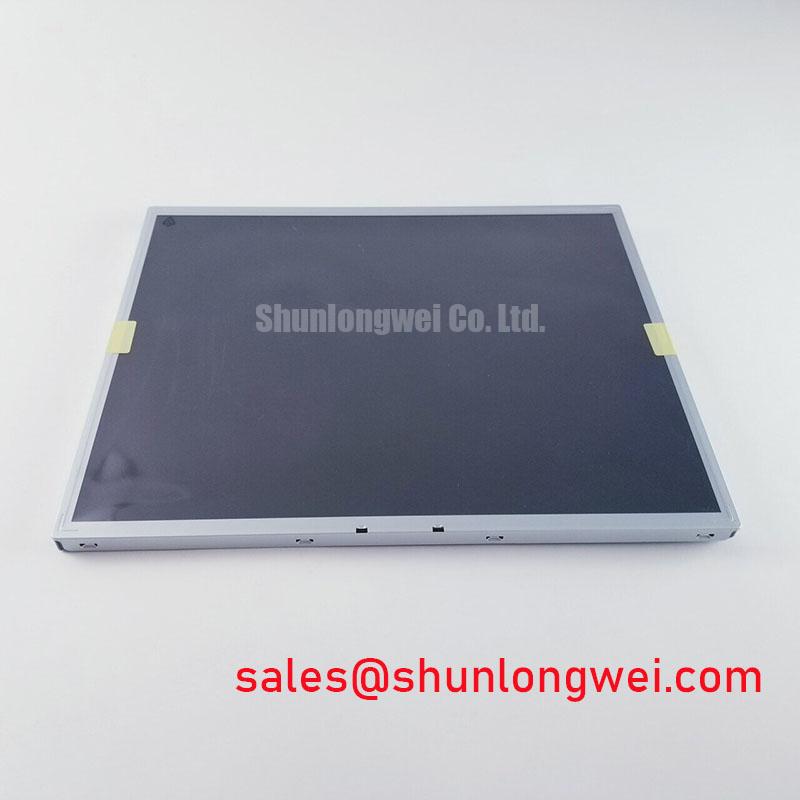
LG LM170E03-TLJ5 17.0″ SXGA Industrial TFT-LCD CELL
Introduction and Core Highlights
The LG Display LM170E03-TLJ5 is a 17.0-inch a-Si TFT-LCD CELL, engineered for system integrators who require full control over their final display assembly. As a “CELL,” this component consists of the core liquid crystal glass without an integrated backlight or driver board, offering maximum design flexibility. This allows for the creation of truly custom display solutions tailored to specific performance and environmental demands. The panel’s standard SXGA resolution and 5:4 aspect ratio make it an ideal foundation for specialized industrial and medical systems where precise optical characteristics are critical.
- Core Specifications: 17.0-inch Diagonal | 1280×1024 (SXGA) Resolution | LVDS (2 ch, 8-bit) Interface
- Key Advantages: Enables custom backlight and driver integration for application-specific brightness and thermal management. Delivers a high 800:1 contrast ratio for deep blacks and clear image definition.
- Integration Focus: Requires sourcing of external backlight unit and timing controller (T-Con) board.
View the Complete Technical Specifications (Panelook)


Technical Analysis for System Integration
The defining characteristic of the LM170E03-TLJ5 is its delivery as a CELL. This means it is intended for engineers who are building a display system from the ground up, not for simple module replacement. Procuring a CELL provides ultimate control over key performance metrics. Engineers can select or design a backlight unit (BLU) that precisely matches the required luminance, color temperature, and operational lifetime for the end application, whether it’s a dimmable marine ECDIS or a high-brightness outdoor kiosk. This approach separates the display’s core from its illumination source, which is a critical consideration in advanced industrial LCD manufacturing.
The panel’s visual performance is anchored by its Normally Black display mode. This technology ensures that when a pixel is in its “off” state, it obstructs light, resulting in a deeper, more natural black level. You can think of it like a closed window blind that effectively blocks light, whereas some other technologies are like blinds that never fully close, always allowing some light to leak. This characteristic is directly responsible for the panel’s typical 800:1 contrast ratio, which translates to superior image depth and text legibility—a vital parameter for data-intensive HMI and diagnostic imaging applications.
Durability and usability are addressed through its surface treatment. The panel features an antiglare surface with a 25% haze value, which effectively diffuses ambient light to reduce reflections and maintain readability. This is complemented by a 3H hard coating, providing a necessary layer of protection against scratches and minor impacts common in industrial environments. Combined with the native SXGA (1280×1024) resolution in a 5:4 aspect ratio, the LM170E03-TLJ5 is well-suited for legacy system upgrades where user interfaces are already designed for this traditional format, simplifying software and hardware integration.
Optimized Application Scenarios
- Custom Medical Displays: The CELL format allows for the integration of a specialized, high-CRI backlight and DICOM-calibrated driver board, which are essential for diagnostic imaging systems. The 8-bit color depth supports the display of 16.7 million colors for detailed medical visuals.
- Industrial HMI Panels: Its standard 5:4 aspect ratio and SXGA resolution provide a direct component path for manufacturers of process control and factory automation equipment, avoiding the need for UI redesign.
- Specialized Test and Measurement Equipment: Engineers can design a compact, thermally managed enclosure with a custom-fit backlight, leveraging the bare cell to optimize the instrument’s form factor.
- Air Traffic and Marine Control Systems: The ability to implement a custom backlight with a wide dimming range is critical for day/night operation. The antiglare surface ensures clarity under varied cockpit or bridge lighting.
This CELL is best matched for engineering teams building display systems where precise control over illumination, thermal performance, and final form factor is a primary objective.
Key Specifications of the LM170E03-TLJ5
| Parameter | Specification |
|---|---|
| Panel Type | a-Si TFT-LCD, CELL |
| Resolution | 1280(RGB)×1024, SXGA, 96 PPI |
| Active Area | 337.92(H) × 270.336(V) mm |
| Display Mode | S-IPS, Normally Black, Transmissive |
| Contrast Ratio | 800:1 (Typ.) |
| Display Colors | 16.7M (8-bit) |
| Response Time | 14 (Typ.)(Tr+Td) ms |
| Viewing Angle | 89/89/89/89 (Typ.)(CR≥10) |
| Signal Interface | LVDS (2 ch, 8-bit), 30 pins Connector |
| Logic Voltage (VDD) | 3.3V (Typ.) |
| Surface Treatment | Antiglare (Haze 25%), Hard coating (3H) |
Engineer’s FAQ
1. What is the key difference between the LM170E03-TLJ5 CELL and a full LCD module?
The LM170E03-TLJ5 is an LCD CELL, meaning it is the glass substrate with the TFT array and color filter but without a backlight unit (BLU), driver ICs, or a timing controller (T-CON). A full module is a complete, ready-to-use display with all these components integrated. This CELL is for applications requiring a custom-designed backlight and driver solution.
2. What are the main integration challenges with this CELL?
The primary challenge is that the integrator is responsible for the complete display system design. This includes sourcing or engineering a compatible backlight unit, a T-CON board to drive the panel, and an LVDS driver. Furthermore, careful mechanical design is needed to properly house and protect the CELL and backlight. For guidance on ensuring system durability, refer to our guide on vibration and shock resistance for industrial displays.
3. How does the “Normally Black” feature benefit my application?
Normally Black technology, based on S-IPS (Super In-Plane Switching), provides superior black levels and a higher contrast ratio (800:1) compared to Normally White panels. This results in a sharper, more vivid image with better definition between colors, which is especially important for applications where image clarity and accuracy are paramount.
4. What are the signal requirements for the LVDS interface?
The panel requires a standard LVDS (Low-Voltage Differential Signaling) interface with 2 channels and 8-bit color depth. The logic voltage (VDD) required to power the panel’s source driver is 3.3V (typical). Proper signal integrity is key; refer to resources on solving EMI issues in industrial displays for robust design practices.
Enabling Custom Display Solutions
The LM170E03-TLJ5 strips the display down to its essential, high-performance core. It delivers a reliable SXGA S-IPS panel that serves as a blank canvas for engineers. This empowers the development of specialized display systems where off-the-shelf modules cannot meet the unique demands of the application, putting full control of optical and mechanical performance back into the hands of the system designer.