Littelfuse VVZ175-16IO7: Integrated Rectifier and Brake Chopper for AC Drives
Littelfuse VVZ175-16IO7 Thyristor/Diode Module, 1600V
Integrated Rectifier and Brake Chopper for AC Drives
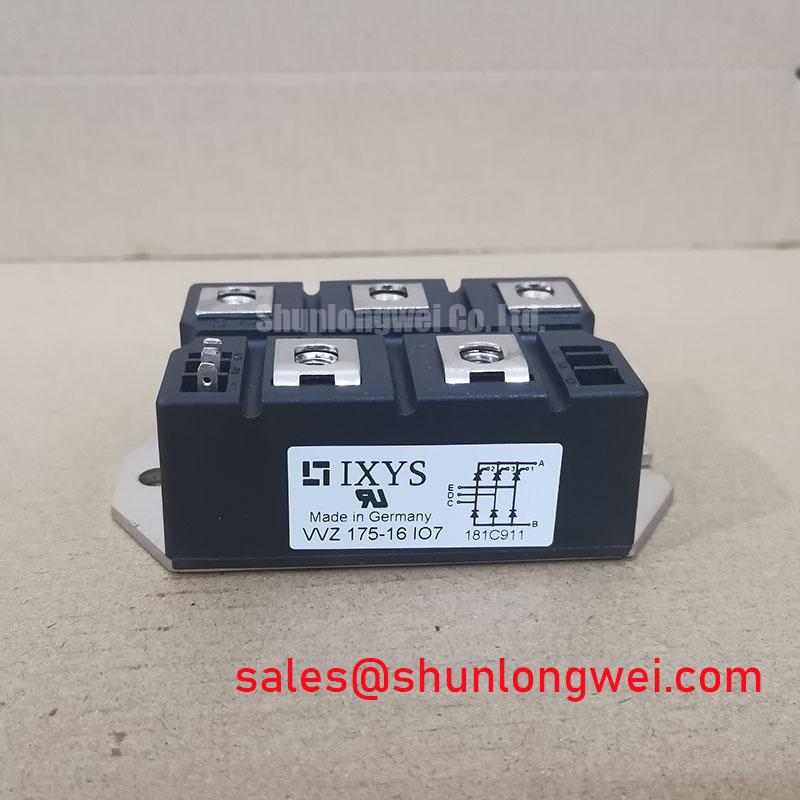
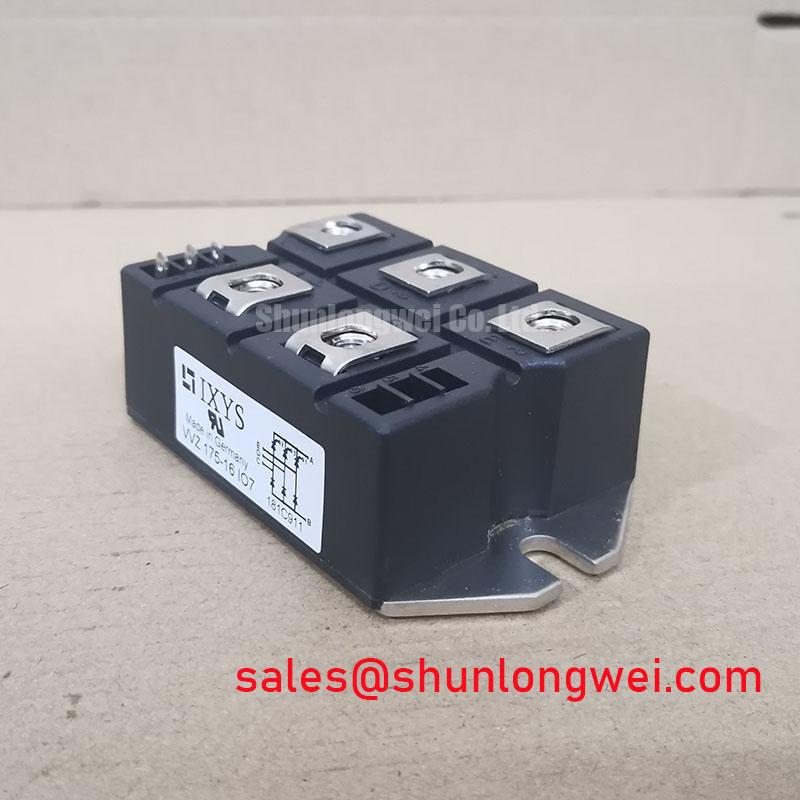
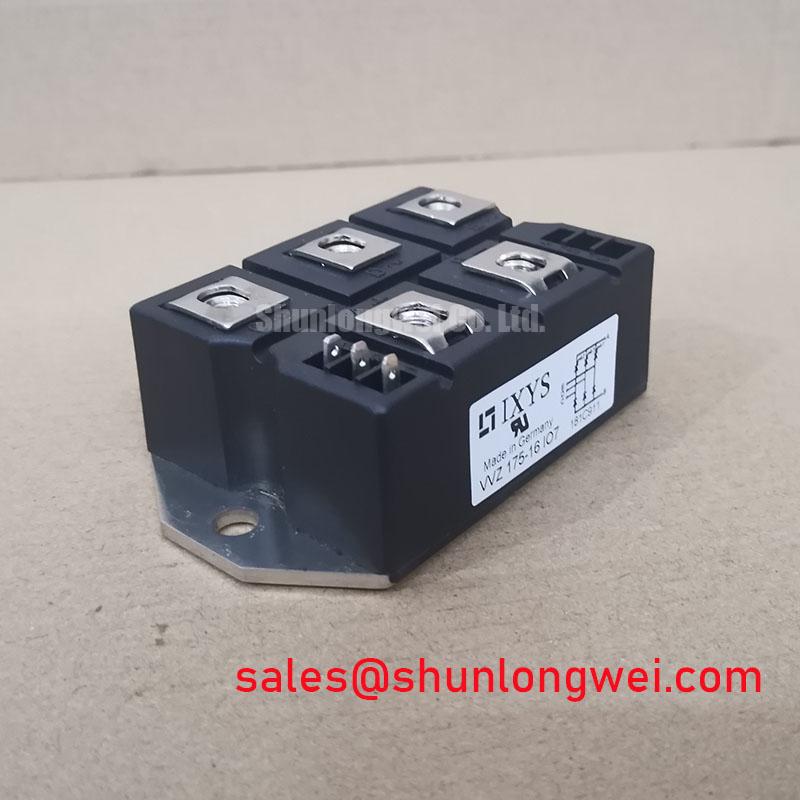
The Littelfuse VVZ175-16IO7 is a power integrated module that combines a three-phase diode rectifier bridge with a brake chopper thyristor in a single, robust package. This integrated topology provides a compact and efficient solution for the front-end and regenerative braking circuits in AC motor drives, reducing both component count and assembly complexity. The module’s high blocking voltage and current handling capabilities are engineered for demanding industrial power conversion systems.
- Core Specifications: 1600V | 167A (Rectifier) | 175A (Thyristor)
- Key Advantages: Simplifies system design by integrating two key functions. Facilitates effective thermal management with a single isolated baseplate.
- Design Solution: Directly addresses the need for handling regenerative energy in motor drives by providing an integrated brake chopper, which helps prevent DC bus overvoltage faults during deceleration.
Download Official Datasheet (PDF)
Technical Analysis of the Integrated Design
The primary engineering value of the VVZ175-16IO7 lies in its functional integration. By housing a three-phase input rectifier and a brake chopper within one module, it eliminates the need for separate components and the associated wiring. This consolidated design reduces parasitic inductance, which can cause voltage overshoots during switching, and simplifies the overall power stage layout. The result is a more compact, reliable, and cost-effective front-end for power conversion systems.
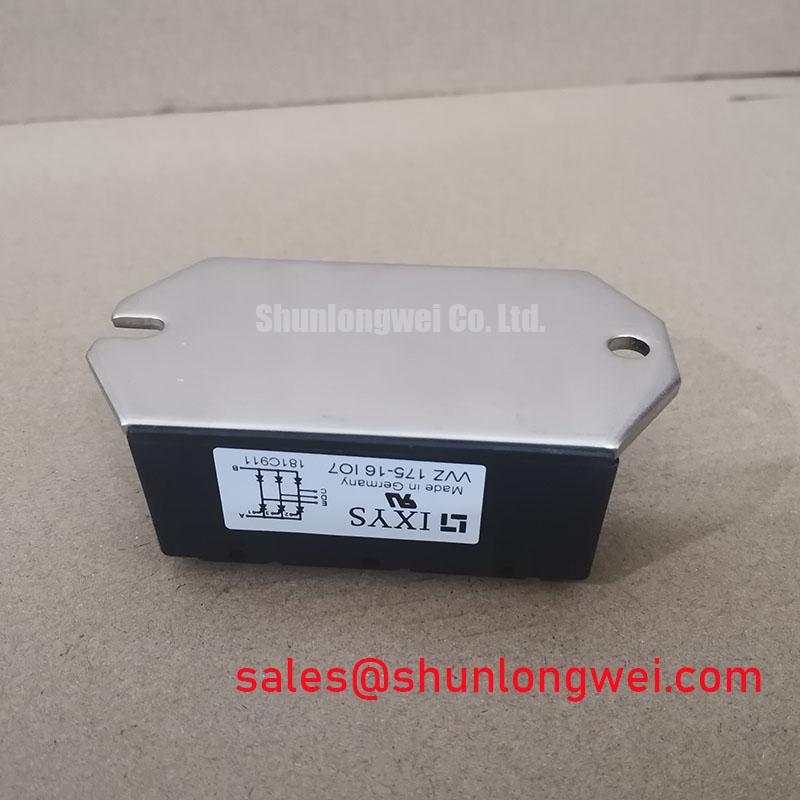
Effective thermal dissipation is critical for long-term reliability. The VVZ175-16IO7 utilizes a direct bonded copper (DBC) substrate with an Aluminium Oxide (Al2O3) ceramic insulator. This structure provides a low thermal resistance path from the semiconductor junctions to the heatsink. Think of thermal resistance as the width of a pipe for heat; a lower value, like the 0.17 K/W per diode specified for this module, signifies a wider pipe. This allows heat to escape more easily, keeping the junctions at a safer operating temperature and enhancing the system’s ability to handle high continuous and surge currents.
Optimized Application Scenarios
The specific feature set of the VVZ175-16IO7 makes it particularly well-suited for several applications:
- AC Motor Drives (VFDs): The module serves as a complete front-end, handling both AC-to-DC rectification and the dissipation of regenerative energy from the motor. Its 1600V rating provides a substantial safety margin for 400V/480V mains.
- Industrial Power Supplies: For high-power SMPS or DC bus supplies, this module offers a robust and compact rectification stage.
- Soft Starters: While primarily a rectifier, the thyristor component can be controlled in specific topologies for soft-start functionality in motor control circuits.
- Input Rectifiers for PWM Converters: Provides a reliable AC-to-DC conversion stage for various PWM-based power converters.
This module is an optimal match for AC motor drive systems where integrated rectification and a simple, effective solution for regenerative braking are required.
Key Specifications of the VVZ175-16IO7
| Absolute Maximum Ratings (TC = 25°C unless otherwise specified) | |
|---|---|
| Repetitive Peak Reverse Voltage (VRRM) | 1600 V |
| Average Forward Current, Diode (IdAVM) @ TC=85°C | 167 A |
| RMS On-State Current, Thyristor (ITRMS) @ TC=85°C | 175 A |
| Surge Forward Current, 10ms (IFSM / ITSM) | 1500 A |
| Isolation Voltage (VISOL), 50/60 Hz, RMS, 1 min | 3600 V~ |
| Operating Junction Temperature (TVJ) | -40°C to +125°C |
| Thermal and Mechanical Characteristics | |
| Thermal Resistance, Junction-to-Case (RthJC) – per Diode | 0.17 K/W |
| Thermal Resistance, Junction-to-Case (RthJC) – per Thyristor | 0.22 K/W |
| Mounting Torque (M6) | 4-6 Nm |
| Terminal Torque (M5) | 2-2.5 Nm |
Engineer’s FAQ
How does the VVZ175-16IO7 simplify regenerative braking circuit design?
By integrating the brake chopper thyristor and freewheeling diode directly into the module, it eliminates the need to source, mount, and wire a separate high-power chopper circuit. The thyristor is simply connected across the DC bus with an external braking resistor. This reduces design time, component count, and potential points of failure.
What is the recommended mounting procedure for optimal thermal performance?
For effective heat transfer, the module’s baseplate should be mounted to a heatsink with a flatness of less than 0.05 mm. A thin, uniform layer of thermal grease (typically 0.05-0.1 mm) should be applied. The module must be secured using M6 screws with a mounting torque of 4-6 Nm, ensuring even pressure across the baseplate.
What does the UL registration (E72873) signify for this module?
The UL registration indicates that the VVZ175-16IO7 has been tested and certified by Underwriters Laboratories to meet specific safety standards. This is a critical certification for components used in industrial equipment, ensuring compliance with North American safety regulations regarding electrical insulation and construction.
Can this module be used in a single-phase application?
Yes, while designed for three-phase systems, the internal diode bridge can be used in single-phase applications by utilizing two of the three input terminals. However, the current rating would need to be de-rated according to the manufacturer’s guidelines, as only a portion of the diodes would be conducting. For a deeper understanding of such trade-offs, exploring topics like the choice between integrated and discrete components can be beneficial.
Design Enablement
The VVZ175-16IO7 offers a robust, system-level solution that allows engineers to accelerate the development of reliable and compact AC motor drives. Its integrated nature and proven thermal design provide a solid foundation for high-performance power conversion, reducing both assembly time and supply chain complexity.