Mitsubishi FM600TU-3A: High-Efficiency 150V 600A 3-Phase Bridge MOSFET Module for Industrial Power Systems
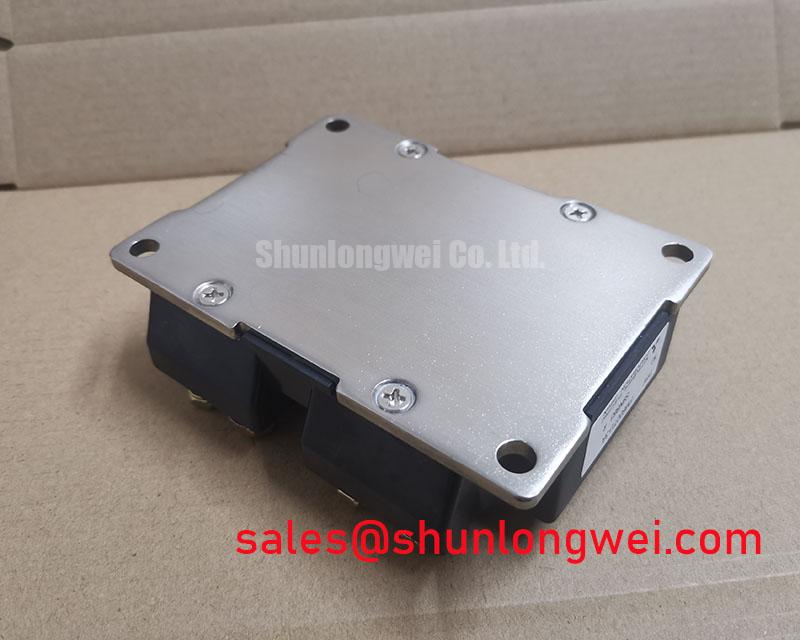
Mitsubishi FM600TU-3A 3-Phase Bridge MOSFET Module
Introduction and Core Technical Highlights
The Mitsubishi FM600TU-3A is a high-current 3-phase bridge MOSFET module engineered to deliver significant power density in industrial and automotive-grade power conversion systems. By integrating six high-performance MOSFETs into a single TU-type package, this module provides an optimized solution for 150V systems requiring up to 600A of continuous current. This integrated approach solves the common engineering challenge of reducing parasitic inductance and busbar complexity that typically arises when using discrete components for high-power bridges.
- Core Specifications: 150V | 600A | 3-Phase Integrated Bridge
- Key Advantages: Minimized assembly footprint and superior thermal management via an isolated baseplate.
For engineers investigating how to optimize high-current switching in battery-powered vehicles or industrial DC drives, the FM600TU-3A eliminates the need for multiple discrete MOSFET arrays, ensuring balanced current sharing and simplified gate drive synchronization.
Download Official Datasheet (PDF)
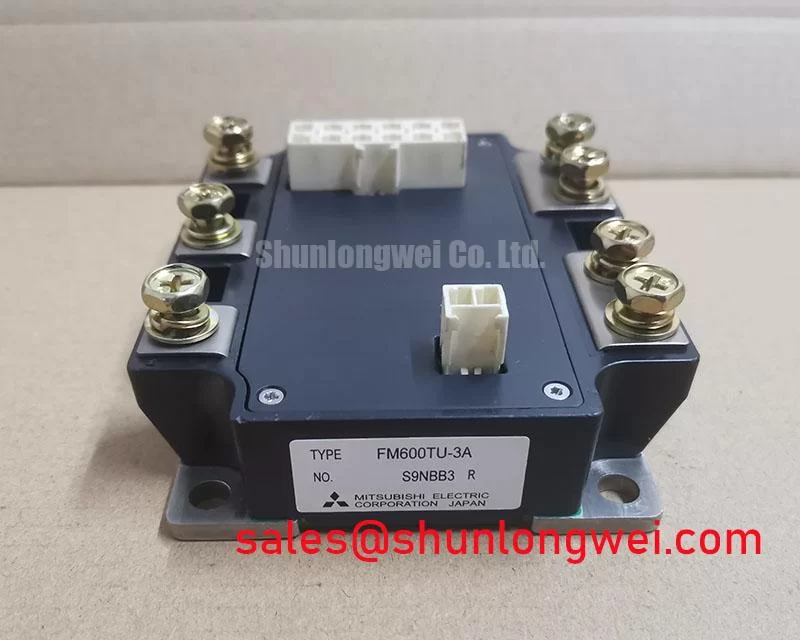
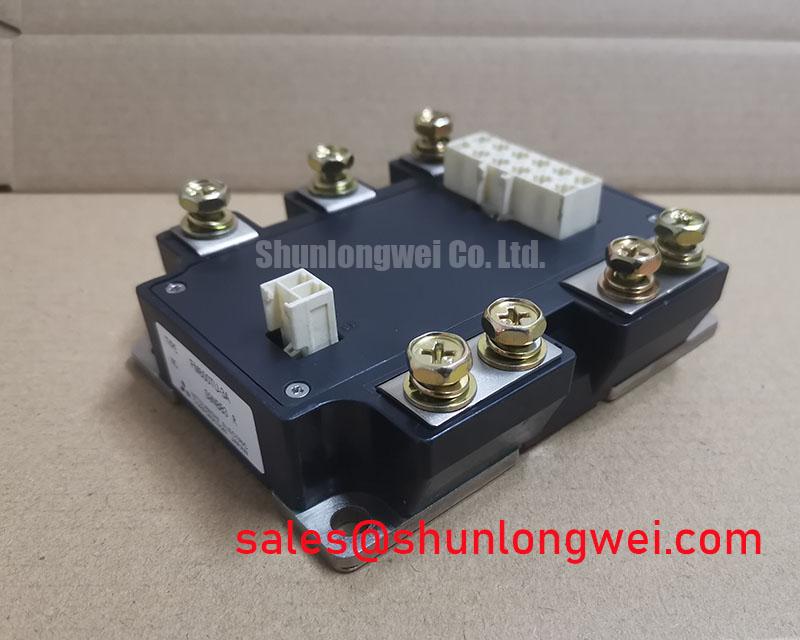
Technical Analysis: Efficiency through Low On-Resistance
The primary Unique Value Proposition of the FM600TU-3A lies in its high current handling capability relative to its static drain-source on-state resistance (RDS(on)). In high-power applications, even milliohms of resistance can lead to significant conduction losses. Analogously, you can think of the RDS(on) as the internal diameter of a water pipe; the lower the resistance, the “wider” the pipe is, allowing 600A of current to flow with minimal friction (heat). This efficiency is vital for maintaining system reliability without requiring oversized cooling solutions.
Furthermore, because this is a MOSFET Module rather than an IGBT, it offers superior switching speeds and lower switching losses in the 150V range. This makes the FM600TU-3A particularly effective in applications where high-frequency PWM (Pulse Width Modulation) is required to ensure smooth torque in DC motors or precision in battery charging algorithms. The internal layout of the module is designed to minimize internal loop inductance, which protects the semiconductor dies from voltage spikes during high di/dt switching events.

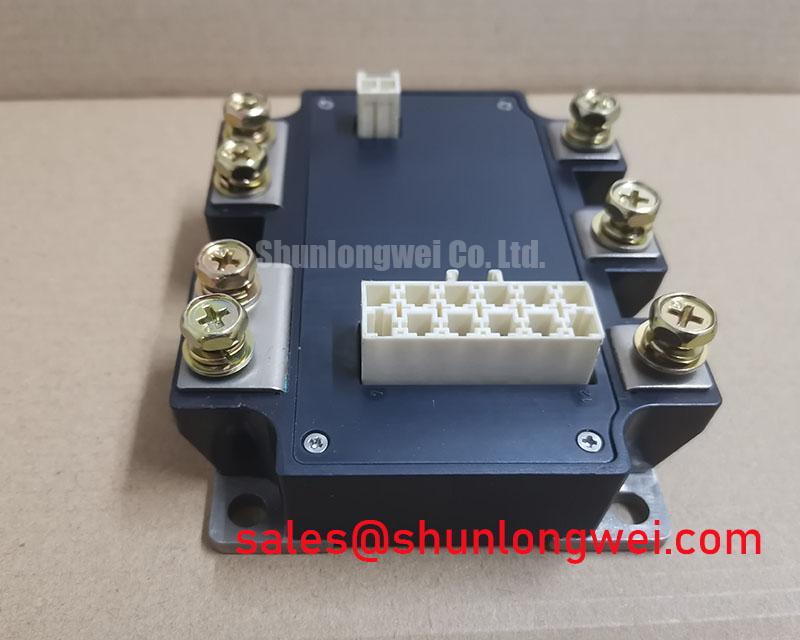
Optimized Application Scenarios
The FM600TU-3A is a versatile component found in various high-demand sectors. Its design makes it specifically suitable for:
- Electric Forklifts and Industrial EVs: The 150V rating is ideal for 48V to 80V battery systems, providing a robust safety margin and high current for heavy lifting operations.
- High-Current Battery Chargers: Its 6-in-1 topology allows for efficient rectification or DC-DC conversion in megawatt-scale battery storage facilities.
- Uninterruptible Power Supplies (UPS): High efficiency during DC-to-AC conversion ensures longer battery runtime and reduced thermal stress on the equipment.
- DC Motor Control: Provides smooth, high-frequency control for large industrial motors used in conveyors and manufacturing lines.
Conclusion: The FM600TU-3A is the best match for 48V-96V systems where high efficiency and low parasitic inductance are non-negotiable engineering requirements.
Key Specifications and Ratings
| Category | Parameter | Value (Typical/Max) |
|---|---|---|
| Absolute Maximum Ratings | Drain-Source Voltage (VDS) | 150V |
| Continuous Drain Current (ID) | 600A (at Tc=25°C) | |
| Isolation Voltage (Visol) | 2500V AC | |
| Thermal Characteristics | Junction Temperature (Tj) | -40 to +150 °C |
| Thermal Resistance (Rth(j-c)) | Optimized per MOSFET chip | |
| Package | Type | TU Housing (3-Phase Bridge) |
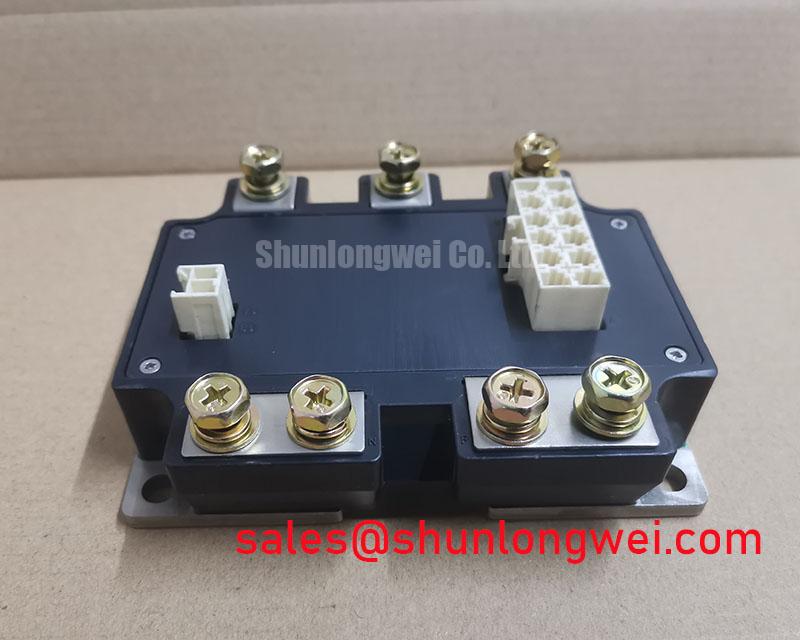
Engineer FAQ
Q1: How should I calculate the heat sink requirements for the FM600TU-3A?
A: You must factor in the total power dissipation (Pd) which is the sum of conduction and switching losses for all six MOSFETs. Use the junction-to-case thermal resistance (Rth(j-c)) provided in the datasheet and combine it with the thermal resistance of your interface material to ensure the junction temperature never exceeds 150°C under peak load. For more on this, see our guide on thermal design fundamentals.
Q2: Why choose a MOSFET bridge over an IGBT bridge for a 150V application?
A: At 150V, MOSFETs typically offer lower conduction losses because they do not have the fixed diode-like voltage drop characteristic of IGBTs. Additionally, MOSFETs like those in the FM600TU-3A can switch at higher frequencies, reducing the size of passive components like inductors and capacitors in your system.
Q3: What precautions are necessary for mounting the high-current terminals?
A: Proper torque is essential to minimize contact resistance and prevent terminal overheating. Refer to the manufacturer’s mechanical specifications for the exact torque values for the M5/M6 mounting screws to avoid damaging the internal ceramic substrates.
Engineering Conclusion
The Mitsubishi FM600TU-3A remains a cornerstone component for high-current power semiconductor assemblies. By providing a pre-engineered 3-phase bridge with integrated MOSFETs, it allows design engineers to focus on system-level efficiency rather than component-level matching and busbar parasitics. Its massive 600A capacity combined with 150V ruggedness empowers the next generation of industrial mobility and high-density power conversion systems.