Mitsubishi PM20CSJ060: An Integrated Power Module for Compact Motor Drives
Mitsubishi PM20CSJ060 600V 20A CIB Intelligent Power Module
Integrated Power Stage for Compact Motor Drives
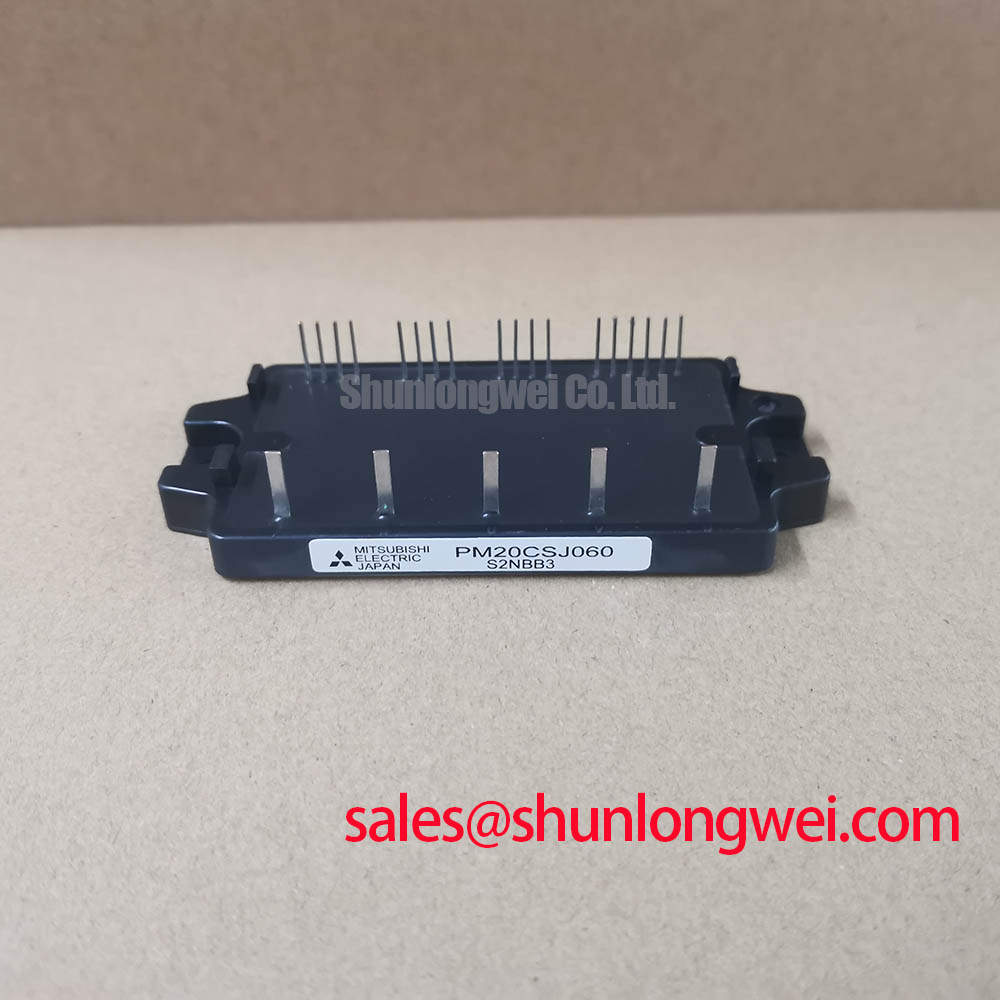
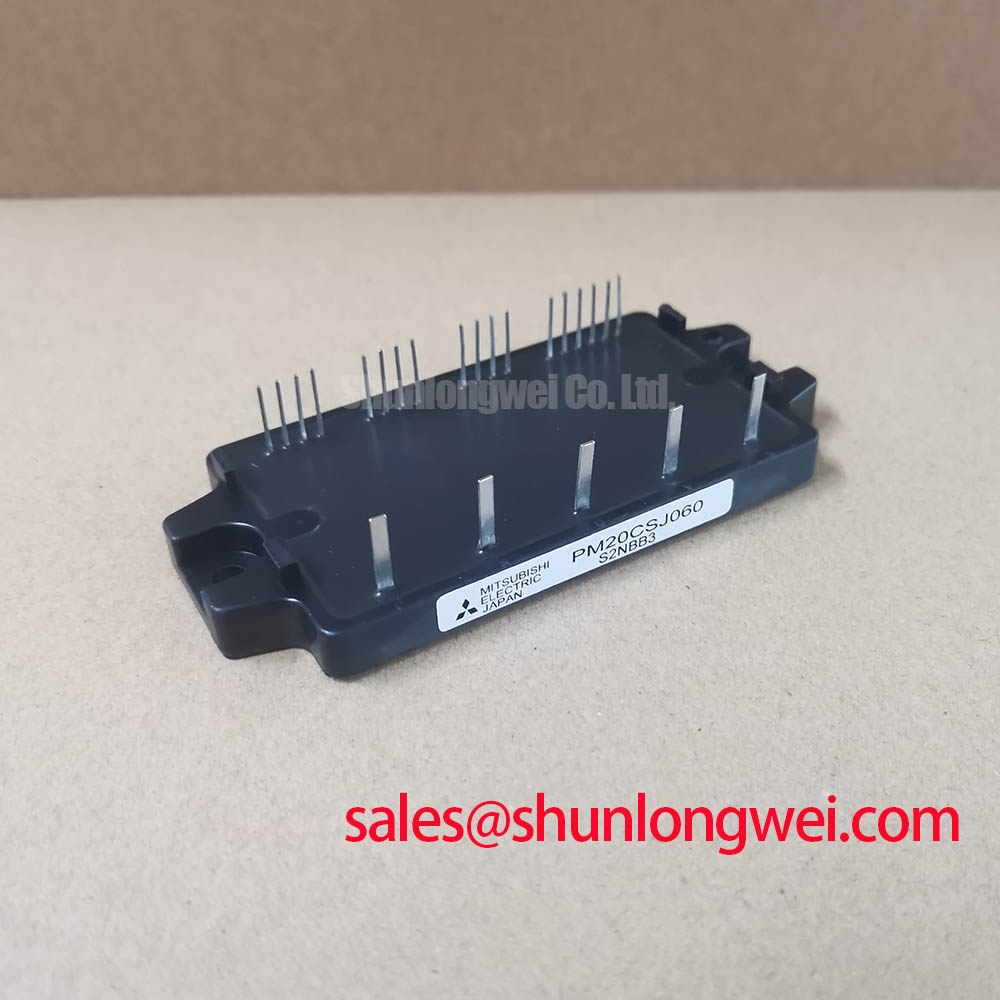
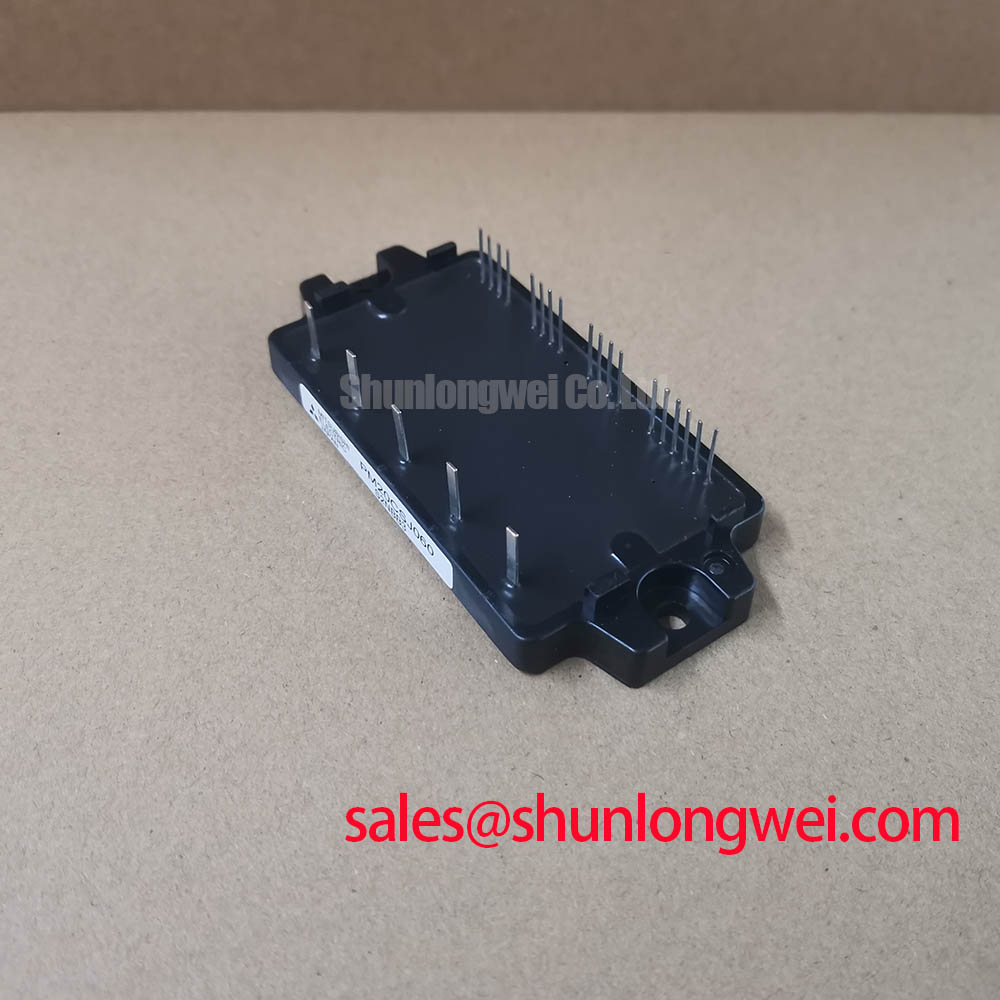
The Mitsubishi PM20CSJ060 is a CIB (Converter-Inverter-Brake) Intelligent Power Module (IPM) that delivers a highly integrated solution for low-power motor control systems. This module consolidates a three-phase AC/DC converter, a three-phase DC/AC inverter, a braking chopper, and their associated gate drive and protection circuits into a single compact package. This all-in-one approach significantly simplifies the design of variable frequency drives (VFDs) by minimizing external component count and reducing overall PCB footprint.
- Core Specifications: 600V | 20A | Integrated CIB Topology
- Key Advantages: Reduces component count and system size, enhances reliability with built-in protection.
- Design Goal: Accelerates development cycles for small motor control applications.
Download Official Datasheet (PDF)

Technical Analysis for System Integration
The primary engineering value of the PM20CSJ060 lies in its high level of integration. By incorporating the converter, inverter, and brake chopper stages, it eliminates the need for separate power components and their complex interconnections. This not only saves board space but also reduces parasitic inductance, a common source of voltage overshoot and EMI in power systems. The module includes built-in gate drivers optimized for the internal IGBTs, which simplifies the control interface and ensures reliable switching performance up to 20 kHz, as specified in the datasheet.
System reliability is significantly enhanced by the module’s comprehensive protection features. It integrates logic for short-circuit (SC), over-temperature (OT), and under-voltage (UV) lockout. These functions provide real-time monitoring and shutdown capabilities, protecting the module and the motor from damaging fault conditions. For thermal design, the datasheet specifies the thermal resistance from junction to case (Rth(j-c)) for each section. For instance, the inverter IGBT has a Rth(j-c) of 2.16 °C/W per chip. This value is crucial for calculating heatsink requirements to ensure the junction temperature remains within its safe operating limits. Think of this thermal resistance as the width of a pipe; a lower value means heat can flow out more easily, preventing the device from overheating under load.
Optimized Application Scenarios
The specifications of the PM20CSJ060 make it well-suited for a range of specific applications:
- Small Industrial Motor Drives: Its 20A current rating and integrated CIB design are ideal for compact AC motor controllers up to approximately 3.7 kW.
- HVAC Systems: A perfect fit for controlling fans and pumps, where the module’s reliability and integrated protections ensure long service life with minimal maintenance.
- Automated Access Control: Suitable for gate openers and barrier systems, where the integrated brake chopper allows for controlled and precise deceleration.
- General-Purpose Inverters: The all-in-one package simplifies the architecture of small-scale general-purpose inverters for various industrial machines.
This module is best matched for AC 200V class inverterized motor controls where system simplicity, space savings, and robust protection are key design priorities.
Key Electrical and Thermal Specifications
| Parameter | Symbol | Value | Unit |
|---|---|---|---|
| Absolute Maximum Ratings | |||
| Collector-Emitter Voltage | VCES | 600 | V |
| Collector Current (Inverter) | IC | 20 | A |
| Collector Power Dissipation (Inverter) | PC | 54 | W |
| Isolation Voltage | Viso | 2500 (AC, 1 min) | Vrms |
| Inverter Part Characteristics | |||
| Collector-Emitter Saturation Voltage | VCE(sat) | 2.2 (Typ) / 2.7 (Max) | V |
| Diode Forward Voltage | VEC | 2.5 (Typ) / 3.0 (Max) | V |
| Thermal & Protection | |||
| Thermal Resistance (Inverter IGBT) | Rth(j-c)Q | 2.16 | °C/W |
| Over-Temperature Protection | OT | 125 (Min) | °C |
Engineer’s FAQ
- What are the main benefits of using a CIB IPM like the PM20CSJ060 over discrete components?
- The primary benefit is design simplification. The PM20CSJ060 integrates the AC-DC converter, DC-AC inverter, brake chopper, gate drivers, and protection circuits into one tested module. This reduces component count, PCB complexity, assembly time, and potential EMI issues arising from layout, accelerating the overall development process for a power semiconductor system.
- What is the recommended heatsink mounting torque for this module?
- According to the datasheet, the recommended mounting torque for the M4 screws is between 0.98 and 1.47 N·m. Applying the correct torque is critical for ensuring proper thermal contact between the module’s baseplate and the heatsink. Insufficient torque can lead to poor heat transfer and overheating, while excessive torque can cause mechanical stress and damage the module’s isolated substrate.
- How does the integrated short-circuit (SC) protection work?
- The module’s control IC monitors the collector-emitter voltage of each IGBT. If a short-circuit event causes the current to rise rapidly, V_CE also increases. When V_CE exceeds a predefined threshold, the control logic initiates a soft shutdown of the affected IGBT and sends a fault signal. This prevents the destructive failure associated with high-current shoot-through events.
- What is the purpose of the built-in bootstrap diodes and circuits?
- The integrated bootstrap circuits, including high-voltage diodes, are used to generate the floating power supply required for the high-side IGBT gate drivers. This feature eliminates the need for an isolated, multi-output DC/DC converter to power the high-side drivers, further reducing external component count and simplifying the power supply architecture for the control board.
Enabling Reliable, Compact Power Control
The Mitsubishi PM20CSJ060 IPM provides a robust foundation for building dependable and space-efficient motor control systems. Its CIB topology and integrated protection circuits allow engineers to focus on system-level functionality rather than discrete power stage design and validation. For more insights on module integration, see our guide on PIM vs. Discrete IGBTs.