Semikron SKM400GAL124D: 1200V 400A SEMITRANS IGBT Module Technical Analysis and Applications
SKM400GAL124D Semikron SEMITRANS IGBT Module 1200V 400A
High-Efficiency Low-Side Chopper with CAL Diode Technology
The Semikron SKM400GAL124D is a specialized SEMITRANS® IGBT module featuring a “GAL” (Low-side chopper) topology, engineered to facilitate high-efficiency power conversion in industrial environments. By leveraging a homogeneous silicon structure and an integrated Controlled Axial Lifetime (CAL) fast-recovery diode, this module effectively minimizes switching energy while maintaining robust performance across wide temperature ranges. It is particularly suited for engineers seeking to optimize power density in applications where precise current control and thermal stability are mandatory.
- Core Specifications: 1200V Collector-Emitter Voltage | 400A Continuous Collector Current (Tc=25°C) | VCE(sat) 2.1V Typical.
- Key Engineering Advantages: Positive temperature coefficient for simplified IGBT paralleling and ultra-low reverse recovery current through the integrated CAL diode.
Download Official SKM400GAL124D Datasheet (PDF)
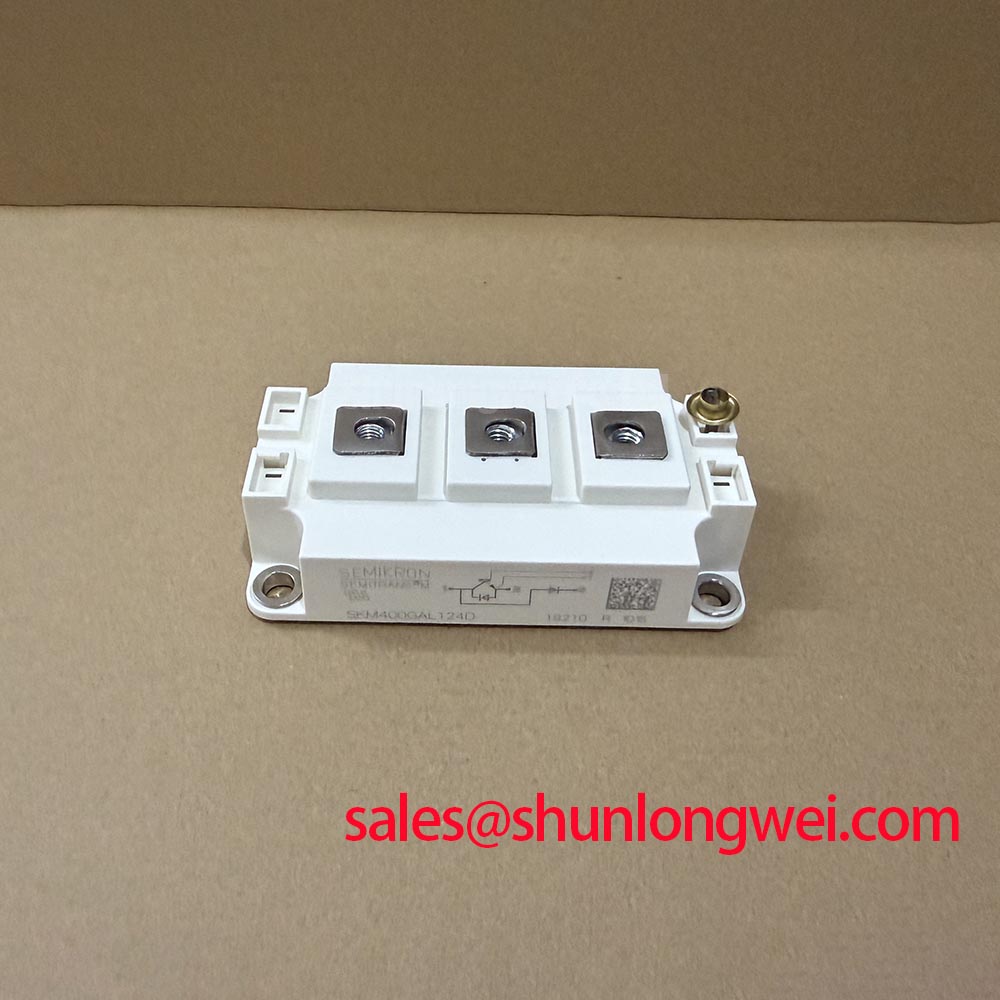
M3: Technical Analysis of Homogeneous Silicon and CAL Integration
The SKM400GAL124D utilizes a homogeneous Si-structure, which provides a significant advantage in high-power system design. Unlike non-punch-through (NPT) or older epitaxial designs, the homogeneous structure ensures a highly predictable voltage drop across the collector-emitter junction. Specifically, the positive temperature coefficient of VCE(sat) means that as the device heats up, its resistance naturally increases. This physical property acts as an internal load balancer, preventing current crowding and making the SKM400GAL124D inherently safer for multi-module configurations compared to devices with negative coefficients.
The integration of the CAL (Controlled Axial Lifetime) fast-recovery diode is the silent partner in the module’s performance. In high-frequency switching, the diode must transition from a conducting state to a blocking state almost instantaneously. You can imagine thermal resistance and reverse recovery current like the drag on a racing car; the lower these values, the less energy is wasted as heat, allowing the system to accelerate its switching frequency without overheating. The CAL technology achieves this by controlling carrier concentration, which reduces the peak reverse recovery current and softens the “snap-off” effect, thereby lowering electromagnetic interference (EMI).
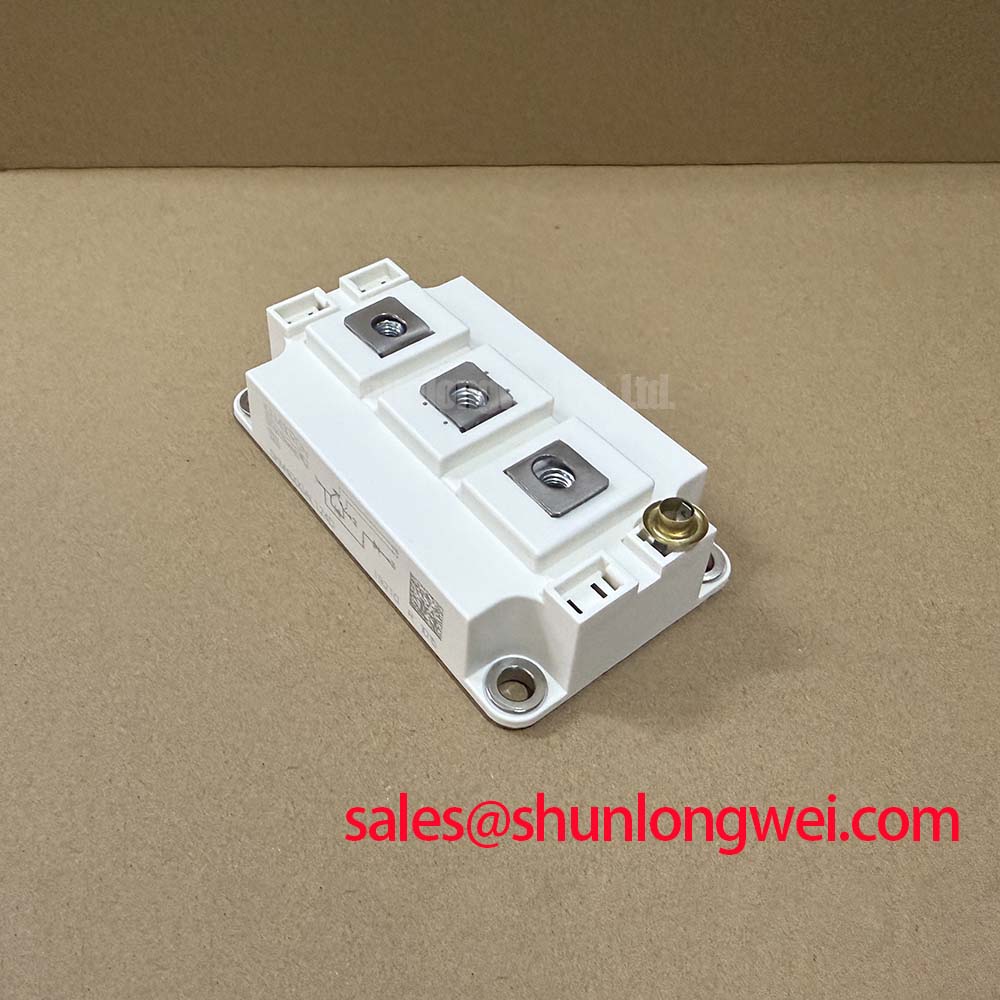
Furthermore, the SEMITRANS 3 package is designed with low internal inductance. When switching 400A at high speeds, even nanohenries of stray inductance can cause massive voltage spikes (V = L * di/dt). The internal layout of the SKM400GAL124D is optimized to keep these paths short, protecting the gate oxide and reducing the need for aggressive active clamping or bulky snubber circuits.
M4: Optimized Industrial Application Scenarios
The “GAL” configuration makes the SKM400GAL124D a specific match for topologies where the switching element is on the low-voltage side of the load. This is a critical distinction for engineers moving from a PIM vs. discrete IGBT strategy.
- Brake Choppers in VFDs: The module is ideal for dissipating regenerative energy in variable frequency drives. Its high pulse current rating (600A for 1ms) allows it to handle heavy braking loads.
- Switched Mode Power Supplies (SMPS): Used in the secondary side of high-power converters where low conduction losses are prioritized to meet efficiency standards.
- Electronic Welding Equipment: The robust 1200V rating provides a high safety margin against voltage transients common in industrial welding arcs.
- DC/DC Converters: High current density and optimized thermal resistance facilitate compact converter designs for renewable energy storage.
Best Match Conclusion: The SKM400GAL124D is the primary choice for high-power brake choppers requiring a fast-recovery CAL diode to manage inductive energy spikes.
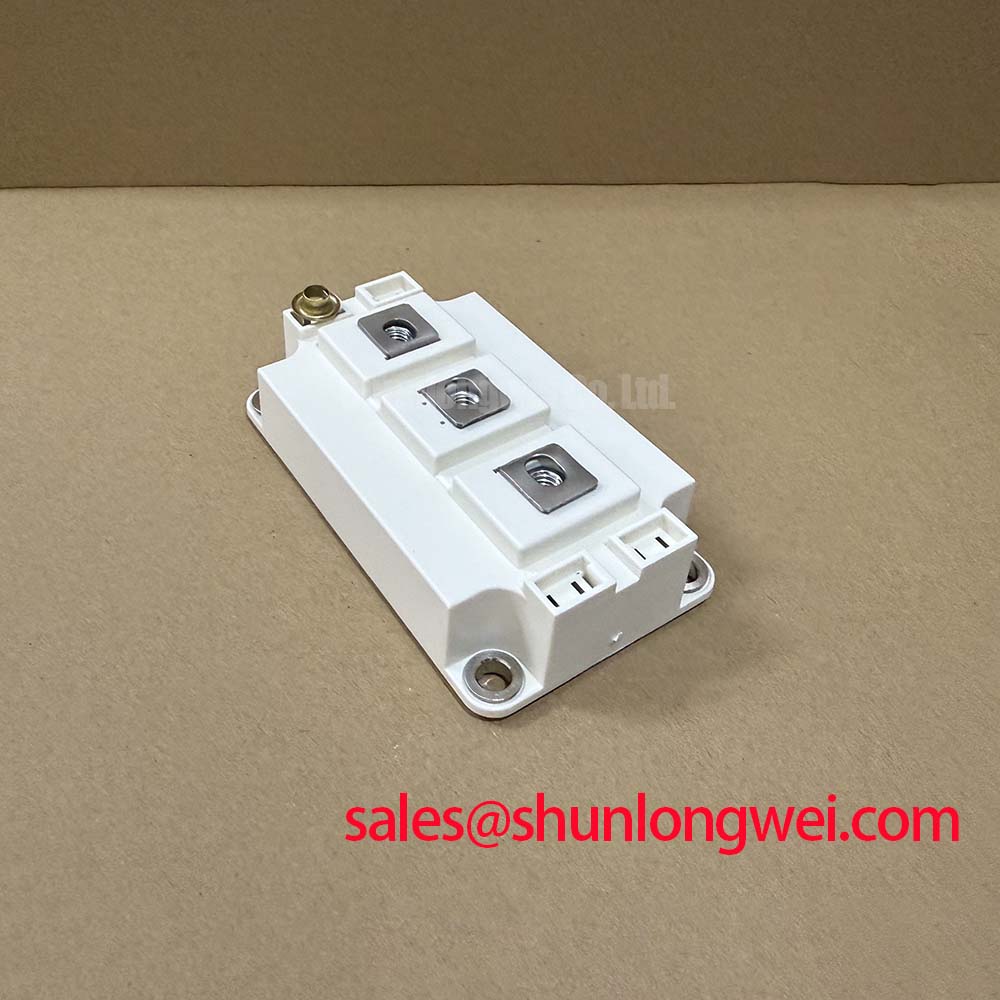
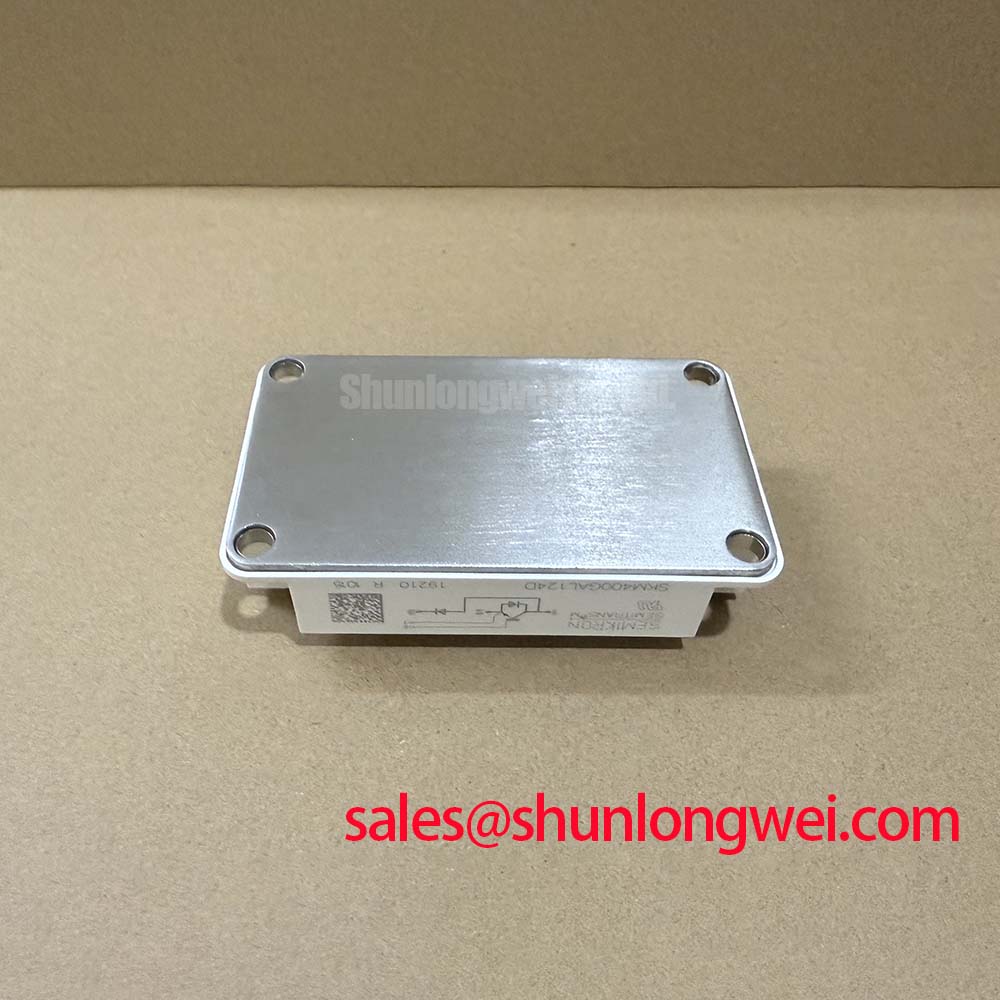
M5: SKM400GAL124D Key Technical Specifications
| Parameter Group | Specific Parameter | Value (Rating) |
|---|---|---|
| Absolute Maximum Ratings | Vces (Collector-Emitter Voltage) | 1200 V |
| Ic (Continuous Collector Current @ Tc=80°C) | 300 A | |
| Icm (Peak Collector Current, tp=1ms) | 600 A | |
| Electrical Characteristics | VCE(sat) (Collector-Emitter Saturation Voltage) | 2.1 V (Typ) / 2.5 V (Max) |
| VGE(th) (Gate-Emitter Threshold Voltage) | 4.5 V to 6.5 V | |
| Cies (Input Capacitance @ 1MHz) | 26 nF | |
| Thermal & Mechanical | Rth(j-c) (Thermal Resistance Junction-to-Case) | 0.05 K/W (IGBT) |
| Mounting Torque (Case / Terminals) | 3.0 to 5.0 Nm |
M6: Engineer FAQ
Q1: What is the maximum recommended switching frequency for the SKM400GAL124D?
While the module can operate at various frequencies, it is optimized for high-power switching between 8kHz and 15kHz. Operation above this range is possible but requires careful monitoring of switching losses (Eon/Eoff) and total power dissipation to stay within the Rth(j-c) limits.
Q2: How should I calculate the heat sink requirements for this 400A IGBT?
You must use the transient thermal impedance Zth(j-c) curves provided in the datasheet. Total losses (P_total = P_conduction + P_switching) must be multiplied by the thermal resistance to ensure the junction temperature (Tj) does not exceed 150°C. For detailed methodology, refer to our guide on calculating IGBT thermal curves.
Q3: Does the GAL topology require a specific type of gate driver?
The SKM400GAL124D requires a gate driver capable of delivering sufficient peak current to charge the 26nF input capacitance (Cies). Because this is a low-side chopper, the gate drive reference is typically the common emitter terminal, simplifying isolation requirements compared to high-side modules.
Closing Statement
The Semikron SKM400GAL124D is a highly engineered solution for industrial designers prioritizing efficiency and thermal reliability in chopper applications. By combining the natural load-balancing properties of homogeneous silicon with the low-loss performance of CAL diode technology, this module provides the technical foundation needed to build robust, high-density power converters and braking systems.