SKiiP 11NAB063T1: A Technical Review of the Integrated CIB Power Module
SKiiP 11NAB063T1: 600V CIB Intelligent Power Module
Integrated Power Stage for Compact Motor Drives
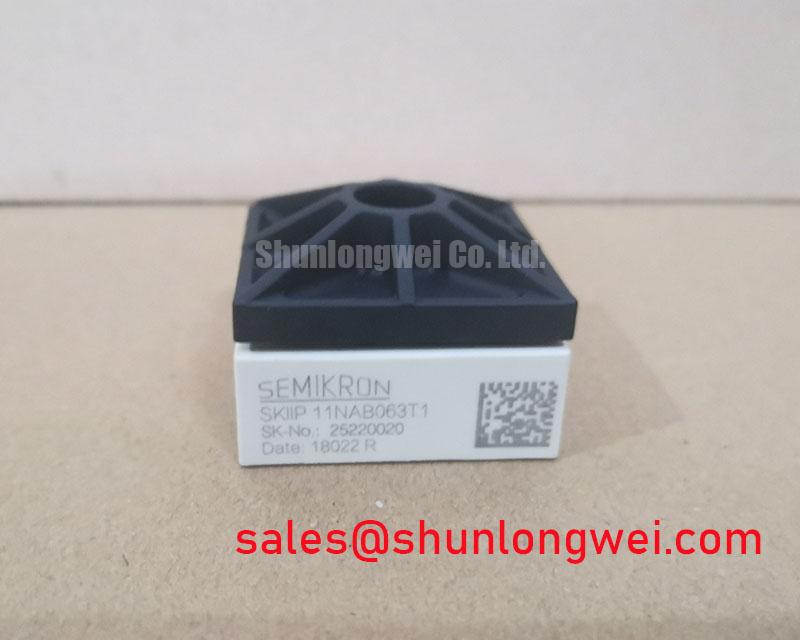
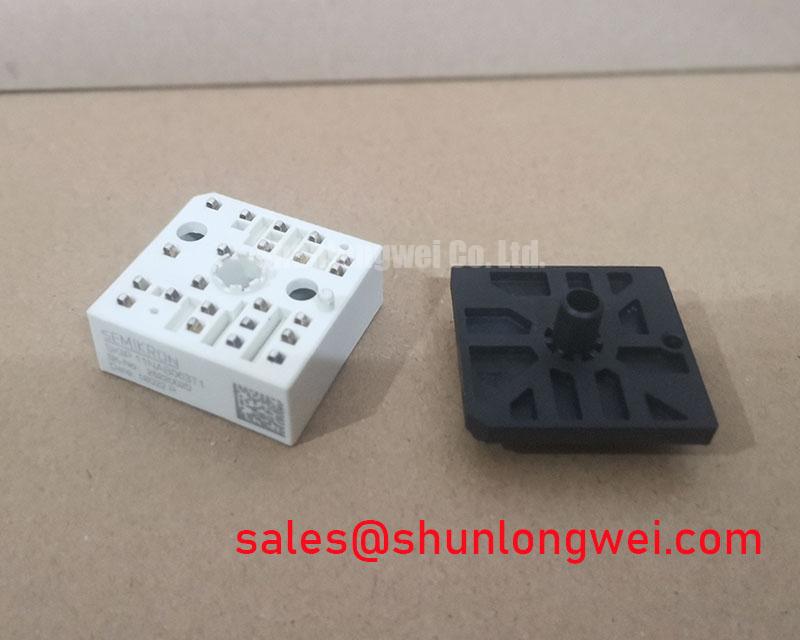
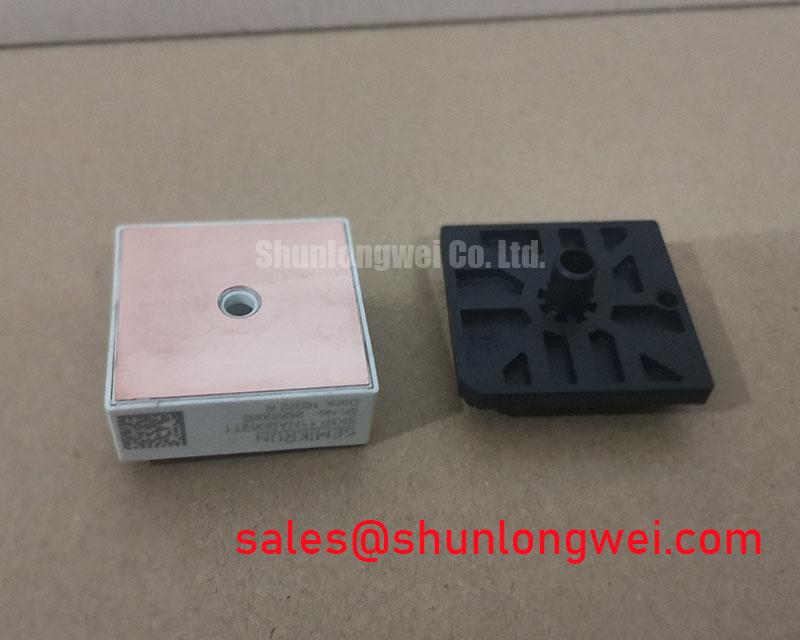
The SEMIKRON SKiiP 11NAB063T1 is an Intelligent Power Module (IPM) that integrates a three-phase rectifier, a three-phase inverter, and a brake chopper into a single, compact package. This CIB (Converter-Inverter-Brake) topology streamlines the design of variable speed drives by consolidating the entire power stage.
- Core Specifications: 600V | 17A (at Tcase=25°C) | NPT IGBTs.
- Key Advantages: Reduces component count and simplifies assembly; enhances system reliability with integrated driver and protection features.
The module’s low-inductance case design is a critical feature for engineers, as it minimizes voltage overshoot during fast switching operations. This addresses a common challenge in achieving both high efficiency and robust performance in modern motor drives. For detailed specifications, please download the official datasheet (PDF).
Technical Analysis of the Integrated Design
The primary value of the SKiiP 11NAB063T1 lies in its high level of integration. By combining the input rectifier, output inverter, and brake chopper, it eliminates the need for multiple discrete power components and complex interconnecting busbars. This not only shrinks the required PCB footprint but also minimizes assembly steps and potential points of failure, contributing to a more robust final product.
A key challenge in power electronics is managing parasitic inductance, which can cause damaging voltage spikes during high-speed switching. The module’s low-inductance case is engineered to mitigate this effect. Think of thermal resistance as the width of a pipe for heat; a lower value means heat escapes more easily. Similarly, low inductance acts like a wide, smooth channel for current, preventing the electrical equivalent of “water hammer” (voltage overshoot) when the flow is rapidly turned on or off. This allows for cleaner switching waveforms, reduced EMI, and improved device reliability.
As an Intelligent Power Module, the SKiiP 11NAB063T1 incorporates a dedicated driver circuit. According to the datasheet, this driver provides essential protection features, including under-voltage lockout (UVLO) for the supply voltages. This integrated intelligence ensures the IGBTs are operated only under safe conditions, protecting them from common fault scenarios and offloading critical monitoring tasks from the system’s central microcontroller.
Optimized Application Scenarios
The specific characteristics of the SKiiP 11NAB063T1 make it well-suited for several applications:
- Variable Frequency Drives (VFDs): The CIB topology provides the complete power stage required for compact AC motor drives, simplifying design and manufacturing.
- Servo Drives: Its fast-switching Non-Punch-Through (NPT) IGBTs and low-inductance design enable the precise current control necessary for high-performance positioning systems.
- Industrial Pumps and Fans: For cost-sensitive applications, the high integration level reduces the bill of materials (BOM) and overall system cost.
- HVAC Systems: The compact MiniSKiiP footprint is ideal for space-constrained air conditioning and ventilation control units where efficient power conversion is required.
This module is an optimal match for motor drive systems up to 2.2 kW that require a compact, highly integrated, and reliable power stage.
Key Specifications of the SKiiP 11NAB063T1
| Parameter | Value | ||
|---|---|---|---|
| Absolute Maximum Ratings | Inverter Collector-Emitter Voltage (VCES) | 600 V | |
| Inverter Continuous Collector Current (IC @ Th=25°C) | 17 A | ||
| Rectifier Repetitive Peak Reverse Voltage (VRRM) | 800 V | ||
| Isolation Voltage (Visol, AC, 1 min.) | 2500 V | ||
| Inverter Characteristics (Tj=125°C) | Collector-Emitter Saturation Voltage (VCEsat, typ. @ IC=10A) | 2.4 V | |
| Turn-off Switching Energy (Eoff, typ.) | 0.1 mJ (Diode) | ||
| Thermal Characteristics | Thermal Resistance, Junction to Heatsink (Rth(j-h), Inverter IGBT) | 2.3 K/W | |
| Thermal Resistance, Junction to Heatsink (Rth(j-h), Rectifier Diode) | 1.7 K/W | ||
Note: All parameters are based on the official datasheet at Th = 25°C unless otherwise specified. For definitive values, consult the manufacturer’s documentation.
Engineer’s FAQ for the SKiiP 11NAB063T1
What are the primary advantages of using a CIB IPM like the SKiiP 11NAB063T1 over discrete components?
A CIB IPM significantly reduces system complexity by integrating the rectifier, inverter, and brake chopper. This leads to a smaller PCB, fewer components on the bill of materials, and reduced assembly time. It also improves reliability by minimizing stray inductance between power stages and incorporating built-in protection circuits.
What are the key thermal management considerations for this module?
Effective thermal management is crucial. The datasheet specifies the thermal resistance from junction to heatsink (Rth(j-h)) for each component. An appropriately sized heatsink must be selected to ensure the maximum junction temperature (Tj) of 150°C is not exceeded under worst-case operating conditions. A mounting torque of 2 to 2.5 Nm is specified to ensure proper contact with the heatsink.
Does this module require an external gate driver?
No, the SKiiP 11NAB063T1 is an Intelligent Power Module. It includes an integrated gate driver board that handles IGBT switching and provides fault monitoring. The system controller only needs to provide the low-voltage logic-level PWM signals and a suitable power supply for the driver itself.
What kind of diode technology is used in the inverter section?
The inverter’s freewheeling diodes use SEMIKRON’s CAL (Controlled Axial Lifetime) technology. This technology is known for producing a “soft” recovery characteristic, which reduces voltage overshoots and electromagnetic interference (EMI) during diode turn-off.
The SKiiP 11NAB063T1 offers a highly integrated and reliable foundation for developing compact and efficient motor control systems. By combining the complete power stage with intelligent protection in a thermally efficient package, it allows design engineers to focus on system-level performance and accelerate their time to market.