SKKE 120F17 Technical Analysis: A 1700V Diode for High-Reliability Power Systems
SKKE 120F17 Technical Analysis: 1700V Fast Diode Module
High-Voltage, Fast-Recovery Rectification for Demanding Power Systems
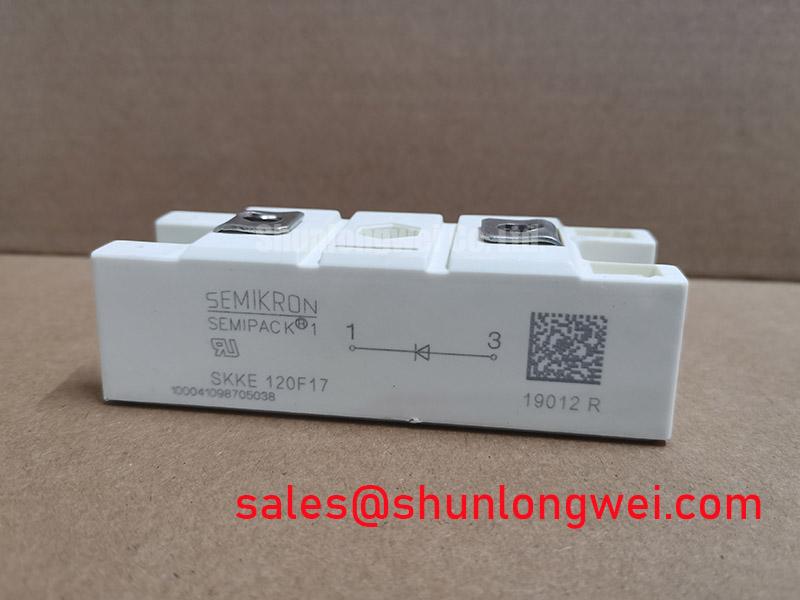
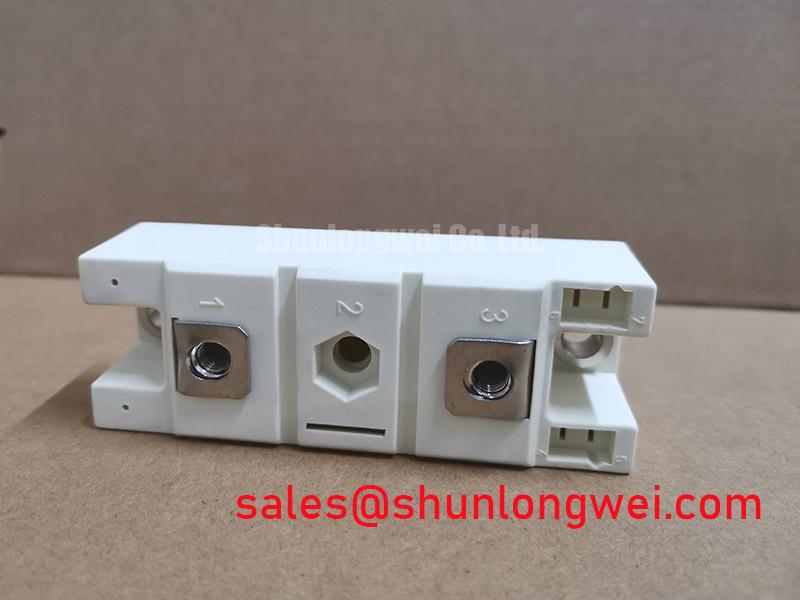
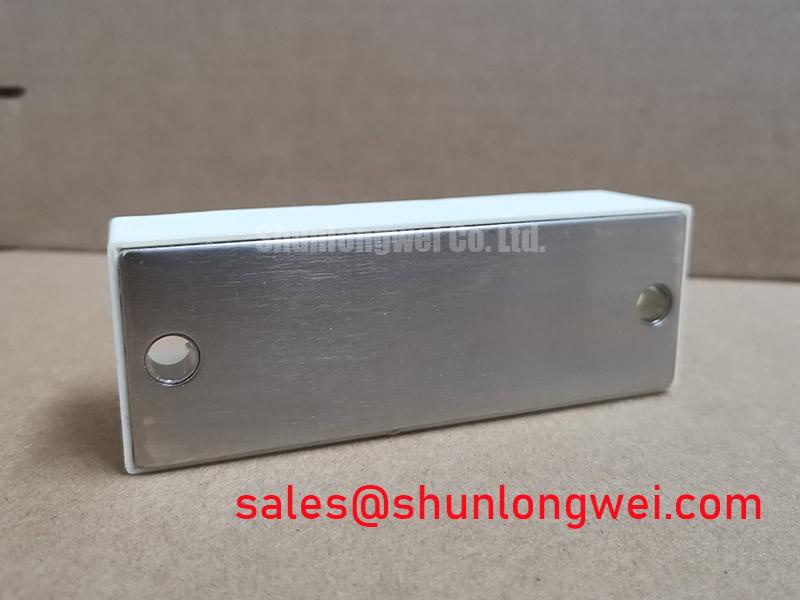
The Semikron SKKE 120F17 is a fast diode module engineered for high-reliability power conversion systems. It combines a high reverse voltage capability with fast, soft recovery characteristics. This allows for efficient operation in applications that require robust performance at elevated frequencies. A key design feature is its heat transfer mechanism, which utilizes an aluminium oxide ceramic isolated metal baseplate. This construction facilitates effective thermal management, a critical aspect for maintaining system longevity and performance under heavy electrical loads.
- Core Specifications: 1700V | 120A | Rth(j-c) 0.18 K/W
- Key Advantages: High electrical reliability from hard soldered joints, simplified thermal design through an isolated baseplate.
This module provides a direct path to developing resilient power stages. Its specifications are well-suited for engineers looking to minimize switching losses while ensuring dependable operation.
Download the Official SKKE 120F17 Datasheet (PDF)
Technical Performance Analysis
The SKKE 120F17 is defined by two primary characteristics: its high blocking voltage and its fast reverse recovery time (trr). The 1700V repetitive peak reverse voltage (VRRM) provides a substantial safety margin in industrial systems operating on high-voltage DC buses. This high voltage rating is essential for applications like inverters and choppers where voltage spikes are common. The module’s “fast” designation comes from its typical reverse recovery time of just 250 ns, which allows for reduced switching losses, especially in circuits operating at higher frequencies where slower diodes can lead to significant energy waste and thermal stress.
Effective thermal management is crucial for the long-term reliability of any power module. The SKKE 120F17 addresses this with a low thermal resistance from junction to case (Rth(j-c)) of 0.18 K/W per diode. Think of thermal resistance as the width of a pipe for heat; a lower value means a wider pipe, allowing heat to flow away from the semiconductor junction more easily. This efficient heat transfer is enabled by the module’s isolated metal baseplate, which simplifies mounting to a heatsink. For a deeper understanding of thermal design, an engineer can explore resources on mastering IGBT thermal design.
Optimized Application Scenarios
The specifications of the SKKE 120F17 make it a strong candidate for several high-power applications:
- Power Supplies: The high surge forward current (IFSM) rating of 1800A (at Tvj=150°C, 10 ms) allows the module to withstand significant inrush currents typical during the startup of large capacitive loads.
- DC Choppers and Motor Control: The fast and soft recovery characteristic is critical for reducing electromagnetic interference (EMI) and improving efficiency in chopper and power semiconductor-based motor drives.
- Inductive Heating and Welding: These applications involve high-frequency switching. The low switching losses of the SKKE 120F17 directly contribute to higher system efficiency and reduced cooling requirements.
With its 1700V rating and fast recovery, this module is an excellent match for industrial systems requiring robust and efficient high-frequency rectification.
Key Specifications of the SKKE 120F17
| Maximum Ratings | |
|---|---|
| Repetitive Peak Reverse Voltage (VRRM) | 1700 V |
| Average Forward Current (IFAV) | 120 A (sin. 180; Tcase = 85 °C) |
| Surge Forward Current (IFSM) | 1800 A (10 ms, Tvj = 150 °C) |
| Operating Junction Temperature (Tvj) | -40 to +150 °C |
| Electrical Characteristics (at Tvj = 25 °C unless otherwise specified) | |
| Forward Voltage (VF) | typ. 1.25 V, max. 1.5 V (at IF = 120 A) |
| Threshold Voltage (VT0) | 0.9 V |
| Slope Resistance (rT) | 4.5 mΩ |
| Reverse Recovery Time (trr) | typ. 250 ns (IF=120A, -di/dt=400 A/µs, Tvj=125°C) |
| Thermal and Mechanical Characteristics | |
| Thermal Resistance, Junction to Case (Rth(j-c)) | 0.18 K/W (per diode) |
| Mounting Torque | 5 ± 15% Nm |
| Case | A 50 (SEMIPACK® 2) |
Note: All specifications are based on the official Semikron datasheet. For complete details, refer to the document.
Engineer’s FAQ
- How do I determine the required heatsink for the SKKE 120F17?
- To size a heatsink, first calculate the total power dissipation (PAV) using the forward voltage drop and reverse recovery losses based on your application’s current and frequency. Then, use the thermal resistance from junction to case (Rth(j-c) = 0.18 K/W) to find the maximum allowable case-to-ambient thermal resistance (Rth(c-a)) for your desired operating junction temperature. Your heatsink’s thermal resistance must be below this calculated Rth(c-a) value. For further reading, consult our guide on thermal management principles.
- What is the engineering benefit of ‘hard soldered joints’?
- Hard soldered joints provide superior mechanical strength and fatigue resistance compared to soft solders. This construction enhances the module’s resilience to thermal cycling—the expansion and contraction that occurs during power-up and power-down cycles. This directly contributes to a longer operational lifetime, a critical factor in industrial equipment where reliability is paramount. Understanding these mechanical failure points is key to preventing premature issues, as detailed in analyses of IGBT failures.
- What does a ‘soft recovery’ characteristic mean for this diode?
- A “soft” reverse recovery means the diode current returns to its blocking state smoothly rather than abruptly. This gradual transition reduces high-frequency oscillations (ringing) and voltage overshoots, which are major sources of EMI. For engineers, this translates to a cleaner electrical environment, potentially reducing the need for extensive filtering and simplifying EMC compliance.
Enabling Robust High-Frequency Power Design
The SKKE 120F17 module provides the technical foundation for building high-performance power conversion systems that do not compromise on reliability. Its combination of a 1700V rating, fast switching, and thermally efficient packaging gives engineers the necessary components to achieve demanding design goals in modern industrial applications.