SKM195GB126DN: A Technical Analysis for High-Reliability Power Systems
SKM195GB126DN IGBT Module: A Technical Analysis
Reliable Power Switching with Trench Gate Technology
The Semikron SKM195GB126DN is a SEMITRANS® 2 IGBT module engineered for high-reliability power conversion systems. Its core value proposition lies in the integration of Trench Gate IGBTs and robust CAL (Controlled Axial Lifetime) freewheeling diodes, delivering a balanced performance profile for demanding industrial applications. This combination ensures efficient power handling and superior durability against electrical stresses.
- Core Specifications: 1200V | 195A | VCE(sat) (typ.) 2.15V @ 125°C.
- Key Advantages: Features a positive VCE(sat) temperature coefficient for simplified paralleling and includes a soft-recovery diode to minimize EMI.
- Design Benefit: The module’s characteristics, such as its high short-circuit capability, provide essential robustness for building resilient inverter systems.
For complete electrical and thermal specifications, please download the official SKM195GB126DN datasheet (PDF).
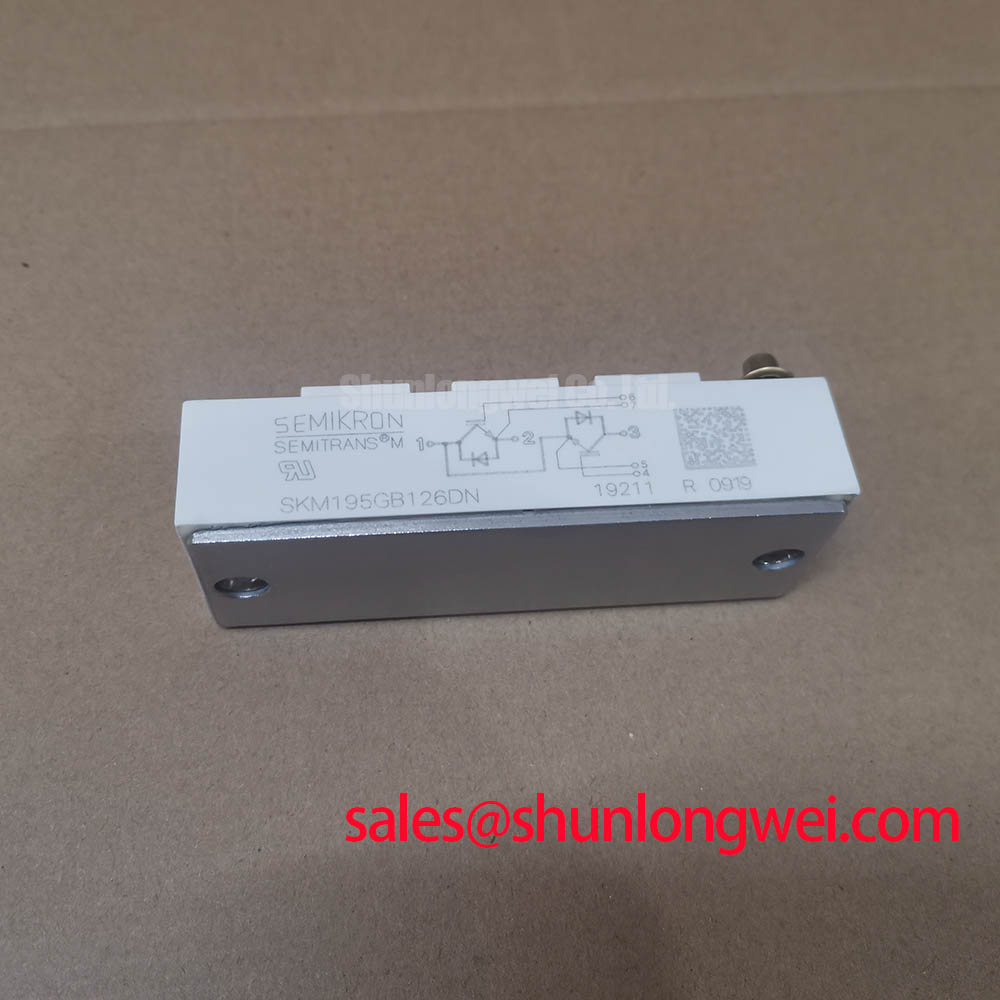
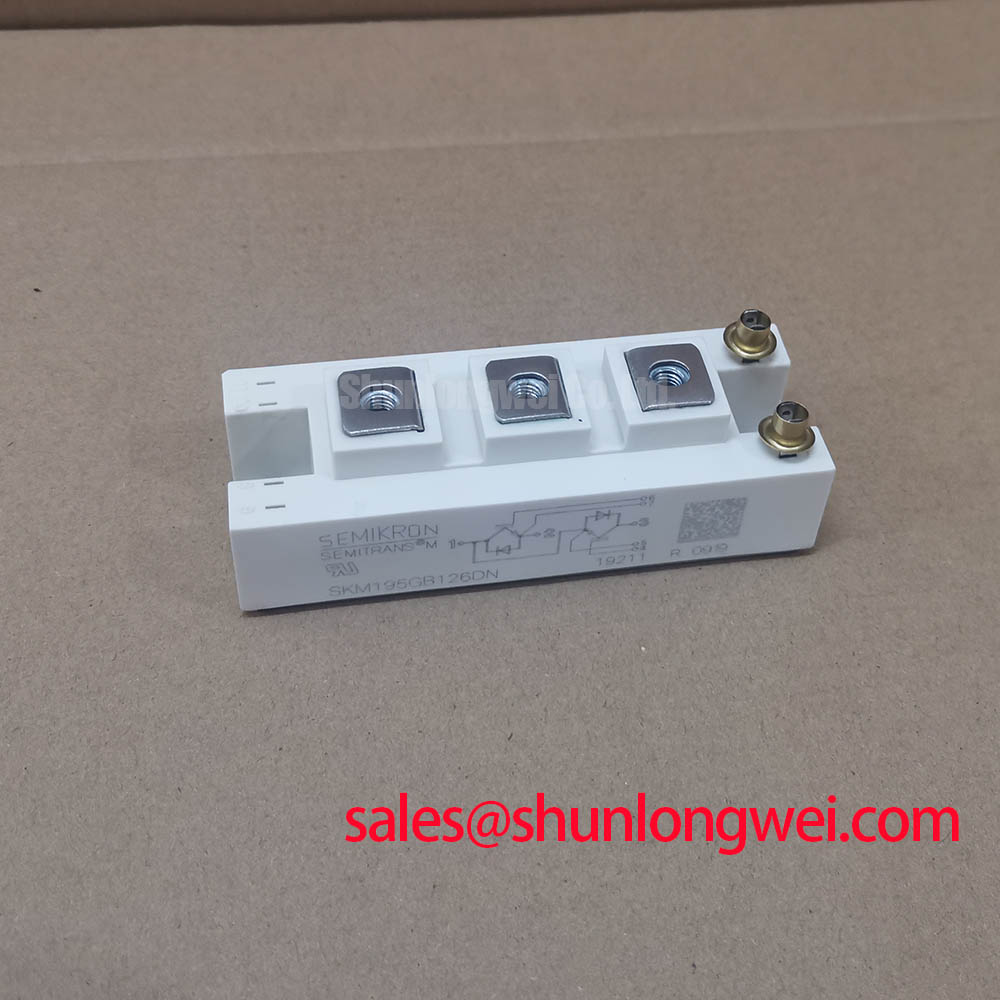
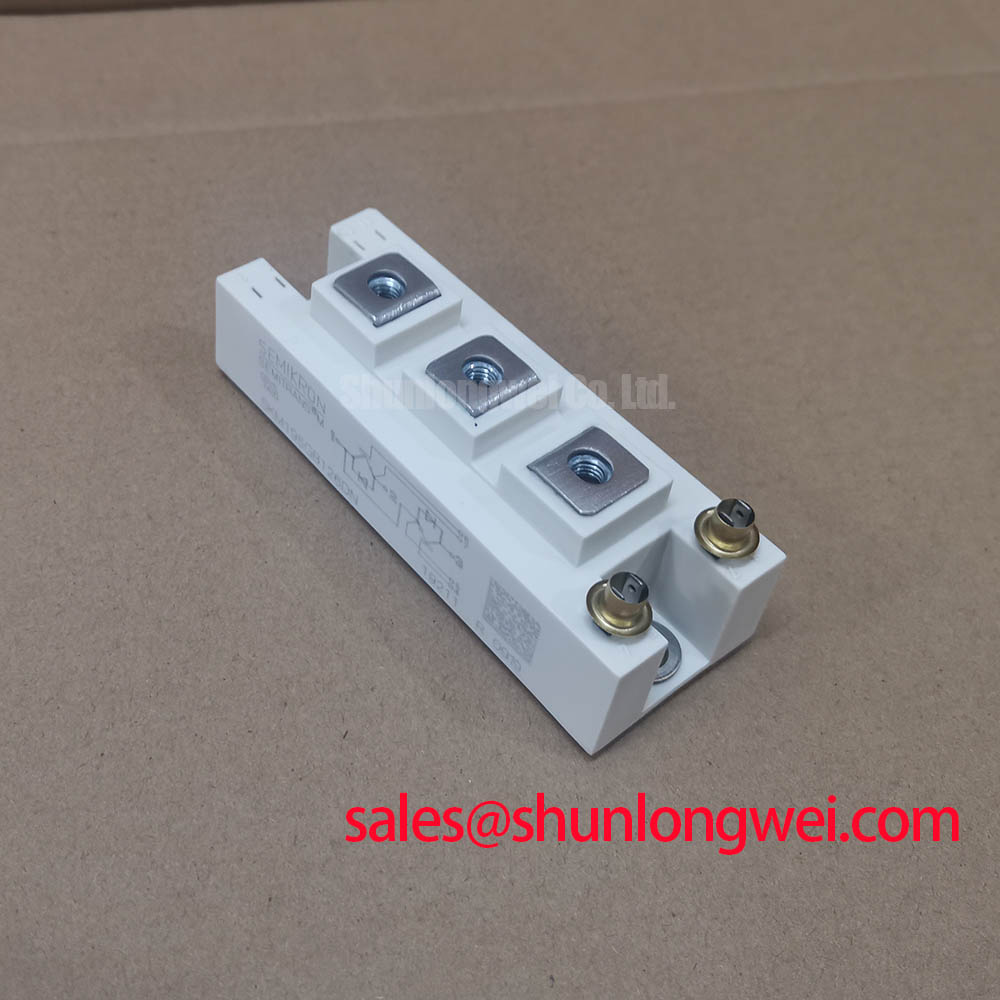
Technical Analysis for System Integration
The engineering value of the SKM195GB126DN is evident in its core components. The module utilizes Trench Gate IGBT technology, which allows for a high channel density. This contributes to its collector-emitter saturation voltage (VCE(sat)) of 2.15V (typical) under a 150A load at an operating temperature of 125°C. VCE(sat) can be compared to the resistance of a mechanical switch; a lower value directly translates to lower conduction losses, reducing the heat generated and easing thermal management requirements. For engineers, this means smaller heatsinks or higher power density is achievable. You can learn more about the crucial role of mastering IGBT thermal design from our technical articles.
Complementing the IGBT is an integrated CAL (Controlled Axial Lifetime) freewheeling diode. In applications like motor drives, the diode’s recovery behavior is critical. The CAL diode provides a “soft” recovery, which means it gradually stops conducting reverse current. This behavior minimizes voltage spikes and high-frequency oscillations (EMI), which can disrupt other electronic components. The benefit is a more stable system that may require less complex snubber circuits, saving both component cost and board space.
Optimized Application Scenarios
The SKM195GB126DN is specified for robust performance in several key industrial power systems:
- AC Inverter Drives: Its high short-circuit withstand time of 10 µs provides the necessary ruggedness to handle motor stall or fault conditions without failure.
- Uninterruptible Power Supplies (UPS): The module’s low conduction losses improve overall system efficiency, a critical factor for battery-powered backup systems.
- Electronic Welding Systems: The fast and controlled switching characteristics of the Trench IGBTs enable the precise energy delivery required in modern welding power supplies.
The module’s balanced specifications make it an optimal choice for power converters where operational reliability and efficiency are primary design considerations.
Key Specifications of the SKM195GB126DN
| Absolute Maximum Ratings (Tc = 25°C unless otherwise specified) | |||
|---|---|---|---|
| Parameter | Symbol | Value | |
| Collector-Emitter Voltage | VCES | 1200 V | |
| Continuous Collector Current (Tc = 80°C) | IC | 160 A | |
| Gate-Emitter Voltage | VGES | ±20 V | |
| Operating Junction Temperature | Tvj, op | -40 to +150 °C | |
| Electrical Characteristics (Tj = 125°C unless otherwise specified) | |||
| Parameter | Symbol | Conditions | Typ. Value |
| Collector-Emitter Saturation Voltage | VCE(sat) | IC = 150 A, VGE = 15 V | 2.15 V |
| Gate Threshold Voltage | VGE(th) | IC = 6 mA, Tj = 25°C | 5.8 V |
| FWD Forward Voltage | VF | IF = 150 A | 1.8 V |
| Turn-on Energy | Eon | VCC=600V, IC=150A, RG=5Ω | 16 mJ |
| Turn-off Energy | Eoff | 21 mJ | |
Engineer’s FAQ
What is the primary benefit of the CAL freewheeling diode in the SKM195GB126DN?
The CAL (Controlled Axial Lifetime) diode is engineered for soft recovery characteristics. This minimizes voltage overshoot and electromagnetic interference (EMI) during diode turn-off, which is common in hard-switched applications. This allows for a more reliable system and can reduce the need for external snubber circuitry. More information on diode performance can be found in our guide to soft-recovery diodes.
How does the positive temperature coefficient of VCE(sat) aid in system design?
The VCE(sat) increases as the device temperature rises. When operating multiple modules in parallel, if one module starts to get hotter, its on-state voltage drop increases. This inherently forces current to share more evenly with the cooler, parallel modules, creating a self-balancing effect that prevents thermal runaway. For insights into this, see our article on mastering IGBT paralleling.
What are the recommended mounting torque specifications for this module?
According to the datasheet, the mounting torque for the M6 main terminals is 5 Nm. For mounting the module to a heatsink using M6 screws, the recommended torque is also 5 Nm. Applying the correct torque is critical to ensure a low-resistance thermal connection and to avoid mechanical stress on the module’s isolated baseplate.
The SKM195GB126DN provides a robust foundation for power electronics, enabling engineers to develop efficient and reliable systems. Its proven Trench Gate and CAL diode technologies offer a dependable solution for managing power in demanding industrial environments.