SKM200GAR125D: A Technical Analysis for Robust Power System Design
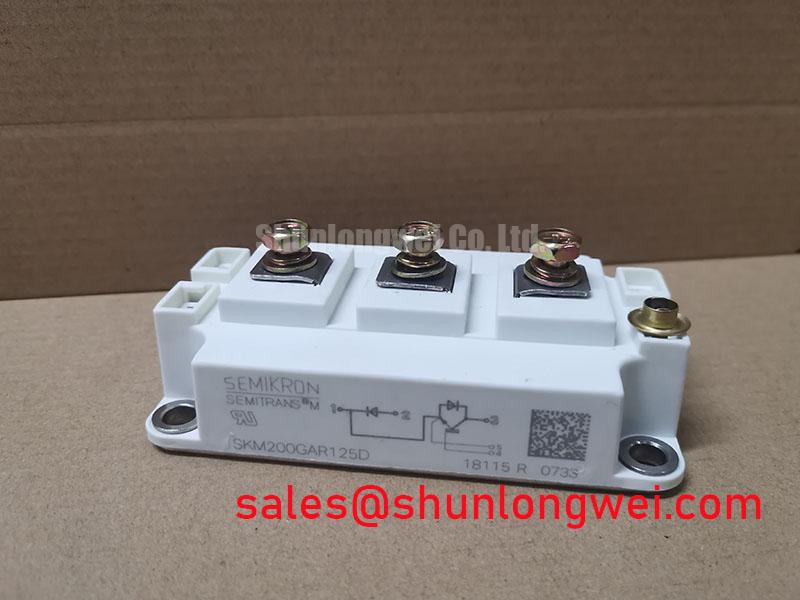
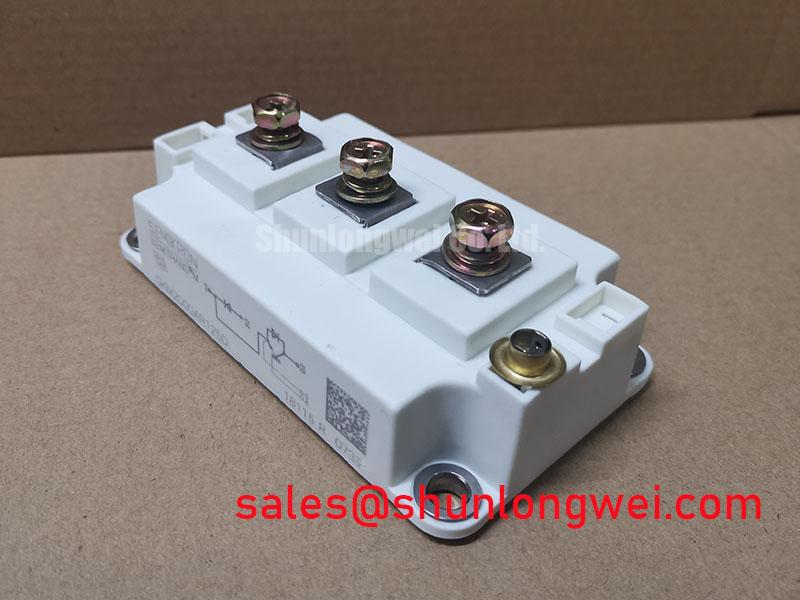
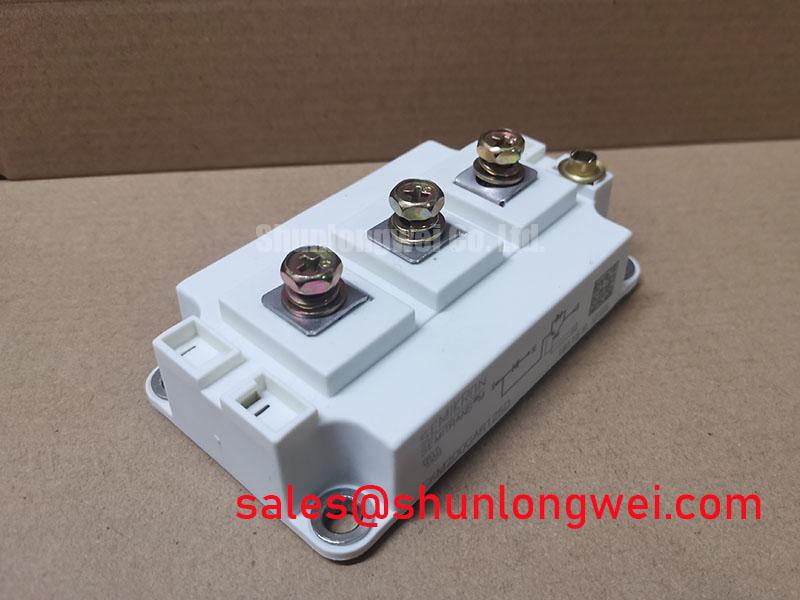
SKM200GAR125D 1200V 200A SEMITRANS 2 IGBT Module
Introduction and Core Highlights
This SEMITRANS® 2 module integrates a 1200V Trench IGBT with a soft-recovery CAL (Controlled Axial Lifetime) freewheeling diode, providing a robust and efficient foundation for high-power switching applications. The device is engineered to balance conduction losses, switching performance, and ruggedness. This datasheet-driven approach ensures reliable operation in demanding industrial systems by providing clear thermal and electrical parameters, which are critical for accurate heatsink selection and overall system design.
- Core Specifications: 1200V | 200A | VCE(sat) (typ) 2.3V @ 125°C
- Key Advantages: High short-circuit ruggedness, soft diode recovery for reduced EMI.
Download Official Datasheet (PDF)
Technical Analysis Based on Performance Characteristics
The engineering value of the SKM200GAR125D is found in its blend of silicon technology and robust packaging. The core of the module is a Trench Gate IGBT, a design that optimizes the density of the silicon to lower the collector-emitter saturation voltage (VCE(sat)). A lower VCE(sat), typically 2.3V at a junction temperature of 125°C and 200A collector current, directly translates to reduced conduction losses. This reduction in wasted energy as heat means lower operational temperatures and smaller, more cost-effective cooling systems.
Complementing the IGBT is a CAL (Controlled Axial Lifetime) freewheeling diode. In hard-switching applications, the diode’s recovery behavior is critical. The “soft” recovery characteristic of the CAL diode ensures a smoother current transition during turn-off. This minimizes voltage overshoots and high-frequency oscillations, which are primary sources of electromagnetic interference (EMI). By reducing EMI at the component level, engineers can often simplify or eliminate external snubber circuits, saving board space and component cost.
Ruggedness and Thermal Management
A key indicator of this module’s reliability is its short-circuit withstand time (t_psc) of 10 microseconds. This rating ensures the device can survive brief but severe fault conditions, preventing catastrophic failures in applications like motor drives where stalls or short circuits can occur. The module’s thermal resistance from junction to case (Rth(j-c)) for the IGBT is specified at a maximum of 0.16 K/W. This value can be imagined as the width of a pipeline for heat; a lower value indicates a wider pipe, allowing thermal energy to flow easily from the active silicon to the heatsink. This efficient heat transfer is fundamental to preventing overheating and ensuring long-term operational stability.
Optimized Application Scenarios
The specifications of the SKM200GAR125D make it a strong candidate for several high-power industrial applications:
- Industrial Motor Drives: The high short-circuit capability and robust thermal performance are ideal for the demanding torque and load profiles of AC motor control.
- Uninterruptible Power Supplies (UPS): Its efficiency and reliability are critical for ensuring consistent power delivery in data centers and industrial facilities.
- Welding Power Supplies: The module’s ability to handle high currents and its soft-switching diode characteristics are well-suited for the pulsed-power requirements of modern welding equipment.
- Solar and Wind Inverters: Efficient 1200V power switching is essential for converting DC power from renewable sources to grid-compatible AC power.
This module is an excellent fit for high-reliability industrial inverters requiring a balance of efficiency and robust fault tolerance.
Key Specification Parameters of the SKM200GAR125D
| Absolute Maximum Ratings (Tcase = 25°C unless otherwise specified) | |
|---|---|
| Collector-Emitter Voltage (VCES) | 1200 V |
| DC Collector Current (IC) @ Tcase=25°C | 282 A |
| DC Collector Current (IC) @ Tcase=80°C | 200 A |
| Short Circuit Withstand Time (t_psc) | 10 µs |
| Operating Junction Temperature (Tj) | -40 to +150 °C |
| Electrical & Thermal Characteristics (IGBT) | |
| Collector-Emitter Saturation Voltage (VCE(sat)) @ IC=200A, Tj=125°C | 2.3 V (typ.) |
| Gate-Emitter Threshold Voltage (VGE(th)) | 5.8 V (typ.) |
| Turn-off Delay Time (td(off)) @ Tj=125°C | 410 ns (typ.) |
| Thermal Resistance, Junction-to-Case (Rth(j-c)) | 0.16 K/W (max.) |
Engineer’s FAQ
- How is the Rth(j-c) value used for heatsink selection?
- The thermal resistance from junction to case, Rth(j-c), is a critical parameter for thermal design. To select an appropriate heatsink, you must first calculate the total power loss (P_loss) of the module in your application. The required thermal resistance of the heatsink (Rth(c-a)) can then be estimated using the formula: Rth(c-a) = (Tj_max – Ta) / P_loss – Rth(j-c), where Tj_max is the maximum allowable junction temperature and Ta is the ambient temperature.
- What are the benefits of the CAL freewheeling diode?
- The CAL diode is designed for “soft” recovery. This means it turns off with a smoother current waveform, reducing voltage spikes and high-frequency ringing. This behavior lowers electromagnetic interference (EMI) and improves the reliability of the overall system by reducing voltage stress on the components.
- What is the recommended mounting torque for the SKM200GAR125D?
- The datasheet specifies a mounting torque for the M6 terminal screws of 3-5 Nm and for the M6 mounting screws of 3-5 Nm. Applying the correct torque is essential to ensure a low-resistance thermal connection to the heatsink without inducing excessive mechanical stress on the module’s isolated baseplate.
Enabling Robust Power System Design
By providing a well-balanced design that combines Trench IGBT efficiency with the reliability of a soft-recovery diode and documented fault tolerance, the SKM200GAR125D enables engineers to develop robust and efficient high-power conversion systems. Its detailed specifications support predictable thermal performance, which is a cornerstone of reliable industrial electronics.