Technical Review: The Mitsubishi CM1200DB-34N High-Power IGBT Module
CM1200DB-34N IGBT Module | 1700V 1200A Dual | Mitsubishi
High-Power Performance with Low Conduction Loss
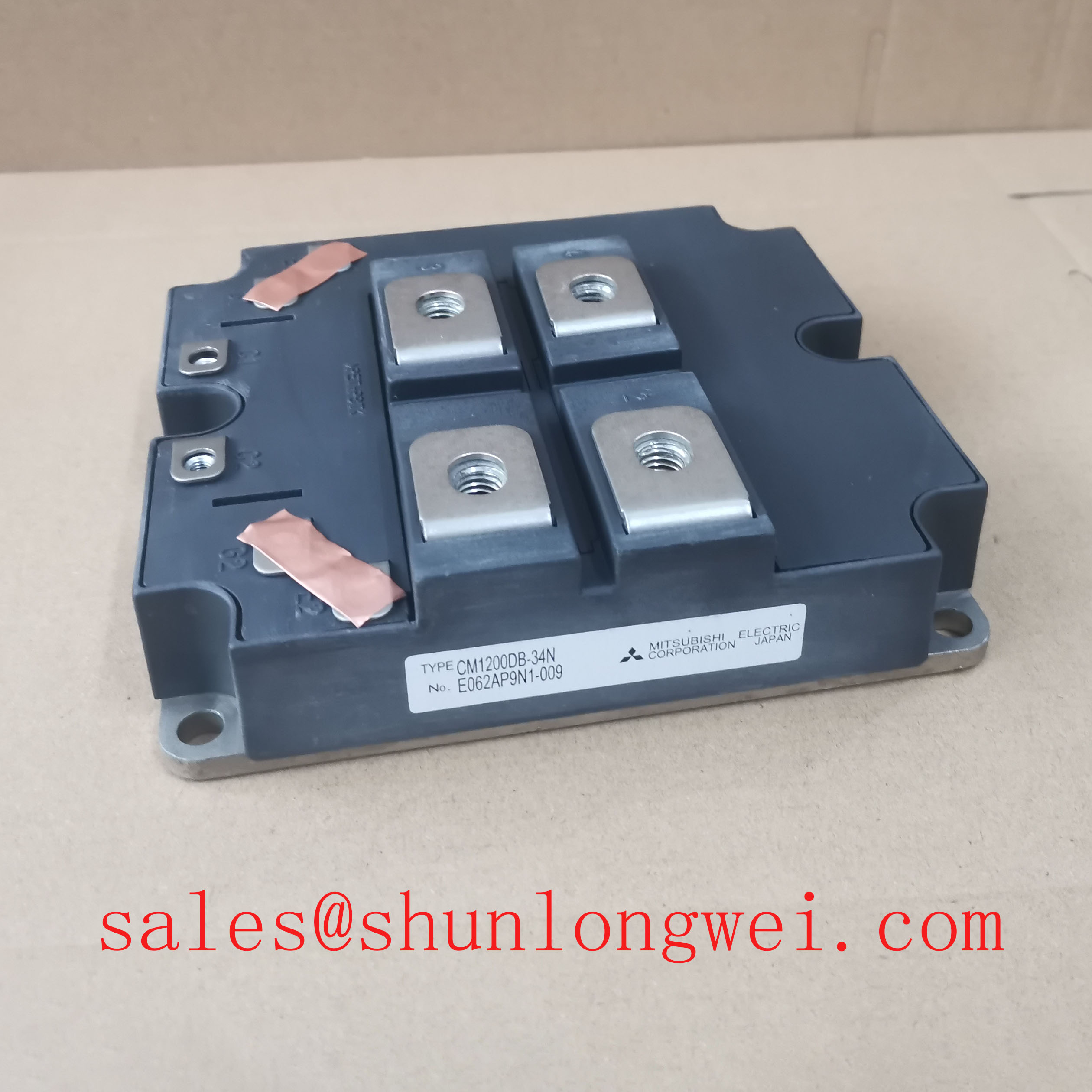
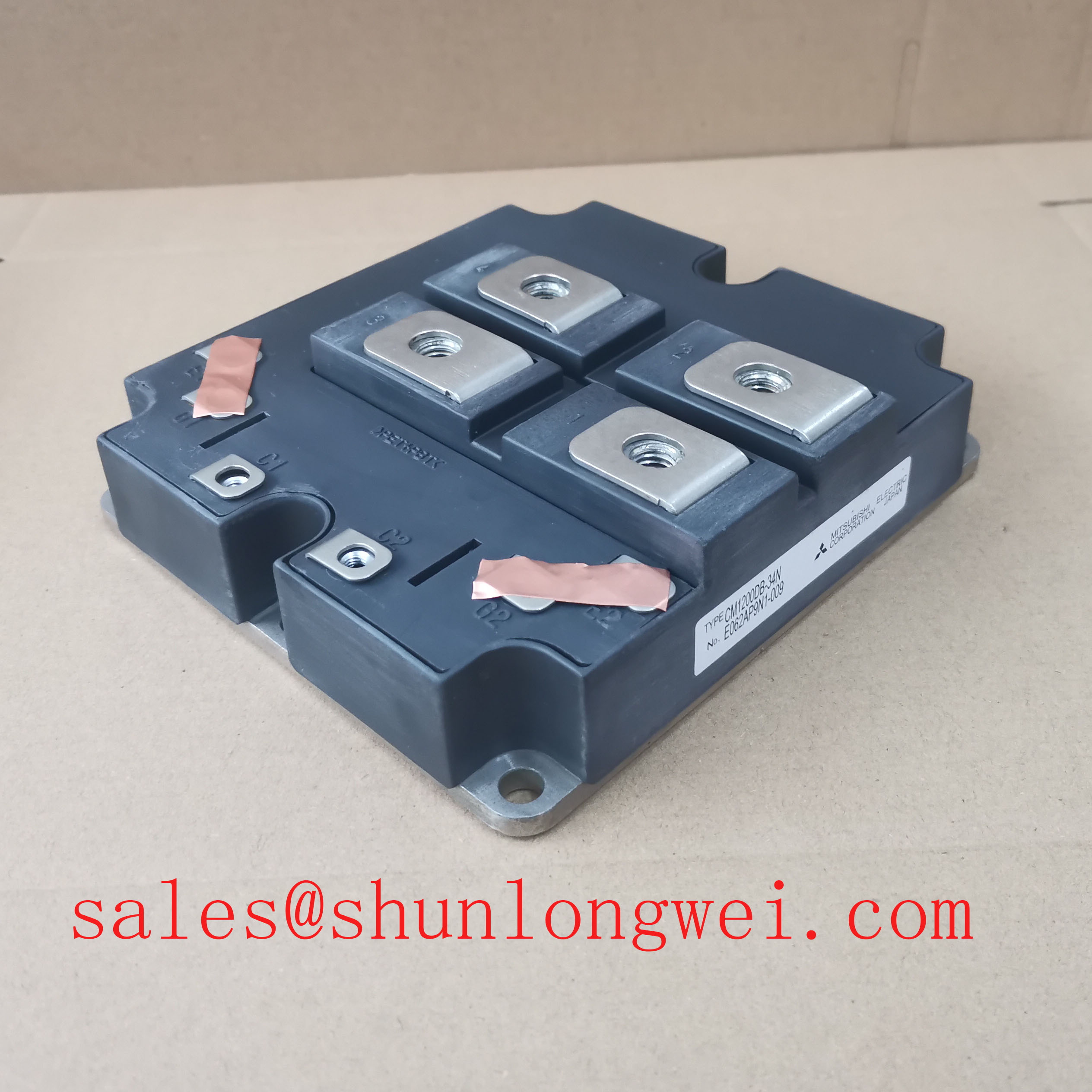
The Mitsubishi CM1200DB-34N is a high-power dual IGBT module engineered for demanding power conversion applications. It leverages Mitsubishi’s N-Series CSTBT™ (Carrier Stored Trench-Gate Bipolar Transistor) technology to achieve a formidable balance of high-current capability and operational efficiency. This design minimizes power losses, a critical factor for system designers working with high-power inverters where thermal management and reliability are paramount.
- Core Specifications: 1700V | 1200A | VCE(sat) 2.1V (typ)
- Key Advantages: Minimized conduction losses, high thermal efficiency.
This module’s low collector-emitter saturation voltage (VCE(sat)) directly translates to reduced heat generation during operation, simplifying thermal design and potentially lowering cooling system costs. For further information, please refer to the official manufacturer’s documentation.
Download Official Datasheet (PDF)
Technical Analysis of the CM1200DB-34N
The engineering value of the CM1200DB-34N is rooted in its core semiconductor technology and thermal design. The N-Series CSTBT™ structure is specifically designed to lower the on-state voltage drop across the device. With a typical VCE(sat) of just 2.1V at its rated current of 1200A, the module significantly cuts down on conduction power losses (P_loss = VCE(sat) × IC), a primary source of waste heat in high-current inverters. This efficiency is fundamental to achieving higher system performance and reliability, issues often linked to IGBT failures.
Effective thermal management is equally critical. The module specifies a thermal resistance from junction to case (Rth(j-c)Q) of 0.012 °C/W for the IGBT part. Think of thermal resistance as the width of a pipe for heat; a lower value indicates a wider pipe, allowing heat to escape more easily. This excellent thermal conductivity ensures that heat generated within the silicon can be efficiently transferred to an external heatsink, maintaining the junction temperature within safe operating limits even under heavy loads. This characteristic is essential for long-term operational stability.
Optimized Application Scenarios
The specifications of this module make it a strong candidate for several high-power industrial applications:
- High-Power Inverters/Converters: The 1700V blocking voltage provides a robust safety margin for systems with a 1000V to 1200V DC bus, while the 1200A current rating supports megawatt-scale power conversion.
- Wind Turbine Converters: Its high current capability and efficient thermal performance are well-suited to handle the variable and demanding power cycles found in wind energy generation.
- Large Industrial Motor Drives: The ability to precisely control high currents enables its use in variable frequency drives (VFDs) for large-scale AC motors in heavy industry.
- Uninterruptible Power Supplies (UPS): The module’s high reliability and power ratings are essential for critical backup power systems in data centers and industrial facilities.
This module is an optimal match for high-power inverter designs where thermal efficiency and voltage headroom are primary engineering considerations.
Key Specification Parameters
| Absolute Maximum Ratings (Tj=25°C unless otherwise specified) | |
|---|---|
| Collector-Emitter Voltage (VCES) | 1700V |
| Gate-Emitter Voltage (VGES) | ±20V |
| Collector Current (IC) | 1200A |
| Maximum Power Dissipation (Pc) | 6900W (TC=25°C) |
| Electrical & Thermal Characteristics (Tj=125°C unless otherwise specified) | |
| Collector-Emitter Saturation Voltage (VCE(sat)) | 2.1V (typ) at IC = 1200A, VGE = 15V |
| Gate-Emitter Threshold Voltage (VGE(th)) | 5.5V (min), 7.5V (max) at VCE = 10V, IC = 120mA |
| Thermal Resistance, Junction-to-Case (Rth(j-c)Q) | 0.012 °C/W (IGBT part) |
| Operating Junction Temperature (Tj op) | -40 to +150°C |
Engineer’s FAQ
What is the primary consideration for thermal design when using the CM1200DB-34N at its maximum current?
The main factor is ensuring the junction temperature (Tj) remains below the 150°C maximum. Given the low thermal resistance (Rth(j-c)Q) of 0.012 °C/W, an appropriately sized heatsink with low thermal resistance and sufficient airflow is critical to dissipate the heat generated from conduction and switching losses. A robust thermal management strategy is essential.
What are the recommended gate drive voltage conditions for this module?
The datasheet specifies test conditions using a gate-emitter voltage (VGE) of ±15V. A positive voltage of +15V is recommended to fully saturate the IGBT and minimize VCE(sat). A negative voltage of -15V provides a strong buffer against induced turn-on from Miller currents, enhancing noise immunity. Adherence to these values is key for reliable switching.
What does the ‘DB’ in the part number signify?
In Mitsubishi’s N-series nomenclature for this package type, ‘DB’ typically indicates a dual IGBT configuration, meaning the module contains two IGBT switches connected in a half-bridge topology. This is a common building block for three-phase inverters.
What is the isolation voltage rating of this module?
The CM1200DB-34N has an isolation voltage (Viso) rating of 6000Vrms (for 1 minute at 60Hz), as specified in the datasheet. This high isolation capability ensures safety and reliability in high-voltage industrial systems by providing a robust dielectric barrier between the power terminals and the module’s baseplate.
Enabling Efficient High-Power Designs
The CM1200DB-34N provides the high-current switching foundation required for next-generation power converters. Its foundation in low-loss CSTBT™ technology, combined with a thermally efficient package, empowers engineers to develop more compact, reliable, and energy-efficient high-power systems. This module is a direct path to reducing system-level heat dissipation and improving overall performance.