Vicor VI-JNF-EW: A Technical Review of a High-Density 75W DC-DC Converter
Vicor VI-JNF-EW DC-DC Converter | 75W, 150V Input, 12V Output
High-Density 75W DC-DC Converter for Demanding Applications
The Vicor VI-JNF-EW is a high-density, isolated DC-DC converter that delivers a tightly regulated output from a wide input range. Its core value proposition is enabling compact and reliable power architectures through its combination of a small footprint, high efficiency, and agency-approved design. This module is an effective solution for engineers looking to reduce the size and thermal load of their power systems without compromising on performance or safety compliance.
- Core Specifications: 100-200VDC Input | 12V Output | 75W Power
- Key Advantages: High power density in a half-brick package, wide 2:1 input voltage range.
Download Official Datasheet (PDF)
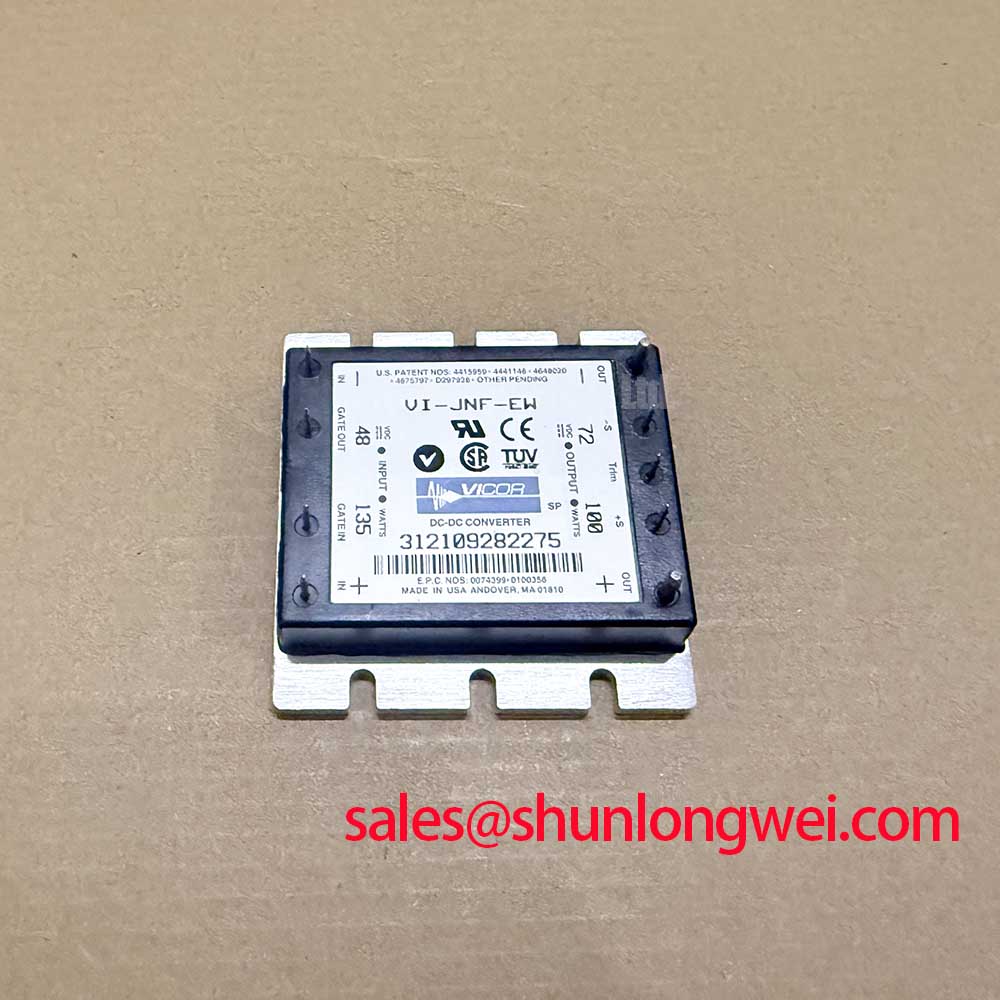
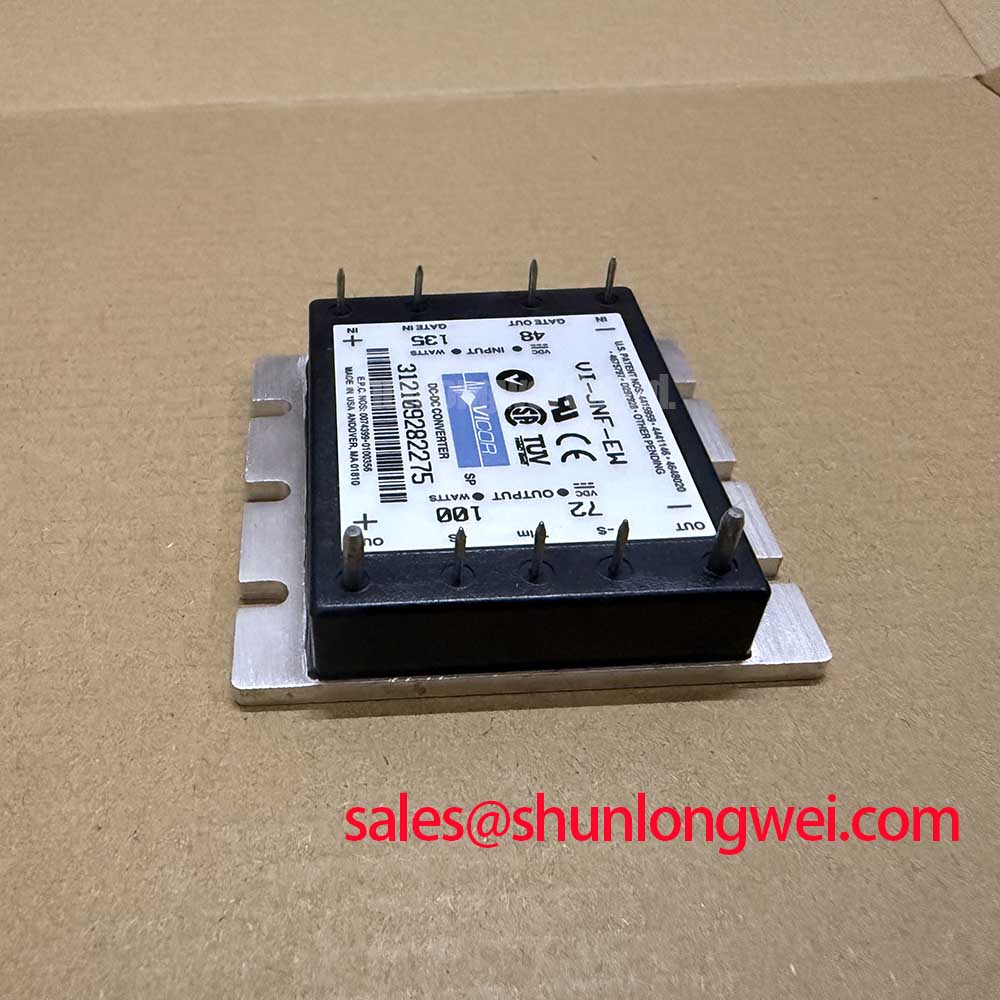
Technical Analysis of the VI-JNF-EW
A primary engineering advantage of the VI-JNF-EW is its power density. By utilizing a zero-current-switching topology, the module achieves efficiencies up to 80-90%, which minimizes waste heat and allows for its compact half-brick footprint (2.28″ x 2.4″). Think of power density like packing efficiency; this converter allows you to fit more power processing capability into a smaller, lighter enclosure. This directly contributes to smaller end-product dimensions and potentially lower material costs for chassis and heatsinking components. The module’s thermal management is further explored in resources on mastering thermal design.
The specified 2:1 input voltage range (100V to 200V DC) provides significant design flexibility. It allows the converter to maintain a stable 12V output even when connected to unregulated or fluctuating DC power sources, such as battery systems where voltage sags under load. This robustness simplifies the upstream power conditioning requirements and enhances system reliability. The combination of a wide input range and high efficiency is a crucial characteristic for modern power semiconductors, ensuring predictable performance across varied operating conditions.
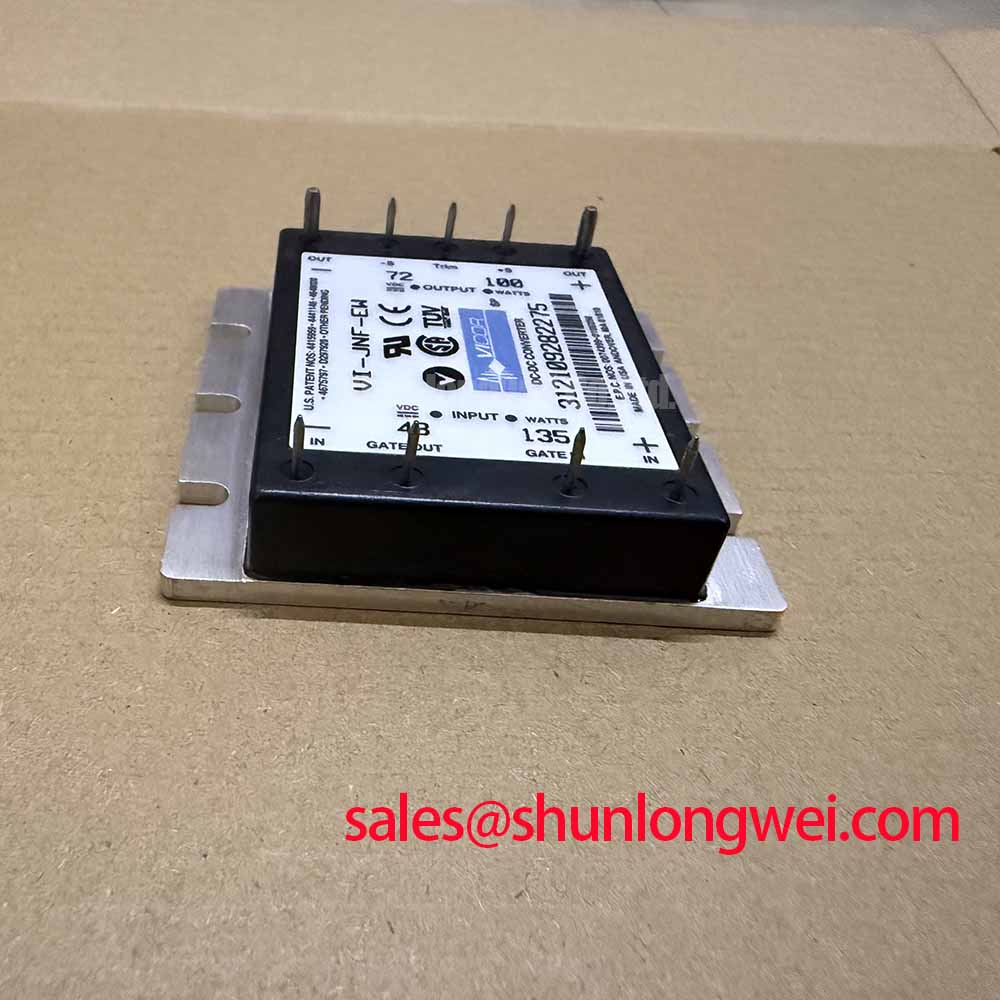
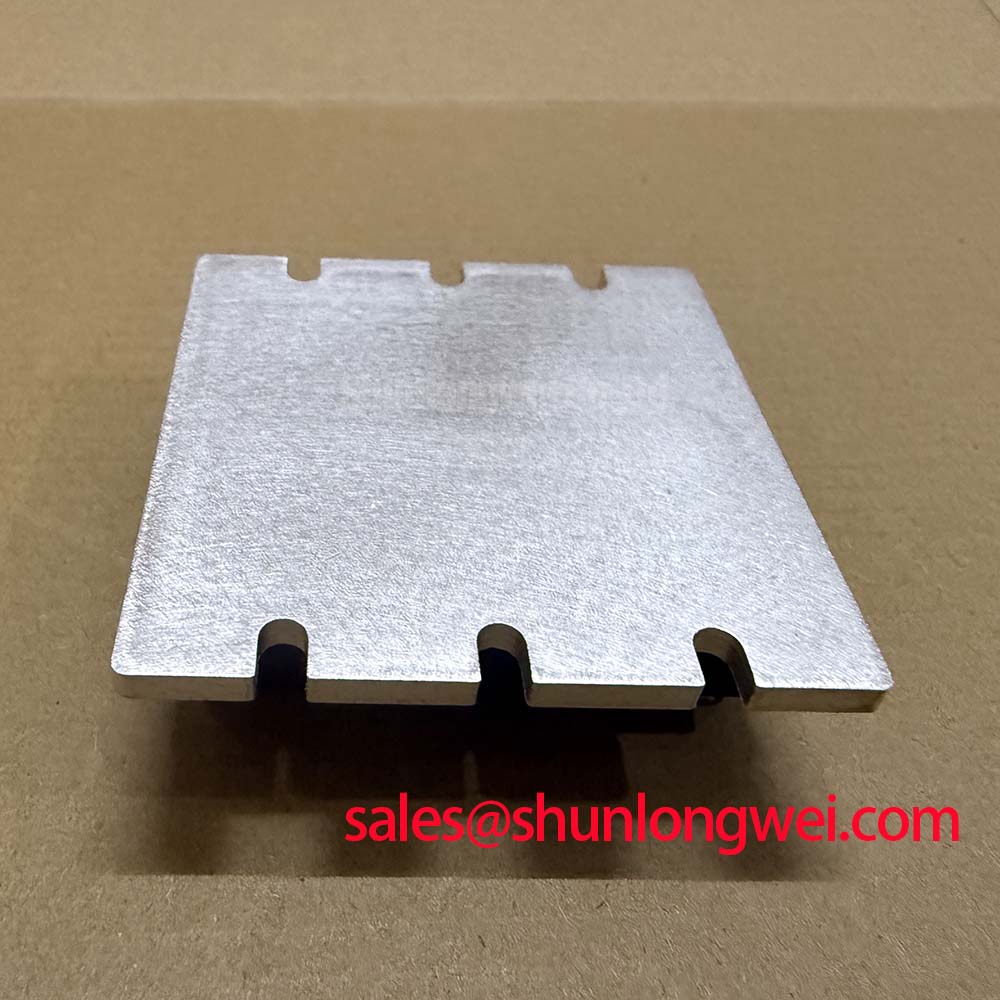
Optimized Application Scenarios
The VI-JNF-EW’s features make it well-suited for several specific use cases:
- Industrial Control Systems: Its wide input range tolerates voltage fluctuations common on factory floors, ensuring consistent power for critical control logic.
- Telecommunications Infrastructure: The high power density allows for more functionality to be packed into standard equipment racks where space is at a premium.
- Off-Grid and Battery-Powered Equipment: The module’s efficiency maximizes battery life, and its ability to handle a wide voltage swing is ideal for battery discharge cycles.
- Distributed Power Architectures: Can be used to efficiently step down a higher bus voltage to a regulated 12V at the point of load, improving overall system performance.
This module is an optimal match for space-constrained applications requiring a robust, agency-approved 75W power source from a high-voltage DC bus.
VI-JNF-EW Key Specifications
| Electrical Characteristics (at T_C = 25°C unless otherwise specified) | |
|---|---|
| Input Voltage Range | 100 – 200 VDC |
| Output Voltage | 12 VDC |
| Output Power | 75 W |
| Output Current | 6.25 A |
| Efficiency | 88% (Typical at nominal line) |
| Isolation Voltage (Input to Output) | 3000 VRMS |
| Switching Frequency | 100 kHz – 1 MHz (Varies with load and line) |
| Thermal & Mechanical Specifications | |
| Operating Case Temperature | -40°C to +100°C |
| Package Dimensions | 2.28″ L x 2.4″ W x 0.5″ H (57.9 x 61.0 x 12.7 mm) |
Engineer’s FAQ
1. Can the output voltage of the VI-JNF-EW be adjusted?
Yes. The VI-JNF-EW features a trim pin (-SENSE/TRIM). According to the datasheet, the output voltage can be trimmed from 10% to 110% of its nominal 12V value by connecting an external fixed resistor between the trim pin and either the +SENSE or -SENSE pin. Refer to the datasheet for specific resistor value calculations.
2. What is the best way to manage the thermal performance of this module?
Effective thermal management is crucial for reliability. The datasheet specifies a thermal resistance from the case to the sink (with thermal compound) of 0.2 °C/W. To keep the case temperature below the 100°C maximum, a heatsink is typically required. The required size of the heatsink depends on the output power, ambient temperature, and airflow. The datasheet provides power dissipation curves to aid in these calculations.
3. How does the current limit feature work?
The VI-JNF-EW includes a current limit function accessible via the PC pin. The datasheet indicates that connecting a resistor from the PC pin to the -OUT pin sets the rectangular current limit threshold. This feature protects both the power supply and the load from overcurrent conditions.
4. What safety agency approvals does the VI-J00 series carry?
The series is designed to meet stringent safety standards. According to the datasheet, it carries UL, CSA, and TÜV approvals, which can significantly streamline the certification process for the final product.
Empowering Compact Power Designs
The VI-JNF-EW DC-DC converter provides a verified, high-density power component for engineers developing systems with high-voltage DC buses. Its wide input range and integrated protection features offer a dependable and flexible power foundation. This allows design teams to focus on their core application logic, supported by a robust, pre-certified power conversion stage that facilitates smaller, more efficient, and reliable end products.