SanRex PD100KN16: High-Reliability 1600V Industrial Diode Module
SanRex PD100KN16 Diode Module: 1600V, 100A Rectifier
High-Reliability Rectification for Industrial Power Systems
The SanRex PD100KN16 is a high-power diode module delivering robust performance for demanding rectification circuits. It combines a high reverse voltage capability with significant current handling, all within an electrically isolated package. This component is specified for systems requiring efficient and durable power conversion under challenging industrial conditions. How to ensure thermal stability is a common question, which is addressed by the module’s low thermal resistance characteristics.
- Core Specifications: 1600V VRRM | 100A IF(AV) | 2500V Viso
- Key Strengths: High voltage headroom for noisy industrial lines, excellent surge current survivability.
- Engineering Value: Simplifies heatsink mounting with an isolated base, enhances system reliability.
Download the Official PD100KN16 Datasheet (PDF)
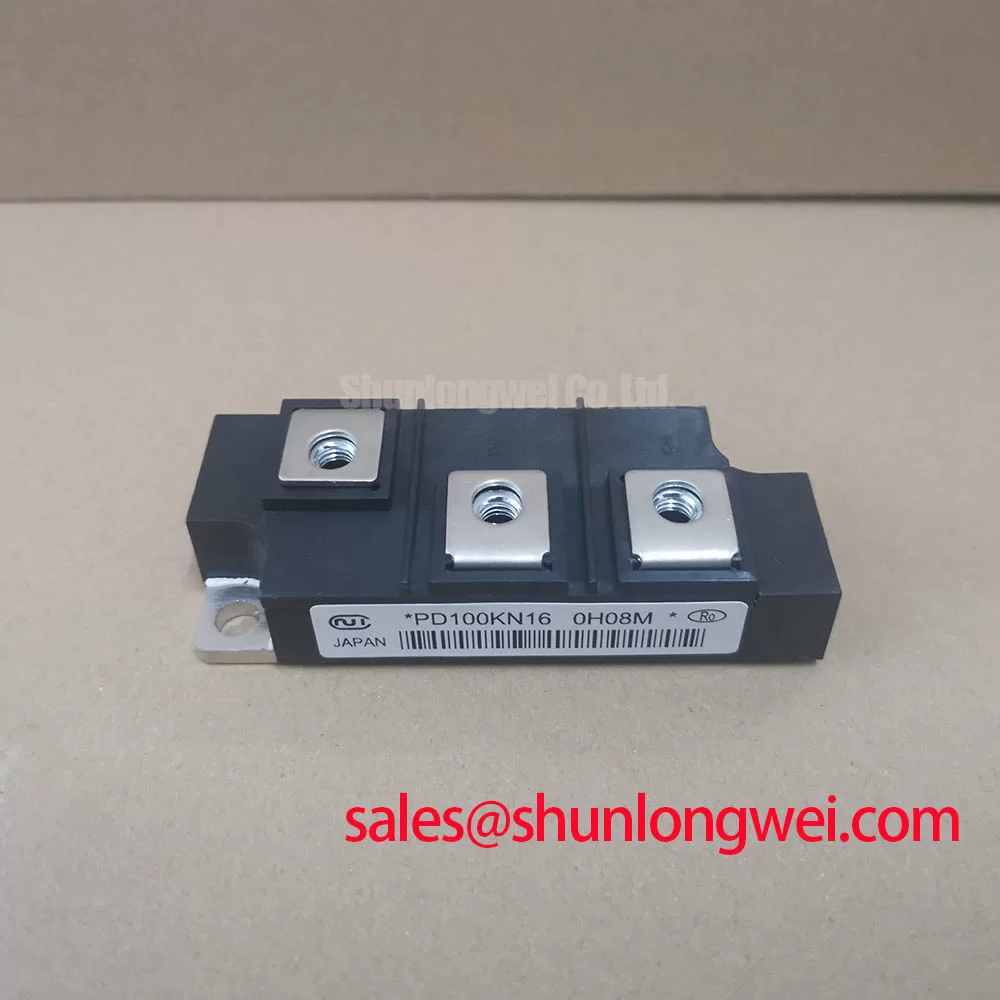

Technical Analysis for System Design
The PD100KN16 module’s primary strength lies in its 1600V repetitive peak reverse voltage (VRRM). This high rating provides a substantial safety margin against voltage transients common in industrial environments, protecting the system from catastrophic failure. The non-repetitive peak reverse voltage (VRSM) of 1700V further underscores its robustness. This capability is critical for applications connected directly to high-voltage mains or those subject to inductive load switching, which can generate significant back-EMF.
Efficient thermal management is enabled by the module’s low thermal resistance. The junction-to-case thermal resistance (Rth(j-c)) is specified at a maximum of 0.25°C/W per arm. You can think of thermal resistance as the width of a pipe for heat; a lower value means a wider pipe, allowing heat to flow away from the active silicon junction more easily. This low resistance, combined with a maximum junction temperature of 150°C, allows the module to sustain its 100A average forward current rating without excessive temperature rise, a key factor in long-term reliability. For insights into power component failures, consider reading a root cause analysis of IGBT failures.

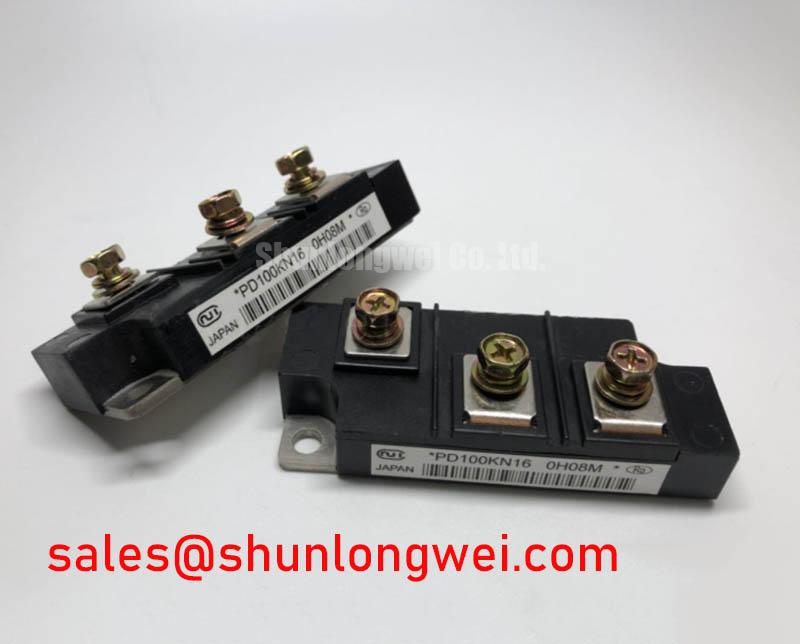
Optimized Application Scenarios
The PD100KN16 is well-suited for a range of high-power industrial applications where reliability is paramount.
- Welding Power Supplies: Its high surge forward current (IFSM) of 2000A ensures it can withstand the intense, short-duration current pulses characteristic of welding operations.
- Industrial Battery Chargers: The 1600V rating provides ample protection against voltage spikes from the AC line, making it a dependable choice for large-scale charging systems.
- DC Motor Drives: The module serves as a robust freewheeling or rectifier diode, capably handling the demands of motor control circuits.
- Uninterruptible Power Supplies (UPS): Its high current and voltage ratings make it ideal for the input rectifier stage of high-capacity UPS systems.
This module’s balanced electrical and thermal specifications make it an optimal component for industrial rectifier circuits requiring high reliability.
Key Specifications of the PD100KN16
| Absolute Maximum Ratings (Tj = 25°C unless otherwise specified) | ||
|---|---|---|
| Repetitive Peak Reverse Voltage | VRRM | 1600V |
| Average Rectified Output Current | IO(AV) | 100A (Tc=108℃) |
| Surge Forward Current | IFSM | 2000A (50Hz, 1 pulse) |
| Operating Junction Temperature | Tjw | -40 to +150°C |
| Electrical & Thermal Characteristics | ||
| Peak Forward Voltage | VFM | 1.54V max (IFM=320A) |
| Peak Reverse Current | IRM | 10mA max (VRM=1600V, Tj=150°C) |
| Thermal Resistance (Junction to Case) | Rth(j-c) | 0.25 °C/W |
| Isolation Voltage | Viso | 2500V (AC, 1 minute) |
Engineer’s FAQ
1. What is the junction-to-case thermal resistance for the PD100KN16 and why is it important?
The maximum junction-to-case thermal resistance is 0.25 °C/W. This value is critical for thermal design as it allows engineers to accurately calculate the junction temperature based on power dissipation and the heatsink’s performance, ensuring the device operates within its safe temperature limits. Understanding IGBT thermal design provides transferable knowledge for managing diode modules.
2. What are the recommended mounting torque specifications?
According to the datasheet, the recommended mounting torque for both the M5 main terminals and the M5 baseplate mounting screws is 2.4 to 2.8 N·m. Applying the correct torque is essential to ensure a low-resistance electrical connection and effective thermal transfer to the heatsink without causing mechanical stress.
3. Can this module be used for three-phase rectification?
Yes. The PD100KN16 contains two series-connected diodes. Three modules can be configured to form a standard six-pulse full-bridge rectifier for three-phase AC power systems. Its isolated baseplate simplifies the mechanical layout and electrical isolation between phases.
4. What does the UL recognition signify?
The UL recognition (File E76102(M)) indicates that the module has been tested and certified by Underwriters Laboratories to meet specific safety standards. This is often a requirement for components used in industrial equipment sold in North America, simplifying the end-product’s certification process.
Enabling Robust Power Conversion
The SanRex PD100KN16 diode module provides the high-voltage and high-current ratings necessary for building durable and efficient power conversion systems. Its conservative specifications, industry-standard housing, and certified safety compliance offer a reliable foundation for any design requiring robust rectification, from industrial motor drives to battery charging infrastructure. For more on power components, explore topics like isolated baseplates.