SKM300GB128D Technical Analysis: A Robust 1200V IGBT for High-Power Systems
SKM300GB128D: 1200V 370A SPT IGBT Module Analysis
Introduction to the SKM300GB128D for High-Power Systems
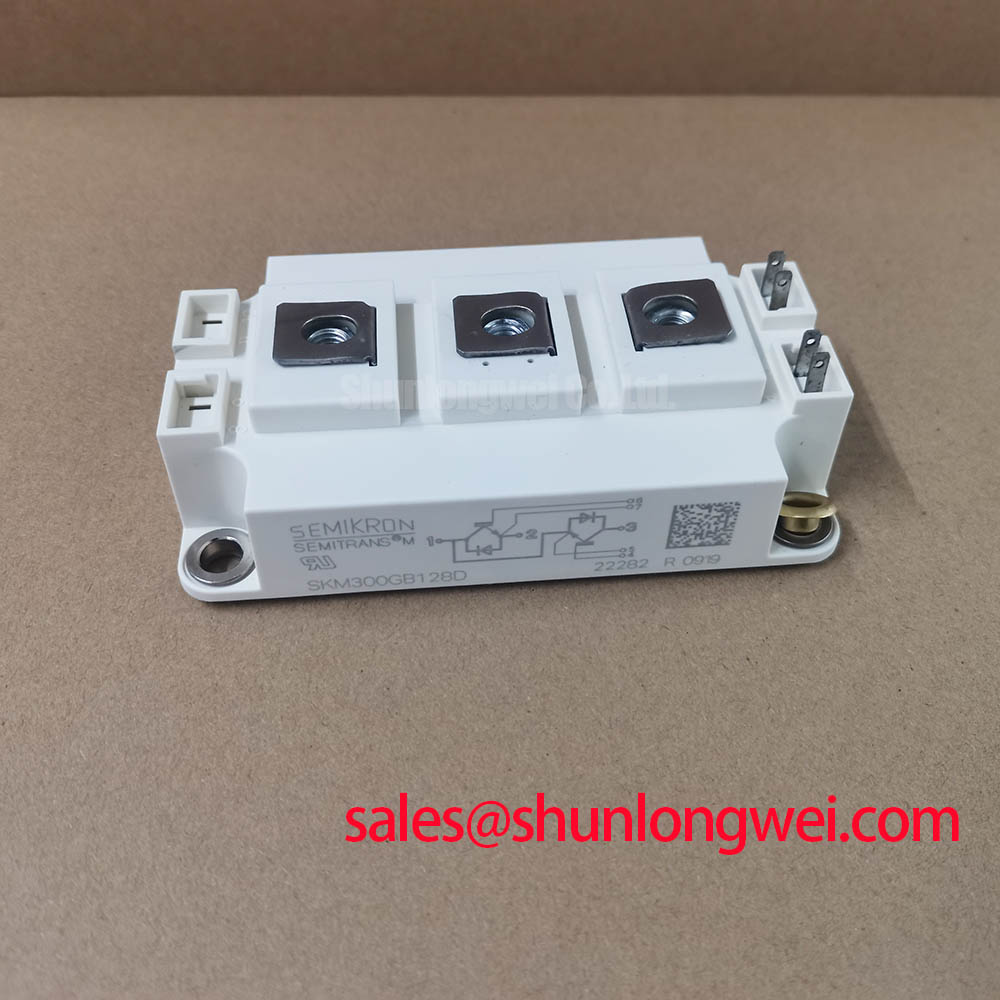
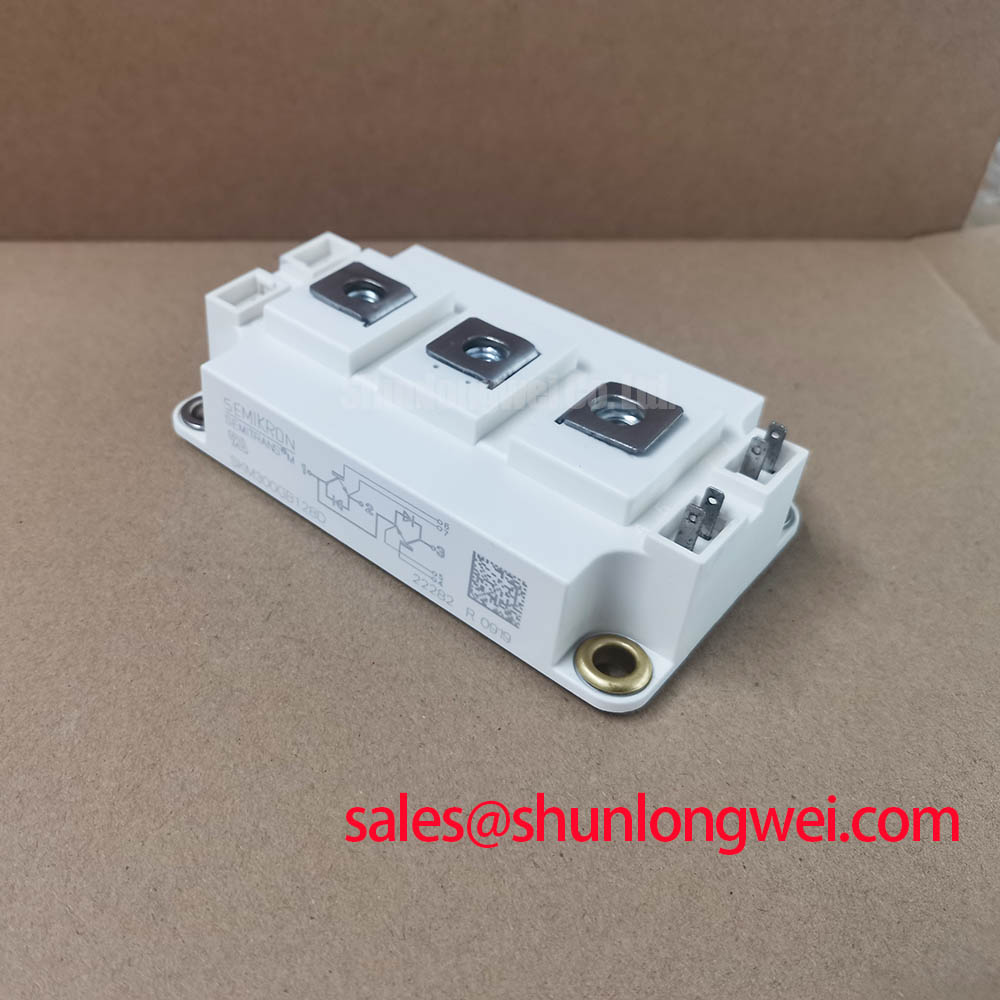
The Semikron SKM300GB128D is a half-bridge IGBT module engineered for high-reliability power conversion, leveraging Soft-Punch-Through (SPT) technology to balance conduction and switching losses. This design achieves robust performance with a high short-circuit capability, making it a durable component for demanding applications.
- Core Specifications: 1200V | 370A (at Tc=25°C) | VCE(sat) 2.1V (typ. at 125°C)
- Key Advantages: Features a positive VCE(sat) temperature coefficient for reliable parallel operation and an integrated NTC thermistor for real-time temperature monitoring.
For engineers designing systems where paralleling modules is necessary for higher power output, the positive temperature coefficient of the SKM300GB128D simplifies thermal balancing between devices.
Download the Official SKM300GB128D Datasheet (PDF)

Technical Analysis: Performance Under Load
A critical aspect of the SKM300GB128D is its thermal performance, defined by the thermal resistance from junction to case (Rth(j-c)). The datasheet specifies this value at 0.085 K/W per IGBT. This parameter is analogous to the width of a pipe draining heat away from the silicon chip. A low thermal resistance means heat can be extracted efficiently, which is essential for maintaining a junction temperature within the safe operating area, especially under heavy load conditions. Efficient heat removal directly impacts both the module’s lifespan and its ability to handle peak currents without degradation.
The module’s robustness is further quantified by its short-circuit withstand time (tpsc) of 10 µs at a junction temperature of 125°C. This rating indicates the module can survive a direct short-circuit condition for this duration without catastrophic failure, providing crucial time for protection circuits to intervene. This feature is a direct result of the SPT technology, which inherently limits the short-circuit current to approximately 6 times the nominal current. This self-limiting behavior enhances the reliability of the entire power system, a key consideration explored in articles on preventing IGBT latch-up.
Optimized Application Scenarios
The electrical and thermal characteristics of the SKM300GB128D make it well-suited for several specific power conversion tasks:
- AC Inverter Drives: The module’s high current handling (370A) and robust thermal management are ideal for controlling large industrial motors.
- Uninterruptible Power Supplies (UPS): Its low VCE(sat) improves efficiency, a critical factor in UPS systems where energy conservation is paramount.
- Electronic Welding Systems: The module supports switching frequencies up to 20 kHz, and its high short-circuit capability provides the ruggedness needed in demanding welding environments.
- Renewable Energy Inverters: For solar or wind power applications, the module’s efficiency and reliability ensure maximum energy harvest and long operational life.
This module’s balanced profile of efficiency, robustness, and thermal stability makes it an optimal choice for high-power industrial inverter and converter designs.
Key Specifications of the SKM300GB128D
| Absolute Maximum Ratings (Tc = 25°C unless otherwise specified) | ||
|---|---|---|
| Symbol | Parameter | Value |
| VCES | Collector-Emitter Voltage (Tj = 25°C) | 1200 V |
| IC | Continuous Collector Current (Tc = 80°C) | 265 A |
| VGES | Gate-Emitter Voltage | ± 20 V |
| tpsc | Short-Circuit Withstand Time (Tj = 125°C) | 10 µs |
| Tvj | Operating Junction Temperature | -40 to +150 °C |
| Electrical & Thermal Characteristics (Tj = 125°C unless otherwise specified) | ||
| VCE(sat) | Collector-Emitter Saturation Voltage (IC=200A, VGE=15V) | 2.1 V (typ.) |
| VGE(th) | Gate-Emitter Threshold Voltage | 5.5 V (typ.) |
| Rth(j-c) | Thermal Resistance, Junction to Case (per IGBT) | 0.085 K/W |
Engineer’s Frequently Asked Questions
1. What is the benefit of the positive temperature coefficient of VCE(sat) in the SKM300GB128D?
A positive temperature coefficient means that as the IGBT heats up, its on-state voltage (VCE(sat)) increases. When paralleling modules, if one module carries slightly more current and gets hotter, its VCE(sat) will rise, naturally redirecting current to the cooler modules. This self-balancing effect prevents thermal runaway and is crucial for building reliable high-current systems, a core topic in power semiconductor design.
2. What are the mounting requirements for this module to achieve the specified thermal resistance?
To achieve the datasheet Rth(j-c) value, the module’s baseplate must be mounted to a heatsink with a flat, clean surface using a thermal interface material (TIM). The datasheet specifies M6 mounting screws, which should be tightened to the recommended torque value to ensure even pressure and optimal thermal contact. Improper mounting can significantly increase thermal resistance and lead to overheating.
3. How does the integrated NTC thermistor improve system reliability?
The built-in NTC thermistor allows the control system to monitor the module’s internal temperature in real-time. This data can be used to implement over-temperature protection (OTP), derate the power output to prevent overheating, or control cooling fan speed dynamically. This direct temperature feedback is far more accurate than an external sensor on the heatsink, providing a faster and more reliable safety mechanism.
By providing a combination of low conduction losses, proven short-circuit ruggedness, and features that support reliable paralleling, the Semikron SKM300GB128D enables engineers to develop efficient and durable high-power conversion systems.