A Technical Analysis of the Fuji 2MBI300S-120 IGBT Module
Fuji 2MBI300S-120 IGBT Module | 1200V 300A Dual
Engineered for High-Stress Industrial Power Conversion
The Fuji Electric 2MBI300S-120 is a 1200V, 300A dual IGBT module that provides a foundation of reliability for high-power industrial systems. Its design prioritizes operational robustness, featuring a comprehensive Safe Operating Area (SOA) and high short-circuit tolerance. This focus makes it a dependable component for systems where electrical stress is a constant factor, such as inverters and motor drives. By integrating two IGBTs in a half-bridge configuration, it simplifies the power stage design for three-phase applications.
- Core Specifications: 1200V | 300A | 10µs Short-Circuit Withstand Time
- Key Advantages: Exceptional ruggedness under inductive loads, enables simplified and reliable thermal management.
This module allows engineers to build systems with a higher margin of safety against fault conditions. The predictable thermal characteristics also streamline the selection of cooling hardware. For full specifications, please review the official documentation.
Download the Official 2MBI300S-120 Datasheet (PDF)
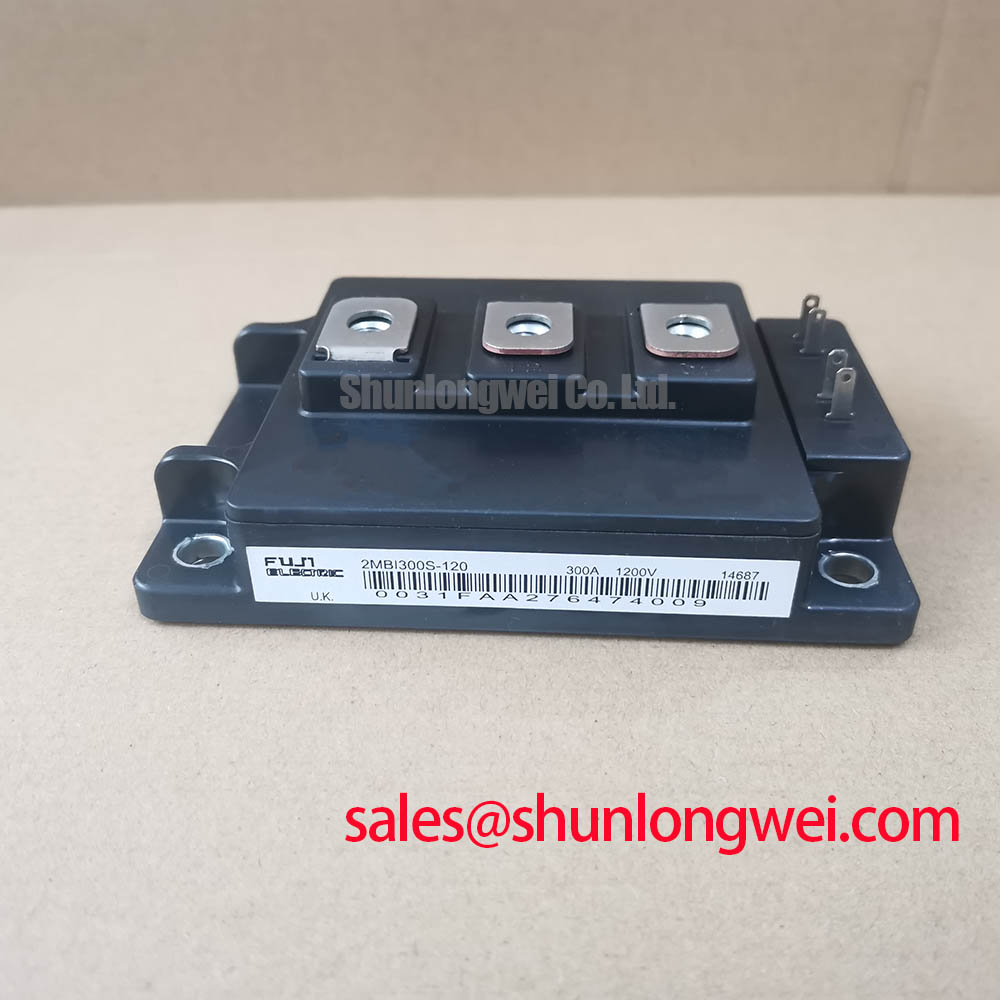
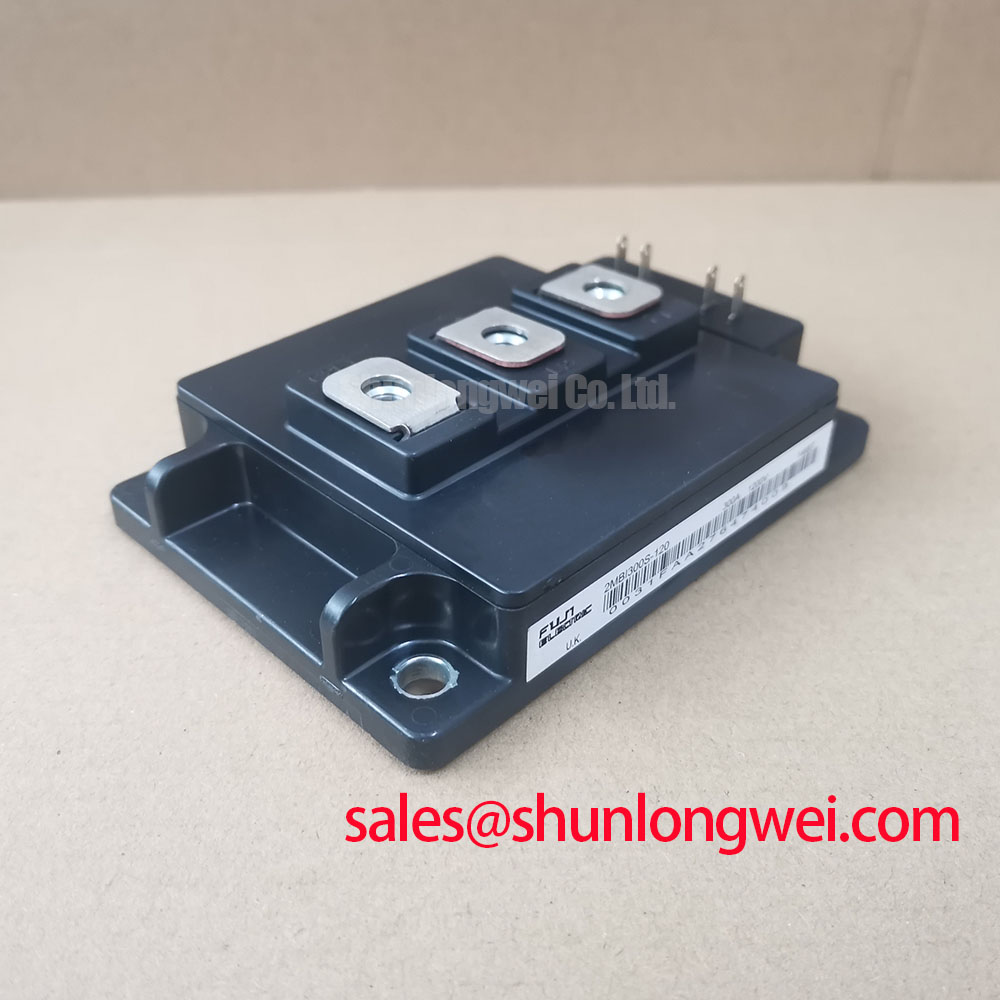
A Technical Analysis of Robustness and Thermal Stability
The engineering value of the 2MBI300S-120 is centered on its durability. A key feature is its Square Reverse Bias Safe Operating Area (RBSOA). The RBSOA defines the voltage and current limits the IGBT can safely handle during turn-off. A “square” RBSOA, as specified for this module up to twice the rated current (600A), indicates that it can switch off high currents even when the collector-emitter voltage is high. This is a frequent occurrence in power semiconductors controlling inductive loads like motors, where voltage spikes are common. This feature provides a critical layer of protection against device failure.
Further enhancing its reliability is the 10-microsecond short-circuit withstand time (t_psc). In the event of a system fault leading to a direct short, the 2MBI300S-120 can endure the immense current for 10µs at a bus voltage of 600V. This gives the system’s protection circuitry a vital window to detect the fault and initiate a safe shutdown, preventing module destruction. This level of robustness is a significant factor in applications where uptime and safety are paramount. For more on this topic, consider reading about the root cause analysis of IGBT failures.
Effective thermal design is also simplified by this module’s clear specifications. The thermal resistance from junction to case (Rth(j-c)) is 0.085°C/W for the IGBT. This value can be imagined as the width of a pipe for heat to escape the semiconductor die. A lower Rth(j-c) is like a wider pipe, allowing heat to be transferred more easily to the heatsink. This enables more compact cooling solutions and ensures the junction temperature remains within safe limits, a crucial aspect detailed in guides to mastering IGBT thermal design.
Optimized Application Scenarios
The specific characteristics of the 2MBI300S-120 make it a strong fit for several demanding power applications:
- AC and DC Motor Drives: Its square RBSOA and high current handling provide the ruggedness needed to manage the inductive load switching and potential fault conditions typical in motor control.
- Uninterruptible Power Supplies (UPS): The module’s proven reliability and 1200V rating ensure dependable performance in critical power backup systems operating on 400V/480V lines.
- Welding Power Supplies: The robust thermal design and high current capacity allow it to handle the intense, pulsed power demands of welding equipment.
Its combination of a robust SOA, specified short-circuit endurance, and stable thermal performance makes it a prime candidate for high-current industrial power conversion.
Key Specifications of the 2MBI300S-120
| Absolute Maximum Ratings (T_c = 25°C) | ||
|---|---|---|
| Collector-Emitter Voltage (V_CES) | 1200V | |
| Gate-Emitter Voltage (V_GES) | ±20V | |
| Continuous Collector Current (I_C) @ T_c=80°C | 300A | |
| Pulsed Collector Current (I_Cp) 1ms | 600A | |
| Max Power Dissipation (P_C) | 1560W | |
| Electrical & Thermal Characteristics (T_j = 125°C unless otherwise noted) | ||
| Collector-Emitter Saturation Voltage (V_CE(sat)) @ 300A | 2.7V (Typ), 3.2V (Max) | |
| Gate-Emitter Threshold Voltage (V_GE(th)) @ 30mA | 5.0V to 8.0V | |
| Forward On Voltage (V_F) @ 300A | 2.4V (Typ), 3.0V (Max) | |
| Thermal Resistance, Junction-to-Case (R_th(j-c)), IGBT | 0.085 °C/W (Max) | |
| Thermal Resistance, Junction-to-Case (R_th(j-c)), Diode | 0.16 °C/W (Max) | |
Engineer’s FAQ
1. How is the thermal resistance value Rth(j-c) used for heatsink selection?
The Rth(j-c) value is the starting point for thermal calculations. To estimate the required heatsink-to-ambient thermal resistance (Rth(f-a)), you first calculate power loss (P_loss). Then, use the formula: T_j = T_a + P_loss * (Rth(j-c) + Rth(c-f) + Rth(f-a)). You solve for Rth(f-a), ensuring the calculated T_j remains below the 150°C maximum operating limit. Rth(c-f) represents the thermal interface material resistance.
2. What does the “Square RBSOA” mean for my motor drive’s reliability?
A square RBSOA means the IGBT can safely turn off high currents across its full V_CES rating. In a motor drive, this is critical because the motor’s inductance causes voltage overshoots during switching. A non-square or constricted RBSOA would force you to limit the operating current at higher bus voltages to avoid failure. The 2MBI300S-120’s square RBSOA provides a larger safety margin, enhancing system reliability under real-world inductive load conditions.
3. What are the recommended mounting and torque specifications?
According to the datasheet, the module should be mounted using M6 screws with a recommended torque of 3.5 to 4.5 Nm. The main power terminals also use M6 screws with the same recommended torque. Applying the correct torque is critical to ensure low thermal resistance to the heatsink and to prevent mechanical stress on the module’s substrate.
4. Does this module include an integrated NTC thermistor?
No, the datasheet for the standard 2MBI300S-120 does not specify an integrated NTC thermistor for temperature monitoring. Systems requiring direct temperature feedback would need to implement an external sensor on the heatsink near the module base.
Enabling Robust Power System Design
The 2MBI300S-120 IGBT module delivers a well-documented balance of switching performance and ruggedness. Its primary engineering advantage lies in its robust specifications, particularly the square SOA and short-circuit withstand time, which provide a high degree of protection in demanding industrial environments. This allows designers to develop high-current power conversion systems with confidence in their long-term operational stability and safety.