SKBZ28/14 Three-Phase Rectifier: A Technical Analysis for Industrial Applications
SKBZ28/14 Three-Phase Bridge Rectifier | 1400V 28A Module
Introduction and Core Highlights
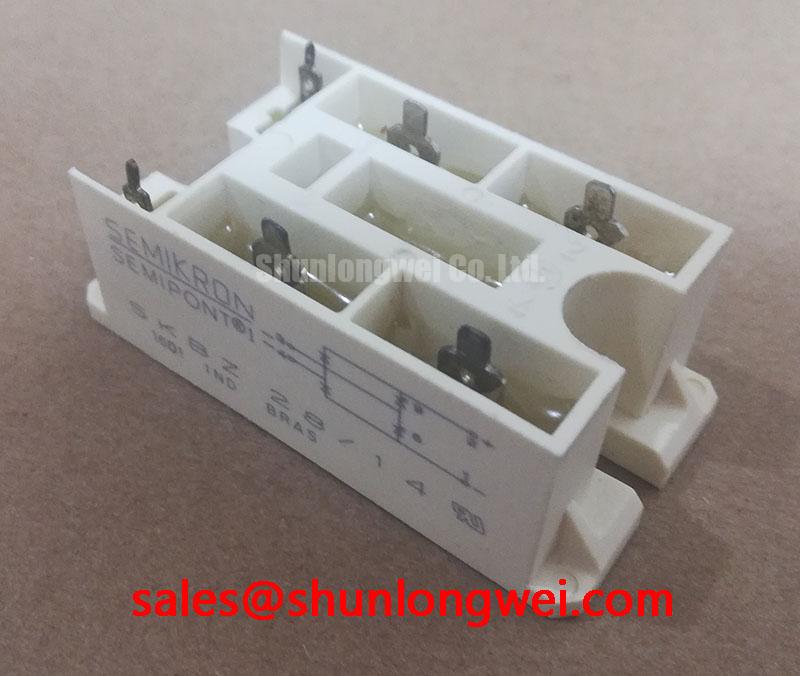
The Semikron SKBZ28/14 is a three-phase bridge rectifier that provides a robust and simplified solution for AC-to-DC power conversion. Its primary value stems from a mechanically rugged design featuring an isolated metal case and screw terminals, which simplifies assembly and enhances thermal performance in demanding industrial environments. This module is engineered for systems requiring high reliability and straightforward integration without complex PCB layouts.
- Core Specifications: 1400V VRRM | 28A ID | 3000V Isolation Voltage
- Key Engineering Benefits: Facilitates direct heatsink mounting for effective thermal dissipation, while heavy-duty screw terminals ensure secure, vibration-resistant electrical connections.
For engineers specifying front-end rectifiers for industrial power supplies, the SKBZ28/14 offers a component with well-defined thermal and mechanical characteristics.
Download the Official SKBZ28/14 Datasheet (PDF)

Technical Analysis of Core Features
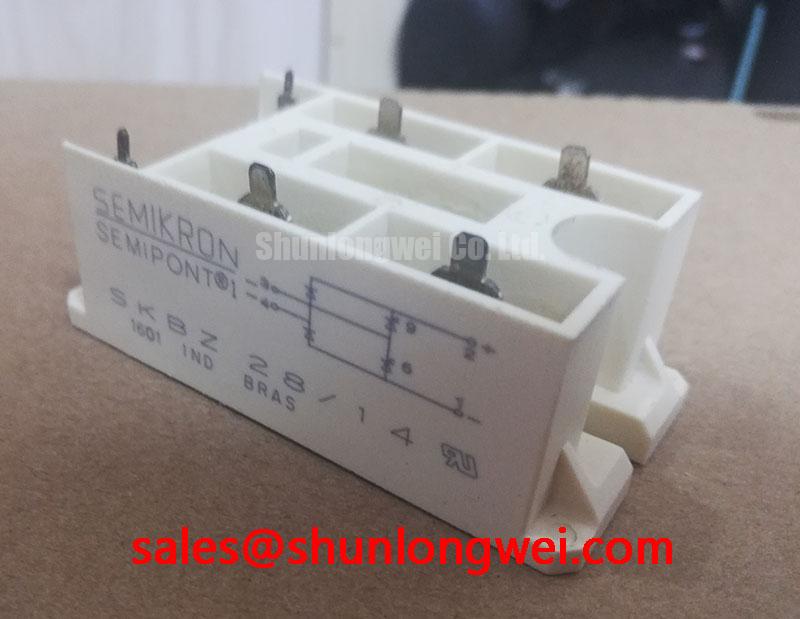
The engineering value of the SKBZ28/14 is rooted in its practical design features that ensure long-term reliability. The module’s construction with an isolated metal case and screw terminals directly addresses common challenges in industrial power system assembly. This physical robustness ensures stable electrical contact is maintained, even in equipment subject to mechanical vibration. Furthermore, the metal baseplate provides a large, flat surface for mounting to a heatsink, a critical factor for managing heat in power semiconductors.
A key electrical parameter is the high isolation voltage (Visol) of 3000 V~ between the terminals and the case. This characteristic is vital for safety compliance and system integrity in mains-connected applications. Think of the isolation voltage as the strength of a protective barrier separating the high-voltage electrical circuit from the grounded chassis of the equipment. The 3000V rating provides a substantial safety margin against voltage transients, safeguarding both the system and personnel. This feature is a direct benefit of using isolated baseplates in module design.
Optimized Application Scenarios
The SKBZ28/14 is well-suited for a range of industrial applications where reliability and ease of assembly are paramount.
- Industrial Power Supplies: Its 1400V blocking voltage provides ample headroom for rectifying 380/400V AC lines, making it an ideal front-end for SMPS units.
- Battery Charging Systems: The high forward surge current rating (IFSM) of 500A allows the rectifier to withstand the inrush currents typical of large capacitor banks and battery loads.
- Variable Frequency Drive (VFD) Front-Ends: Provides a simple and robust uncontrolled rectifier stage to create the internal DC bus from a three-phase AC input.
- DC Power for Welding: The module’s durable construction and thermal efficiency are advantageous in the harsh electrical and thermal environments of welding power sources.
This module’s combination of voltage rating, current capacity, and thermal performance makes it a best-match for industrial AC/DC conversion applications rated up to approximately 10 kW.
Key Specification Parameters for SKBZ28/14
| Absolute Maximum Ratings (Tc = 25°C unless otherwise specified) | |
|---|---|
| Repetitive Peak Reverse Voltage (VRRM) | 1400 V |
| DC Output Current (ID) | 28 A (at Tcase = 80°C) |
| Peak Forward Surge Current (IFSM) | 500 A (10 ms, half-sine) |
| Operating Junction Temperature (Tvj) | -40 to +150 °C |
| Electrical & Thermal Characteristics | |
| Forward Voltage per Diode (VF) | < 1.3 V (at IF = 30 A, Tj = 25°C) |
| Isolation Test Voltage (Visol) | 3000 V~ (Terminals to case, 1 minute) |
| Thermal Resistance, Junction to Case (Rth(j-c)) | < 0.3 K/W (per module) |
Engineer’s Frequently Asked Questions
- What are the recommended mounting procedures for the SKBZ28/14?
- For proper installation, the module should be mounted on a clean, flat heatsink. A thin, uniform layer of thermal grease should be applied to the baseplate to minimize thermal resistance. The case mounting screw (M6) should be tightened to a torque of 4.5 Nm ± 10%, and the electrical terminal screws (M5) to 2.5 Nm ± 10% to ensure secure connections.
- How do I calculate the required heatsink for this rectifier?
- A preliminary heatsink calculation involves determining the total power dissipation (Ptot) and using the thermal resistance values. Ptot is approximately the total forward voltage drop multiplied by the average DC current. The required heatsink thermal resistance (Rth(s-a)) can then be estimated by the formula: Rth(s-a) = (Tj,max – Ta) / Ptot – Rth(j-c) – Rth(c-s). Effective thermal management is crucial for reliability.
- What is the advantage of a three-phase bridge over three single-phase bridges?
- A single integrated module like the SKBZ28/14 simplifies the mechanical assembly, reduces component count, and centralizes the heat source onto a single heatsink. This leads to a more compact and often more cost-effective design with fewer points of potential failure compared to using six discrete diodes or three separate rectifier modules.
Final Engineering Statement
The SKBZ28/14 rectifier module delivers a dependable foundation for industrial power conversion circuits. By integrating a high-voltage, high-current three-phase bridge into a mechanically sound and electrically isolated package, it enables engineers to achieve reliable system performance while streamlining the manufacturing and thermal design process.