BOE GV101WXM-N30: A Robust 10.1-inch Display for Industrial Applications
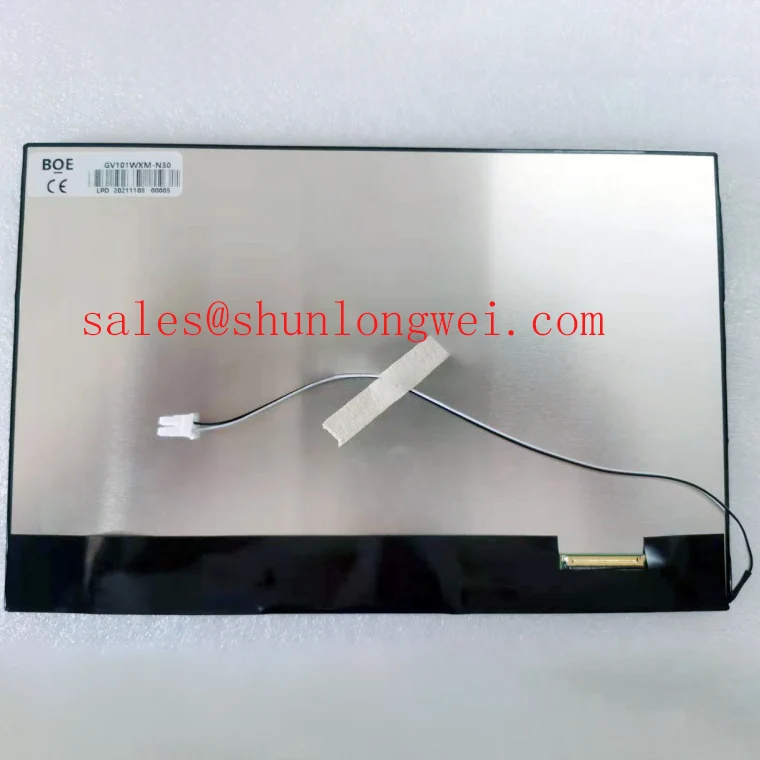
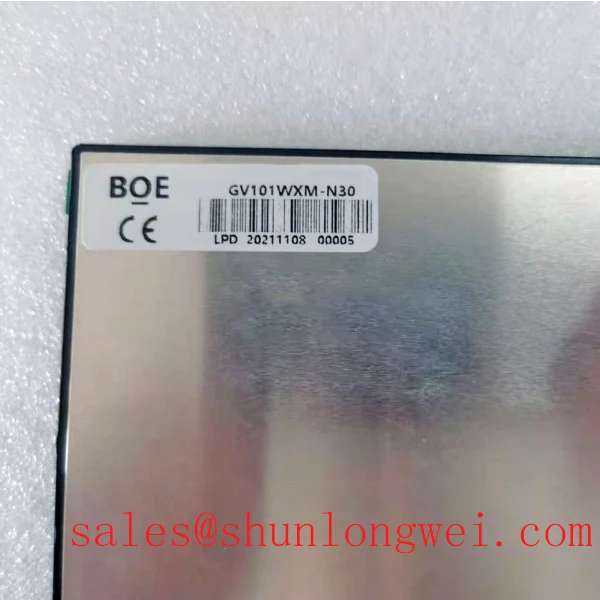
## BOE GV101WXM-N30 10.1-inch WXGA Industrial LCD Module
High-Clarity Visuals for Demanding Industrial Environments
The BOE GV101WXM-N30 is a 10.1-inch a-Si TFT-LCD module engineered for robust performance in industrial applications. Its distinct advantage lies in delivering excellent image quality through high brightness and consistent, wide viewing angles, ensuring reliable readability for human-machine interfaces (HMIs) and monitoring systems. This display provides a stable platform for clear visual data transmission.
* **Core Specifications**: 1280×800 WXGA | 330 cd/m² Brightness | LVDS Interface
* **Key Advantages**: Consistent off-axis color fidelity, suitable for varied ambient light conditions.
* **Application Focus**: The panel’s wide operating temperature range makes it a strong candidate for systems deployed in environments that are not climate-controlled.
Download Official Datasheet (PDF)
Technical Analysis for System Integration
The performance of the GV101WXM-N30 is rooted in its core display technology. The ADS (Advanced Super Dimension Switch) mode, a technology similar to IPS, is fundamental to its wide viewing angles of 80/80/80/80 degrees. This ensures that operators can view the screen from various positions without significant color shift or contrast degradation, a critical requirement for collaborative workspaces or complex machinery monitoring. A high contrast ratio of 1000:1 (Typ.) further enhances image depth, rendering blacks darker and colors more distinct, which improves the legibility of detailed graphical interfaces.
Effective thermal management is crucial for display longevity. The specified operating temperature range of -20°C to 70°C allows the GV101WXM-N30 to function reliably in a variety of industrial settings, from refrigerated areas to factory floors with elevated ambient temperatures. The thermal resistance of a display can be thought of like the insulation on a building; proper system design must account for heat dissipation to keep the panel within its specified limits. Integrating this display requires attention to airflow and proximity to other heat-generating components to maintain performance and reliability.
Optimized Application Scenarios
The specific feature set of this display makes it well-suited for several professional uses:
* **Industrial HMI Panels**: The wide viewing angles and robust operating temperature range ensure clear visibility and durability on the factory floor.
* **Medical Monitoring Equipment**: Its 1000:1 contrast ratio provides the clarity needed for displaying critical patient data and diagnostic imagery.
* **Portable Test & Measurement Instruments**: The 10.1-inch diagonal and WXGA resolution offer a good balance of screen real estate and physical size for field equipment.
* **Information Kiosks**: High brightness and durable surface treatment provide a dependable user interface for public or semi-public environments.
This module is best matched for applications requiring consistent visual performance across wide viewing angles and fluctuating temperatures.
Key Specifications of the GV101WXM-N30
| Parameter | Specification |
|---|---|
| Screen Size | 10.1 inch |
| Resolution | 1280(RGB)×800 [WXGA] |
| Display Mode | ADS, Normally Black, Transmissive |
| Luminance | 330 cd/m² (Typ.) |
| Viewing Angle | 80/80/80/80 (Typ.)(CR≥10) |
| Contrast Ratio | 1000:1 (Typ.) |
| Interface | LVDS (1 ch, 8-bit), 40 pins Connector |
| Operating Temperature | -20 ~ 70 °C |
| Storage Temperature | -30 ~ 80 °C |
| Outline Dimensions | 228.5(W) × 149.3(H) × 7.6(D) mm |
Engineer’s Frequently Asked Questions
1. What does the “ADS, Normally Black” display mode mean for my application?
ADS (Advanced Super Dimension Switch) is a type of IPS technology that provides the wide 80/80/80/80 viewing angles. “Normally Black” means that when a pixel is in its off state (no voltage applied), it appears black. This contributes to the high 1000:1 contrast ratio and helps prevent light leakage, resulting in deeper black levels which is often preferred for medical displays and industrial panels.
2. What are the primary considerations when designing a housing for the GV101WXM-N30?
The mechanical drawing in the datasheet is the primary reference. Key considerations include ensuring the bezel does not apply stress to the active area of the display, providing adequate ventilation to operate within the -20 to 70°C thermal range, and securing the module using the designated mounting holes. The LVDS cable should have sufficient strain relief.
3. How is the backlight driven on this module?
The GV101WXM-N30 contains a WLED backlight system. However, the datasheet specifies it is delivered “W/O Driver” (Without Driver). This means an external LED driver board is required to supply the correct voltage and current to the backlight. System designers must source or create a compatible driver for backlight control, including dimming functions.
4. Is this display suitable for outdoor or high ambient light environments?
With a typical luminance of 330 cd/m², this display is well-suited for indoor industrial environments. While it can perform in areas with bright ambient light, direct sunlight applications may require a panel with higher brightness (e.g., 800-1000 nits) or the use of optical enhancements like anti-reflective coatings or optical bonding to ensure full readability, a topic further explored in guides on rugged industrial displays.
Enabling Reliable System Visuals
The technical specifications of the GV101WXM-N30 provide a solid foundation for industrial systems that demand reliable and clear visual output. Its combination of a WXGA resolution, strong contrast, and consistent off-axis viewing angles empowers engineers to design effective and user-friendly interfaces that hold up to the demands of professional operating environments.