Mitsubishi RM100DZ-H: A Technical Guide to High-Isolation Power Rectification
Mitsubishi RM100DZ-H Diode Module: 1600V 100A Rectification
High-Isolation Power Rectification for Industrial Systems
The Mitsubishi RM100DZ-H is a dual diode module engineered for high-reliability power rectification, delivering robust performance through its 1600V reverse voltage rating and 3000V isolation capability. This module provides a dependable foundation for converting AC to DC power in demanding industrial environments.
* **Core Specifications**: 1600V | 100A | 3000V Isolation
* **Key Advantages**: Ensures high electrical safety with an insulated baseplate, facilitates efficient thermal design.
* **Primary Function**: Optimized for power supplies and motor controllers where dependable voltage rectification and safety isolation are paramount concerns.
Download the Official RM100DZ-H Datasheet (PDF)
Technical Analysis for System Integration
The performance of the RM100DZ-H is anchored in key electrical and thermal specifications that directly influence system reliability. Its high repetitive peak reverse voltage (VRRM) of 1600V provides a substantial safety margin for systems operating on high-voltage lines, protecting the module from transient voltage spikes. This high standoff voltage is critical for applications like industrial inverters and DC power supplies.
A defining feature is the 3000V AC isolation voltage (Viso) between the active terminals and the mounting baseplate. This electrical separation is fundamental to safety, preventing potentially lethal voltages from reaching the equipment chassis and protecting downstream control electronics. It simplifies system design by providing a pre-certified isolation barrier, a crucial element for meeting industrial safety standards.

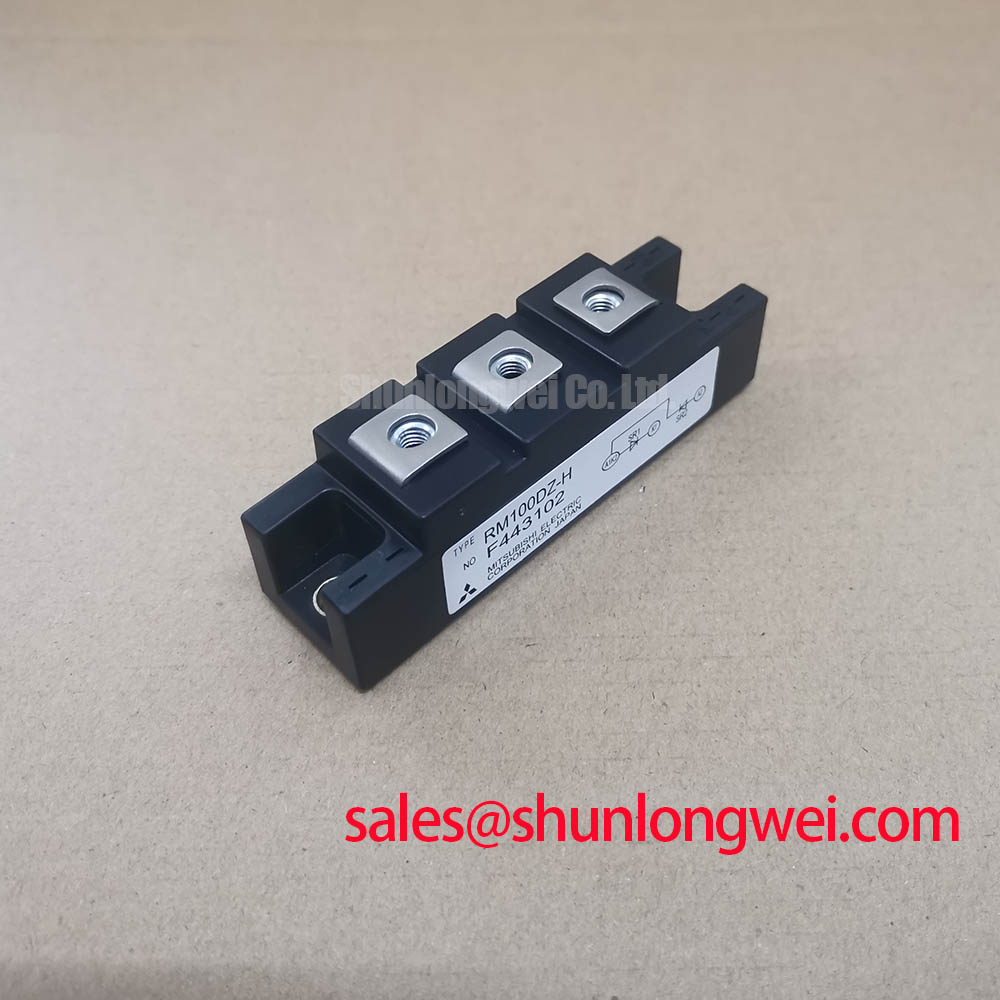
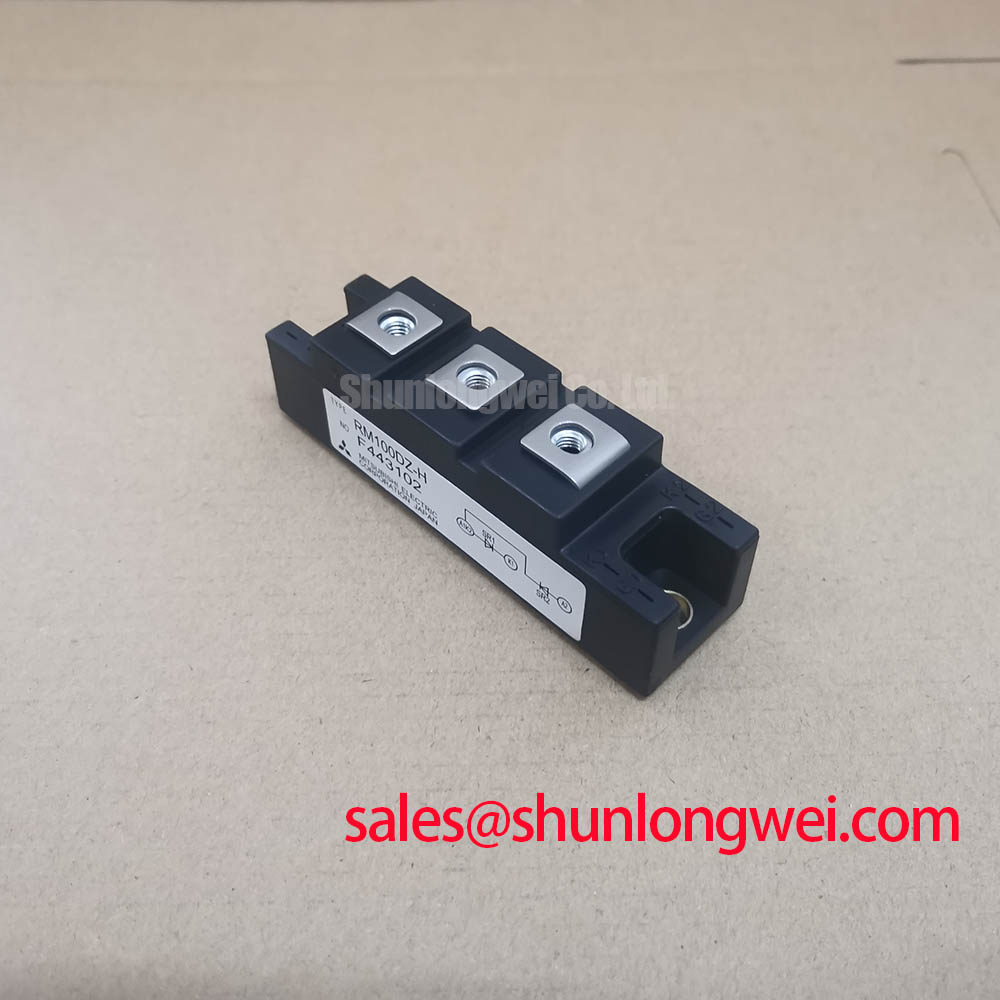
Effective thermal management is directly addressed by the module’s low junction-to-case thermal resistance (Rth(j-c)) of 0.3 °C/W per arm. Think of thermal resistance as the narrowness of a pathway for heat; a lower value represents a wider, clearer path. The RM100DZ-H’s specification ensures that heat generated during its 100A operation is efficiently transferred to an external heatsink, maintaining a safe junction temperature and promoting long-term operational stability.
Optimized Application Scenarios
The specific characteristics of the RM100DZ-H make it highly suitable for several power conversion applications:
- Industrial Motor Controllers: The high 1600V VRRM and 100A current rating are ideal for the input rectifier stages of both AC and DC motor drives.
- Welding Power Supplies: Its robust thermal performance and high surge current capability (IFSM) of 2000A can withstand the demanding, high-current pulses typical in welding equipment.
- Battery Charging Systems: Provides reliable high-current rectification for industrial-scale battery chargers, with the 3000V isolation ensuring safety between the grid and the battery bank.
- Uninterruptible Power Supplies (UPS): The module’s high reliability and isolated construction are critical for building dependable UPS systems that protect sensitive loads.
This diode module is an optimal match for systems requiring high-voltage rectification combined with stringent electrical isolation and dependable thermal stability.
Key Technical Specifications
| Absolute Maximum Ratings (Tj=25°C) | |
|---|---|
| Repetitive Peak Reverse Voltage (VRRM) | 1600V |
| Average Forward Current (IF(AV)) | 100A (Single-phase, half-wave 180° conduction, Tc=115°C) |
| Surge Forward Current (IFSM) | 2000A (60Hz, half cycle) |
| Electrical & Thermal Characteristics | |
| Maximum Forward Voltage (VFM) | 1.4V (IFM=320A, Tj=25°C) |
| Repetitive Peak Reverse Current (IRRM) | 20mA (VRRM applied, Tj=150°C) |
| Isolation Voltage (Viso) | 3000V (Terminals to case, AC 1 min.) |
| Thermal Resistance (Rth(j-c)) | 0.3 °C/W (Junction to Case, per 1/2 module) |
| Operating Junction Temperature (Tj) | -40 to +150 °C |
Engineer’s FAQ for the RM100DZ-H
What is the primary benefit of the 3000V isolation voltage?
The 3000V isolation rating ensures a high degree of electrical separation between the power circuit and the module’s mounting surface (heatsink). This is a critical safety feature that prevents high voltage from creating a shock hazard at the chassis and protects low-voltage control circuits from damage, as detailed in the role of isolated baseplates.
What are the recommended mounting torque specifications?
For reliable mechanical and thermal contact, the datasheet specifies a mounting torque of 1.96 to 2.94 N·m for the M6 mounting screws. The M5 main terminal screws should be tightened to a torque of 1.47 to 1.96 N·m. Adhering to these values prevents damage and ensures optimal heat transfer.
How does the forward voltage (VFM) affect heatsink selection?
The forward voltage drop (max 1.4V at high current) directly contributes to conduction losses (Power Loss ≈ VFM × IF(AV)). Higher power loss means more heat must be dissipated. Engineers must use this value to calculate the total thermal load and select a heatsink with a sufficiently low thermal resistance to keep the module’s junction temperature well below the 150°C maximum rating.
Can these modules be configured for a single-phase bridge rectifier?
Yes, two RM100DZ-H modules can be readily configured to form a full-wave, single-phase bridge rectifier. This configuration would be capable of handling a 100A load, making it a robust solution for high-power AC-DC conversion.
This module’s integration of a high 1600V standoff voltage, robust 3000V isolation, and efficient thermal pathways provides the foundational reliability required for modern industrial power stages. It enables engineers to design durable and safe power conversion systems with confidence.