NEC NL10276BC30-38B: A High-Performance Display for Industrial Applications
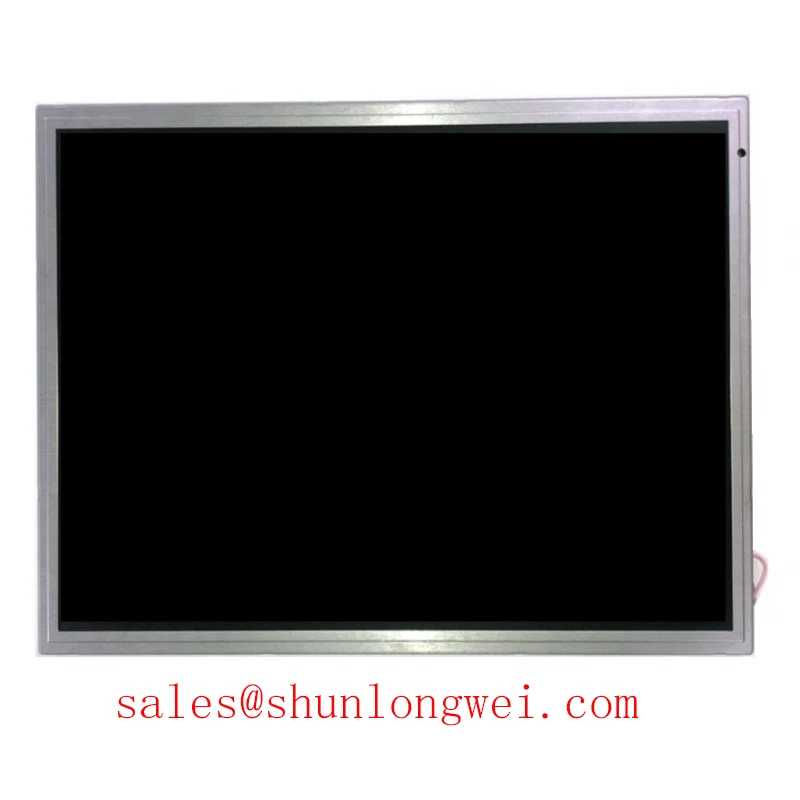
NEC NL10276BC30-38B 15.0-inch XGA Industrial LCD Module
Engineered for Clarity and Durability in Industrial HMIs
The NEC NL10276BC30-38B is a 15.0-inch amorphous silicon TFT-LCD module delivering consistent, high-quality visuals for demanding industrial applications. Its primary value stems from the UA-SFT (Ultra-Advanced Super Fine TFT) technology, which ensures exceptionally wide viewing angles and high color fidelity. This makes it a reliable choice for systems where data must be clearly legible from various operator positions.
- Core Specifications: 1024×768 XGA | 700:1 Contrast Ratio | LVDS Interface
- Key Advantages: Exceptional off-axis readability, consistent color reproduction.
- Solves Intent: Provides a robust display solution for multi-operator environments where screen visibility from any angle is critical.
Download Preliminary Datasheet (PDF)

A Technical Analysis of Visual Performance
The defining feature of the NL10276BC30-38B is its UA-SFT display mode. This technology, functionally similar to In-Plane Switching (IPS), provides symmetrical viewing angles of 88 degrees in all directions (up, down, left, right). This ensures that contrast and color do not degrade when the screen is viewed off-center, a critical requirement for control panels or medical devices accessed by multiple users simultaneously. The normally black transmissive mode further enhances performance by ensuring that off-state pixels are truly black, which is the foundation for its specified 700:1 contrast ratio.
Think of the contrast ratio like the clarity of a voice in a noisy room. A low contrast ratio is like a muffled voice that’s hard to distinguish from the background noise. The 700:1 ratio of this display acts like a clear, distinct voice, making it easier for the operator to differentiate between various graphical elements and data points, reducing the chance of misinterpretation in complex HMIs. The standard 8-bit LVDS interface simplifies integration with a wide range of industrial motherboards and single-board computers, reducing design complexity.
Optimized Application Scenarios
The specific performance characteristics of the NL10276BC30-38B make it a strong candidate for several specialized applications.
- Industrial Control Panels: The wide viewing angles and anti-glare treatment allow multiple engineers and technicians to view process data clearly from different positions on the factory floor.
- Medical Diagnostic Stations: Its high contrast ratio and 16.7M color depth provide the detail and accuracy necessary for reviewing medical images where subtle variations are critical.
- Test and Measurement Equipment: The stable XGA resolution and reliable LVDS interface offer a dependable platform for displaying waveforms, schematics, and measurement data without distortion.
- Point-of-Sale (POS) Systems: Durability and clear visibility from the cashier’s and customer’s perspectives make it suitable for high-transaction environments.
This display is an optimal match for fixed-position systems where multi-angle readability and long-term operational stability are the primary engineering goals.
Key Specifications of the NL10276BC30-38B
| Parameter | Specification |
|---|---|
| Display Characteristics | |
| Screen Size | 15.0 inches |
| Resolution | 1024(RGB)×768, XGA |
| Display Mode | UA-SFT, Normally Black, Transmissive |
| Luminance | 250 cd/m² (Typ.) |
| Contrast Ratio | 700:1 (Typ.) |
| Viewing Angle | 88/88/88/88 (Typ.)(CR≥10) |
| Color Depth | 16.7M (8-bit) |
| Surface Treatment | Antiglare, Hard coating (3H) |
| Interface & Electrical | |
| Interface Type | LVDS (1 ch, 8-bit), 20 pins |
| Power Supply Voltage | 3.3V (Typ.) |
| Backlight | CCFL (2 pcs), driver not included |
| Mechanical & Environmental | |
| Module Dimensions | 326.5(W) × 253.5(H) mm |
| Active Area | 304.128(W) × 228.096(H) mm |
| Weight | 970g (Typ.) |
| Operating Temperature | 0 ~ 55 °C |
| Storage Temperature | -20 ~ 60 °C |
Engineer’s FAQ
1. What makes the NL10276BC30-38B a good choice for collaborative workstations?
Its UA-SFT panel technology provides symmetrical 88-degree viewing angles horizontally and vertically. This ensures all users see a consistent, accurate image without color shifting, which is vital when multiple personnel need to view the same screen.
2. How should an engineer approach the CCFL backlight integration?
The datasheet specifies that the display uses a dual CCFL backlight system but does not include an inverter (driver). Engineers must source a compatible external inverter that meets the voltage and current requirements for the CCFL tubes. Proper high-voltage safety precautions and cable routing are essential during design to ensure reliability and prevent EMI. Learn more about solving EMI issues in industrial displays.
3. What is the significance of the 8-bit LVDS interface?
An 8-bit LVDS interface is a widely adopted standard in industrial computing. It supports the display’s full 16.7 million color palette and offers good noise immunity over short-to-moderate cable lengths. This standardization simplifies the connection to host systems and reduces development time, as many off-the-shelf controllers support this interface. For further reading, explore the topic of rugged connectivity and signal integrity.
4. Can this display be used in environments with fluctuating temperatures?
The module has a specified operating temperature range of 0 to 55°C and a storage range of -20 to 60°C. While suitable for most indoor industrial and commercial environments, it is not intended for outdoor use or applications involving extreme cold or heat without an appropriate enclosure and thermal management system.
Enabling Reliable System Design
The NL10276BC30-38B offers a well-balanced combination of visual performance, standardized interfacing, and physical durability. Its core strength lies in providing superior off-axis image quality, which directly supports the development of effective and user-friendly human-machine interfaces. By delivering clear, stable visuals from any perspective, this module empowers engineers to build systems that prioritize data accessibility and operator efficiency. For more insights into display technologies, consider exploring our resources on LCD core technology.