LB040Q02-TD01 Technical Analysis: A Bright and Durable 4.0-inch Industrial Display
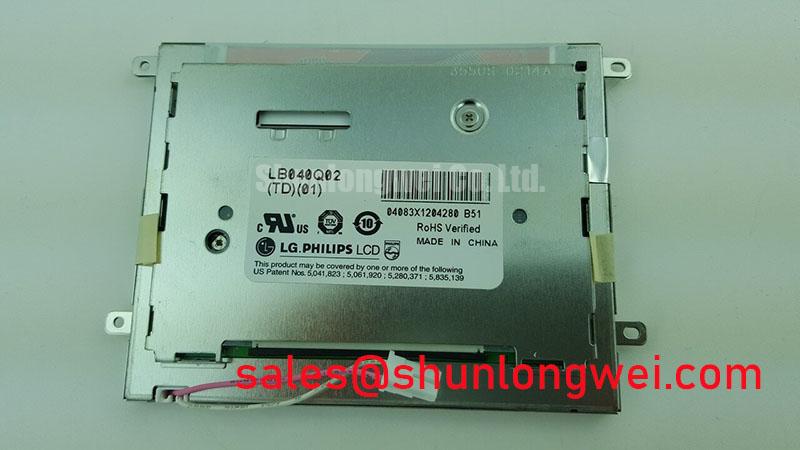
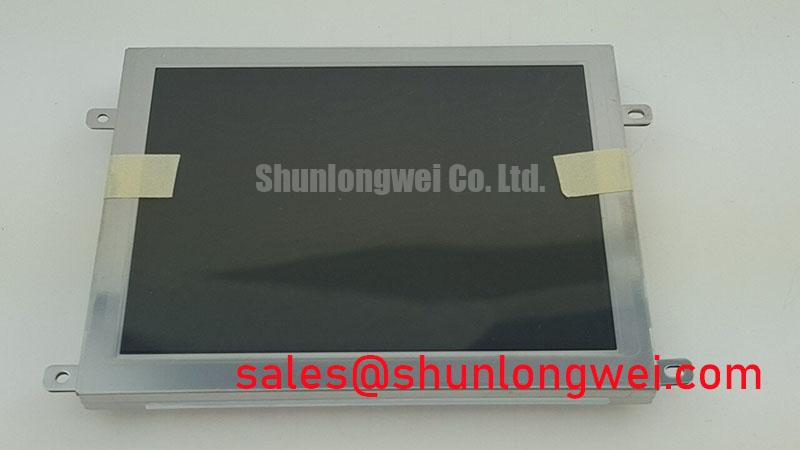
LB040Q02-TD01: 4.0-inch QVGA Industrial TFT-LCD Module
High-Clarity Display for Demanding Industrial Environments
The LG Display LB040Q02-TD01 is a 4.0-inch a-Si TFT-LCD module engineered for performance in compact industrial applications. Its distinct advantage lies in a combination of high brightness and a durable CCFL backlight system, ensuring consistent readability and a long operational lifespan. This display provides a clear, reliable human-machine interface solution for systems where space is limited but visual performance cannot be compromised.
- Core Specifications: 320×240 (QVGA) Resolution | 450 cd/m² Brightness | 262K Color Depth.
- Key Advantages: High brightness for improved visibility in varied lighting conditions and a 20,000-hour minimum backlight life for enhanced longevity.
- Engineered for Integration: A standard 6-bit CMOS/TTL interface simplifies connection to a wide range of embedded system controllers.
Download the Official LB040Q02-TD01 Datasheet (PDF)
Technical Analysis for System Integration
The LB040Q02-TD01’s primary value proposition is its high-performance optical characteristics within a compact form factor. A typical brightness of 450 cd/m² is a critical specification, ensuring the display remains legible in environments with fluctuating ambient light, such as factory floors or field service equipment. This level of luminance, combined with a 400:1 contrast ratio, provides the clarity needed for operators to accurately read data and interact with user interfaces without error.
The longevity of the display is anchored by its CCFL backlight system, which is specified for a minimum operational life of 20,000 hours. This can be thought of as the display’s endurance rating. For an industrial device expected to operate for years, this long-life backlight minimizes the need for maintenance and replacement, directly contributing to a lower total cost of ownership. This feature is particularly relevant when considering the lifecycle of industrial HMI systems.
The module’s transmissive, normally white TN panel technology is a pragmatic choice for industrial use. It offers fast response times suitable for dynamic GUIs and provides a cost-effective solution for achieving the required optical performance. The specified viewing angles of 65/65/50/65 (L/R/U/D) are sufficient for applications where the operator is typically positioned directly in front of the screen, such as on a control panel or handheld device.
Optimized Application Scenarios
The specific parameter set of the LB040Q02-TD01 makes it a strong candidate for several applications:
- Portable Test & Measurement Equipment: Its 4.0-inch size and clear QVGA resolution are ideal for displaying waveforms, measurements, and system status in a handheld form factor.
- Industrial Control Panels: The high brightness and robust CCFL backlight ensure the display remains a reliable, long-term HMI component in factory automation systems.
- Medical Monitoring Devices: The 262K color depth provides sufficient fidelity for displaying vital signs and basic graphical user interfaces in non-diagnostic patient monitors.
- Legacy System Upgrades: The standard CMOS/TTL interface and common QVGA resolution make it a suitable drop-in replacement for older or end-of-life 4.0-inch displays in existing equipment.
This module is best matched for systems requiring a bright, long-lasting, and compact display with straightforward electrical integration.
Key Specifications of the LB040Q02-TD01
| Panel & Optical Characteristics | |
|---|---|
| Panel Type | a-Si TFT-LCD, TN, Normally White, Transmissive |
| Resolution | 320(RGB)×240 [QVGA] |
| Active Area | 81.6(W) × 61.2(H) mm |
| Brightness | 450 cd/m² (Typ.) |
| Contrast Ratio | 400:1 (Typ.) |
| Viewing Angle | 65/65/50/65 (Typ.)(CR≥10) (L/R/U/D) |
| Display Colors | 262K (6-bit) |
| Surface Treatment | Antiglare |
| Electrical & Backlight Specifications | |
| Signal Interface | CMOS/TTL (1 ch, 6-bit) |
| Supply Voltage | 3.3V (Typ.) |
| Backlight Type | CCFL, Edge light type |
| Backlight Lifetime | 20,000 hours (Min.) |
Engineer’s Frequently Asked Questions (FAQ)
1. How does the 450 nit brightness benefit my design?
A brightness of 450 cd/m² ensures the screen remains readable under various industrial and indoor lighting conditions. This reduces operator eye strain and minimizes errors when reading critical information, making it suitable for environments where ambient light is not always controllable. Understanding display performance is a key aspect of LCD core technology.
2. What are the main considerations for driving this display’s CCFL backlight?
Unlike modern LED backlights, a CCFL system requires an external inverter to supply the necessary high voltage for operation. Your design must accommodate this inverter module and its power requirements. Careful consideration should be given to the inverter’s placement and shielding to avoid introducing EMI into sensitive parts of the system, a common challenge discussed in guides for solving EMI issues in industrial displays.
3. What is the pixel arrangement, and why does it matter?
The LB040Q02-TD01 uses an RGB Vertical Stripe arrangement. This is the most common and standard pixel geometry for LCDs. It ensures that text and fine lines are rendered sharply and clearly without the artifacts that can sometimes be present with non-standard pixel layouts. This is important for creating a clean and easily readable user interface.
4. Is this module suitable for outdoor applications?
While the 450 nit brightness is good for indoor and some shaded outdoor conditions, this module is not specified for direct sunlight readability. Furthermore, its operating temperature range and lack of an explicit IP rating mean it would need to be housed within a protective, sealed enclosure for reliable outdoor use.
Enabling Clear and Reliable System Interfaces
The LG Display LB040Q02-TD01 provides a robust foundation for building human-machine interfaces in compact equipment. Its engineered balance of high brightness, extended backlight life, and a standard interface empowers engineers to develop systems that offer both visual clarity and long-term operational reliability. This focus on essential performance metrics makes it a valuable component for a wide range of industrial, medical, and instrumentation applications.