CLAA170EA07: A Technical Review of the 17-inch Industrial SXGA LCD Module
CLAA170EA07 17.0-inch SXGA Industrial TFT-LCD Module
Introduction and Core Highlights
The Chunghwa Picture Tubes (CPT) CLAA170EA07 is a 17.0-inch TFT-LCD module delivering proven performance for industrial and commercial applications. This display provides a stable and reliable solution, making it well-suited for legacy system integration and long-term deployments where consistency is critical. Its standard 5:4 aspect ratio and SXGA resolution ensure compatibility with a wide range of existing industrial human-machine interfaces (HMIs) and specialized equipment, simplifying repairs and upgrades without costly redesigns.
- Core Specifications: 1280 x 1024 SXGA | 300 cd/m² Brightness | 2-ch LVDS Interface
- Key Advantages: Standardized 5:4 aspect ratio for seamless legacy equipment integration. Anti-glare surface treatment enhances readability in varied lighting conditions.
- Intent Answered: This panel’s physical dimensions and LVDS interface make it a direct-fit candidate for replacing older 17-inch displays in systems like CNC machines or medical monitors.
Download a reference CLAA170EA07 Datasheet (PDF)
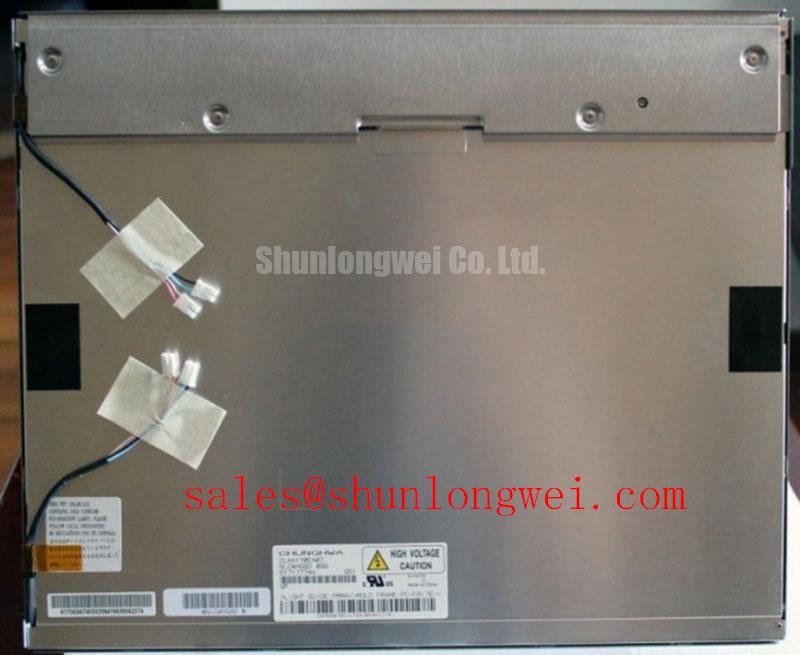
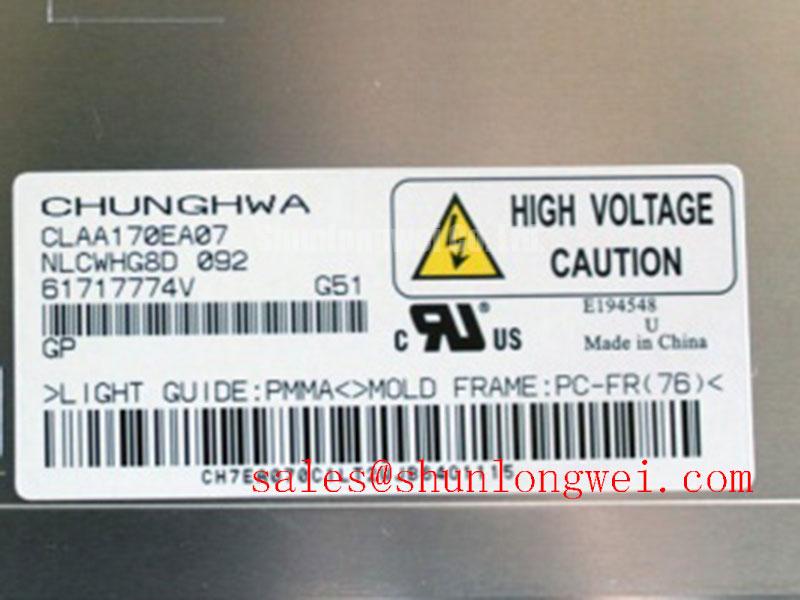
Technical Analysis for System Integration
The CLAA170EA07 is built on a foundation of established a-Si TFT technology, offering a practical balance of performance and reliability. A key engineering attribute is its typical brightness of 300 cd/m², which is sufficient for most indoor industrial environments, from control rooms to laboratory equipment. This brightness level, combined with the panel’s anti-glare surface treatment, ensures that operators can clearly read data without significant interference from overhead lighting.
Another critical parameter is the 2-channel, 8-bit LVDS interface. This standardized interface simplifies integration with a vast number of existing single-board computers and display controllers, reducing the need for custom interface hardware during system repairs or upgrades. Think of the LVDS interface as a universal plug type; its commonality prevents the engineering headache of sourcing or designing proprietary connectors and cables, a crucial factor when maintaining older but still valuable equipment. Exploring topics like vibration and shock resistance can further inform robust system design around this panel.
Optimized Application Scenarios
The specific characteristics of the CLAA170EA07 make it a strong candidate for several targeted applications:
- Industrial Control Panels & HMIs: The 1280×1024 resolution and 5:4 aspect ratio are a perfect match for legacy software interfaces that were not designed for modern widescreen formats.
- Medical Diagnostic Stations: Its ability to display 16.2 million colors (6-bit + FRC) and standard brightness are suitable for non-critical imaging applications where consistent visual representation is necessary.
- Point-of-Sale (POS) Systems: The durable construction and clear visibility from an anti-glare screen are valuable in high-traffic retail and hospitality environments.
- Test and Measurement Equipment: The SXGA resolution provides ample detail for displaying complex waveforms and measurement data with clarity.
This display is a best-match for systems requiring a durable 17.0″ SXGA panel with a CCFL backlight and a standard LVDS interface.
Key Specification Parameters
| CLAA170EA07 Technical Specifications | |
|---|---|
| Parameter Group | Value |
| Screen Size | 17.0 inches |
| Resolution | 1280(RGB) x 1024, SXGA |
| Display Technology | a-Si TFT-LCD, TN, Normally White |
| Brightness | 300 cd/m² (Typ.) |
| Viewing Angle (H/V) | 140° / 130° (Typ.) |
| Contrast Ratio | 500:1 (Typ.) |
| Display Colors | 16.2M (6-bit + FRC) |
| Interface | LVDS (2 ch, 8-bit), 30-pin connector |
| Backlight | 4 pcs CCFL, 40K hours (Typ.) |
| Operating Temperature | 0 ~ 50 °C |
| Module Dimensions | 358.5(W) x 296.5(H) x 17.5(D) mm |
Engineer’s FAQ
1. What is the LVDS interface pinout for the CLAA170EA07?
The display uses a 30-pin connector, such as the JAE FI-XB30SSL-HF15 or an equivalent. The pinout includes pairs for odd and even channel data signals (RXO0-/+, RXE0-/+, etc.) and power supply pins. Referencing the official datasheet is essential for correct pin assignments before integration.
2. Is this panel a suitable drop-in replacement for other 17-inch 5:4 displays?
Mechanically, its dimensions (358.5 x 296.5 x 17.5 mm) are standard for this class of display. However, engineers must verify the LVDS pin configuration, backlight connector, and driver board compatibility of the target system. While often compatible, a direct comparison of datasheets is required to ensure a seamless fit.
3. What are the power requirements for the CCFL backlight?
The CCFL backlight requires an external inverter. The lamp current is typically 7.0 mA, with a lamp voltage around 600 Vrms. Proper inverter selection is critical for achieving the specified 300 cd/m² brightness and maximizing the backlight’s 40,000-hour typical lifespan. Understanding the management of backlight lifespan is key for long-term reliability.
4. How does the anti-glare surface impact image quality?
The anti-glare coating diffuses ambient light, reducing specular reflections that can wash out the image or create distracting glare. This is particularly important in industrial settings with uncontrolled overhead lighting. While it may slightly soften the image compared to a glossy screen, the benefit is significantly improved readability and reduced operator eye strain. For more on display technology, see our resources on LCD core technology.
Concluding Statement
The CLAA170EA07 provides a reliable and technically sound solution for engineers tasked with maintaining or developing systems built around the 17-inch SXGA format. Its adherence to standard interfaces and proven optical performance delivers the consistency required to extend the operational life of critical industrial and commercial equipment, ensuring predictable and clear visualization of data.