SanRex SDA150AA80: A Robust 800V/150A Module for Industrial Power Conversion
SanRex SDA150AA80 Diode Module: 800V, 150A Rectification
High-Current Rectification with Robust Voltage Headroom
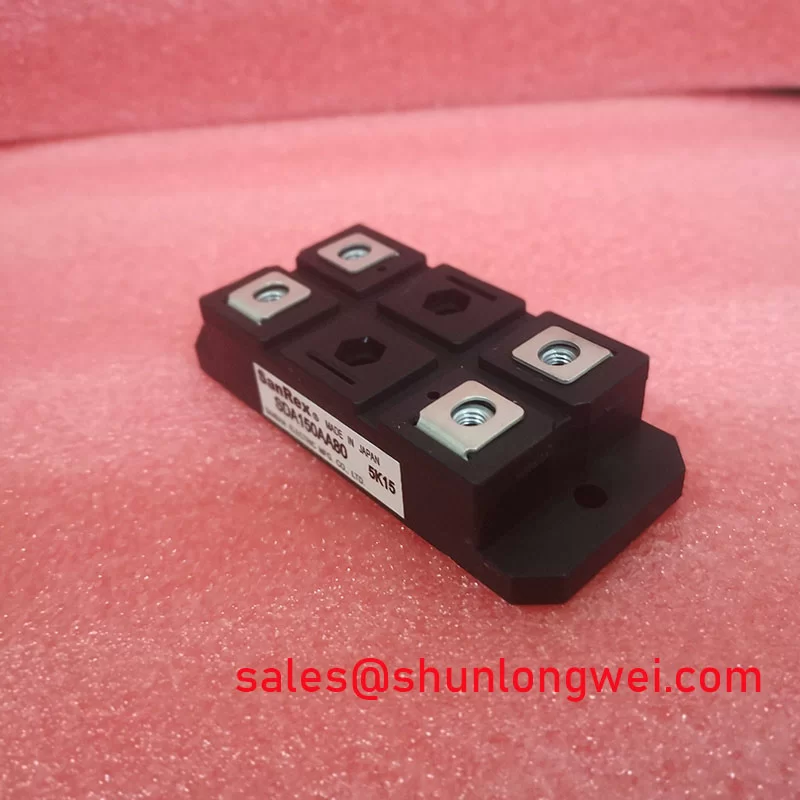
The SanRex SDA150AA80 is a dual diode module engineered for high-power rectification stages in industrial systems. Its core value proposition is the delivery of a substantial 150A average forward current combined with a high 800V repetitive peak reverse voltage, offering a robust solution for converting AC to DC power. This module’s design focuses on thermal efficiency and electrical ruggedness, making it a reliable component for power supply front-ends.
- Core Specifications: 800V | 150A | VFM 1.35V (max)
- Key Advantages: High surge current survivability, electrically isolated base for simplified thermal management.
- Application Focus: Well-suited for constructing three-phase bridge rectifiers in motor drives and high-power converters.
Download the Official SDA150AA80 Datasheet (PDF)

Technical Analysis for System Reliability
The performance of the SDA150AA80 is defined by key parameters that directly influence system durability and efficiency. The 150A average forward current (IF(AV)) rating establishes its capacity for continuous high-load operation, essential for industrial equipment that runs for extended periods. This high current handling prevents the module from becoming a bottleneck in the power delivery chain.
Equally important is the repetitive peak reverse voltage (VRRM) of 800V. This specification provides a significant safety margin against voltage transients commonly found on industrial AC lines, protecting the module and downstream components from overvoltage events. The module’s ability to withstand a non-repetitive surge current (IFSM) of 2500A ensures it can survive the large inrush currents that occur during system startup or fault conditions without degradation.
Thermal Performance and Mechanical Design
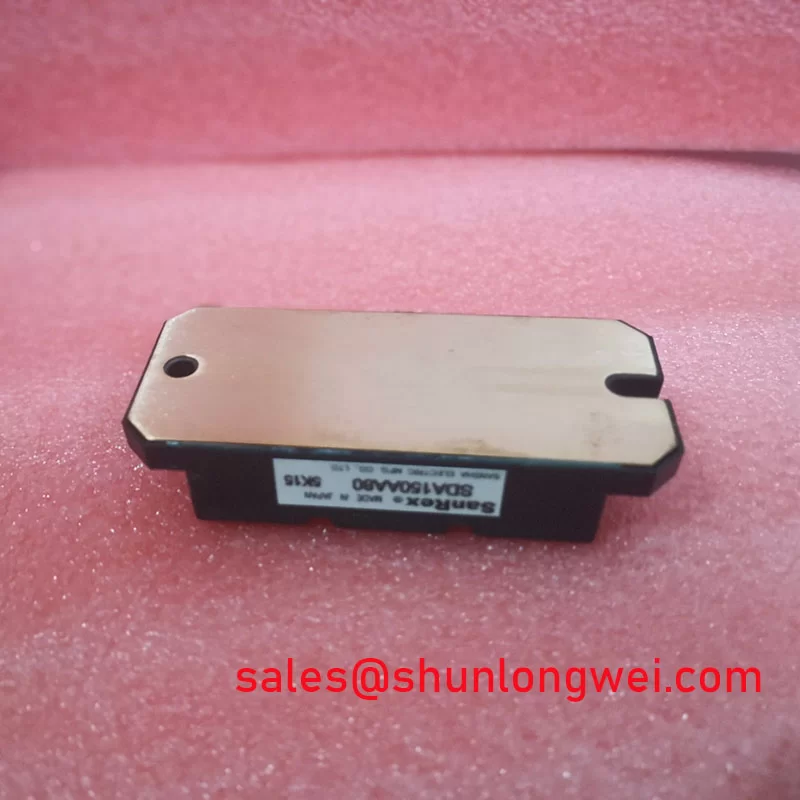
Effective thermal management is critical for high-power semiconductors. The SDA150AA80 features a low maximum thermal resistance from junction to case (Rth(j-c)) of 0.24°C/W. Think of thermal resistance as the width of a pipe for heat; a lower value means a wider pipe, allowing heat to flow away from the semiconductor junction more easily. This efficient heat transfer, facilitated by the module’s isolated baseplate, helps maintain a lower operating temperature, which is fundamental to achieving long-term operational reliability.

Optimized Application Scenarios
The electrical and thermal characteristics of the SDA150AA80 make it a strong fit for several demanding applications:
- AC Motor Drives & VFDs: Provides the initial high-current rectification stage. Its surge handling capability is ideal for managing motor inrush currents.
- Uninterruptible Power Supplies (UPS): The 800V rating ensures reliable operation from AC mains, while the high current capacity supports significant load demands during power outages.
- Welding Power Supplies: Easily handles the high, continuous DC currents required for various welding processes, ensuring a stable arc.
- Industrial Power Converters: Serves as a robust front-end rectifier for battery chargers, DC power systems, and other industrial converters.
Its specifications make it an excellent candidate for building three-phase bridge rectifiers where high reliability and simplified thermal design are required.
Key Specifications of the SDA150AA80
| Absolute Maximum Ratings (Tc = 25°C unless otherwise specified) | |
|---|---|
| Repetitive Peak Reverse Voltage (VRRM) | 800 V |
| Average Forward Current (IF(AV)) | 150 A |
| Peak Surge Forward Current (IFSM) | 2500 A (50Hz, half-sine wave) |
| Operating Junction Temperature (Tj) | -40 to +150 °C |
| Electrical & Thermal Characteristics | |
| Peak Forward Voltage (VFM) | 1.35 V (max @ IFM = 150A) |
| Repetitive Peak Reverse Current (IRRM) | 10 mA (max @ VRRM = 800V) |
| Thermal Resistance, Junction to Case (Rth(j-c)) | 0.24 °C/W (max) |
| Isolation Voltage (Viso) | 2500 V (AC, 1 minute) |
Engineer’s FAQ for the SDA150AA80
1. How can the SDA150AA80 be used to construct a three-phase bridge rectifier?
To create a full-wave three-phase rectifier, you would typically use three SDA150AA80 modules. Each module contains two diodes. The six diodes are then connected in a standard bridge configuration to rectify the three-phase AC input into a DC output. For more on power semiconductors, see our technology resources.
2. What are the recommended mounting torque specifications?
According to the datasheet, the recommended mounting torque for the M6 mounting screws is between 3.92 and 5.88 Nm. For the M6 terminal screws, the recommended torque is also between 3.92 and 5.88 Nm. Adhering to these values is crucial for ensuring both a secure mechanical connection and proper thermal contact to the heatsink.
3. How does the module’s isolated baseplate benefit the design process?
The electrically isolated mounting base (rated for 2500V) simplifies thermal design significantly. It allows multiple modules to be mounted directly onto a single, common, non-isolated heatsink without needing separate insulating pads for each module. This reduces assembly complexity, component count, and potential points of failure, leading to a more compact and cost-effective thermal solution. Understanding the role of an isolated baseplate is key to robust design.
4. What is the impact of forward voltage (VFM) on system efficiency?
Forward voltage drop directly contributes to conduction losses in the form of heat (Power Loss = VFM x IF(AV)). The SDA150AA80 has a maximum VFM of 1.35V at its rated current. A lower VFM translates to lower power dissipation, which means less heat is generated, improving overall system efficiency and reducing the demands on the cooling system.
Enabling Reliable High-Power Conversion
The SanRex SDA150AA80 diode module provides a well-defined set of characteristics for engineers developing high-current power systems. Its combination of a high 150A current rating, 800V reverse voltage, and efficient thermal design through an isolated baseplate offers a dependable foundation for industrial rectification. This component enables the design of robust and simplified power front-ends for a variety of demanding applications. Learn more about core power components like free-wheeling diodes on our blog.