Optrex DMF50840: A Technical Review of the 5.7-inch QVGA Industrial LCD Module
Optrex DMF50840 5.7-inch QVGA Graphic LCD Module
Introduction and Core Highlights
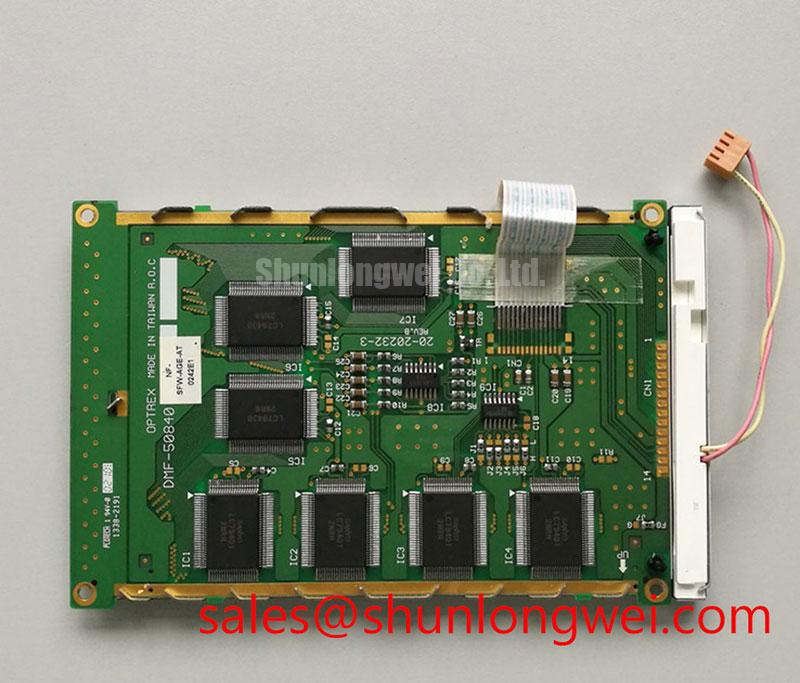
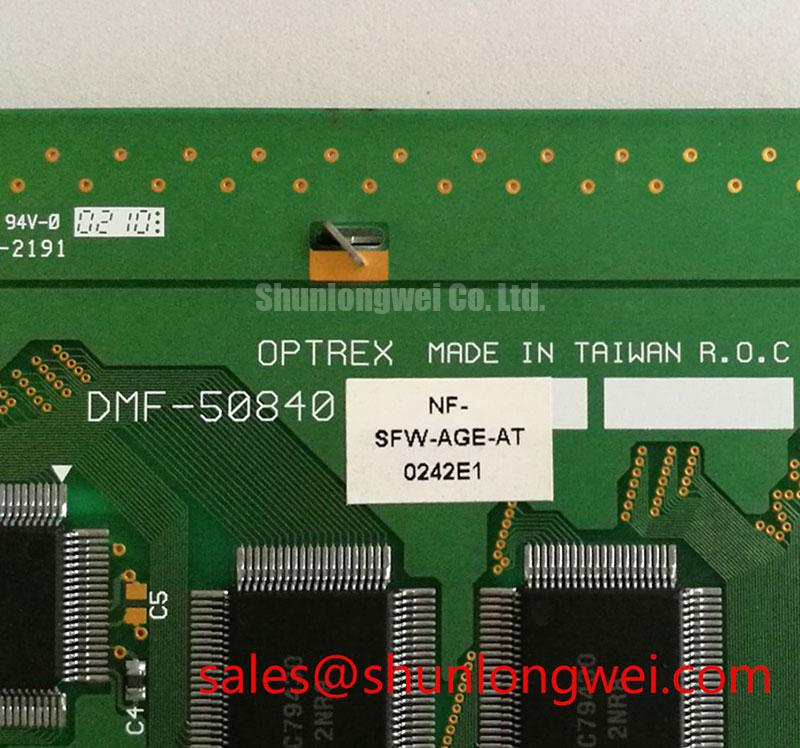
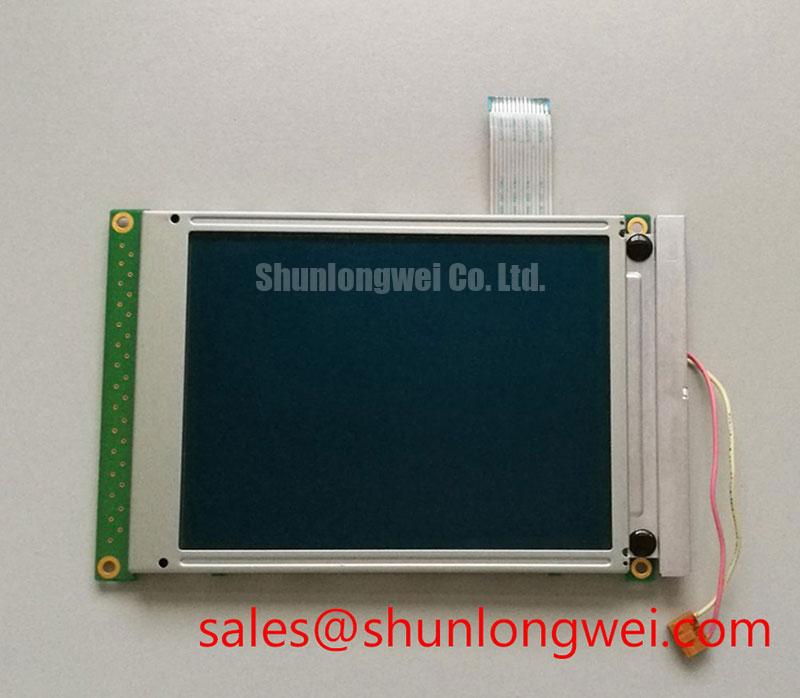
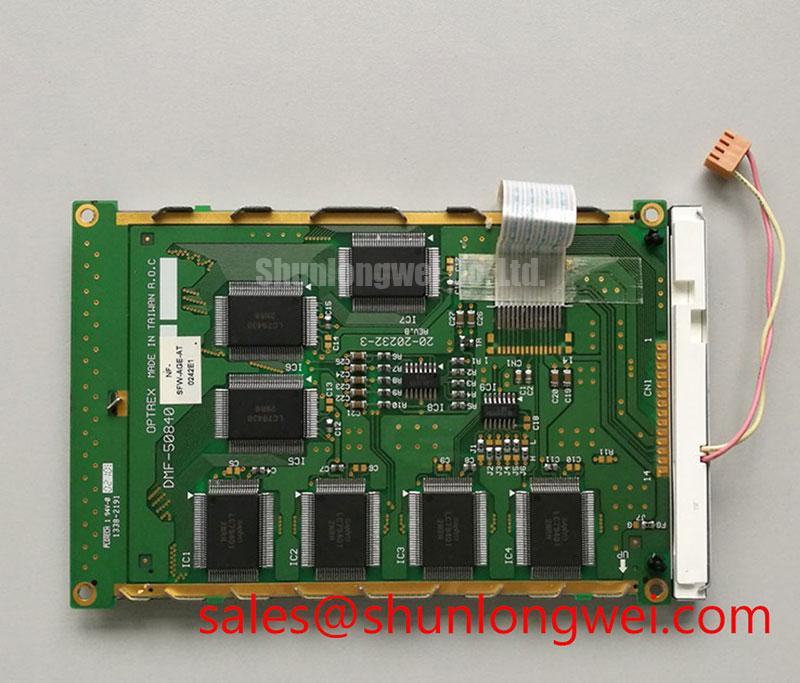
The Optrex DMF50840 is a monochrome STN-LCD module that delivers a clear 320×240 QVGA resolution for industrial applications requiring unambiguous graphical or text-based data presentation. This 5.7-inch display is engineered for direct integration, featuring a parallel data interface that requires an external controller to manage timing signals like HSYNC and VSYNC. This component-level design gives engineers maximum flexibility in system architecture and driver selection.
- Core Specifications: 320 x 240 Pixels | 5.7-inch Diagonal | CCFL Backlight
- Key Advantages: High-contrast monochrome visibility, wide operating temperature range for industrial environments.
- Integration Focus: The controller-less design allows engineers to select or build a controller that precisely matches their system’s timing and memory requirements.
Download a Verified Datasheet (PDF)
Technical Analysis for System Integration
The defining characteristic of the DMF50840 is its direct-drive, controller-less architecture. This requires the host system to provide all timing signals, including dot clock, horizontal sync (HSYNC), and vertical sync (VSYNC), via a 4-bit parallel data interface. While this demands more from the host processor or a dedicated graphics controller, it provides complete control over the display’s refresh rate and performance, which is critical for timing-sensitive applications. An external controller IC or an FPGA can be implemented to manage the frame buffer memory and generate the necessary signals, offloading the main system CPU.
The display utilizes STN (Super-Twisted Nematic) technology in a negative blue mode, which produces high-contrast white pixels on a blue background. The contrast can be thought of like the clarity of a blueprint; a high contrast ratio ensures that every line and character is sharp and easily readable, which is essential for user interfaces in industrial control or medical monitoring. The contrast is adjusted via a dedicated Vadj input voltage, allowing designers to fine-tune readability based on ambient lighting and application requirements.
Optimized Application Scenarios
The DMF50840 is well-suited for equipment where a robust, clear, and cost-effective monochrome graphical display is needed.
- Industrial HMI Panels: The 320×240 resolution is ideal for displaying process variables, status indicators, and simple menu systems without the complexity of a color display.
- Test and Measurement Equipment: Its high-contrast STN display provides excellent readability for waveforms, numerical data, and instrument settings.
- Legacy System Replacements: The standard QVGA resolution and parallel interface make it a viable candidate for replacing end-of-life displays in existing industrial machinery.
- Medical Monitoring Devices: Suitable for applications like vital signs monitors or infusion pumps that require a clear, unambiguous data readout.
This module is a best-match for systems where a custom or powerful host controller is already present, capable of managing the display’s direct signal requirements.
Key Specifications of the DMF50840
| Parameter | Specification |
|---|---|
| Screen Size | 5.7 inches |
| Display Technology | STN-LCD, Blue Mode (Negative), Transmissive |
| Resolution | 320 x 240 pixels (QVGA) |
| Interface | 4-bit Parallel Data |
| Backlight | CCFL with 50,000-hour average life (inverter not included) |
| Logic Supply Voltage (VCC) | 5.0V (Typ.) |
| LCD Driving Voltage (VEE) | -26V (Typ.) |
| Operating Temperature | 0°C to 50°C |
| Outline Dimensions | 167.1(W) x 109(H) x 11(D) mm |
Engineer’s FAQ
1. How is the DMF50840 controlled without an onboard controller?
The DMF50840 requires an external source, such as an FPGA, a dedicated graphics controller IC, or a sufficiently powerful microcontroller, to continuously provide pixel data and timing signals (DotClk, HSYNC, VSYNC) to refresh the screen. The system designer is responsible for implementing the frame buffer and signal generation logic.
2. What are the power supply requirements for this module?
Three separate voltages are required: a +5V supply for the logic (Vcc), a negative voltage of approximately -26V for the LCD bias (Vee), and an adjustable voltage for contrast (Vadj). Additionally, the CCFL backlight requires a separate high-voltage AC inverter, which is not integrated into the module.
3. What is the typical contrast ratio and viewing angle?
The datasheet specifies a typical contrast ratio of 5:1. The optimal viewing direction is specified at the 6 o’clock position, which should be considered when mounting the display in an enclosure to ensure the best readability for the operator.
4. What type of connector is used for the interface?
The module uses a 14-pin Flexible Flat Cable (FFC) with a 1.25mm pitch. Mating connectors, such as those from the Molex 39-53 or 52044 series, are required on the host PCB for connection.
Design Enablement
The DMF50840 offers engineers a fundamental building block for creating custom HMI solutions. Its controller-less design provides the architectural freedom to pair it with a host processor that precisely meets the application’s cost and performance targets. By providing clear, high-contrast monochrome imaging, this module serves as a reliable visual interface for industrial equipment where data clarity is paramount. For more detailed information on related display technologies, consider exploring topics like industrial LCD manufacturing or designing for shock and vibration resistance.