MTC400A/1800V: A Robust Thyristor Module for Industrial Power Control
MTC400A/1800V Thyristor Module for High-Power Control
Robust 1800V Thyristor Module for Industrial Power Systems
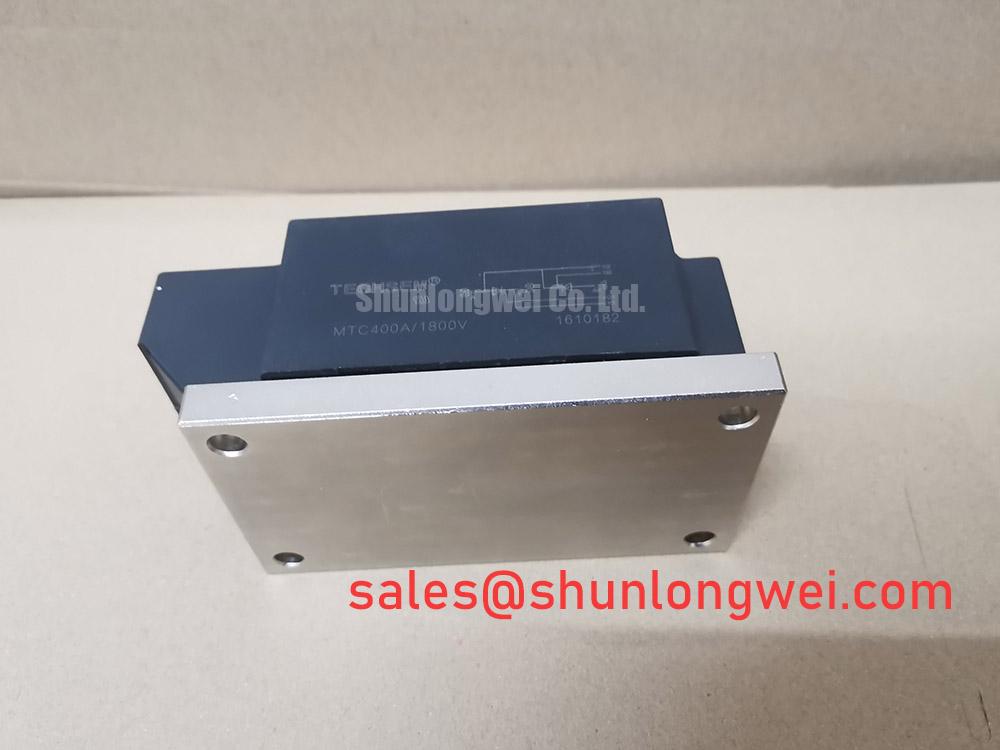
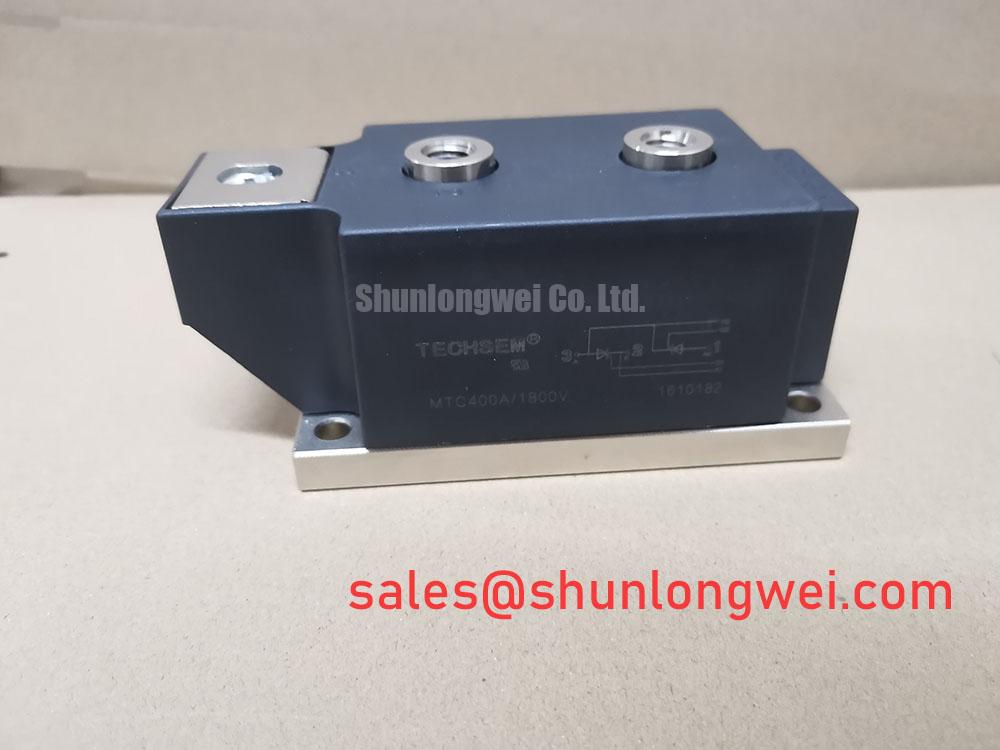
This MTC400A/1800V is a thyristor-thyristor module engineered for reliable control in high-power AC and DC applications. It integrates two series-connected SCRs in a common cathode configuration, providing a robust solution for managing substantial electrical loads. Its core function revolves around high-voltage blocking and high-current conduction, making it a cornerstone component for industrial power conversion and control systems where operational stability is critical.
- Core Specifications: 1800V VDRM/VRRM | 400A IT(AV) | 3000V Isolation
- Key Advantages: High surge current capability enhances system survivability. An electrically isolated mounting base simplifies thermal design and improves safety.
- Design Consideration: The module’s low thermal resistance facilitates effective heat dissipation, a key factor in achieving long-term operational reliability in demanding industrial environments.
Download Official Datasheet (PDF)
Technical Analysis for System Integration
The MTC400A/1800V module is defined by its capacity to operate reliably under significant electrical stress. The 1800V repetitive peak off-state voltage (VDRM/VRRM) provides a substantial design margin for systems connected to high-voltage industrial mains, mitigating the risk of failure from transient overvoltage events. This high blocking voltage, combined with a strong surge current (ITSM) rating of up to 12,500A, ensures the module can withstand the demanding conditions of motor startups and fault currents, contributing directly to overall system ruggedness.
Effective thermal management is fundamental to the reliability of high-power semiconductors. This module features an electrically isolated baseplate, offering up to 3000V of isolation. This integration simplifies the mechanical assembly by allowing multiple modules to be mounted on a single, non-isolated heatsink, reducing component count and assembly complexity. The module’s thermal resistance, Rth(j-c), is a critical parameter for thermal calculations. Think of it as the width of a pipe for heat flow; the low specified value of 0.075 °C/W (per thyristor) signifies a wide “pipe,” enabling heat to transfer efficiently from the silicon junction to the case, which is essential for preventing overheating under high load conditions. For more on thermal design, see our guide on mastering IGBT thermal design.
Optimized Application Scenarios
The specific characteristics of the MTC400A/1800V make it highly suitable for low-frequency, high-current power control tasks.
- AC Motor Soft Starters: The module’s ability to handle high inrush currents is essential for gradually starting large induction motors, reducing mechanical and electrical stress.
- Industrial Heating Control: Its precise phase-angle control capability allows for efficient regulation of power delivered to large heating elements in furnaces and industrial ovens.
- High-Power Rectifiers: Well-suited for constructing controlled rectifier bridges used in DC power supplies, battery charging systems, and welding equipment.
- Static VAR Compensators: In power grid applications, these modules can be used for power factor correction and voltage regulation, enhancing grid stability.
This module is an optimal match for industrial systems requiring robust, high-current AC phase-angle control with simplified thermal management.
Key Specifications of MTC400A/1800V
| Absolute Maximum Ratings (Tj = 25°C unless otherwise specified) | |
|---|---|
| Repetitive Peak Off-State Voltage (VDRM/VRRM) | 1800V |
| Average On-State Current (IT(AV)) at Tc=80°C | 400A |
| Surge On-State Current (ITSM) | 12500A (50Hz, 10ms) |
| Isolation Breakdown Voltage (VISO) | 2500V (AC, 1 min) |
| Thermal and Mechanical Characteristics | |
| Thermal Resistance, Junction-to-Case (Rth(j-c)) | 0.075 °C/W (per thyristor) |
| Operating Junction Temperature (Tj) | -40 to +125°C |
| Mounting Torque (M6 to Heatsink) | 5 ±15% N·m |
| Mounting Torque (M10 to Terminals) | 12 ±15% N·m |
Engineer’s FAQ
1. What is the correct procedure for mounting the MTC400A/1800V to a heatsink?
Ensure the heatsink surface is clean and flat. Apply a thin, even layer of thermal grease. Mount the module using M6 screws, tightening them gradually and evenly to the recommended torque of 5 N·m ±15% to ensure optimal thermal contact without inducing mechanical stress on the ceramic base.
2. How do I determine the required heatsink for this thyristor module?
To calculate the required heatsink thermal resistance (Rth(c-s)), you must first determine the total power dissipation (Pavg) under your specific load conditions. Using the datasheet’s thermal resistance from junction to case (Rth(j-c) = 0.075 °C/W), you can use the formula: Rth(s-a) ≤ (Tj,max – Ta) / Pavg – Rth(j-c) – Rth(c-s), where Tj,max is 125°C and Ta is the ambient temperature. The Rth(c-s) value depends on your mounting and thermal interface material.
3. Can this module be used for high-frequency applications?
No, the MTC400A/1800V is a thyristor (SCR) based module optimized for low-frequency phase control and rectification, typically at line frequencies of 50/60 Hz. Its switching characteristics are not suitable for high-frequency inverters, which require faster devices like IGBT modules.
4. What does the “MTC” designation signify?
The “MTC” designation typically indicates a dual thyristor module in a half-bridge (series connection) configuration. Other variants like “MTK” (common cathode) and “MTA” (common anode) exist for different circuit topologies.
The MTC400A/1800V provides a dependable foundation for high-power AC control systems. It combines high voltage and current ratings with a thermally efficient, isolated package to facilitate reliable and simplified system design.