Fuji 6MBI100S-120-02: A Technical Review of the 1200V, 100A 6-Pack IGBT Module
Fuji 6MBI100S-120-02 IGBT: 1200V, 100A 6-Pack Module
Introduction and Core Highlights
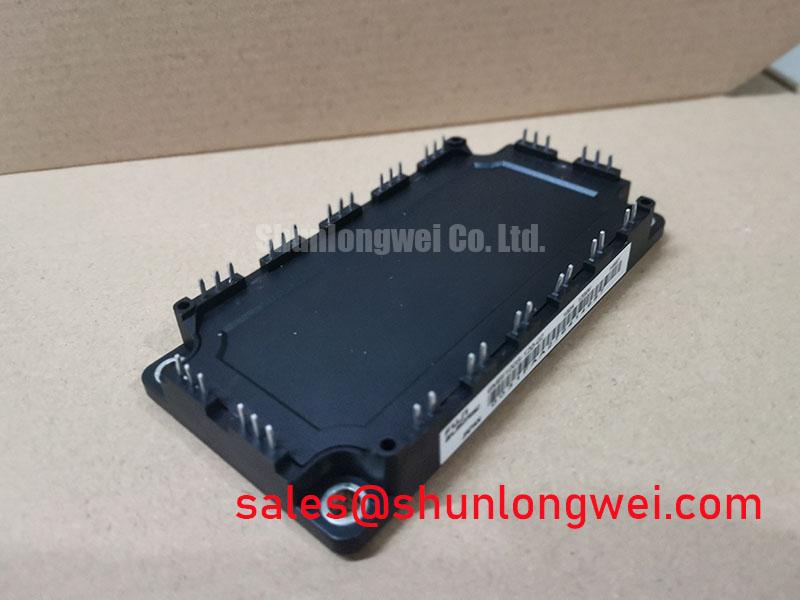
The Fuji Electric 6MBI100S-120-02 is an IGBT module that integrates a full three-phase inverter bridge into a single, robust package. Its unique value stems from this high level of integration, which simplifies the design and assembly of industrial motor drives and power converters. By consolidating six IGBTs and six free-wheeling diodes, this module provides a compact power stage, reducing both component count and the parasitic inductance that can arise from complex layouts. This approach helps engineers streamline development and enhance system reliability.
- Core Specifications: 1200V | 100A | VCE(sat) 2.2V (typ)
- Key Advantages: Reduces bill of materials (BOM) and simplifies PCB layout. Offers a robust, thermally efficient solution for motor control.
- Primary Function: Serves as the core power switching stage in Variable Frequency Drives (VFDs) and other inverter applications.
Download the 6MBI100S-120 Official Datasheet (PDF)

Technical Analysis of the Integrated Design
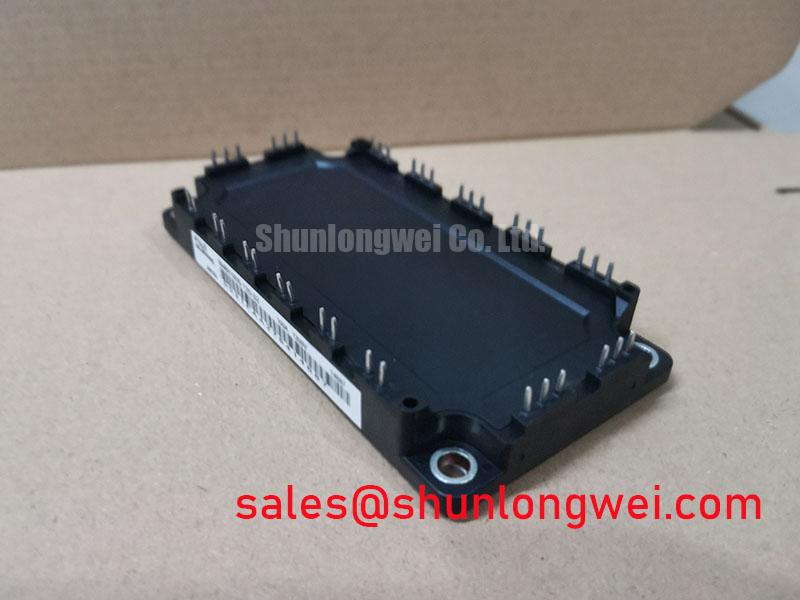
The primary engineering value of the 6MBI100S-120-02 lies in its 6-in-1 package configuration. Compared to designs using discrete IGBTs, this module significantly reduces stray inductance between switches. Lower inductance minimizes voltage overshoots during high-speed switching events, protecting the devices and often reducing the need for extensive snubber circuits. This integration also streamlines the manufacturing process by reducing the number of components to be mounted on the heatsink and PCB, which is a key consideration in the strategic choice between a PIM vs. discrete IGBT design.
Efficient thermal management is critical for power module reliability. The module specifies a thermal resistance from junction to case (Rth(j-c)) of 0.42 °C/W for each diode and 0.20 °C/W for each IGBT. This parameter can be compared to the width of a pipe draining heat away from the semiconductor chip. A lower thermal resistance value signifies a wider pipe, allowing heat to be extracted more effectively to the heatsink. This efficient heat transfer is crucial for maintaining the junction temperature below the 150°C maximum limit, even under heavy load conditions, preventing premature IGBT failures.

Optimized Application Scenarios
The specifications of the 6MBI100S-120-02 make it well-suited for several key industrial applications:
- Variable Frequency Drives (VFDs): The module’s all-in-one three-phase bridge is the standard topology for AC motor control, simplifying the power stage design.
- AC and DC Servo Drive Amplifiers: In applications requiring precise motion control, the module’s predictable switching characteristics and robust thermal performance provide a stable power foundation.
- Uninterruptible Power Supplies (UPS): The 1200V breakdown voltage and 100A current rating offer sufficient headroom for inverter stages in mid-sized UPS systems.
- Industrial Welding Machines: The module can handle the high-current pulse conditions typical in welding power supplies due to its 200A pulsed collector current rating (IC pulse).
This module provides an excellent power stage solution for three-phase inverter systems operating from 380V to 480V AC lines.
Key Specification Parameters for the 6MBI100S-120-02
| Absolute Maximum Ratings (Tc=25°C) | |
|---|---|
| Collector-Emitter Voltage (VCES) | 1200V |
| Gate-Emitter Voltage (VGES) | ±20V |
| Continuous Collector Current (IC) @ Tc=80°C | 100A |
| Pulsed Collector Current (IC pulse) | 200A |
| Max Power Dissipation (PC) per IGBT | 700W |
| Operating Junction Temperature (Tj) | -40 to +150°C |
| Electrical & Thermal Characteristics (Tj=25°C unless otherwise specified) | |
| Collector-Emitter Saturation Voltage (VCE(sat)) @ IC=100A, VGE=15V | 2.2V (typ.), 2.7V (max.) |
| Diode Forward Voltage (VF) @ IF=100A | 2.0V (typ.), 2.5V (max.) |
| Turn-on Time (ton) | 0.35µs (typ.) |
| Turn-off Time (toff) | 0.45µs (typ.) |
| Thermal Resistance, Junction-to-Case (Rth(j-c)) per IGBT | 0.20°C/W (max.) |
Note: All parameters are based on the official Fuji Electric datasheet. Characteristics are subject to change by the manufacturer.
Engineer FAQ
- What are the main benefits of the 6MBI100S-120-02’s 6-pack configuration?
- The integrated 6-pack design simplifies the power stage of a three-phase inverter. It reduces the physical footprint, shortens assembly time, and lowers the stray inductance path compared to using six individual IGBTs. This leads to a more compact and electrically stable system.
- How should this module be mounted for effective heat dissipation?
- For optimal thermal performance, the module’s baseplate must be mounted to a flat, clean heatsink surface. A thin, uniform layer of thermal grease should be applied to eliminate air gaps. The M5 mounting screws should be tightened to the recommended torque of 3.5 N·m to ensure even pressure and contact.
- What is the typical collector-emitter saturation voltage (VCE(sat))?
- The typical VCE(sat) is 2.2V when the collector current is 100A and the gate-emitter voltage is 15V at a junction temperature of 25°C. This value is critical for calculating conduction losses, a key factor in overall system efficiency, especially in lower-frequency applications like motor drives.
- Does this module include over-temperature protection?
- The datasheet for the 6MBI100S-120 does not indicate a built-in NTC thermistor. Engineers must implement external temperature sensing on the heatsink to monitor thermal conditions and trigger system shutdowns if necessary. Proper IGBT thermal design is paramount.
Enabling Robust Power Conversion
The 6MBI100S-120-02 delivers a proven, highly integrated solution for power system engineers. By combining a full three-phase inverter into a single component, it allows for the development of more compact, reliable, and easier-to-manufacture industrial motor drives and power supplies. Its balanced electrical and thermal characteristics provide a solid foundation for systems where long-term operational stability is essential.